
Sunrise alarms are one of those product categories that sound either deeply sensible or faintly ridiculous depending on how they get explained. The sensible version is simple: many people wake up before actual sunrise, especially in winter, and a gradually brightening light may make that wake-up ...
Sunrise alarms are one of those product categories that sound either deeply sensible or faintly ridiculous depending on how they get explained. The sensible version is simple: many people wake up before actual sunrise, especially in winter, and a gradually brightening light may make that wake-up feel less brutal than a phone alarm blasting in a dark room. The ridiculous version is the one marketing prefers: a bedside lamp that promises to fix your sleep, your mood, your mornings, and possibly your personality. The truth is much narrower than the pitch. That usually means it's more useful than the hype, but for fewer people.
This isn't a hands-on review. It's an editorial primer on what sunrise alarms are actually trying to do, what the underlying light science does and doesn't support, why dark winter mornings matter more than brands admit, and how to think about a product like the Hatch Restore 2 without treating it as a medical device or a luxury placebo. We'll use the Hatch as the worked example, contrast it with a cheaper DIY route built around an Echo Dot and a lamp routine, and briefly touch on the JBL Go 4 as the kind of travel-friendly speaker people sometimes try to use as a partial substitute.
The 60-second version
| Question | Honest answer |
|---|---|
| What is a sunrise alarm? | A bedside light that gradually brightens before your set wake time to simulate dawn and make waking feel less abrupt. |
| Is it the same as bright-light therapy for SAD? | No. Related idea, much smaller dose. Bright-light therapy is better studied and typically much more intense than a wake-up light. |
| Do sunrise alarms work? | Modestly, for some people. Research is thinner than the marketing suggests, but there is support for improved perceived wake quality and morning alertness. |
| Who benefits most? | People waking in darkness, later chronotypes, some people with winter mood issues, and people whose mornings are consistently rough rather than merely annoying. |
| Will it fix insomnia or depression on its own? | No. That's too much to ask from a bedside lamp. It may help morning timing and comfort, not solve every sleep problem. |
| Can I fake it with a smart bulb and a routine? | Often yes. A smart lamp plus an Echo Dot can get you 70–80% of the concept for less money, with fewer wellness claims. |
| Is an expensive sunrise alarm worth it? | Sometimes, if you want one-purpose bedside simplicity. If you already have smart-home gear, the premium gets harder to justify. |
Pro tip: The most honest way to think about a sunrise alarm is not "sleep therapy," but "a less hostile way to wake up in a dark room." That's a real benefit. It just isn't a miracle.
What a sunrise alarm actually is — a structural definition
A sunrise alarm is a timed light source designed to increase brightness gradually before a scheduled wake time. The key idea is that waking is not just about sound. Human sleep and alertness are shaped by light exposure, especially in the morning, because light affects the circadian system — the body clock that helps time sleep, wakefulness, and hormone rhythms.
That sounds more medical than it needs to. In plain English: your brain pays attention to morning light. When mornings are dim, late, or inconsistent, many people feel groggier and less naturally awake. A sunrise alarm tries to bridge that gap by giving you an artificial dawn indoors before the actual sun shows up.
The important caveat is intensity. Bright-light therapy for Seasonal Affective Disorder and circadian rhythm disorders is a well-studied category with established clinical use. Sunrise alarms borrow some of the same logic, but they are not the same intervention. A sunrise alarm sits by the bed and ramps up gently. A clinical light box is a more direct, more intense exposure, usually used while awake. Marketers blur that line because it sounds flattering. Consumers shouldn't.
And then there's the practical reality: in winter, especially at northern latitudes, many people are waking in darkness for months. Toronto sunrise around 7:47 AM in January is a perfectly ordinary example of the basic problem. If your alarm goes off at 6:30, your body is not getting much help from the sky. A wake light is trying to solve that specific mismatch.
Why morning light matters more than most sleep advice admits
Sleep advice often gets reduced to the same five commandments — no screens, cooler room, less caffeine, regular bedtime, blackout curtains. None of that is wrong. But morning light is one of the more powerful signals for circadian timing, and it often gets treated like an afterthought because it's less sellable than mattresses and supplements.
Your circadian system uses light as a timing cue. Morning light tends to help anchor wake time and shift the body clock earlier. Evening light, especially if it's bright and mistimed, can push the clock later. That's why someone can be "tired all day but wide awake at night" and not be imagining things. Timing matters as much as total sleep.
This is also why winter affects people unevenly. Some people can wake to a standard phone alarm in total darkness and function fine after coffee. Others feel like they've been pulled out of anesthesia. If you're in the second group, that doesn't automatically mean you need a sunrise alarm — but it does mean a light-based wake cue is at least a rational idea, not wellness theatre.
The skeptical point is just as important: if your schedule is chaotic, your room is too bright at night, you're sleeping 5.5 hours, and your first daylight exposure doesn't happen until lunch, a sunrise alarm is not the main issue. It may soften the wake-up. It won't compensate for a badly timed life.
The three mechanisms sunrise alarms are really trading on
1. Gradual arousal instead of abrupt interruption
A sound alarm works by force. It interrupts sleep at a set moment, often from complete darkness, and asks your brain to become functional immediately. A sunrise alarm changes the shape of that transition. The theory is that gradually increasing light can nudge the body toward wakefulness before the final alarm sound, making the actual getting-up moment feel less violent.
That matters because a lot of "bad mornings" are really bad transitions. Not every groggy morning is a circadian disorder. Sometimes the problem is simply being jolted awake in a dark room by a harsh sound. A gentler ramp can help even when it doesn't change total sleep.
2. Morning circadian cueing
The second mechanism is timing. Light in the morning tells the circadian system, broadly speaking, "day starts now." That can help people whose body clock tends to drift later, especially if they consistently need to wake before they would naturally choose to.
This is where late chronotypes and younger adults often come into the conversation. If your natural rhythm trends late, but work or school still expects you up early, morning light is more relevant than another podcast about magnesium. That's a more honest framing than "optimizing sleep."
3. Mood and winter compensation
The third mechanism is mood-adjacent rather than purely wake-related. Dark mornings can be demoralizing. That's not a clinical term, but it is a real one in lived experience. Bright-light therapy has a stronger evidence base for seasonal mood issues. Sunrise alarms are better thought of as a lighter-touch cousin: possibly helpful, especially in winter, but not a substitute for treatment when symptoms are significant.
That's why the category deserves both interest and skepticism. The concept is biologically plausible. The problem it addresses is real. The leap from that to "buy this premium bedside device and transform your life" is where the nonsense starts.
The worked example: Hatch Restore 2
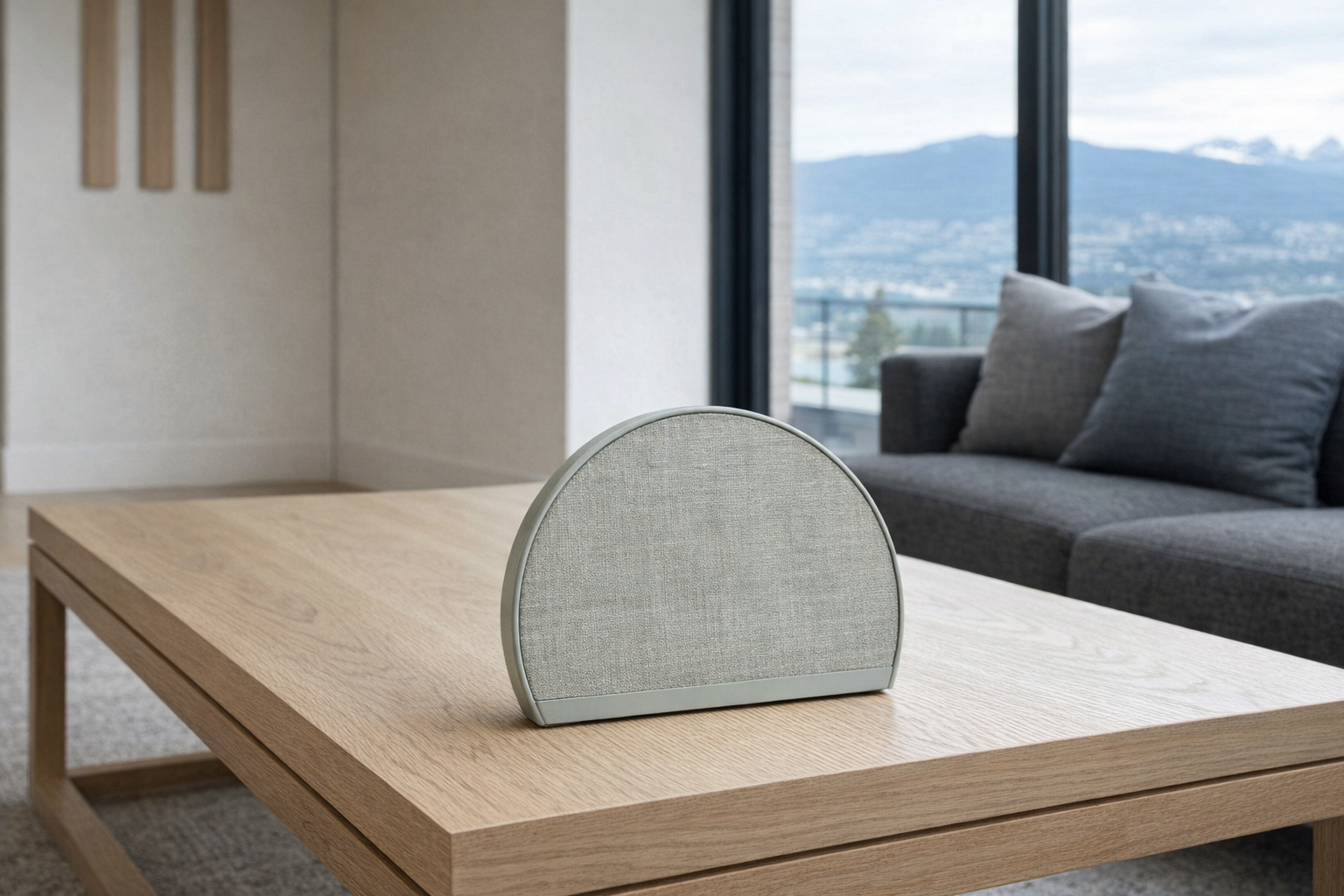
The Hatch Restore 2 is useful as a worked example because it represents the modern sunrise-alarm pitch almost perfectly: not just an alarm, but a bedside routine device intended to shape how you fall asleep and how you wake up. That's an attractive idea, and also a warning sign. The more functions a product claims in the sleep category, the more carefully you should separate what is plausible from what is branding.
According to the listing, the Hatch Restore 2 sits in the Unique & Lifestyle category, carries a 4.2/5 source rating, and is listed at around $11 CAD. That price is obviously unusual for this kind of product, so it is worth treating as a listing-specific figure rather than a reliable market-wide expectation. Check the live product page before assuming anything. The rating, though, is believable enough for the category: people tend to like the basic experience of wake lights more than the category's more ambitious wellness claims.
As an anchor for this primer, the Hatch illustrates the central promise of sunrise alarms better than a generic lamp does. A purpose-built bedside device gives you a dedicated place in the room, a defined wake routine, and less temptation to overcomplicate things. That simplicity matters. A sunrise alarm works best when it becomes boring — set it, leave it alone, let your mornings be more predictable. That's a more honest design philosophy than the "biohack your bedroom" tone a lot of sleep-tech brands adopt.
What it likely does not do, at least not by virtue of being a sunrise alarm, is replace stronger interventions for serious sleep or mood issues. If someone has pronounced seasonal depression, circadian rhythm disorder, chronic insomnia, or sleep apnea, a bedside dawn simulation may be pleasant and still not address the main problem. That's not a flaw unique to the Hatch. It's the limit of the category.
The practical argument for a dedicated device like this is bedside friction. A phone can run alarms. A smart speaker can run routines. A smart bulb can fade up. But a single-purpose object built around sleep and waking may be more likely to remain in place, remain configured, and avoid becoming one more screen-mediated system. The practical argument against it is equally straightforward: if you already own smart-home gear, paying extra for packaging and sleep branding can feel a little indulgent.
My opinion, bluntly: sunrise alarms make more sense than most wellness gadgets, but less sense than their branding suggests. The Hatch Restore 2 looks like the right kind of product for someone who wants a tidy bedside ritual and knows they wake badly in darkness. It's a narrower audience than the category's marketing implies, and that's fine.
- Full explainer: Hatch Restore 2 on Celmin · Directory: product page
What sunrise alarms genuinely fix
- They can make dark-room wakeups feel less abrupt.
This is the most credible benefit. If your alarm currently goes off in a pitch-dark room at 6:00 or 6:30, a gradual light ramp may reduce that "dragged awake" feeling even if it doesn't change your total sleep. - They help when the real sunrise is too late to be useful.
Winter is the obvious case. If dawn happens after your workday has already begun, waiting for natural light is not a plan. A sunrise alarm is a practical workaround for that mismatch. - They may improve subjective wake quality and morning alertness.
This is where the research is modest but supportive. The gains are not usually dramatic, but "I feel better getting up" is not a trivial outcome when repeated five days a week for months. - They provide a more stable cue for later chronotypes.
If your body prefers later sleep and wake times, consistent morning light can be part of nudging that schedule earlier. Not all late sleepers need special hardware, but some benefit from having the cue built into the room. - They reduce dependence on a harsh audio-only alarm.
Some people do fine waking to sound alone. Others dread it. If the light does enough of the work, the sound can be gentler or secondary. That's not medical magic; it's just a better wake-up experience.
What sunrise alarms still don't fix
- They are not equivalent to bright-light therapy.
This is the big one. A sunrise alarm is not a clinical light box, and shoppers should be wary of any branding that implies otherwise. If you need treatment-level light exposure, this category may be too mild. - They don't solve insufficient sleep.
If you're sleeping 6 hours and need 8, no sunrise effect is going to hide that math for long. A nicer alarm is still an alarm. - They won't overcome terrible sleep timing on their own.
If your evenings are full of bright light, late caffeine, inconsistent bedtimes, and doomscrolling, a gentle dawn lamp has limited leverage. Morning cues matter, but they are only part of the system. - Some people simply do better with direct outdoor light after waking.
If you can wake up, open the blinds, and get outside or near a bright window quickly, that may do more than a bedside device. The cheapest useful sleep intervention is often daylight plus consistency. - The category tends to overbundle "sleep wellness" features.
A sunrise alarm can be a rational purchase. A sunrise alarm wrapped in subscriptions, soundscapes, vague recovery language, and emotional promises deserves side-eye. Evaluate the wake-light function first and ignore the poetry.
Real products already on Celmin that are sunrise-alarm-adjacent
These are not all sunrise alarms in the strict sense, but they map onto the actual consumer decision: buy a dedicated wake-light device, build a cheaper routine around existing smart gear, or carry a simple audio solution when you're away from home.
- Hatch Restore 2 on Celmin — the anchor example of a dedicated sunrise-alarm-style bedside device.
- Echo Dot on Celmin — a realistic budget-friendly building block for a DIY wake routine using Alexa, smart lights, and schedules.
- JBL Go 4 on Celmin — not a sunrise alarm at all, but relevant as the sort of portable speaker people use for calmer wake audio while travelling, when light-based routines are harder to replicate.
How to read a "sunrise alarm" product listing
The category uses a lot of soft language. Four common claims mean different things.
- "Sunrise simulation"
This usually means the light gradually brightens before your alarm time. That's the core feature, and it is the one worth caring about. If a product can't explain that clearly, the rest is fluff. - "Clinically inspired" or "light-based wake therapy"
This is where brands start borrowing authority from bright-light therapy research without necessarily matching the intensity or use case. Treat that phrasing carefully. Inspired by a real idea is not the same as equivalent to a studied intervention. - "Sleep routine" or "bedside wellness system"
Translation: the product does more than wake lighting, often with sounds, timers, or guided routines. That may be useful, but it's also where price inflation sneaks in. Ask whether you want a wake light or a lifestyle platform. - "Works with Alexa" or smart-home routine support
This matters if you're comparing dedicated hardware to a DIY setup. A plain smart speaker plus a lamp on a schedule may replicate much of the benefit. If a premium sunrise alarm doesn't clearly outperform that simpler setup in convenience, think twice. - "Improves mood, sleep, energy"
Possible, maybe, for some people. But this is where listings become least trustworthy. Products in this category often stack outcomes that belong to different mechanisms and evidence levels. Wake comfort is plausible. Global life improvement is marketing.
The three questions worth asking before buying sunrise-alarm gear today
- Are you solving a dark-morning problem, or just buying nicer bedside furniture?
If you routinely wake before dawn, especially for months of the year, this category makes more sense. If you already wake with natural light and feel fine, the value drops fast. - Do you need a dedicated device, or would a smart light routine do the same job?
This is the most practical question. A lot of households already have enough gear to build a decent sunrise routine. Paying for a premium bedside device is reasonable only if simplicity and consistency matter more to you than saving money. - Are your mornings the real problem, or are your nights?
If your bedtime is inconsistent, your room is bright late, and your sleep is too short, fix that first. Sunrise alarms are most useful when the rest of your sleep setup is at least somewhat sane.
The DIY alternative: Echo Dot + lamp routine
Echo Dot — the cheap, honest workaround
The Echo Dot (5th Gen) is not a sunrise alarm, and that is exactly why it's relevant. A lot of people do not need a dedicated sleep-branded device. They need a bedside speaker, a routine engine, and a lamp that can be scheduled to turn on gradually or at least predictably.
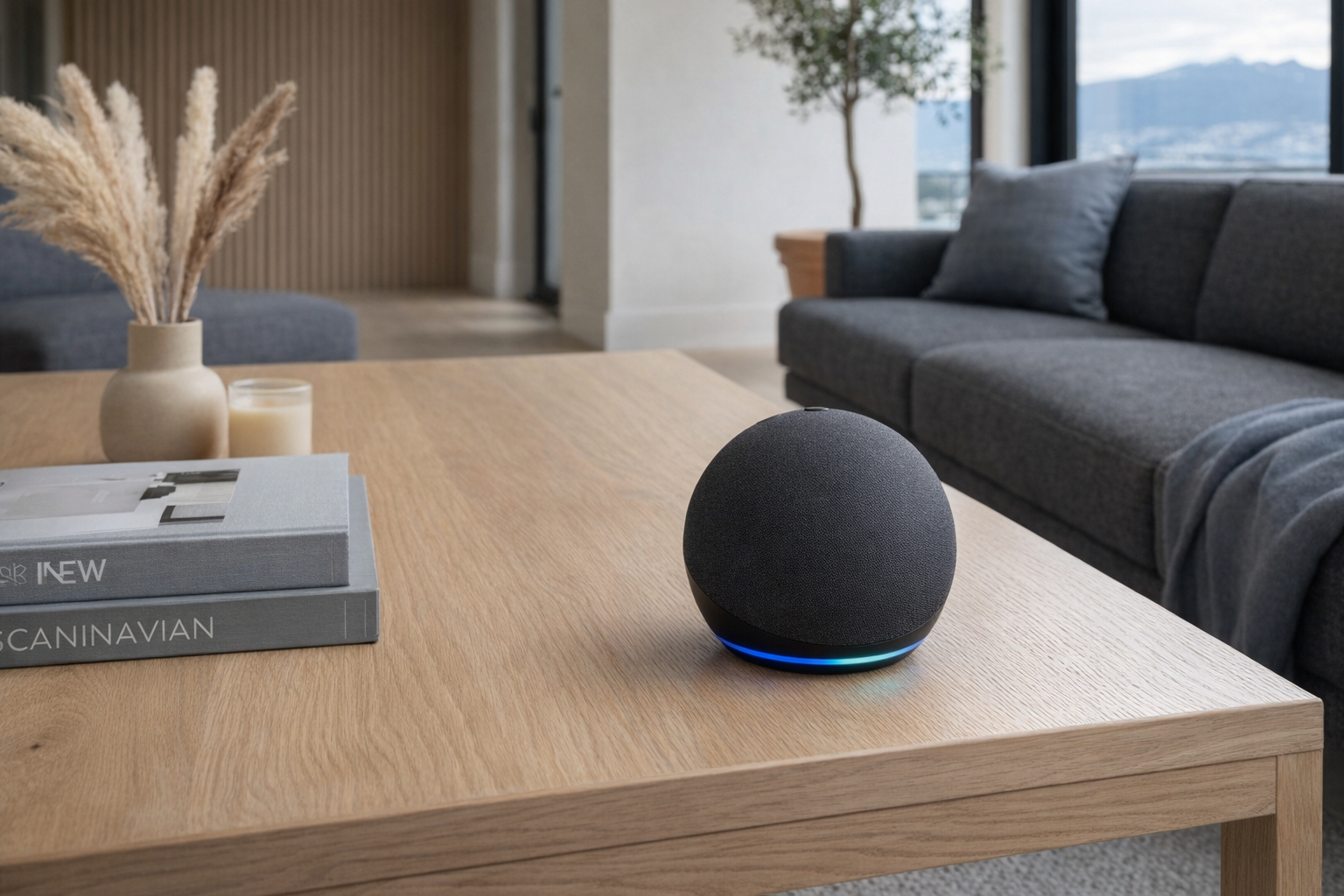
At around $47 CAD with a 4.7/5 rating on the source listing, the Echo Dot is the more grounded option for households already halfway into smart-home routines. According to the listing, it offers Alexa voice control, improved audio, built-in motion and indoor temperature sensors, dual-band 2.4 and 5 GHz Wi‑Fi, Bluetooth, and a tap to snooze alarm feature. That set of features matters less because any one of them is special, and more because it makes the Dot a practical bedside control point.
For sunrise-alarm purposes, the Dot's value is not in emitting therapeutic light — it doesn't. Its value is orchestrating a wake routine with compatible lighting and audio. In a realistic setup, you might schedule a lamp to come on before wake time and let the Dot handle the spoken alarm, weather, or a gentle audio cue. That's not as elegant as an all-in-one wake light, but it's a lot cheaper and arguably more flexible.
The built-in sensors are a nice bonus, though not a reason on their own to buy it for sleep. Motion and temperature can support automations, but people often overestimate how much that matters at the bedside. The more important question is whether you are the kind of person who benefits from routines at all. If yes, the Echo Dot is the no-nonsense route. If no, it becomes one more puck asking to be configured.
My opinion: for many people, this is the smarter first move than buying a premium sunrise alarm. An Echo Dot plus a lamp on a smart plug or smart bulb routine gets most of the practical benefit with less mystique. The downside is bedside clutter and setup friction. Evaluate it like a tool, not like a sleep transformation.
- Full explainer: Echo Dot on Celmin · Directory: product page
A side note for travellers: why a speaker is not the same thing
JBL Go 4 — useful on the road, but not a sunrise substitute
The JBL Go 4 belongs here for one narrow reason: people travelling for work often try to recreate their home wake routine in hotels, and a small portable speaker is one of the few pieces that realistically comes along.
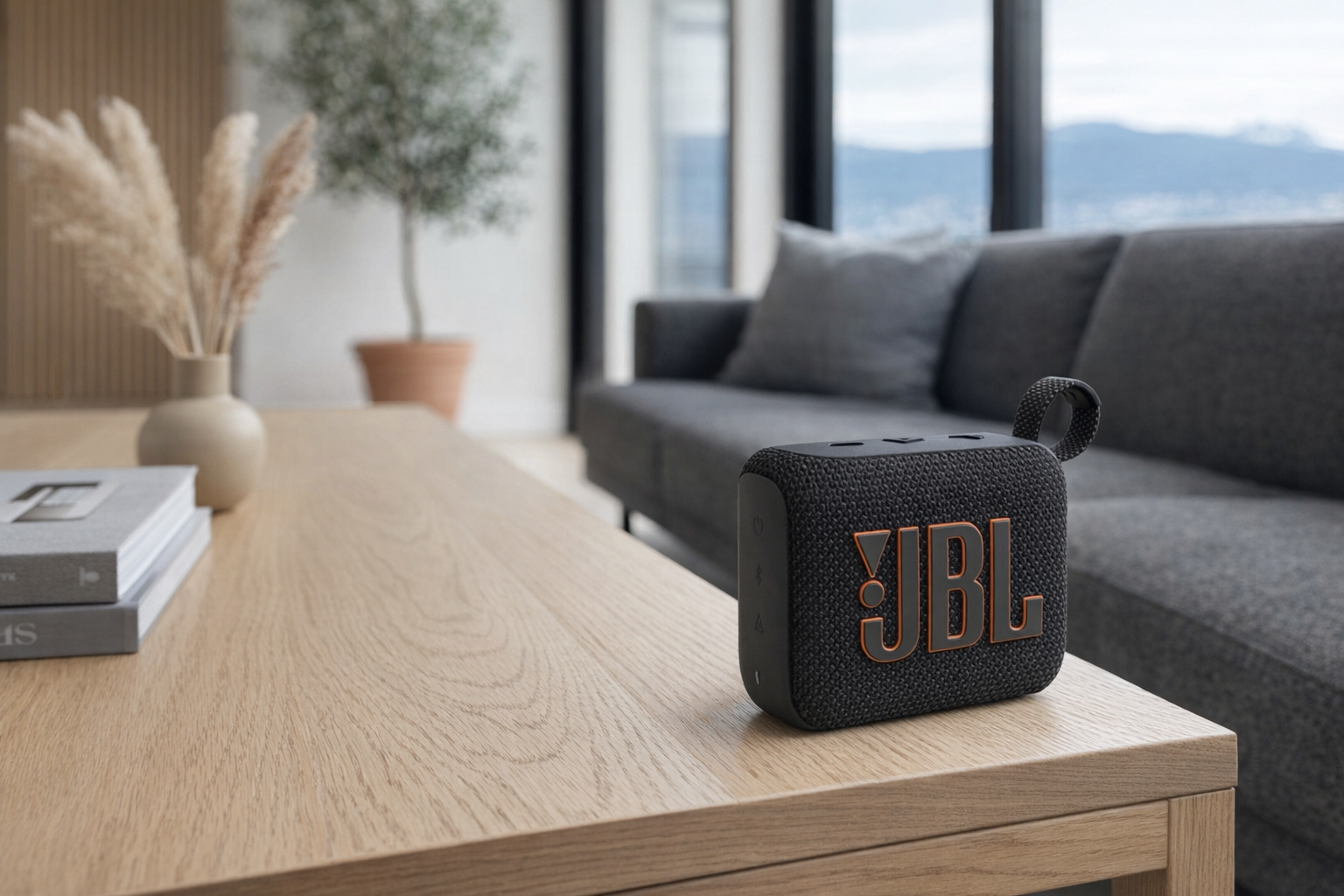
At around $33 CAD with a 4.8/5 source rating, the JBL Go 4 is clearly attractive as a small, simple audio device. But it does not solve the light side of the morning equation. If anything, it highlights the difference between waking with better sound and waking with better timing cues. A portable speaker can make the alarm itself less obnoxious. It cannot simulate dawn unless it's paired with something else.
That makes it relevant mostly as a sidebar product. If you're sleeping in unfamiliar rooms and want calmer alarm audio, fine. If you're trying to preserve the core benefit of a sunrise alarm while away, this is only a partial answer. A lot of the category's usefulness depends on the room lighting environment, and a portable speaker doesn't control that.
My opinion: the JBL Go 4 is probably a better speaker purchase than a sleep purchase. Treat it that way and it's easy to understand. Treat it like a travel sunrise alarm and you're asking the wrong thing from it.
- Full explainer: JBL Go 4 on Celmin · Directory: product page
Got Questions About Sunrise Alarms? Let's Clear Things Up.
Is this a hands-on review?
No. This is an editorial primer on the science and consumer logic around sunrise alarms, using the Hatch Restore 2 as the anchor example and the Echo Dot as the most obvious DIY alternative. It's meant to help you think clearly about the category, not replace product-specific testing or a live spec sheet.
Are sunrise alarms proven the same way bright-light therapy is?
No. That's the distinction most worth keeping straight. Bright-light therapy has a much stronger and more established literature, especially for Seasonal Affective Disorder and certain circadian rhythm problems. Sunrise alarms draw on related principles, but the evidence base is thinner and the intervention is gentler. Expect mild help, not treatment-level certainty.
Do sunrise alarms actually help with winter mornings?
Often, yes — especially when you're waking before dawn for long stretches of the year. That's the most intuitive and most defensible use case. If sunrise is happening well after you need to be functional, adding light before wake time is a reasonable attempt to reduce the mismatch between your schedule and the season.
Who should probably skip them?
People who already wake comfortably, people who can get direct outdoor light shortly after waking, and people whose main problem is simply not sleeping enough. Also, if you hate fiddly bedside tech, a sunrise alarm may become one more object to resent. A basic alarm and a habit of getting real morning light may do more.
What does a sunrise alarm cost?
It varies a lot by category position. In the supplied listings here, the Hatch Restore 2 is shown at about $11 CAD, the Echo Dot at about $47 CAD, and the JBL Go 4 at about $33 CAD. That Hatch figure is unusual enough that it should be treated cautiously; check the current listing before making price assumptions. More broadly, the category spans from "cheap DIY routine using smart-home gear you already own" to "premium bedside object with wellness framing."
Can I just use an Echo Dot and a lamp?
Yes, and many people should at least consider that first. If you already have an Alexa setup or don't mind basic automation, a Dot plus scheduled lighting is the most sensible budget version of the sunrise-alarm idea. It may be less polished than a dedicated bedside device, but it avoids paying extra for sleep branding.
Is a sunrise alarm enough for Seasonal Affective Disorder?
Not necessarily, and sometimes clearly not. If seasonal symptoms are strong, persistent, or interfering with daily functioning, a bedside sunrise device may be too mild to count on. That's where the distinction from bright-light therapy matters. The category is best understood as supportive, not comprehensive.
Where should I go next if I want to build a better bedside setup?
If you're leaning toward a dedicated wake-light device, start with the Hatch Restore 2 explainer on Celmin. If you're more interested in the cheaper routine-first route, the Echo Dot explainer is the next logical stop. And if you're sorting out a broader sleep-friendly room, Celmin's smart-home coverage is the better place to start than most "wellness tech" marketing pages, which tend to promise more than the hardware can plausibly deliver.
If you're building a smarter home in Canada and want honest comparisons of gadgets worth considering — plus the ones worth skipping — Celmin covers the full catalog without the marketing theater. More comparisons, reviews, and buyer guides at https://celmin.ca.
Discussion
Sign up or sign in to join the conversation.