

The Mansnix Smart Blinds sit in a very specific corner of the smart-home market: motorized blackout roller shades for people who want the convenience of remote-controlled blinds without drilling brackets into the wall. That matters, because most "smart blinds" are really one of two things: ex...
The Mansnix Smart Blinds sit in a very specific corner of the smart-home market: motorized blackout roller shades for people who want the convenience of remote-controlled blinds without drilling brackets into the wall. That matters, because most "smart blinds" are really one of two things: expensive custom shades that need careful installation, or retrofit motors that expect you to already own compatible blinds. Mansnix is neither. It is closer to a ready-made blackout shade with a built-in motor and an easier mounting approach.
This article is not a hands-on review. Nothing here is based on personally installing the product. Instead, this is a practical explainer built around the listed features, the installation style Mansnix advertises, and the common measuring mistakes people make with roller shades. If you are trying to figure out whether these blinds fit your window, whether inside or outside mount makes more sense, and what "no-drill" actually changes, this is for you.
Quick snapshot
| Question | What the Mansnix Smart Blinds actually are |
|---|---|
| Category | Smart Home |
| Made by | MANSNIX |
| Typical price | ~$133 CAD (listing at the time of writing — verify current pricing) |
| Rating signal | 4.3/5 on the source listing |
| Best for | Renters, condo owners, bedrooms, nurseries, and anyone who wants blackout coverage without drilling |
| Skip if | You want fully custom sizing, guaranteed app control out of the box, or a hardwired shade system |
Pro tip: Before worrying about Alexa or Google integration, make sure your window depth, width, and squareness actually suit a pressure-fit roller blind. Smart features are pointless if the shade itself is the wrong physical fit.
What the Mansnix Smart Blinds actually is
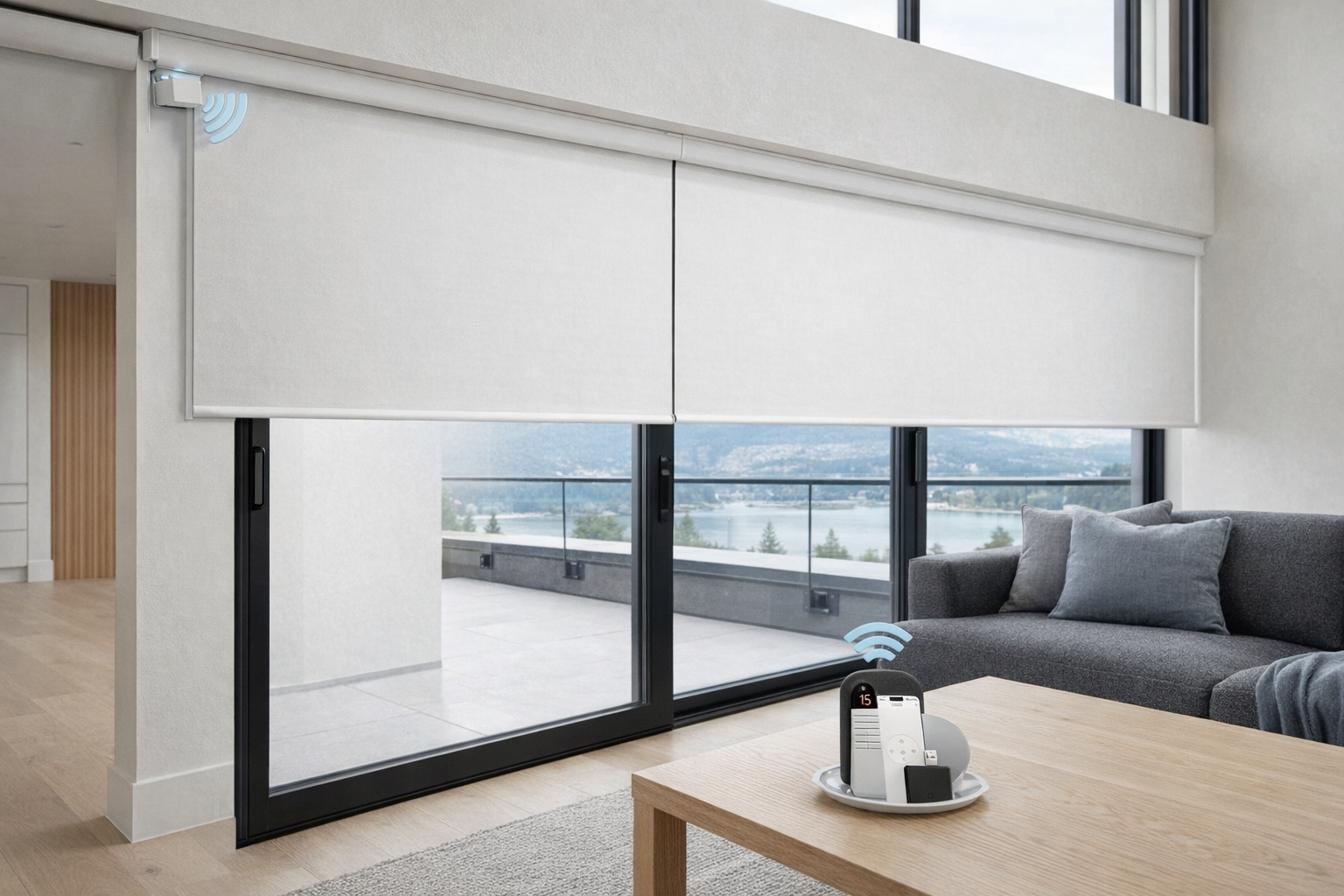
In plain English, the Mansnix Smart Blinds are battery-powered blackout roller shades with a motor built in, a remote included, and an installation method designed to avoid screws. The "smart" part is only partly native: remote control is standard, while app and voice control depend on an optional hub. That makes this less of a full smart-home blind system and more of a motorized blind that can be expanded into one.
Motorized roller blinds with remote control featuring a patented no-drill, no-tools installation. Powered by AA batteries with 4-6 month battery life. Premium 100% blackout three-layer fabric provides UV protection, heat insulation, and enhanced privacy. Optional hub available for app and voice control.
The most important thing to understand is that Mansnix is selling installation convenience as much as automation. Traditional motorized shades often need brackets, anchors, a drill, accurate leveling, and a bit of patience. Mansnix is aiming at people who want to avoid that whole process. Compared with a more permanent system like IKEA FYRTUR, which typically uses fixed brackets and a more conventional install approach, Mansnix's pressure-fit, no-tools design is the headline feature. For renters or anyone uneasy about drilling into vinyl trim, that's a more honest selling point than vague promises about "smart living."
Key features at a glance
- No-drill, no-tools installation with patented pressure-fit design
- AA battery powered operation with a stated 4-6 month battery life
- Wireless remote control included for cord-free, child-safer operation
- Premium 100% blackout three-layer fabric
- UV protection for light blocking and furniture/floor protection
- Heat insulation and energy-efficiency claims tied to the blackout fabric
- Optional hub for Alexa, Google, and app integration
- 60-day repair/replacement policy and 2-year warranty
How the Mansnix Smart Blinds actually works
At the hardware level, this is a motorized roller shade. The fabric wraps around a top tube, and the built-in motor raises or lowers the blind when triggered by the included remote. Because it runs on AA batteries, there is no power cord trailing down the wall and no electrician involved. That battery-powered approach makes the no-drill concept more practical: it is designed to be a self-contained shade, not part of a permanent wired system.
The installation method is the more unusual part. According to the listing, Mansnix uses a pressure-fit, no-tools mounting design rather than the standard bracket-and-screw setup. In practical terms, that means the blind appears intended to brace into the window frame rather than hang from permanently fastened hardware. The appeal is obvious: less mess, less damage, and a faster setup. The trade-off is equally obvious: measuring becomes much more critical, because pressure-fit products usually depend on a fairly accurate width and a reasonably square opening.
There are really three layers to how these blinds function in daily life:
- Physical fit. If the width is right and the frame can accept the mounting pressure, the blind should sit securely and roll straight.
- Motorized control. The included remote handles open/close control without cords, which is especially useful for tall windows or bedrooms.
- Optional smart-home layer. If you add the compatible hub, that is when app routines and Alexa or Google voice control enter the picture.
That distinction matters. Out of the box, think "motorized blackout blind with remote," not "full app-controlled ecosystem." That is not a flaw; it is just the honest way to frame it.
A realistic "day in the life" with Mansnix Smart Blinds
Based on the listed features and how battery-powered roller shades generally fit into a home, a typical day might look like this:
- Morning. You use the remote to raise the blackout shade in a bedroom or nursery without crossing the room or dealing with cords. If the blind is installed inside the frame and measured properly, it should roll cleanly and stay visually tidy.
- Midday. Sun is hitting one side of the house hard. The 100% blackout three-layer fabric comes into play less as a sleep aid and more as glare control for a home office or TV room, while the UV-blocking layer helps protect flooring and furniture.
- Afternoon. In a warmer room, lowering the blind can help with heat buildup. "Heat insulation" in this kind of product does not mean it replaces better windows, but blackout fabric can reduce direct solar gain, which is genuinely useful in bright west-facing rooms.
- Evening. You close the shades fully for privacy and darkness. If you bought the optional hub, this is where a schedule or voice command might make sense. If not, the remote still handles the core job, which is fine for many households.
Who the Mansnix Smart Blinds is actually for (and who it isn't)
Great fits
- Renters who want blackout blinds but do not want to patch holes later.
- Condo owners dealing with strict rules about drilling into window frames or trim.
- Parents setting up a nursery and wanting cord-free blackout coverage for naps and early bedtimes.
- Bedroom upgraders who care more about darkness and privacy than advanced automation.
- Home office users fighting glare on a monitor during certain parts of the day.
- People replacing cheap spring shades and wanting a cleaner, more premium-feeling upgrade.
Poor fits
- Owners of very uneven or out-of-square older windows, where pressure-fit products can be fussier.
- Anyone expecting full smart-home control in the base box, since app and voice control require an optional hub.
- People wanting exact custom-width, designer-grade treatments for a living room renovation.
- Households that never want to think about batteries, because this is not hardwired.
- Windows exposed to a lot of rough handling, where a permanent screwed-in mount may feel more reassuring.
- Buyers who need broad ecosystem guarantees, like native Matter or HomeKit support clearly stated upfront.
Practical trade-offs
Measuring accuracy
This is the big one. With standard blinds, a slightly imperfect measurement can sometimes be forgiven by adjustable brackets. With a no-drill pressure-fit design, the physical fit is the entire foundation of the product. Too wide, and installation may be frustrating or impossible. Too narrow, and you risk looseness, light gaps, or a less secure mount.
For an inside mount, you generally need to measure the window opening in three places for width — top, middle, and bottom — and use the narrowest result unless the brand says otherwise. For height, measure left, centre, and right, then follow the brand's ordering guidance. Also check depth. A lot of buyers focus on width and forget that the headrail or roller assembly still needs enough room inside the frame.
If your window frame is visibly uneven, has rounded trim details, or has shallow depth because of cranks, sensors, or protruding hardware, an outside mount may simply be the cleaner choice. That gives up some minimalist neatness but can save a lot of aggravation.
Light gaps and blackout expectations
"100% blackout" refers to the fabric, not necessarily the entire installed window system. This is one of the oldest blind-marketing issues around. Blackout fabric can block light through the material itself, but roller shades mounted inside a window frame still often leave some side gaps. That is normal.
If you want the darkest possible bedroom, especially in summer when sunrise comes early, outside-mount installation often does a better job because the fabric overlaps the window opening. Inside mount looks cleaner and more built-in, but it usually allows a bit more edge light. Evaluate blackout like hotel curtains, not like a sealed storm shutter.
This is also why measuring and mount choice are linked. A perfectly measured inside mount can still look great and perform well, but if "pitch black at 5:30 a.m." is the goal, coverage matters more than aesthetics.
Batteries and long-term maintenance
Mansnix says the blinds run on AA batteries with 4-6 months of battery life. That is a practical setup for renters and casual installers, but it is still a maintenance item. Battery life will depend on how often you move the blind, the size and weight of the shade, and room temperature. In a busy bedroom used twice daily, reality may land closer to the lower end than the upper end.
The upside is simplicity. AA cells are easy to replace, easy to find in Canada, and do not lock you into a proprietary charger. The downside is that you need to remember they exist. If you are outfitting several windows, battery replacement becomes a small recurring chore. Evaluate these like battery smoke alarms, not like set-and-forget hardwired fixtures.
Where the Mansnix Smart Blinds fits in a smart home
These blinds make the most sense as part of a bedroom, nursery, or media-room routine, not as the centrepiece of a whole-home automation setup. If you add the optional hub and tie them into Alexa or Google Assistant, they can become part of practical routines: open in the morning, close at sunset, drop during movie time, or stay down during the hottest part of the afternoon.
They also pair naturally with other straightforward comfort products rather than flashy gadgets. Think:
- a smart thermostat to manage heating and cooling,
- a temperature sensor in a sunny room,
- smart bulbs for gentle wake-up lighting,
- and perhaps a white-noise machine in a nursery.
That kind of setup is useful because blackout blinds are one of the few smart-home products that can affect both comfort and energy use. They will not transform an inefficient house, but they can reduce glare and some solar heat gain in bright rooms. Used that way, they are closer to an everyday comfort upgrade than a tech toy.
The buying decision, in plain terms
Before buying, three questions usually sort this out quickly:
- Is your window suitable for a pressure-fit blind? If the frame is straight, has enough depth, and you can measure carefully, Mansnix makes more sense. If the opening is awkward or visibly uneven, proceed cautiously.
- Do you mainly want easy blackout and remote control, or deep smart-home integration? If the first answer is yes, this product is aligned. If the second is the priority, make sure the optional hub path is acceptable.
- Are you comfortable replacing AA batteries every few months? If that sounds fine, the cordless design is convenient. If you want hardwired permanence, look elsewhere.
Three yeses point to a practical buy. If your window is tricky or your expectations are more custom than convenient, a traditional mounted shade may be the better call.
Got Questions About the Mansnix Smart Blinds? Let's Clear Things Up.
Is this a hands-on review?
No. This is an informational explainer based on the product listing, the stated installation style, and the common realities of measuring and mounting roller blinds. It is meant to help you think through fit and setup before buying.
Do these blinds work with Alexa or Google Assistant?
According to the listing, voice control and app integration require an optional hub. Out of the box, the core control method is the included wireless remote. That is an important distinction, so check the current product page carefully before assuming full smart-home control is included.
Are they really blackout blinds?
The listing says the fabric is premium 100% blackout three-layer fabric, which means the material itself is intended to block light fully. In real-world terms, total room darkness also depends on mount type and edge gaps. Outside mount usually reduces side light better than inside mount.
What is the biggest measuring mistake people make with blinds like this?
The most common mistake is measuring only once, or measuring the glass instead of the full window opening. For inside mount, width should usually be checked at top, middle, and bottom, and depth matters too. With a no-drill pressure-fit design, a sloppy measurement matters more than it would with forgiving bracket systems.
Where can I verify the current details or buy the Mansnix Smart Blinds?
The safest place to verify current options, sizing availability, and hub details is the live retailer listing. Here is the product page: Mansnix Smart Blinds on Amazon. Check that page for the latest price, window-size options, and what's included in the box.
How often do the batteries need replacing?
The listing says 4-6 months on AA batteries. That should be treated as a rough operating range, not a universal promise, because usage frequency and blind size can affect runtime. If the shade is opened and closed every day, plan around regular battery checks.
What does it cost in Canada?
At the time of writing, the listed price is ~$133 CAD. That is a reasonable range for a motorized blackout blind with a remote, but still worth comparing against fixed-install alternatives and against the optional-hub cost if you want app control. Always verify the live price before ordering.
Where is the Celmin Directory listing for this product?
For a catalog-style view of the same product — structured specs, pros and cons, similar picks, and FAQ — see Mansnix Smart Blinds on Celmin Directory.
If you're building a smarter home in Canada and want honest explainers on gadgets worth considering — plus the ones worth skipping — Celmin covers the full catalog without the marketing theater. More reviews, comparisons, and buyer guides at https://celmin.ca.
Discussion
Sign up or sign in to join the conversation.