
The Townew T1 Self-Sealing Smart Trash Can sits in a slightly odd corner of the home-gadget market: the "smart" trash can that tries to solve a very specific annoyance. Not smell in general, and not recycling, and not kitchen organization. Its pitch is simpler than that. When the bag is full,...
The Townew T1 Self-Sealing Smart Trash Can sits in a slightly odd corner of the home-gadget market: the "smart" trash can that tries to solve a very specific annoyance. Not smell in general, and not recycling, and not kitchen organization. Its pitch is simpler than that. When the bag is full, the can seals it for you, and when you replace it, the refill system is designed to be cleaner and less fussy than wrestling with ordinary garbage bags. That sounds helpful — but it also shifts the buying decision away from the can itself and toward the ongoing cost of proprietary refills.
This is not a hands-on review. Nothing here is based on personally using the Townew T1 in a kitchen or office. Instead, this is a plain-English explainer focused on what matters most for this particular product: the refill economics. If you are looking at the T1 because the upfront price of about $49 CAD seems reasonable, the real question is not just whether the can is affordable. It is whether the refill-bag system makes financial sense compared with a normal trash can using generic bags.
Quick snapshot
| Question | What the Townew T1 Self-Sealing Smart Trash Can actually is |
|---|---|
| Category | Robot Vacuums |
| Made by | TOWNEW |
| Typical price | ~$49 CAD (listing at the time of writing — verify current pricing) |
| Rating signal | 4.1/5 on the source listing |
| Best for | People who hate bag changes, small kitchens, bathrooms, nurseries, and anyone willing to pay extra for cleaner trash handling |
| Skip if | You want the cheapest long-term trash setup, prefer standard bags, or dislike proprietary refill systems |
Pro tip: If you're considering the Townew T1, price it like a razor-and-blades appliance, not like a normal bin. The can may be the cheap part; the refill cartridges are the part that decides whether it still feels worth owning six months later.
What the Townew T1 Self-Sealing Smart Trash Can actually is
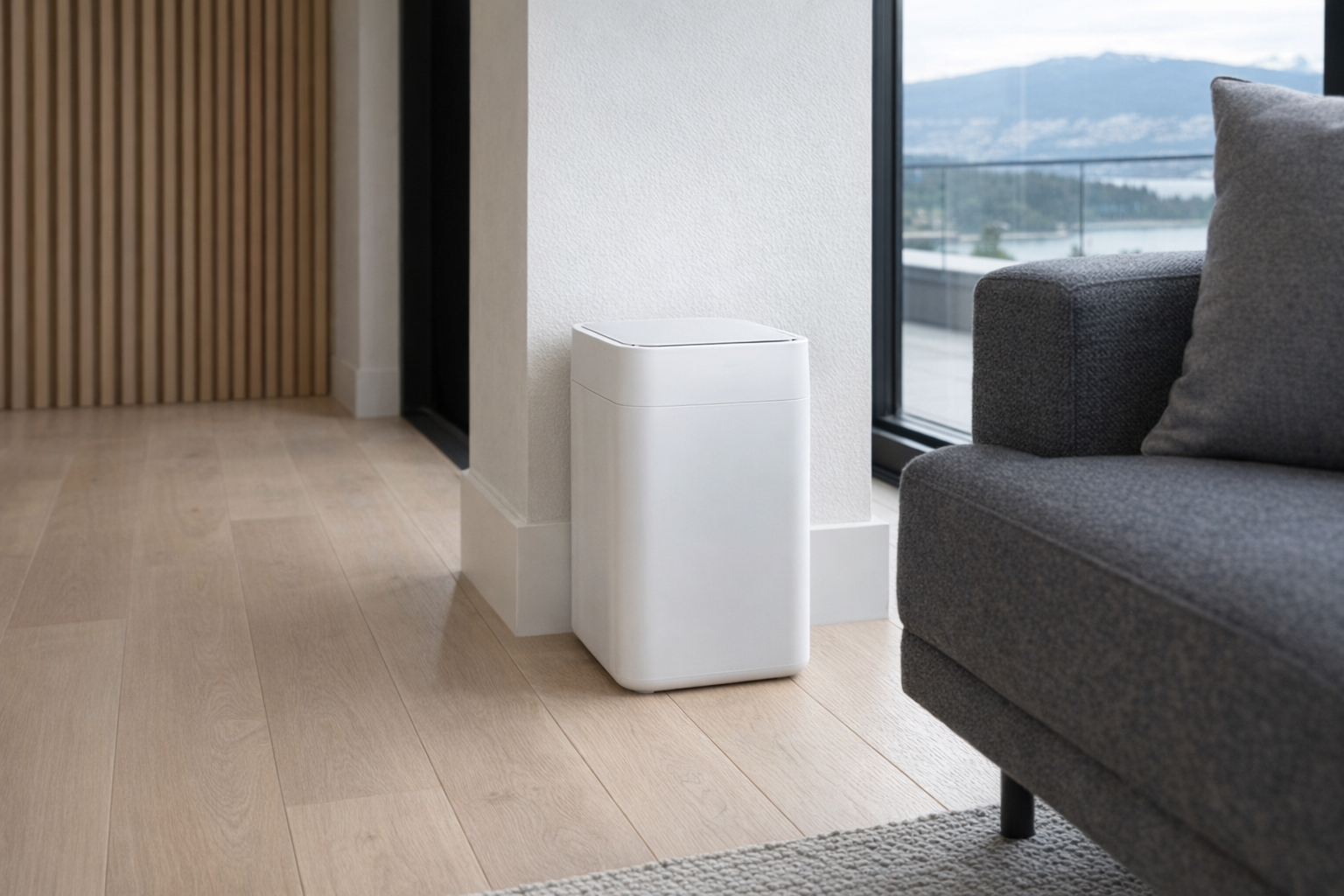
In plain English, the Townew T1 is a small automatic trash can built around one convenience feature: self-sealing liners. Instead of pulling out a floppy garbage bag, tying it yourself, and fitting in a new one, the can is designed to seal the used liner and continue with the next one from a refill ring. That makes the T1 less like a traditional kitchen bin and more like a consumables-based gadget. The real product is not only the can; it is the can plus its bag ecosystem.
Because the supplied description is empty, the listing itself does not give much to quote here beyond the product name and the self-sealing concept. That absence is worth noting. When a product depends heavily on refill supplies, the details that matter most are not the glamorous ones. They are things like how many liners come in a refill ring, how much each refill costs, how often a household goes through one, and whether the convenience premium stays tolerable over time. That is where many smart-bin listings become vague.
The most obvious real-world comparison is the Townew T Air X, a better-known sibling in the same family that also uses automatic sealing and refill rings. The T1 appears to be the more entry-level way into the Townew idea, whereas the T Air X is often positioned as the more polished or higher-end option. The important point is that both live or die on the same question: are you comfortable being locked into branded refills instead of using a box of generic kitchen bags from Costco or Canadian Tire?
Key features at a glance
- Self-sealing trash bag concept built around proprietary refill liners
- Hands-cleaner bag changes than a normal open-bin setup
- Compact smart-bin design aimed at small-space convenience
- Consumables-based ownership model where refill cost matters as much as the can price
- Automatic handling pitch that appeals most in bathrooms, bedrooms, nurseries, or light-use kitchens
How the Townew T1 Self-Sealing Smart Trash Can actually works
The Townew T1's core idea is straightforward even if the listing is light on details. Instead of using a regular loose garbage bag, the bin uses a cartridge or ring of continuous liner material. When the current bag is full, the can seals the top so you can remove it without manually tying a knot. Then the system advances or prepares the next section of liner for the following load.
That matters because it changes the user experience in three ways.
- You touch the trash bag less. That is the whole appeal. If the T1 works as intended, you are not stretching a new bag over the rim every single time.
- You buy compatibility, not flexibility. A standard trash can lets you use whatever bargain box of bags is on sale. The T1 does not really make sense unless you keep buying the matching refill system.
- Your cost shifts from occasional to ongoing. With a dumb trash can, the can is cheap and the bags are nearly a commodity. With the Townew system, the can may still be affordable upfront — in this case around $49 CAD — but the refill stream becomes the main long-term expense.
The economic logic is the same one seen in soap dispensers with custom pods, coffee machines with capsules, or air purifiers with proprietary filters. Sometimes the convenience genuinely justifies it. Sometimes it does not. The trick is to stop thinking "the can only costs $49" and start thinking "what does this setup cost per month if I fill a bag every few days?"
Because no official refill count or capacity figures were supplied in the product data here, it would be careless to invent exact per-bag math. The honest way to approach it is with a framework:
- Step 1: Find the current refill price on the official listing or Amazon page.
- Step 2: Divide by the number of liners or sealed-bag equivalents in the refill pack.
- Step 3: Compare that per-bag figure against your normal generic bag cost.
- Step 4: Multiply the difference by your household's monthly usage.
That simple calculation tells you more than any lifestyle photo ever will.
A realistic "day in the life" with Townew T1 Self-Sealing Smart Trash Can
Because this is an informational piece, here is what a plausible day with the Townew T1 might look like based on the product concept — not a tested account.
- Morning. In a bathroom or bedroom, you drop tissues, cotton pads, or packaging into the bin. The appeal here is not volume; it is neatness. A small smart bin makes more sense in a light-use room than in a busy family kitchen.
- Midday. In a nursery or home office, the bag reaches the point where you would normally rather not touch it directly. This is where the T1's self-sealing concept is supposed to earn its keep by making disposal cleaner and less annoying.
- Afternoon. You realize the hidden cost question. The bag-change process is tidier than with a standard can, but every sealed cycle uses up part of a proprietary refill ring. Convenience is happening, but it is not free.
- Evening. You take stock of whether this feels premium or merely expensive. If the can is only handling light, dry waste, the refill premium may feel acceptable. If you are burning through liners quickly with everyday household garbage, the economics may start to look silly fast.
That last point is the one many buyers miss. The T1 is easier to justify when bag turnover is moderate, not constant.
Who the Townew T1 Self-Sealing Smart Trash Can is actually for (and who it isn't)
Great fits
- People who are squeamish about tying off used trash bags by hand, especially for bathroom waste or nursery use.
- Apartment dwellers with a compact space where a small, tidy bin matters more than maximum capacity.
- Parents setting up a diaper-adjacent waste station and willing to pay extra for less mess.
- Home-office users who throw away tissues, snack wrappers, and light rubbish and value a cleaner-looking bin.
- Gift buyers shopping for someone who already likes neat, slightly overengineered home gadgets.
Poor fits
- Large families who generate a lot of kitchen trash and would run through refills quickly.
- Budget-focused shoppers who buy generic garbage bags in bulk and want the lowest ongoing cost.
- Anyone who dislikes being tied to a specific brand's cartridges or consumables.
- People expecting "smart" to mean app control, automation routines, or deep integration with other devices.
- Heavy-cooking households dealing with wet, bulky, or awkward kitchen waste every day.
Practical trade-offs
Refill economics
This is the main one, and it is the whole reason this product needs an honest explainer. A normal trash can lets you optimize for price forever. You can buy thin bags, thick bags, store-brand bags, scented bags, compostable bags, whatever suits the moment. The Townew T1 removes that flexibility in exchange for convenience.
The break-even question is simple: how much extra are you paying per bag for not having to tie and replace it manually? If the refill system works out to only a modest premium and your usage is light, that may be a fair trade. If the branded refill cost is several times what you normally pay per bag, then the T1 is not really a cheap smart can at all. It is a subscription-like trash habit without the subscription branding.
For a lot of households, the honest answer will be that the T1 makes more financial sense in a bathroom, office, or nursery than as the main kitchen can. That's a more realistic use case than pretending this is a universal upgrade.
Capacity and room placement
Although no capacity spec was provided in the data here, the T1 is generally discussed as a smaller-format automatic can rather than a big family kitchen model. That matters. Small bins are easier to place and nicer to look at, but they also fill faster. Faster fill-ups mean more sealing cycles, and more sealing cycles mean higher refill consumption.
This is why placement matters so much. In a powder room, you might think about the refill cost only occasionally. In a kitchen where the bin fills every day or two, you will think about it constantly. Evaluate it like a specialty convenience bin, not like the one container that should absorb all household waste.
Dependence on a proprietary system
There is a bigger ownership issue beyond price: what happens if refill availability becomes annoying? Proprietary consumables are fine when they are easy to find, sensibly priced, and likely to remain stocked. They are less charming when a listing disappears, third-party options are limited, or local Canadian availability gets patchy.
That does not mean the T1 is a bad idea. It means you should treat refill availability as part of the product, the same way you would evaluate replacement filters for an air purifier. Before buying the can, make sure you are comfortable with where the liners come from and how easily you can reorder them from the Amazon listing.
Where the Townew T1 Self-Sealing Smart Trash Can fits in a modern home
The Townew T1 makes the most sense as a secondary convenience bin, not as the centrepiece of waste management.
A practical setup might look like this:
- Main kitchen: a normal larger stainless trash can using cheap generic bags
- Bathroom or ensuite: Townew T1 for cleaner, lower-contact bag handling
- Nursery: diaper pail or odor-focused bin if smell is the main issue, with the T1 only making sense if you prefer the self-sealing workflow
- Home office or vanity area: Townew T1 for tissues, packaging, wipes, and light daily waste
That is the healthiest way to think about it. Let a boring standard bin do the high-volume work. Let the Townew handle the places where the experience of changing the bag matters more than the cost per litre of trash. In that role, the refill premium can feel reasonable. As a whole-home replacement for generic bags, it becomes much harder to defend.
If you already buy into ecosystems with ongoing consumables — say, a Keurig for pods or a Dyson purifier with branded filters — the Townew model may not bother you. If you dislike locked-in supplies on principle, this bin will probably irritate you no matter how neat the sealing action looks.
The buying decision, in plain terms
Before buying the Townew T1, three yes-or-no questions will usually settle it.
- Do you care enough about cleaner bag changes to pay extra every month?
If yes, the T1's whole premise makes sense. If no, a regular bin and generic bags will do the job for much less. - Will you use it in a low-volume room rather than as your main family trash can?
If yes, the refill economics are easier to live with. If no, expect the ongoing cost to become the main story. - Are you comfortable being tied to Townew refills?
If yes, the system may feel tidy and convenient. If no, skip it now instead of resenting it later.
If you answer yes to all three, the Townew T1 is a sensible niche buy; if even one answer is a firm no, a standard bin is probably the smarter purchase.
Got Questions About the Townew T1 Self-Sealing Smart Trash Can? Let's Clear Things Up.
Is this a hands-on review?
No. This is an informational explainer based on the listing details provided and on how proprietary-refill home gadgets typically work. The goal is to help you judge fit and long-term cost, not to simulate a product test.
What does the Townew T1 actually do differently from a normal trash can?
Its main appeal is that it uses a self-sealing liner system rather than ordinary loose bags. In practical terms, that means less direct handling when taking out the trash, but also less freedom to use whatever bag is cheapest.
Is the Townew T1 worth it for a kitchen?
For a light-use kitchen, maybe. For a busy household kitchen, the refill costs are much more likely to overwhelm the convenience benefit. It usually makes more sense as a bathroom, nursery, vanity, or office bin than as your primary high-volume can.
Are the refill bags the real cost?
Very likely, yes. The can's listed price is about ~$49 CAD, which is not outrageous for a gadget bin. But with any proprietary refill product, the long-term cost usually comes from consumables, not the hardware sitting on your floor.
Where can I verify the current price or buy it?
The source listing linked for this article is Amazon: Townew T1 Self-Sealing Smart Trash Can. Check that page for current pricing, refill availability, and any updated spec details before buying.
Does a 4.1 rating tell you much?
It tells you the product is not universally hated, but it does not answer the refill-economics question by itself. A 4.1/5 signal can still include plenty of buyers who liked the idea at first and later got annoyed by ongoing supply costs. Read the lower-star reviews specifically for refill complaints and durability concerns.
How should I calculate whether the refills are worth it?
Take the current refill pack price and divide it by the number of bag changes the pack provides. Then compare that per-bag figure to your usual generic bag cost and multiply by how many bags you use in a month. That gives you the honest premium you are paying for convenience — and that number is what matters.
Where is the Celmin Directory listing for this product?
For a catalog-style view of the same product — structured specs, pros and cons, similar picks, and FAQ — see Townew T1 Self-Sealing Smart Trash Can on Celmin Directory.
If you're building a smarter home in Canada and want honest explainers on gadgets worth considering — plus the ones worth skipping — Celmin covers the full catalog without the marketing theater. More reviews, comparisons, and buyer guides at https://celmin.ca.

Discussion
Sign up or sign in to join the conversation.