
Food scales have split into three different products wearing the same name. At one end, there's the basic kitchen scale that just tells you something weighs 183 grams and gets out of the way. At the other, there are "smart nutrition" models promising calorie tracking, macro logging, ingredient da...
Food scales have split into three different products wearing the same name. At one end, there's the basic kitchen scale that just tells you something weighs 183 grams and gets out of the way. At the other, there are "smart nutrition" models promising calorie tracking, macro logging, ingredient databases, Bluetooth syncing, and on-scale nutrition lookup that sounds a lot more automated than it really is. The problem is that the category's marketing blurs weighing, nutrition estimation, and diet logging into one pitch, when they're not the same thing at all.
This isn't a hands-on review. It's an editorial comparison of six smart food scales from Celmin's catalog, organized by what kind of "smart" they actually offer, where the nutrition features are genuinely useful, and which models make sense for real kitchens instead of idealized meal-prep Instagram life. If you're trying to decide whether a smart food scale is worth paying more for — or whether you should just buy a plain scale and move on — this is the practical version of that question.
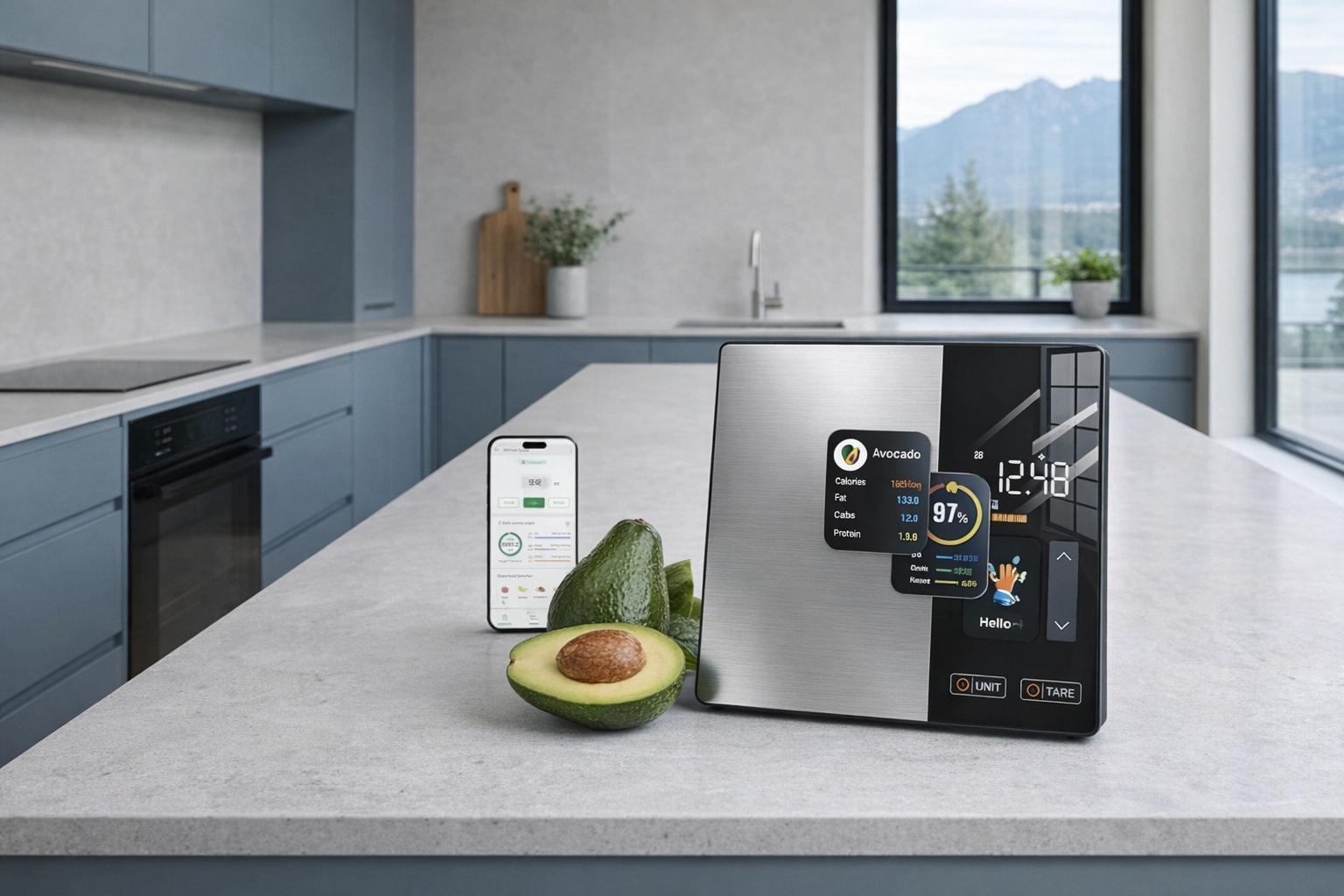
Quick comparison
| Product | Price (CAD) | Smart style | Best for |
|---|---|---|---|
| RENPHO Smart Food Scale | ~$25 | Entry-level smart / app-leaning | People who mostly just need a cheap digital scale |
| Ataller Food Scale with Nutritional Calculator | ~$33 | On-scale nutrition-calculator concept | Budget shoppers curious about nutrition lookup |
| KUAIVO Smart Food Scale with TFT Display | ~$36 | On-scale TFT display nutrition style | Buyers who want smart features visible on the scale itself |
| Etekcity Smart Nutrition Scale | ~$39 | App-based smart nutrition | Macro trackers who don't mind using a phone |
| COSORI Smart Food Scale | ~$56 | Higher-tier app-connected smart scale | People already comfortable with app-based food logging |
| Greater Goods Nutrition Scale | ~$59 | Standalone nutrition database scale | Serious meal planners who want less phone dependence |
Pro tip: Buy a smart food scale only if you're willing to do the data-entry part of nutrition tracking. The scale can measure grams very accurately; it cannot magically know whether your homemade chili is 140 or 240 calories per serving unless you tell it what it's looking at.
What "smart" actually adds to a food scale (and what it doesn't)
There are really three versions of smart in this category, and only one of them is broadly useful for most people.
App-based macro tracking. This is the Etekcity/COSORI/RENPHO style of smart scale: the hardware weighs the food, and an app handles calories, protein, carbs, and other nutrition fields. This can be useful if you already log meals and want fewer manual entries. It is not especially useful if you hate opening food-tracking apps, because the app is the product. The scale is just the measuring front end.
On-scale nutrition lookup. The more interesting idea is a scale that shows nutrition information on the device itself, either through a nutrition calculator concept or a TFT display. That's why the KUAIVO is the anchor product here and why the Greater Goods stands out. In theory, this is the more honest design: weigh food, identify food, see nutritional values right there. In practice, it's only as good as the food database behind it, and databases always have limits. A scale can be excellent for apples, rice, or standard ingredients and much shakier for branded prepared foods, restaurant leftovers, or anything homemade.
Simple Bluetooth sync. Some products wear the word "smart" pretty lightly. That usually means your weight can be sent to an app, stored there, and maybe totaled alongside previous entries. That's fine, but it is not a nutrition breakthrough. For many households, this is mostly bookkeeping with a Bluetooth logo attached.
What these scales do not do: they do not chemically analyze food. They don't detect hidden oil, estimate recipe moisture loss, or infer nutrition from appearance. A "nutrition calculator" is usually working from a stored database and the measured mass on the scale. That's still helpful. It just isn't magic, and you'll be much happier with this category if you treat it as organized estimation, not laboratory equipment.
The 6 food scales, ranked by what they actually do well
RENPHO Smart Food Scale — the cheap entry point that should stay in its lane
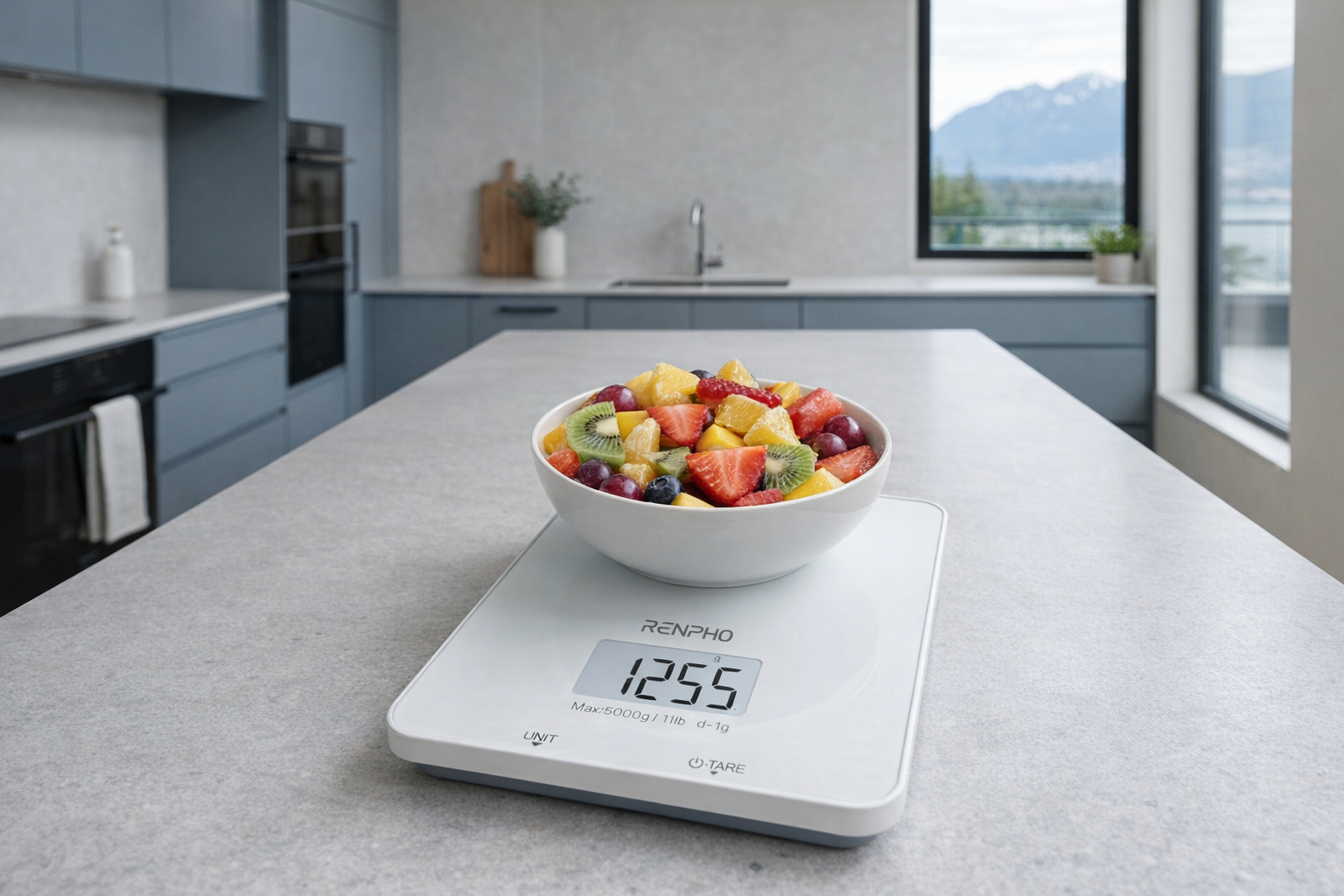
At roughly $25 CAD, the RENPHO Smart Food Scale is the cheapest product in this lineup and the one that most clearly tests whether you even need a smart scale in the first place. The listing gives us very little beyond the name, the brand, and a 4.4/5 source rating, which already tells you something important: this is likely being bought as an accessible, low-friction kitchen scale with some app-connected ambition, not as a premium nutrition workstation.
That makes the RENPHO easier to judge honestly than some of its more expensive rivals. At this price, the right question is not "does it replace a dietitian?" but "does it give me a low-cost way into weighed portions and basic logging?" For that, it probably makes sense. What it likely does not make sense for is anyone expecting the word smart to eliminate effort. If you want serious macro tracking, cheap smart scales can become a halfway house: too involved for casual users, not robust enough to feel premium for obsessive ones.
- Best for: People who mainly want an affordable digital scale and might occasionally use smart features.
- Full explainer: RENPHO Smart Food Scale on Celmin · Directory: product page
Ataller Food Scale with Nutritional Calculator — the budget nutrition idea
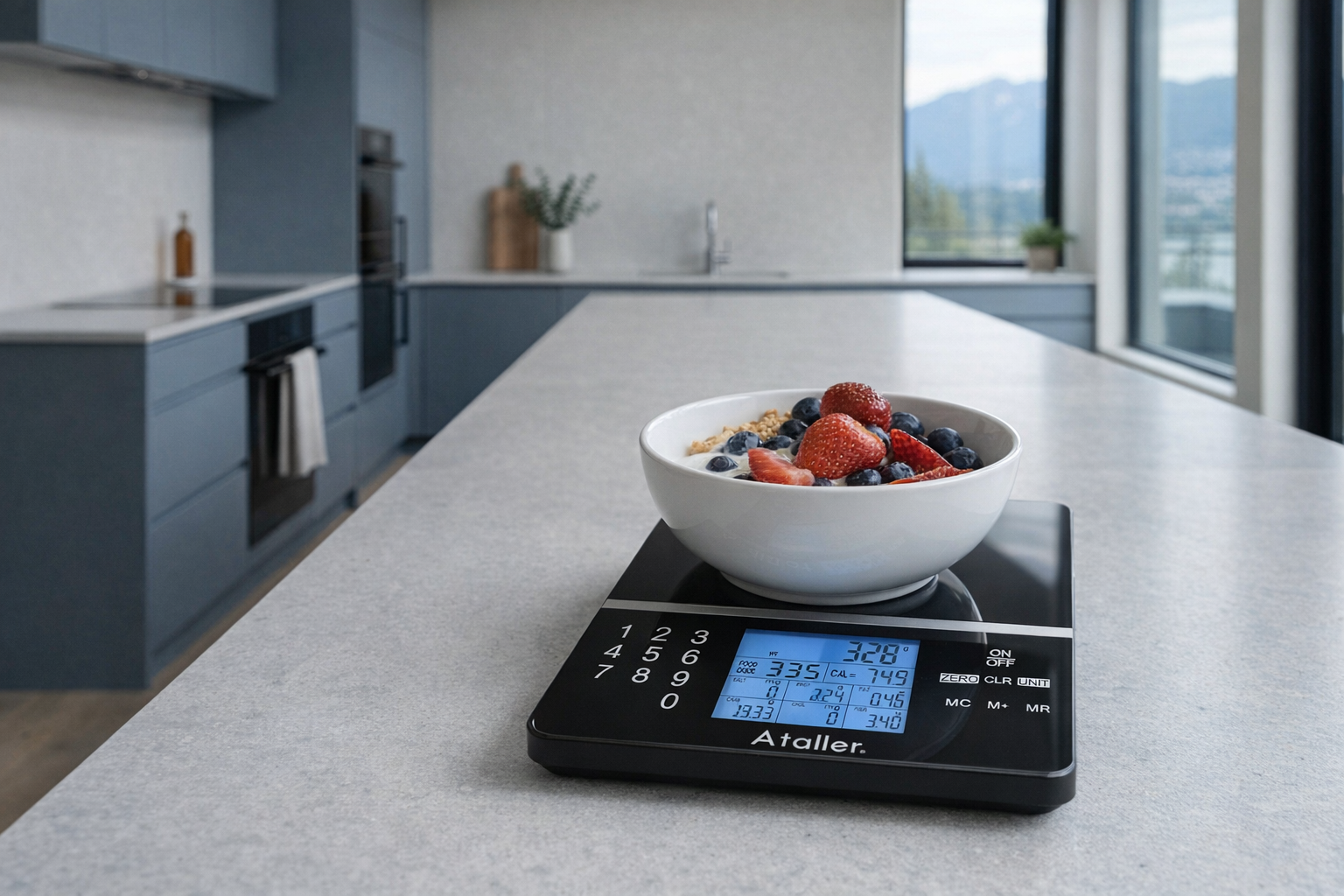
The Ataller Food Scale with Nutritional Calculator comes in around $33 CAD, which is a more interesting price than it first appears. It's only about $8 more than the RENPHO, but its name signals a different promise: not just a smart scale, but a scale with an actual nutritional calculator. That's a stronger claim, even if the listing doesn't give us the detailed feature set to fully unpack how it works.
That lack of detail matters. When a product sells itself primarily on a nutrition-calculator concept but doesn't clearly surface the database size, custom-food handling, or display workflow in the supplied listing, caution is the sensible response. Still, the appeal is obvious: this is the kind of product someone buys when they want to track food more closely without jumping to a near-$60 tier. The honest read is that it's a budget attempt at a genuinely useful idea. It may fit people who want nutrition guidance on the counter, but it also asks for more trust than a sparse listing really earns.
- Best for: Budget-conscious buyers who specifically want a nutrition-calculator style scale and are willing to verify details before ordering.
- Full explainer: Ataller Food Scale with Nutritional Calculator on Celmin · Directory: product page
KUAIVO Smart Food Scale with TFT Display — the most interesting middle-ground pick
The KUAIVO Smart Food Scale with TFT Display sits at about $36 CAD, and that's exactly why it's the anchor product in this roundup. It lands only a few dollars above the Ataller, but the phrase "with TFT Display" points to one of the smarter directions this whole category can take: putting more of the useful information on the scale itself instead of forcing every interaction through a phone. For people who cook with one messy hand and don't want to keep waking a screen, that matters more than most smart-kitchen marketing does.
The KUAIVO also occupies a very sensible middle tier. It's nowhere near the ~$59 CAD Greater Goods price, but it goes beyond the cheapest "smart because app" angle. That's what makes it attractive: not because TFT as a term is inherently exciting, but because an on-device display suggests a more direct user experience. The caution, again, is that "nutrition display" only helps if the underlying food lookup is accurate and easy to navigate. Still, in a category full of half-smart devices, KUAIVO at least appears to be chasing the right problem.
📺 Watch: KUAIVO Smart Food Scale with TFT Display
- Best for: Buyers who want visible smart functionality on the scale itself without spending close to $60.
- Full explainer: KUAIVO Smart Food Scale with TFT Display on Celmin · Directory: product page
Etekcity Smart Nutrition Scale — the practical app-first macro tracker
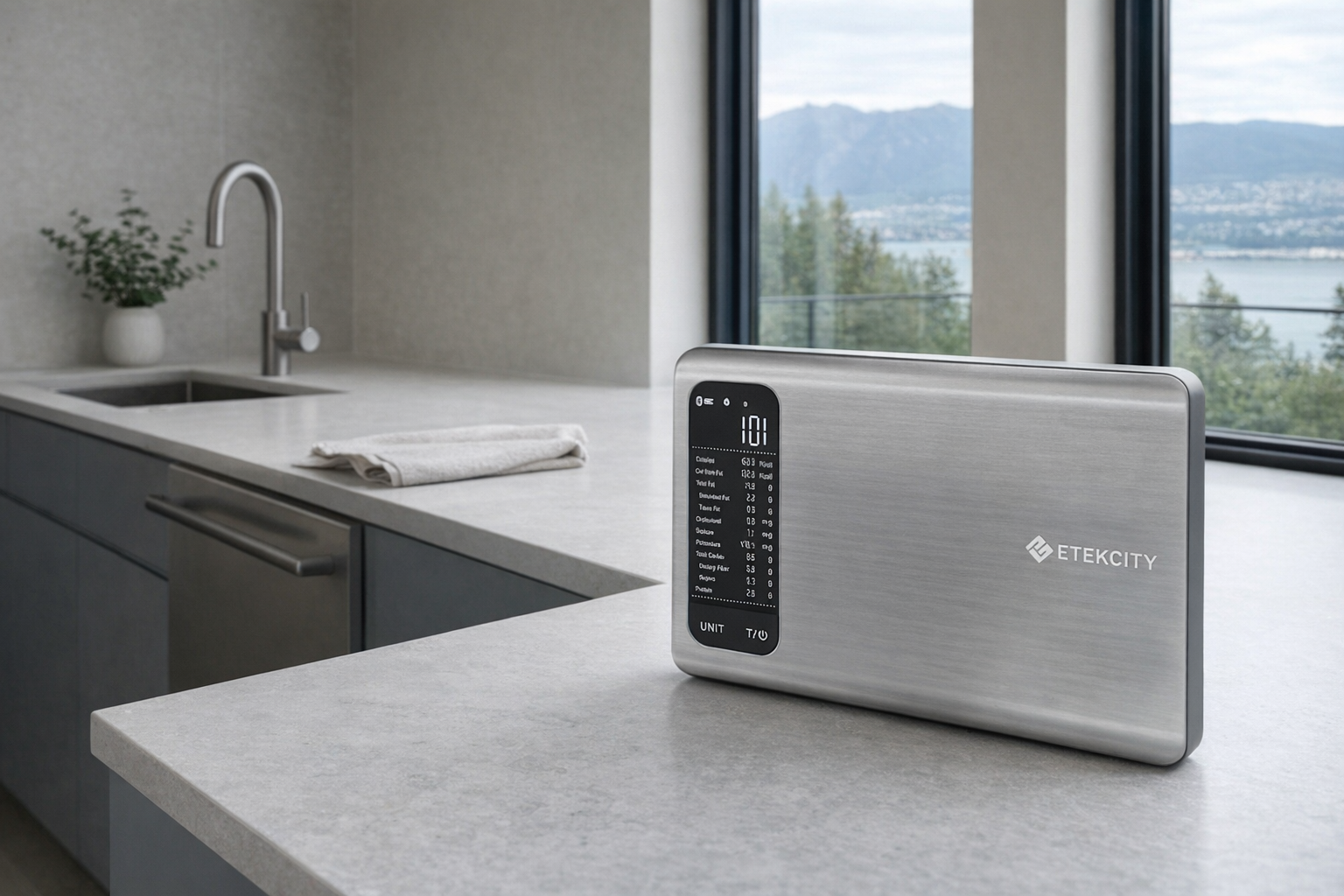
At roughly $39 CAD with a 4.5/5 source rating, the Etekcity Smart Nutrition Scale looks like the point where the category starts making more coherent sense. Etekcity has enough presence in the small-appliance and smart-home-adjacent space that the name doesn't feel random, and the product naming is refreshingly direct: this is a smart nutrition scale, which strongly suggests app-based nutrition logging rather than a plain weight-only tool pretending to be more advanced than it is.
The reason to choose something like Etekcity is if you're already comfortable with a phone-led workflow. In that scenario, app dependence is not a bug — it's the point. The reason not to choose it is equally clear: if you want to glance down at the scale and get most of the job done there, this is probably the wrong style of product. That's the whole divide in this category. Etekcity is likely better than a vague budget smart scale for structured food logging, but it's still only as pleasant as the app ecosystem around it.
- Best for: People who already log food digitally and want a reasonably priced smart scale that fits that habit.
- Full explainer: Etekcity Smart Nutrition Scale on Celmin · Directory: product page
COSORI Smart Food Scale — the app ecosystem play
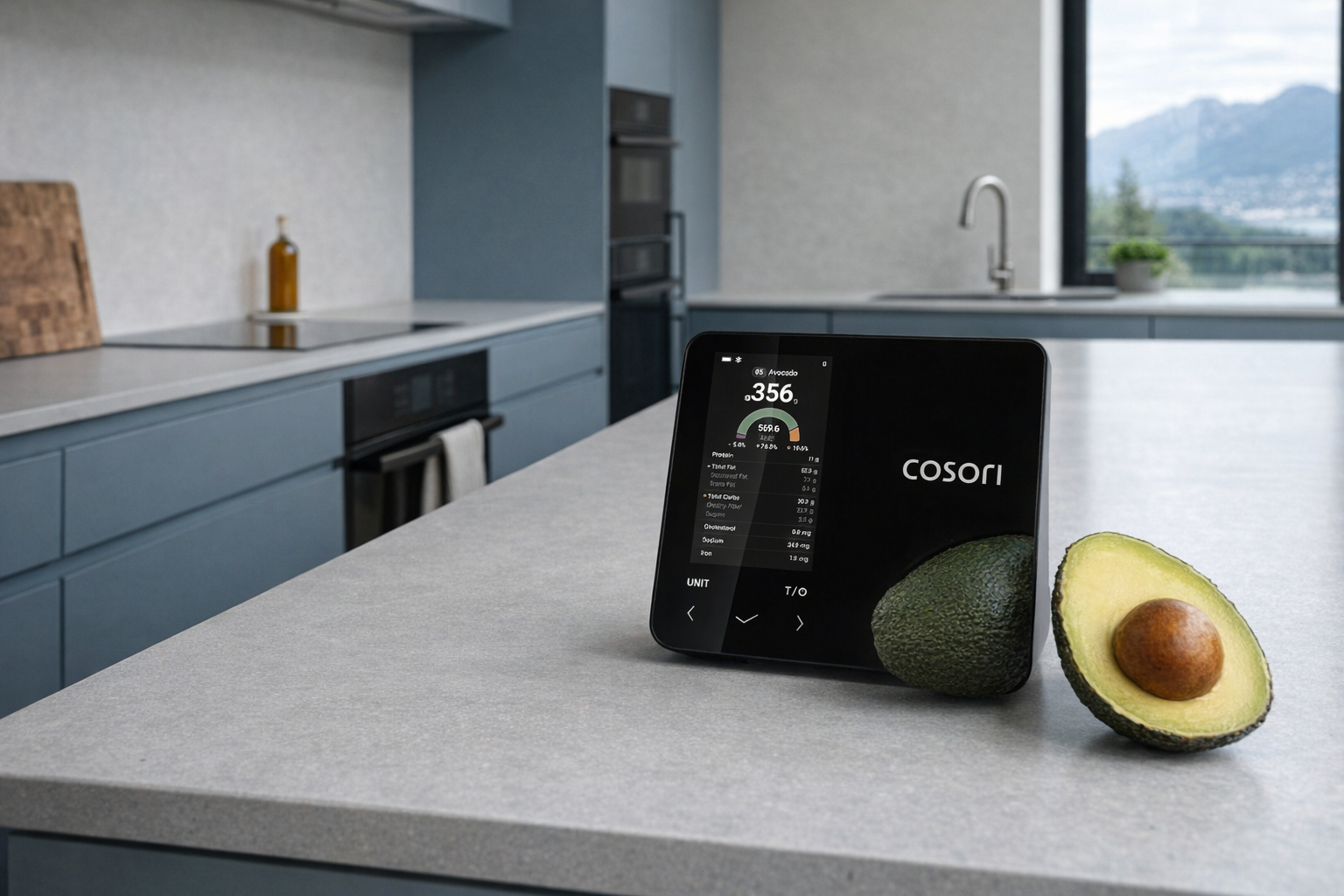
The COSORI Smart Food Scale is around $56 CAD, which puts it in dangerous territory for this category. Once a smart scale gets into the mid-to-high-$50s, it has to justify itself against not only cheaper smart scales, but also against buying a plain $20-ish kitchen scale and doing manual logging if needed. COSORI does have one thing going for it immediately: a strong 4.6/5 source rating, the highest in this lineup, which suggests people are broadly happy with what it's doing.
Still, price changes the standard. At $56, a smart scale needs to feel coherent, not just connected. For buyers already familiar with COSORI as a smart-kitchen brand, the appeal is obvious: you're paying for a more established ecosystem and, presumably, a smoother digital experience. But if your goal is simply portion control, measuring coffee beans, or occasionally checking serving sizes, this is overkill. This is for the person who genuinely wants the app relationship. If that isn't you, the extra money buys very little.
- Best for: Buyers who prefer a more established smart-kitchen brand and expect to use app syncing regularly.
- Full explainer: COSORI Smart Food Scale on Celmin · Directory: product page
Greater Goods Nutrition Scale — the most self-contained serious option
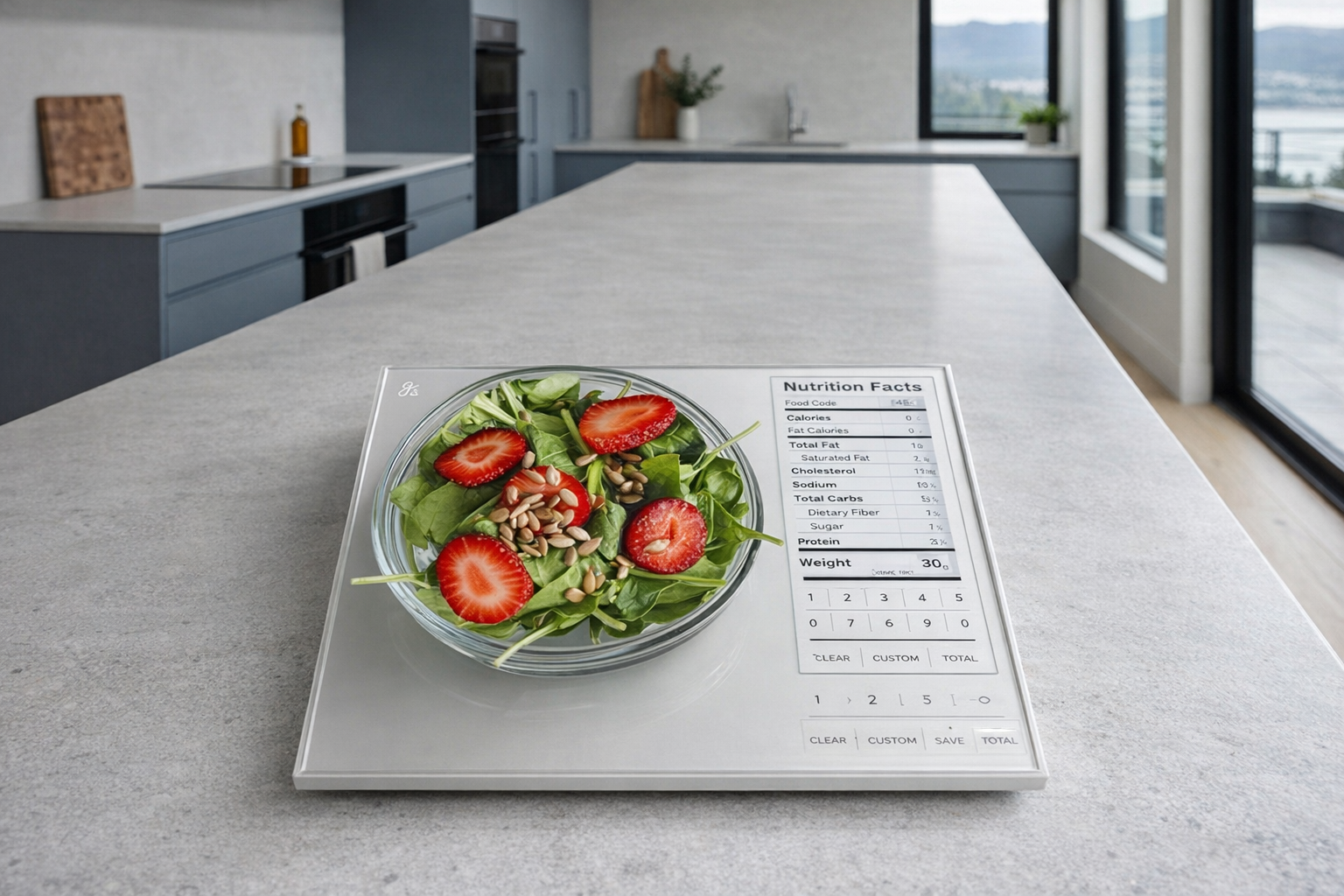
At about $59 CAD, the Greater Goods Nutrition Scale is the most fully explained product in this roundup, and that alone makes it easier to recommend than several rivals. According to the listing, it tracks calories, protein, carbs, fat, fiber, sodium, and sugar, comes loaded with nutritional values for 2,000 foods, allows 99 custom entries, and offers precision down to 0.1 g. Its 9.33 x 6.02 x 0.91-inch body, food-safe glass surface, and capacitive touch buttons also suggest a cleaner, more kitchen-friendly design than the category's cheaper anonymous-looking options.
More importantly, this is a scale that knows what it's trying to be. Instead of vaguely waving at "smart" features, it presents itself as a nutrition scale for people who actually total ingredients and track macros across meals. That's a narrower audience than the marketing probably wants to admit, but it's a real one. The weakness is obvious too: a built-in database of 2,000 foods is useful, not infinite. If your diet leans heavily on homemade mixed dishes or niche packaged foods, you'll still need custom entries and some patience. But as a standalone nutrition tool, this is a more honest design than most of its competitors.
📺 Watch: Greater Goods Nutrition Scale
- Best for: Serious macro trackers and meal planners who want nutrition functions on the scale itself, not just in an app.
- Full explainer: Greater Goods Nutrition Scale on Celmin · Directory: product page
The three questions worth asking before you buy
- Do you actually want to track nutrition, or do you just need accurate weight? If you mostly want better portion awareness, baking precision, or coffee dosing, a smart scale may be unnecessary and a plain budget scale would probably do. Within this lineup, the RENPHO Smart Food Scale is the least expensive place to test whether you even use the "smart" part.
- Do you want to use your phone every time you weigh food? If yes, the Etekcity Smart Nutrition Scale or COSORI Smart Food Scale makes more sense, because app-based tracking is their likely strength. If no, look much harder at the KUAIVO Smart Food Scale with TFT Display or Greater Goods Nutrition Scale, where the value is having more information visible on the scale itself.
- How much patience do you have for food databases and custom entries? If you're tracking standard ingredients repeatedly, the Greater Goods Nutrition Scale is the strongest fit thanks to its stated 2,000-food library and 99 custom entries. If you're more curious than committed, the KUAIVO is the better middle-ground buy because it chases the on-scale idea without asking nearly $60.
Where each one genuinely fits
| If this sounds like your kitchen... | ...buy this |
|---|---|
| "I mostly need a scale, and smart features are a bonus if I ever use them" | RENPHO Smart Food Scale (~$25) |
| "I want a low-cost nutrition-calculator style product, but I'm keeping expectations modest" | Ataller Food Scale with Nutritional Calculator (~$33) |
| "I want the smart part visible on the scale, not hidden in an app" | KUAIVO Smart Food Scale with TFT Display (~$36) |
| "I already log meals on my phone and want the scale to feed that habit" | Etekcity Smart Nutrition Scale (~$39) |
| "I prefer an established smart-kitchen brand and don't mind paying more for the app ecosystem" | COSORI Smart Food Scale (~$56) |
| "I meal-prep seriously and want a more self-contained nutrition tool on the counter" | Greater Goods Nutrition Scale (~$59) |
Got Questions About Smart Food Scales? Let's Clear Things Up.
Is this a hands-on review?
No. This is an editorial comparison based on product listings, stated specs, pricing, and the broader patterns of the smart food scale category. It's meant to help you understand which type of smart scale fits your routine, not to substitute for side-by-side lab testing.
Are smart food scales actually more accurate than regular digital scales?
Not necessarily. The "smart" part usually refers to nutrition lookup, app sync, or macro tracking, not superior weighing hardware. A smart scale may still be a very good kitchen scale, but its added value is usually data handling rather than dramatically better gram measurement.
Can a nutrition scale tell me the exact calories of homemade food?
Only if you build that information yourself. A nutrition scale can estimate calories and macros for known foods in its database and can help total ingredients in a recipe, but it cannot automatically know the exact nutritional profile of your homemade lasagna, soup, or stir-fry without accurate inputs. Treat these products as calculators, not analyzers.
Is on-scale nutrition lookup better than using an app?
For many people, yes — at least in theory. Seeing the information on the scale itself is simpler and more immediate, which is why products like the KUAIVO Smart Food Scale with TFT Display and Greater Goods Nutrition Scale are appealing. But the tradeoff is that an app can sometimes be easier to update, search, and integrate into broader logging habits.
Who should skip this entire category and buy a plain scale instead?
Anyone whose main use is baking, weighing meat portions occasionally, measuring coffee, or checking package serving sizes. If you are not going to log macros, build custom foods, or repeatedly use nutrition databases, a smart scale is mostly feature overhead. That's the biggest truth in this category: lots of people want nutrition tracking in theory and plain weighing in reality.
Are built-in food databases always reliable?
Reliable enough for standard foods, often less reliable for edge cases. A database of 2,000 foods, like the one listed for the Greater Goods Nutrition Scale, can be genuinely useful for staple ingredients, but prepared foods, brand variations, and homemade dishes still require judgment. Always verify details on the current listing and, if the stakes are health-related, cross-check with package labels or professional guidance.
Where should I buy these to verify the latest details?
Before ordering, verify the latest listing details, price, and supported functions directly with the retailer. Quick links: Ataller · COSORI · Etekcity · Greater Goods · KUAIVO · RENPHO. Pricing and availability can shift, especially when listings cross between .ca and .com storefronts.
Which one would Celmin pick?
For a typical household that genuinely wants smart features, the KUAIVO Smart Food Scale with TFT Display is the most interesting value pick at around $36 CAD. It appears to pursue the most sensible version of smart — useful information on the scale itself — without jumping to the nearly $60 tier. For more serious meal planners who know they'll use nutrition tracking regularly, the Greater Goods Nutrition Scale is the stronger dedicated choice.
If you're building a smarter home in Canada and want honest comparisons of gadgets worth considering — plus the ones worth skipping — Celmin covers the full catalog without the marketing theater. More comparisons, reviews, and buyer guides at https://celmin.ca.
Discussion
Sign up or sign in to join the conversation.