

The Skyla Homes Baby Locks 8-Pack Cabinet Proofing sits in a very practical category: low-cost, adhesive child-safety hardware meant to slow down curious toddlers before they get into cleaning supplies, sharp tools, bathroom cabinets, or the oven door. It is not fancy, not electronic, and not...
The Skyla Homes Baby Locks 8-Pack Cabinet Proofing sits in a very practical category: low-cost, adhesive child-safety hardware meant to slow down curious toddlers before they get into cleaning supplies, sharp tools, bathroom cabinets, or the oven door. It is not fancy, not electronic, and not something most parents enjoy shopping for. That is partly why products like this matter. Baby-proofing usually works best when the solution is boring, quick to install, and easy enough that you will actually finish the job instead of leaving half the house unprotected.
This article is not a hands-on review. Nothing here is based on personally testing the locks. Instead, the goal is to explain what the Skyla Homes Baby Locks 8-Pack Cabinet Proofing actually is, how this style of adhesive strap lock compares with more rigid magnet-based or screw-in alternatives, and who it genuinely fits in a real home. If you are trying to baby-proof a kitchen or bathroom without drilling into every cabinet, this is the calmer breakdown.
📺 Watch: Skyla Homes Baby Locks 8-Pack Cabinet Proofing in context
Quick snapshot
| Question | What the Skyla Homes Baby Locks 8-Pack Cabinet Proofing actually is |
|---|---|
| Category | Baby |
| Made by | Skyla Homes |
| Typical price | ~$14 CAD (listing at the time of writing — verify current pricing) |
| Rating signal | 4.6/5 on the source listing |
| Best for | Parents and caregivers who need fast, low-drill childproofing across multiple cabinets, drawers, and bathroom fixtures |
| Skip if | You want invisible magnetic locks, permanent built-in hardware, or a solution for genuinely dangerous appliances without layered supervision |
Pro tip: Use products like this for the secondary barrier, not the only barrier. A $14 adhesive lock pack is great for slowing a toddler down, but it should sit alongside moving chemicals higher up, using stove-knob covers if needed, and keeping true hazards out of reach entirely.
What the Skyla Homes Baby Locks 8-Pack Cabinet Proofing actually is
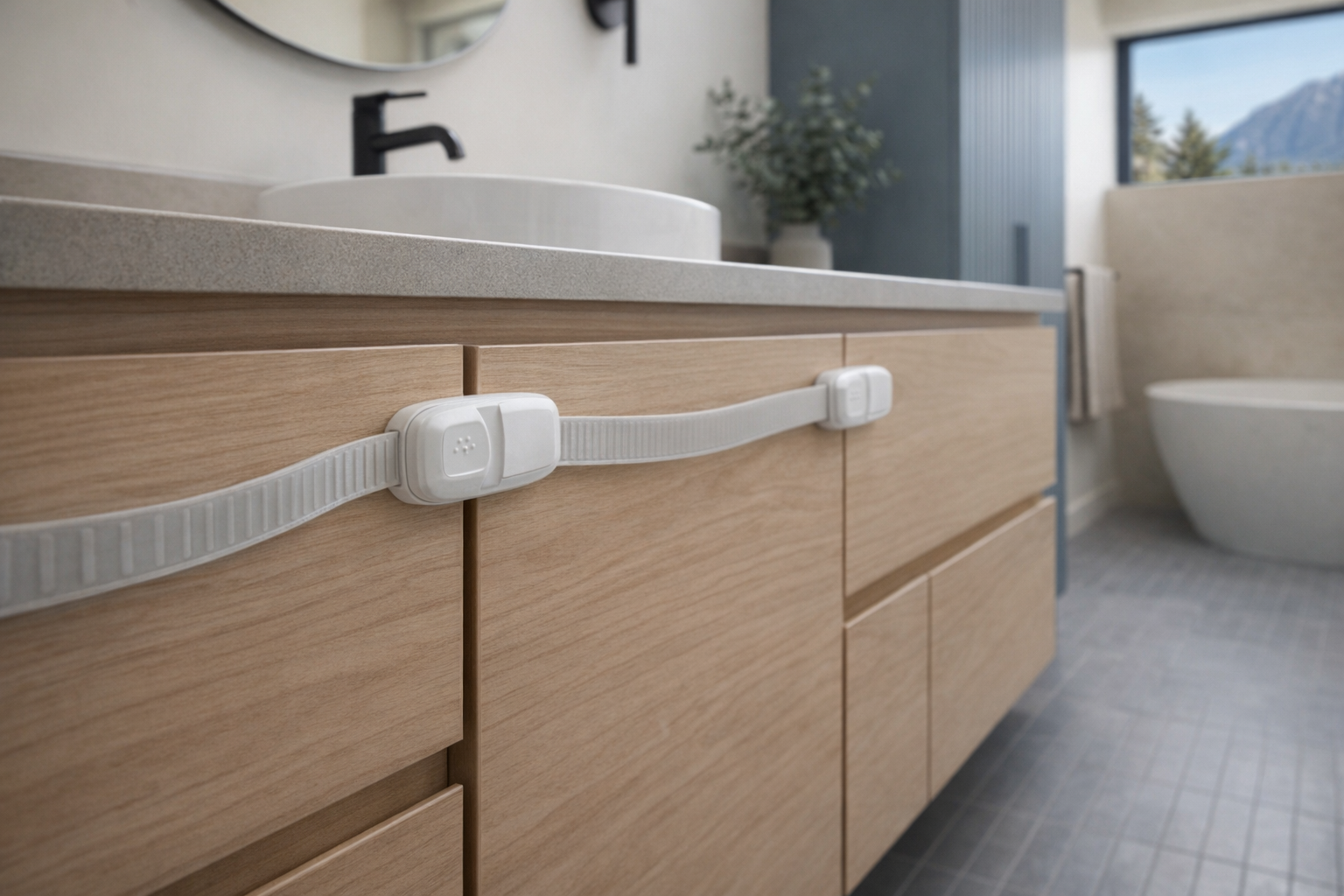
In plain English, this is an 8-pack of flexible adhesive safety straps that stick onto two surfaces and create a child-resistant latch between them. You press and slide the release as an adult, while a toddler typically sees only "the cabinet won't open." That makes it less like a permanent hardware upgrade and more like a removable safety layer for the phase when a child has become mobile, curious, and very interested in every drawer you hoped they would ignore.
8-pack child safety cabinet locks with 3M adhesive. Quick for adults to open but secure against toddlers. No screws or magnets needed, installs in seconds. Multi-purpose for cabinets, drawers, doors, ovens, toilet seats, and more.
That description tells you almost everything important. The key idea is convenience: 3M adhesive instead of screws, and a flexible strap instead of a hidden internal lock system. Compared with a product like the Safety 1st Magnetic Lock System, the Skyla Homes setup is simpler and cheaper to deploy across a bunch of surfaces at once. It is also more visible and less elegant. That is the trade-off. Magnetic systems hide inside the cabinet and look cleaner, but they take more setup and usually cost more. The Skyla approach is more honest: obvious, fast, and meant to get the job done now.
Key features at a glance
- Quick press-and-slide mechanism designed to be easy for adults to release
- 3M adhesive installation with no tools, drilling, or screws
- 8-pack format for covering several cabinets and drawers in one go
- Multi-purpose use on cabinets, drawers, doors, ovens, toilet seats, and furniture
- Adjustable strap length for different gaps and surface layouts
- Satisfaction guarantee from the brand, according to the listing
How the Skyla Homes Baby Locks 8-Pack Cabinet Proofing actually works
The mechanism is straightforward, which is part of the appeal. Each lock uses adhesive pads to attach one end to a fixed surface and the other to the opening surface — for example, a cabinet frame and cabinet door, or a toilet lid and tank area depending on the shape. The flexible strap bridges the gap. When the door or lid is closed, the strap prevents it from opening freely until an adult presses the release area and slides or disengages it.
That matters because this product is trying to solve two real-life problems at once. First, it needs to be annoying for a toddler. Second, it needs to be not too annoying for a sleep-deprived adult who opens that cabinet ten times a day. The listed press-and-slide design is meant to strike that balance. If a childproofing product is too fiddly, adults stop using it properly, or leave cabinets unlatched "just for a minute." That is where many child-safety plans start to fall apart.
There are really three parts to how this style of lock works in practice:
- Adhesion The 3M adhesive does the heavy lifting. Installation is tool-free, but the surface still matters. Smooth, clean cabinet faces generally give better results than dusty, textured, oily, or damp ones. In a kitchen, that means wiping off grease first matters more than the product page makes it sound.
- Mechanical inconvenience These locks are not vault hardware. They are designed to create enough resistance and complexity that a toddler cannot casually pull a drawer open. That is exactly what many families need: not absolute security, but a delay mechanism that prevents quick access.
- Placement Adjustable straps help the same product work across more than one application, from a bathroom vanity to a lower kitchen cabinet. But placement is everything. Too loose, and the opening may still gap enough for fingers or items to come out. Too tight or crooked, and adults will hate using it.
What the listing implies, then, is a product best suited to broad coverage rather than one perfect, invisible installation. Eight locks for about $14 CAD tells you the strategy: protect multiple spots quickly, accept the visible look, and reduce immediate risk without hiring anyone or breaking out a drill.
A realistic "day in the life" with Skyla Homes Baby Locks 8-Pack Cabinet Proofing
Because this is an informational piece, here is what a normal day might look like based on the listed features and how adhesive child locks are typically used.
- Morning. A toddler heads straight for the bathroom cabinet while someone is brushing teeth. The cabinet opens an inch, then stops because the strap lock is engaged. The adult presses the release, grabs what they need, and closes it again. That is the core value: a pause between child curiosity and child access.
- Midday. In the kitchen, a lower drawer full of dish towels or utensils gets the same treatment. An adult can still open it with one hand once they know the motion, but it is not something a toddler can usually solve by pulling harder. That matters because toddlers are often persistent, not delicate.
- Afternoon. A toilet-seat application becomes useful during the phase when children want to explore bathroom fixtures constantly. A flexible strap lock is not glamorous, but it can stop repeated lid lifting and the mess that comes with it. It is the kind of small win that feels bigger at 3 p.m.
- Evening. A caregiver notices one unused lock is still in the pack and applies it to an under-sink cabinet storing cleaning products. This is where the 8-pack format helps. Baby-proofing often happens in stages, and having several matching locks on hand makes it easier to keep going room by room instead of stopping after one problem area.
Who the Skyla Homes Baby Locks 8-Pack Cabinet Proofing is actually for (and who it isn't)
Great fits
- Parents of crawling or early-walking toddlers who suddenly need to secure the lower half of the home fast.
- Grandparents preparing a bathroom or kitchen for frequent visits, without wanting to drill into furniture.
- Renters who want childproofing that is less invasive than screw-mounted latches.
- Families in smaller condos or apartments where one 8-pack can cover most key risk zones.
- Caregivers setting up a temporary safety layer in a secondary home, cottage, or babysitting space.
Poor fits
- People who want a completely hidden childproofing system with no visible straps on the outside of cabinets.
- Households dealing with older, stronger children who may learn the release pattern quickly.
- Anyone trying to use adhesive locks as the only protection for high-risk hazards like harsh cleaners, medications, or sharp tools.
- Owners of delicate, flaky, unfinished, or unusually textured cabinetry where adhesive performance may be unreliable.
- People who prefer one-time, permanent hardware and never want to think about adhesive replacement or removal.
Practical trade-offs
Install and surface prep
The big selling point here is the no-tools setup, and for many homes that is exactly right. No screws means no drilling into cabinet doors, no measuring for hidden hardware, and no special tools. But "installs in seconds" is only half the story. Adhesive products are only as good as the surface prep underneath them. Greasy kitchen cabinets, damp bathroom finishes, or dusty painted wood can all weaken the bond.
That does not make the design bad. It just means the ease of install comes with a condition: clean first, place carefully, then leave it alone long enough to bond properly according to current package guidance. That is a more realistic picture than pretending every surface behaves the same way.
Durability and removal
Adhesive locks are convenient, but they are still adhesive locks. Over time, heat, humidity, repeated pulling, and frequent use can wear on them. Bathrooms and kitchens are exactly where many parents need these locks most, and they are also where moisture and temperature swings can be hardest on stick-on products.
Removal is the other side of that trade-off. Screw-in locks leave holes; adhesive locks may leave residue or, on some finishes, risk surface damage if removed carelessly. If your cabinets are high-end wood or freshly painted, evaluate this like you would removable wall hooks: simple, yes, but not magically consequence-free.
Safety expectations
This is probably the most important practical point. A product like this is designed to be child-resistant, not child-proof in some absolute sense. That distinction matters. It creates friction. It slows access. It reduces casual opening. It does not replace supervision, and it does not turn a dangerous lower cabinet into a safe storage area for bleach, dishwasher pods, or medication.
That is why these locks work best as part of a layered plan. Use them to secure doors and drawers, yes, but also move truly dangerous items upward or into more secure storage. Evaluate them like a seatbelt in a broader safety system, not like a vault door.
Where the Skyla Homes Baby Locks 8-Pack Cabinet Proofing fits in a real baby-proof plan
This product fits best as the fast-deployment layer in a broader child-safety setup. If you are baby-proofing an actual home, the pieces usually work together like this:
- Cabinet and drawer access control: Skyla Homes Baby Locks 8-Pack Cabinet Proofing on lower kitchen cabinets, bathroom storage, and furniture drawers.
- Higher-risk kitchen protection: stove knob covers, oven locks where needed, and relocating knives, cleaners, and breakables.
- Room-level containment: baby gates at stairs or kitchen entrances, especially when cooking.
- Outlet and edge safety: outlet covers, corner guards, and furniture anchoring for dressers or bookcases.
That is why this product is most useful in kitchens, bathrooms, and laundry-adjacent spaces rather than as a whole-house answer by itself. It pairs naturally with common ecosystems of childproofing gear from brands like Safety 1st, Munchkin, or Dreambaby. It is not the centrepiece of the plan. It is one of the small pieces you install in an hour that make daily life less stressful.
In practical terms, this is also a good fit for renters and mixed-use homes. If you cannot or do not want to modify cabinetry permanently, an adhesive strap lock like this gives you a way to act quickly. That is often better than waiting for the perfect solution while a newly mobile toddler has already started opening everything.
The buying decision, in plain terms
Before buying, three blunt questions usually make the answer clear:
- Do you need quick coverage across several spots, or one premium hidden system?
If you want to secure multiple cabinets and drawers immediately, an 8-pack adhesive set makes sense. If you care more about invisible installation and cleaner looks, magnetic locks may suit you better. - Are your cabinet surfaces suitable for adhesive products?
If most of your target surfaces are smooth and cleanable, this style is practical. If they are textured, damaged, damp, or delicate, the convenience may not be worth the uncertainty. - Are you treating this as one layer of safety rather than the whole plan?
If yes, this is a sensible low-cost buy. If no, and you are relying on it alone to secure dangerous materials, rethink the setup first.
Three yeses make the Skyla Homes Baby Locks 8-Pack Cabinet Proofing an easy, sensible add to a toddler-proofing checklist.
Got Questions About the Skyla Homes Baby Locks 8-Pack Cabinet Proofing? Let's Clear Things Up.
Is this a hands-on review?
No. This is an informational explainer based on the listing details and the broader category of adhesive child-safety locks. It is meant to help you understand where the product fits, not to replace direct testing.
How many areas can it cover?
The pack includes 8 locks, which is enough for several key problem spots in a kitchen or bathroom. In a smaller home, that may cover most lower-risk access points; in a larger house, it is more likely a starter pack than a complete solution.
Does it need screws, magnets, or tools?
According to the listing, no. It uses 3M adhesive and is designed for tool-free installation, which is one of its main appeals compared with hidden magnetic systems or screw-mounted latches.
Is it only for cabinets?
No. The listing positions it as multi-purpose, including cabinets, drawers, doors, ovens, toilet seats, and more. The adjustable strap is the reason it can work across different shapes, though the surface and placement still need to make sense for the application.
Is this better than magnetic child locks?
That depends on what you value more. Compared with systems like the Safety 1st Magnetic Lock System, this Skyla Homes set is cheaper, more visible, and quicker to install. Magnetic locks usually look cleaner once installed, but they tend to be more involved and may cost more to cover the same number of openings.
Where can I verify the current listing or buy it?
The current retailer page to check is the Amazon listing here. That is the best place to verify the latest price, photos, included quantity, and any updated installation guidance before buying.
What does it cost in Canada?
At the time of writing, it is listed at ~$14 CAD. As with many low-cost household products sold through marketplace listings, pricing can move around, so it is worth checking the live page before ordering.
Where is the Celmin Directory listing for this product?
For a catalog-style view of the same product — structured specs, pros and cons, similar picks, and FAQ — see Skyla Homes Baby Locks 8-Pack Cabinet Proofing on Celmin Directory.
If you're building a smarter home in Canada and want honest explainers on gadgets worth considering — plus the ones worth skipping — Celmin covers the full catalog without the marketing theater. More reviews, comparisons, and buyer guides at https://celmin.ca.

Discussion
Sign up or sign in to join the conversation.