
The SwitchBot onero H1 Humanoid Robot sits in one of the strangest corners of consumer tech right now: the not-quite-practical, not-just-for-show home robot. It is not a robot vacuum, not a smart speaker, and not a toy in the usual sense. Instead, it is a 1.3m-tall wheeled humanoid robot ...
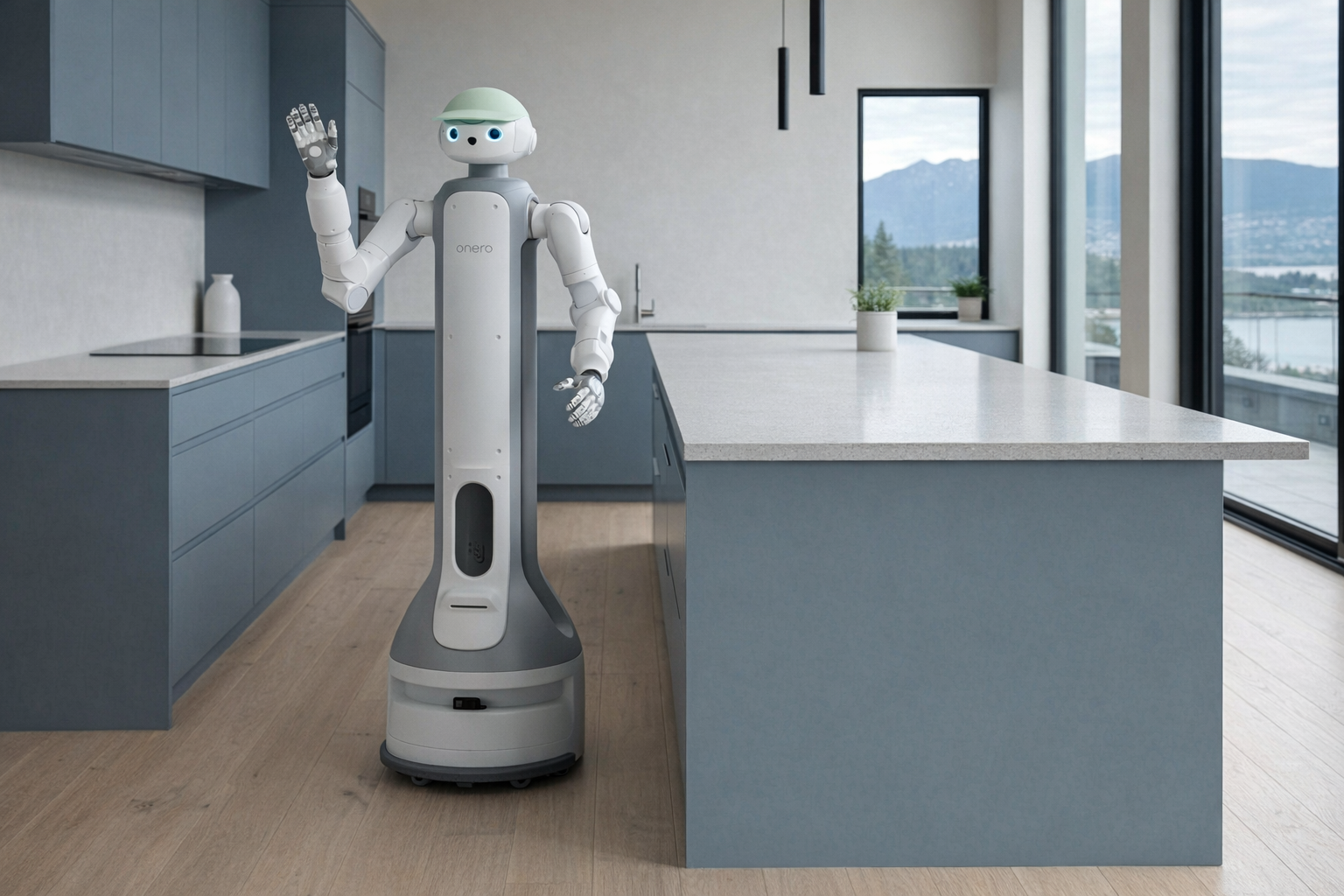
The SwitchBot onero H1 Humanoid Robot sits in one of the strangest corners of consumer tech right now: the not-quite-practical, not-just-for-show home robot. It is not a robot vacuum, not a smart speaker, and not a toy in the usual sense. Instead, it is a 1.3m-tall wheeled humanoid robot that promises to handle household tasks like folding laundry, loading a dishwasher, organizing items, and even serving food. That puts it in a category that still feels half prototype, half product page.
This article is not a hands-on review. Nothing here is based on personally using the robot at home. The goal is simpler: explain what the SwitchBot onero H1 Humanoid Robot actually is, how its listed features translate into real life, where it fits in the broader smart-home picture, and whether its ~$2099 CAD price makes it feel like a serious appliance or more like an ambitious experiment. If the official materials make it sound like the future has already arrived, this is the calmer version.
📺 Watch: SwitchBot onero H1 Humanoid Robot in context
Quick snapshot
| Question | What the SwitchBot onero H1 Humanoid Robot actually is |
|---|---|
| Category | Smart Robots |
| Made by | SwitchBot |
| Typical price | ~$2099 CAD (listing at the time of writing — verify current pricing) |
| Rating signal | Check current reviews |
| Best for | Early adopters, SwitchBot households, people curious about task-capable home robots |
| Skip if | You want a polished appliance, have a cramped layout, or expect a robot butler rather than an experimental helper |
Pro tip: Treat the SwitchBot onero H1 Humanoid Robot as a specialized household assistant inside the SwitchBot ecosystem, not as a general-purpose replacement for human help. If you frame it like a smart appliance with arms, it makes more sense than if you frame it like science fiction.
What the SwitchBot onero H1 Humanoid Robot actually is
In plain English, the SwitchBot onero H1 Humanoid Robot is an attempt to bring humanoid robotics into a normal home without asking you to install an industrial robot arm in the kitchen. It moves on wheels rather than legs, stands 1.3 metres tall, and uses multiple cameras plus a body with 22 degrees of freedom to interact with common household objects. The pitch is not just that it can move around, but that it can manipulate things with enough dexterity to do chores people actually recognize.
The SwitchBot onero H1 is a 1.3m-tall wheeled humanoid robot designed for household tasks. Featuring 22 degrees of freedom, Intel RealSense cameras throughout its body, and an on-device OmniSense Vision-Language-Action AI model, it performs dexterous tasks like folding laundry, loading dishwashers, organizing items, and serving food. Integrates with the SwitchBot smart home ecosystem.
That wording matters because it tells you this is not being sold as a cute companion robot. It is being sold as a task robot. And compared with a device like the Tesla Optimus concept, the SwitchBot onero H1 looks much more grounded in what homes can tolerate right now: wheels instead of full bipedal walking, specific chores instead of broad human replacement, and direct integration with an existing consumer smart-home ecosystem. That's a more honest design than many humanoid robot announcements, even if the ambition is still large.
Key features at a glance
- 22 degrees of freedom for more flexible arm and hand movement
- Intel RealSense cameras in the head, arms, hands, and abdomen
- On-device OmniSense Vision-Language-Action AI model for local decision-making
- 1.3m-tall wheeled humanoid design aimed at household use
- Task focus including laundry folding, dishwasher loading, item organization, and serving food
- Full SwitchBot ecosystem integration for use alongside SwitchBot hubs, locks, curtains, sensors, and climate devices
How the SwitchBot onero H1 Humanoid Robot actually works
At a basic level, the SwitchBot onero H1 Humanoid Robot combines three things that home robots usually split apart: mobility, object handling, and smart-home awareness. A robot vacuum is good at moving. A smart display is good at information. A robotic arm is good at manipulation in a fixed place. The onero H1 is trying to combine those functions into one household machine.
The wheeled base is an important clue to how SwitchBot expects it to operate. Wheels are simpler, more stable, and generally more realistic indoors than bipedal legs, especially around hard floors and open kitchen spaces. That means the robot likely depends on reasonably smooth movement paths rather than stairs, cluttered thresholds, or cramped furniture arrangements. If your home already frustrates a robot vacuum, a humanoid robot with arms will not magically find it easier.
Its sensing stack is also unusually broad for a consumer product. According to the listing, Intel RealSense cameras are placed in the head, arms, hands, and abdomen. That suggests the robot is designed to understand not just the room, but also the position of its own limbs relative to dishes, laundry, shelves, and countertops. In other words, it is not just "looking" ahead like a vacuum mapping the floor; it is trying to visually guide grasping and placement. That is the hard part of household robotics.
The other interesting piece is the on-device OmniSense Vision-Language-Action AI model. Stripped of the branding, that means the robot is meant to process visual input, understand task instructions, and convert that into movements locally on the robot itself. SwitchBot presents this as a privacy advantage, and that is credible up to a point: local processing is generally preferable to shipping every camera feed to the cloud. But local AI does not automatically mean simple ownership. It still depends on software support, firmware updates, and likely careful setup inside the app.
A practical way to think about the system is this:
- It sees the environment through multiple RealSense camera viewpoints.
- It interprets the task using its on-device vision-language-action model.
- It positions itself with the wheeled base near the work area.
- It manipulates objects using the articulated upper body and 22 degrees of freedom.
- It ties into the broader home through SwitchBot ecosystem integration, which may let it coordinate with curtains, locks, sensors, or scenes.
That sounds straightforward on paper. In real homes, it is probably less like "press a button and dinner is served" and more like "set up a defined task in a fairly predictable environment." That does not make it uninteresting. It just makes it a robot.
A realistic "day in the life" with SwitchBot onero H1 Humanoid Robot
Because this is an informational explainer rather than a test report, the examples below are based on what the listed features imply.
- Morning. The robot is stationed near the kitchen or dining area and works as part of a SwitchBot routine. Motion sensors, curtains, or climate devices could already be handling the wake-up environment, while the onero H1 is positioned for a simple assistive task like carrying or serving an item. This is where ecosystem integration matters more than the humanoid look.
- Midday. A load of dishes is ready to be dealt with, and the onero H1 is assigned a structured kitchen task such as loading items into a dishwasher. Its multiple cameras and articulated body are the reason this product exists at all; a regular wheeled home robot cannot do that kind of reach-and-place work.
- Afternoon. In a laundry area or bedroom, it tackles clothing organization or folding. Whether that works smoothly will depend heavily on lighting, item type, and how predictable the setup is, but this is one of the headline use cases SwitchBot is clearly aiming at.
- Evening. The robot becomes more of a household node than a chore machine, fitting into the SwitchBot smart-home setup while waiting for another specific task. That may be the most realistic long-term role: not constant autonomous labour, but intermittent physical assistance inside a connected home.
Who the SwitchBot onero H1 Humanoid Robot is actually for (and who it isn't)
Great fits
- People already invested in SwitchBot Hub 2, Curtain, Lock, Bot, or Meter devices who want to experiment with a physical robot inside that ecosystem.
- Early adopters who understand that first-generation home robotics often means structured tasks, software updates, and some unpredictability.
- Tech-forward households with open floor plans, wide kitchen access, and fewer physical obstacles than the average condo or older home.
- Buyers who are more interested in robotic manipulation than in voice chat, entertainment, or novelty companionship.
- Content creators, educators, or demo spaces that want a humanoid robot doing recognizable home tasks rather than just rolling around.
Poor fits
- Anyone expecting a polished replacement for a cleaner, caregiver, or full-time butler. That is not what the listed features actually promise.
- People in small apartments with narrow hallways, many rugs, floor clutter, steps, or crowded kitchens.
- Buyers who want appliance-level reliability. Humanoid household robotics is still closer to a frontier product than to a mature dishwasher or washing machine.
- Privacy-sensitive households uncomfortable with a robot carrying multiple cameras throughout its body.
- Shoppers who simply want better home automation. In many homes, $2099 CAD would go further on sensors, locks, shades, air purifiers, or a good robot vacuum and mop.
Practical trade-offs
Privacy
SwitchBot highlights the on-device AI model, and that is one of the more credible benefits here. If the robot can interpret tasks locally, that reduces dependence on cloud processing for sensitive indoor video. But this is still a robot with Intel RealSense cameras in the head, arms, hands, and abdomen, which is a lot of visual coverage in a private home.
The sane approach is to treat it like any other always-aware smart device: place it carefully, review app permissions, and understand exactly what data is stored locally versus in an account. If you would not want a moving camera platform around your kitchen or living space, this product is a bad fit regardless of how clever the AI sounds.
Layout and installation reality
The onero H1's 1.3m height and wheeled design sound approachable compared with a legged humanoid, but home layout still matters a lot. A robot that needs to align itself with dishwashers, counters, laundry baskets, or tables benefits from clear routes and consistent furniture placement. That is easier in a staged demo than in a real family kitchen.
There is also the question of setup effort. Even without a published installation spec sheet here, a robot doing physical tasks generally works best when the environment is somewhat predictable. Evaluate it like a machine that may need its workspace to make sense, not like a person who can improvise around every mess.
Long-term support and expectations
This is the trade-off that matters most with ambitious smart-home hardware. A robot like this depends on software maturity, updates, and continued support from SwitchBot. The company has a better-known foundation in practical devices like retrofit curtain motors, smart locks, and hubs, which is reassuring. But a humanoid household robot is still a bigger support promise than a blind-tilt motor.
That means you should buy it for what it reportedly does now, not for every future capability implied by the marketing. If later updates improve routines, object handling, or ecosystem coordination, great. But evaluate the current pitch like a premium experimental product, not like a guaranteed five-year appliance platform.
Where the SwitchBot onero H1 Humanoid Robot fits in a smart home
The best way to understand the onero H1 is not as the centre of a smart home, but as a physical action layer inside one. SwitchBot already has a practical stack: SwitchBot Hub 2 for control, SwitchBot Lock for doors, SwitchBot Curtain or Blind Tilt for shades, Meter devices for temperature and humidity, and sensors that trigger routines. Those products handle the normal work of automation.
The onero H1 sits above that layer as something different: a robot that can potentially do object-level tasks rather than just trigger devices. That is a meaningful distinction. Turning on an appliance is automation. Physically placing dishes, organizing items, or handling laundry is robotics.
If you use Alexa, Google Home, Apple Home, or Matter-compatible devices, the broader home can still remain fairly conventional. Lights, thermostats, plugs, air purifiers, and locks should continue to be managed by ordinary automations. The onero H1 makes the most sense where there is a clearly defined physical task that other smart devices cannot do.
So the honest smart-home placement looks like this:
- Smart speakers and hubs handle voice commands and routines
- Robot vacuums and mops handle floor care
- SwitchBot ecosystem devices handle retrofit automation
- SwitchBot onero H1 Humanoid Robot handles selected physical chores where arms and visual understanding matter
That division keeps expectations sane. It is not your home's brain. It is the part trying to be its hands.
The buying decision, in plain terms
Before buying the SwitchBot onero H1 Humanoid Robot, three questions will usually surface the right answer.
- Do you want a robot that manipulates objects, or do you mainly want automation? If you mostly want lights, locks, curtains, and routines to work better, spend the money on standard smart-home gear first.
- Is your home physically suitable for a 1.3m wheeled robot? Open layouts, predictable task zones, and low clutter help a lot. Tight condos and multi-level homes do not.
- Are you comfortable paying ~$2099 CAD for a first-wave household robot? If that feels like buying a premium experiment rather than a dependable appliance, you are thinking about it correctly.
Three yeses make it a reasonable early-adopter purchase. Any strong no, and a simpler SwitchBot setup will probably deliver better value.
Got Questions About the SwitchBot onero H1 Humanoid Robot? Let's Clear Things Up.
Is this a hands-on review?
No. This is an informational explainer based on SwitchBot's listed details and the broader realities of home robotics. It is meant to clarify what the product appears to be, not to stand in for long-term testing.
What does the SwitchBot onero H1 Humanoid Robot actually do?
According to the listing, it is designed for household tasks such as folding laundry, loading dishwashers, organizing items, and serving food. The key idea is that it combines mobility, cameras, and articulated manipulation rather than doing just one of those things.
Does it work with other SwitchBot products?
Yes, according to the listing it integrates with the SwitchBot smart home ecosystem. That means it likely makes the most sense in a home already using SwitchBot devices such as hubs, locks, curtain motors, or environmental sensors, rather than as a totally standalone purchase.
Is the on-device AI really better for privacy?
Potentially, yes. Local processing is generally more privacy-friendly than sending every visual task to cloud servers. But this is still a robot with multiple onboard cameras, so privacy depends on the full system design, app controls, account handling, and how you place it in the home.
Is this more practical than a robot vacuum or smart display?
For most people, no. A robot vacuum or smart display solves a narrower problem much more predictably. The onero H1 is only more practical if you specifically value physical manipulation tasks like loading or organizing objects and are comfortable with an earlier-stage product category.
Where can I verify the current details or buy it?
The best place to verify the latest pricing, product description, and any updated specs is the official product page: SwitchBot onero H1 Humanoid Robot. For a product in a fast-moving category like this, it is worth checking the live page directly before treating any feature list as final.
What does it cost in Canada?
At the time of writing, the listed price is ~$2099 CAD. Because robotics products can shift in price quickly with promos, exchange rates, or retailer changes, verify the current number before buying.
Where is the Celmin Directory listing for this product?
For a catalog-style view of the same product — structured specs, pros and cons, similar picks, and FAQ — see SwitchBot onero H1 Humanoid Robot on Celmin Directory.
If you're building a smarter home in Canada and want honest explainers on gadgets worth considering — plus the ones worth skipping — Celmin covers the full catalog without the marketing theater. More reviews, comparisons, and buyer guides at https://celmin.ca.
Sign up or sign in to join the conversation.