
Most kettles boil water. That is the entire job description, and for instant noodles or a bag of chamomile dunked in whatever came out of the tap, it is enough. Then you brew green tea at boiling and wonder why it tastes bitter. Or pour water for pour-over coffee that scalds the grounds into ash....
Most kettles boil water. That is the entire job description, and for instant noodles or a bag of chamomile dunked in whatever came out of the tap, it is enough. Then you brew green tea at boiling and wonder why it tastes bitter. Or pour water for pour-over coffee that scalds the grounds into ash. Or re-boil the same pot three times because nobody drank the first cup and now it is lukewarm again.
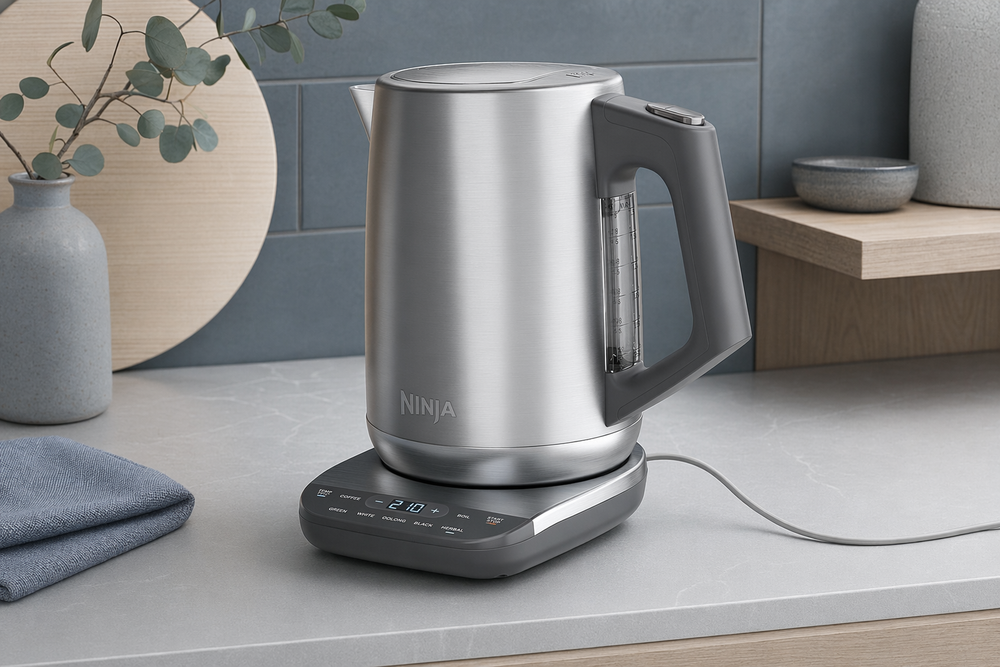
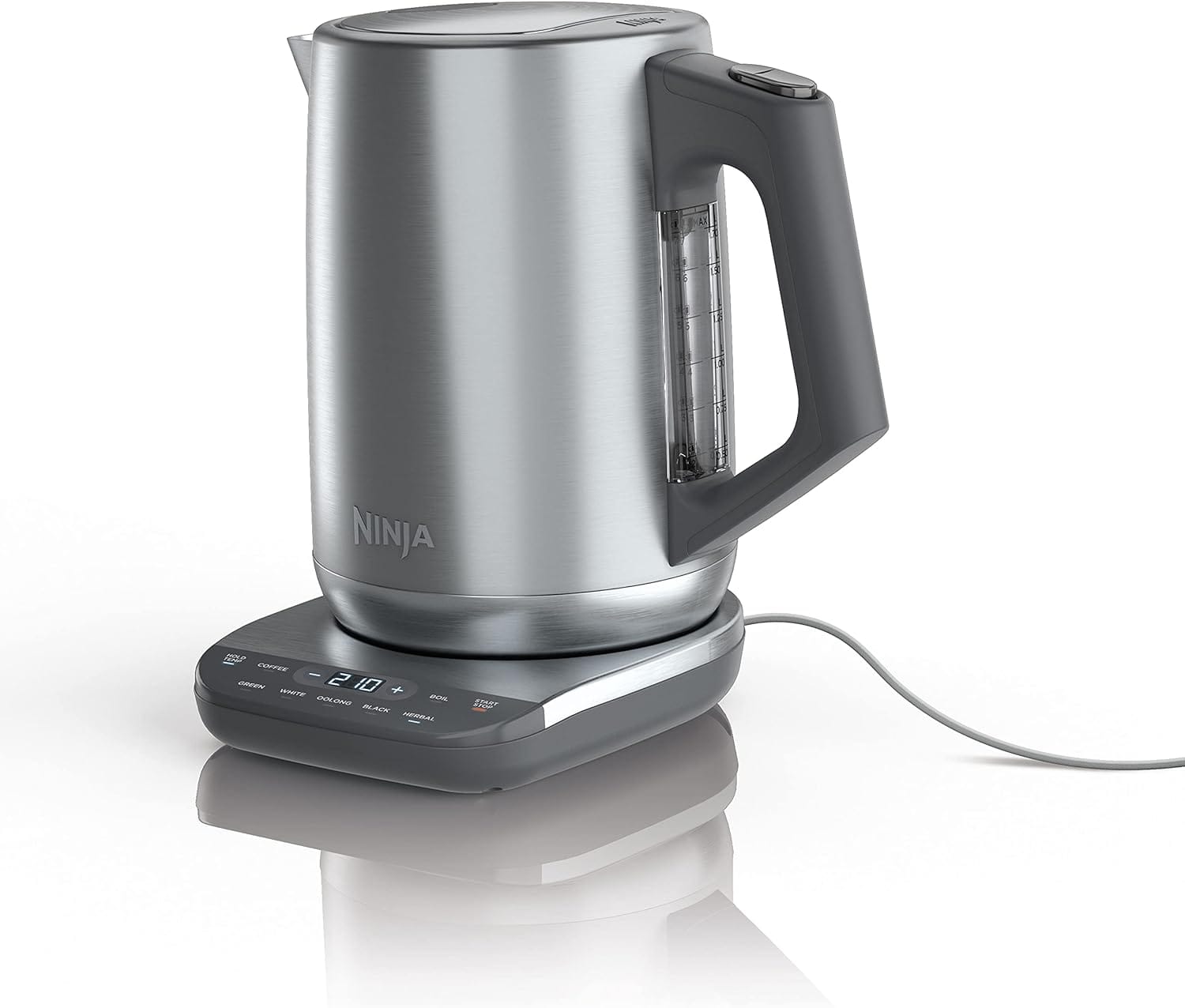
The Ninja KT200C Precision Temperature Kettle exists for people whose drinks have opinions about heat. Seven one-touch presets from delicate white tea through coffee to full boil, manual degree-by-degree control, and a hold temperature function that keeps water where you set it for up to thirty minutes — not re-boiling, just maintaining. That hold feature is the quiet hero of weekday mornings. It is also where hard-water Canada reminds you that any kettle needs descaling eventually.

The snapshot
| Ninja KT200C | |
|---|---|
| What it is | 1.7 L (~7 cup) precision electric kettle with temperature control |
| Power | 1,500 watts — fast heating |
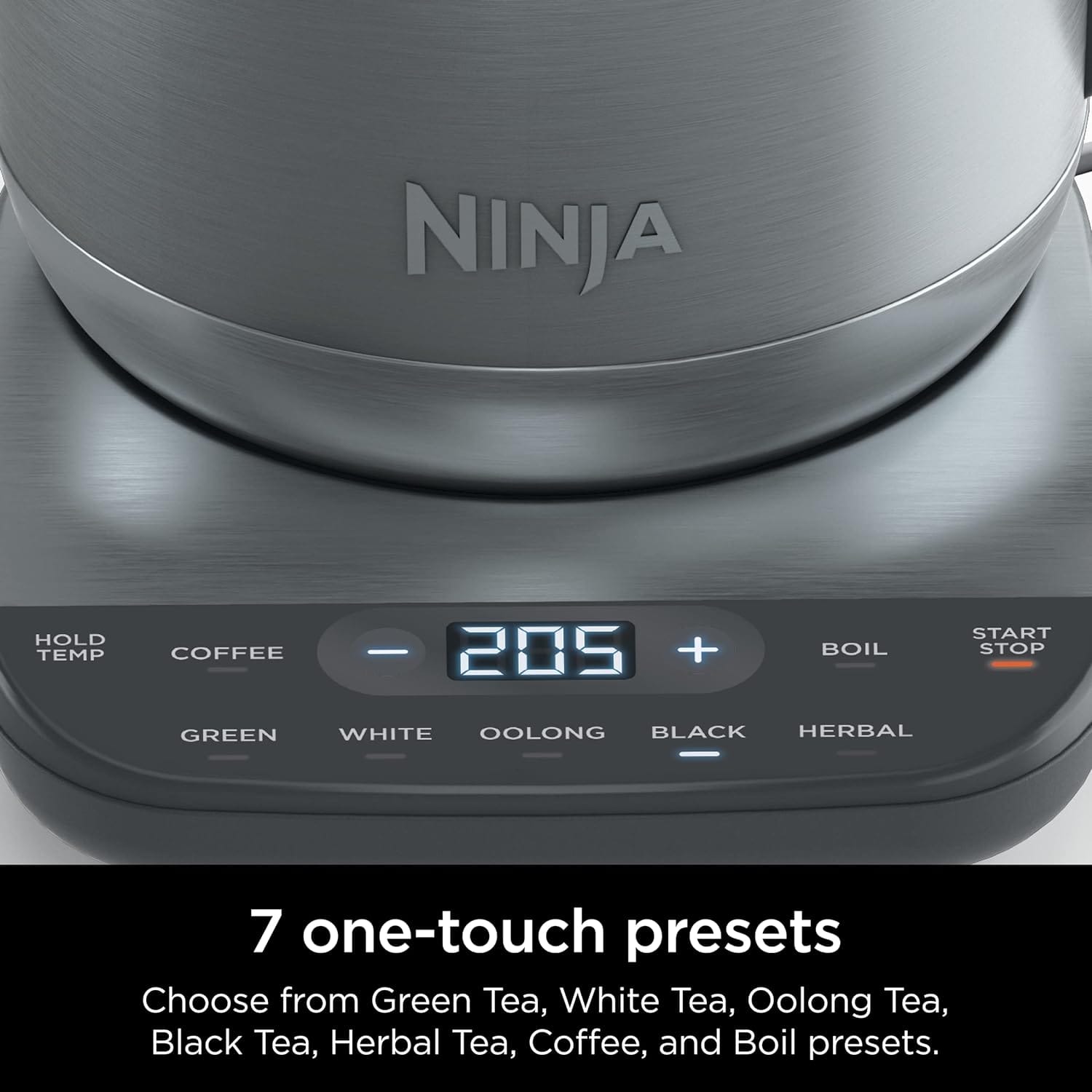
| Presets | Green, white, oolong, black, herbal tea, coffee, boil |
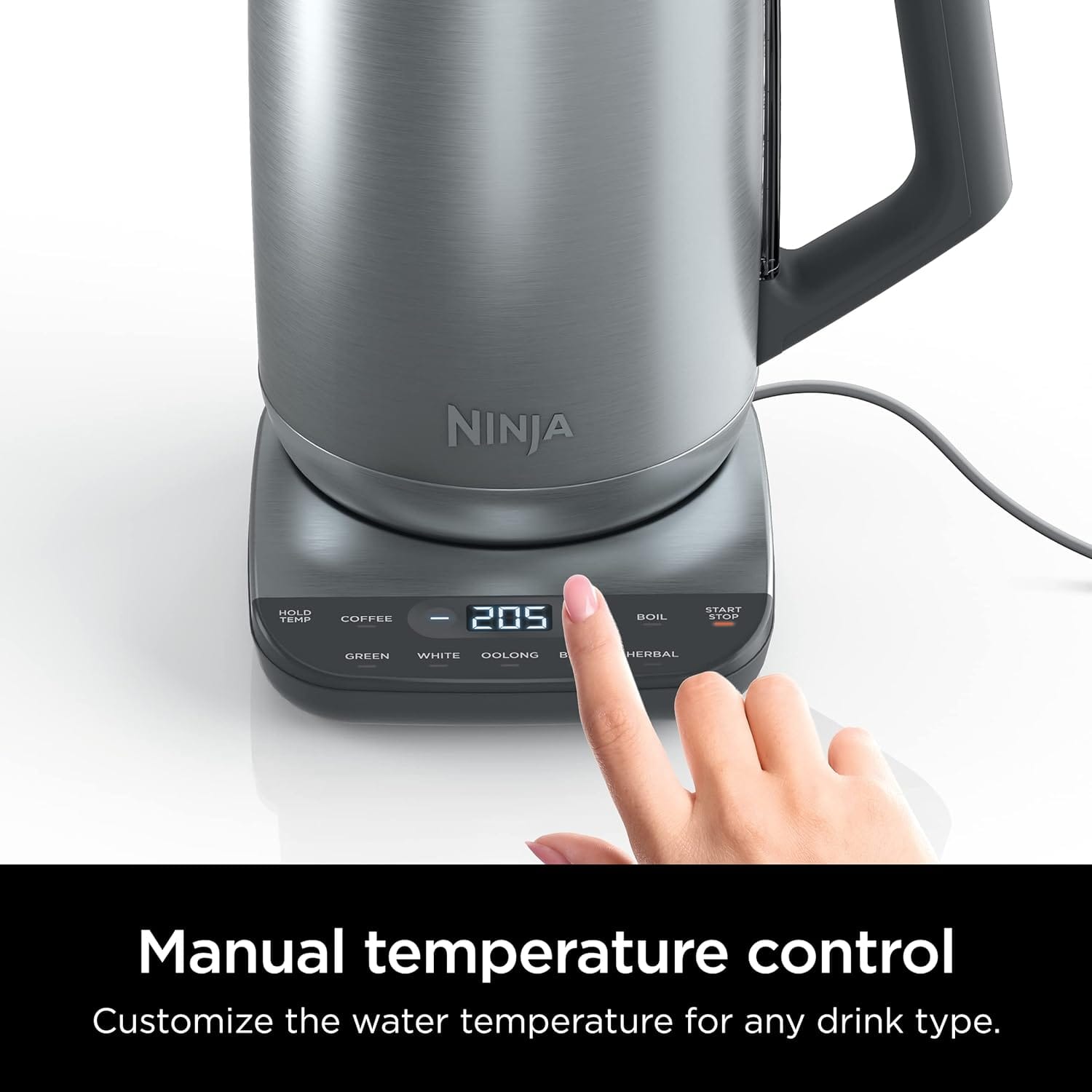
| Manual control | Adjust temperature in increments beyond presets |
| Hold temp | Maintains set temperature up to 30 minutes |
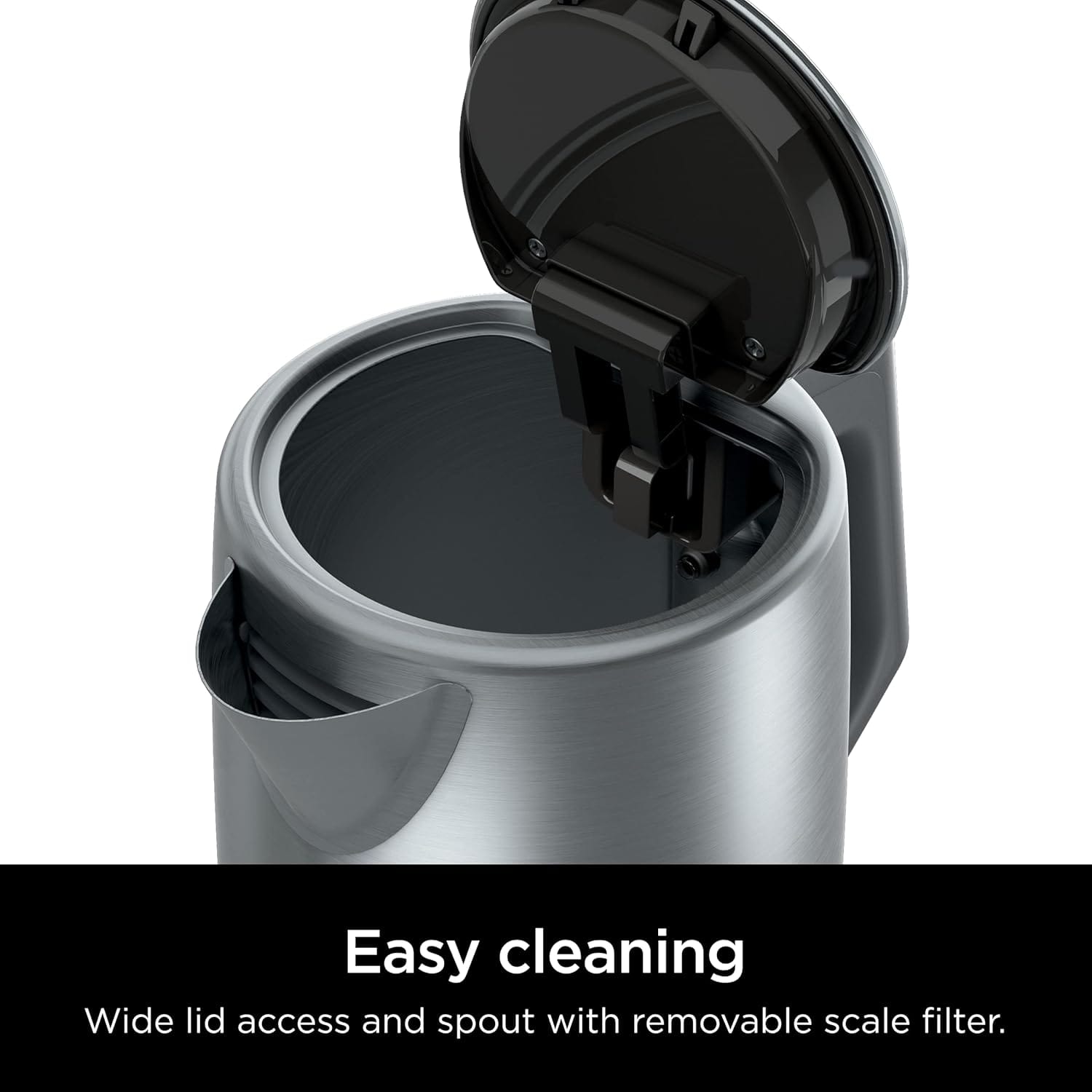
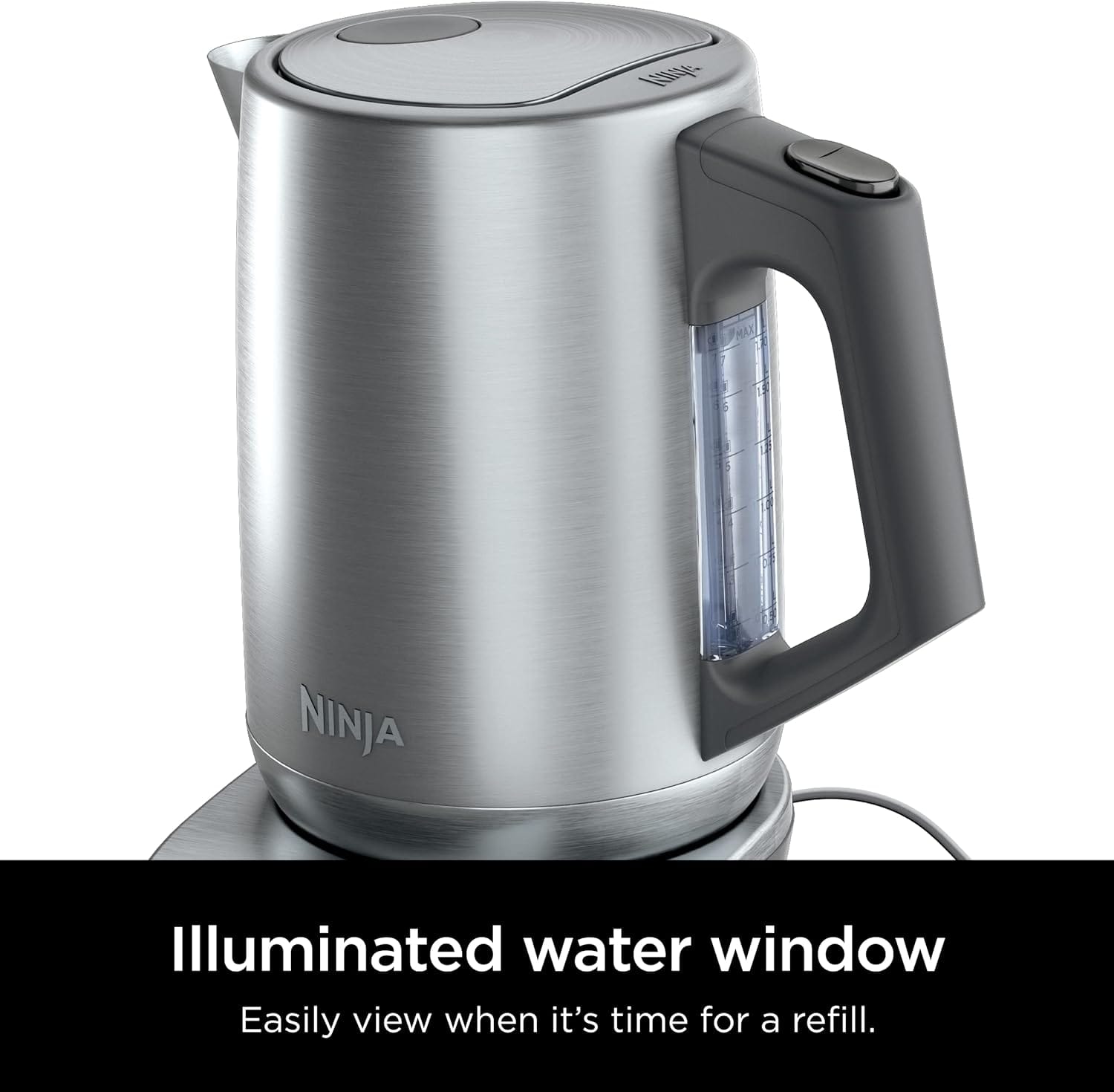
| Body | Stainless steel with water-level window; removable scale filter |
| Capacity | 1.7 L / ~7 cups |
| Real price (CAD) | ~$72–80 on sale (list ~$120); often dips lower during promotions |
What buyers on Amazon are saying
The KT200C sits around 4.4 stars on Amazon.ca with 670+ ratings — a mature product with enough Canadian buyers that the review themes feel settled, not hype-driven. Amazon's summary highlights temperature control, ease of use, and speed as top positives; durability and exterior heat draw the most consistent criticism.
Temperature accuracy and presets dominate happy reviews. Tea drinkers — especially green and white tea people — describe finally getting cups that taste the way the bag promised. Coffee people using pour-over or French press mention holding 93–96°C without guessing. Several buyers note they make 25–30 hot drinks a week and the presets became muscle memory within days.
Speed and hold function appear constantly. A full kettle reaching boil in roughly three to four minutes matches the 1,500-watt spec in real kitchens. The hold button earns more praise than expected — second cups without re-boiling, baby formula prep at a stable temp, oatmeal water waiting while you find a bowl. RedFlagDeals and Amazon reviewers both call hold the feature you did not know you wanted until you had it.
Build and daily usability get strong marks. Fingerprint-resistant stainless, clear level markings under the handle, cord storage in the base, and a removable scale filter for Canadian hard-water regions. Many describe it as the first kettle that felt premium without being fussy.
The friction clusters in three areas:
- Exterior gets hot — Stainless transfers heat. Several buyers warn the outside is not cool-touch during and after a boil; keep it away from curious toddler hands and do not grab the body when refilling mid-hold.
- Durability mixed bag — Most long-term reviews are fine, but a minority report failures after 1–2 years — sensor errors, hold function stopping, units that stop heating entirely. Descaling neglect shows up often in those stories. A ten-year-old basic kettle outliving a fancy one frustrates people who expected Ninja branding to guarantee decades.
- Mineral buildup at the rim — Hard water leaves scale where water sits against the lid line. Buyers who descale with vinegar every few months say the kettle stays fine; buyers who never descale describe rust-coloured spots and odd smells.
Smaller notes: the window is plastic, not glass — a cost choice some wish were different; boil is slightly below rolling boil by design at max setting; and the kettle is not whisper-silent during heating, though the finish chime is polite.
Honest summary: people who bought it for temperature control and use hold daily tend to love it. People who only needed cheap boiling water sometimes feel they paid for features they never touch — fair, but that is a buyer mismatch, not a product flaw.
What it's actually trying to do
Water temperature changes flavour chemistry. Tea polyphenols extract differently at 80°C versus 100°C. Coffee over 96°C extracts bitterness faster than sweetness. Even instant coffee drinkers often prefer water just off boil rather than actively rolling.
A basic kettle gives you 100°C every time — perfect for pasta, wrong for delicate tea. Variable-temperature kettles add a thermostat and logic board so you choose the target, hit start, and get consistency without a thermometer probe every morning.
The KT200C's second trick is hold — not re-boiling every time the temp drops a degree, but pulsing heat gently to stay in range. That saves flavour on re-pours and time on busy mornings when the first cup distracted you for twenty minutes.
Presets versus manual: which mode you will actually use
Seven presets cover the 80/20 of hot drinks:
- Green / white tea — Lower temps protect sweetness; boiling destroys them.
- Oolong / black / herbal — Stepping up through hotter ranges.
- Coffee — Typically high but not always full boil depending on method.
- Boil — 100°C for instant soup, sterilizing, or "I do not care about nuance today."
Manual +/- buttons let you fine-tune — useful if you know your Ethiopian pour-over wants 94°C exactly and the coffee preset is close but not perfect.
Most owners settle on two or three presets and ignore the rest. That is normal. You are not failing at kettle ownership if you only ever touch black tea and boil.
Hold temperature: the feature worth the upgrade alone
Hold keeps water within range for 30 minutes after reaching target. Without it, a precision kettle is still accurate once — then cools like any pot.
Real scenarios from buyer reviews:
- Second mug of tea twenty minutes after the first.
- Pour-over coffee staged across multiple small pours.
- Keeping water ready for guests without boiling repeatedly (which oxygenates and flattens tea).
- Morning chaos — heat once, drink whenever you surface from email.
Hold uses intermittent heating, so energy draw is modest compared to re-boiling from cold. It is not a thermos — expect gradual drift near the end of the window — but it beats starting over.
Hard water, descaling, and Canadian tap reality
Much of Canada has moderately to very hard water. Scale accumulates on heating elements and sensor contacts, slowing heat times and confusing temperature reads.
The removable scale filter at the spout catches some particulate, but it does not replace descaling the interior. Vinegar or citric acid descaler every 1–3 months — more often in Calgary, less in Vancouver — keeps hold accurate and extends life.
Buyers who treat descaling like oil changes report years of reliable service. Buyers who never descale and blame the sensor are telling the same story from opposite ends.
Watch the rim line where steam condenses — wipe and descale there specifically. Several four-star reviews dock one star purely for scale aesthetics at the water line, not functional failure.
What it gets genuinely right
- Preset accuracy — The reason people buy it; reviews back the claim across tea types.
- Hold function — Genuinely changes daily routines; not marketing filler.
- Speed — 1,500 watts delivers on "ready before you finish selecting a mug."
- Capacity — 1.7 L handles family mornings without refilling constantly.
- Stainless build — Feels solid; fingerprint-resistant finish holds up in photos and reality.
- Price on sale — Near $80 CAD during promotions, it undercuts Breville and Fellow while covering most use cases.
Who should buy it — and who really shouldn't
This is your machine if you're:
- A tea drinker with more than one type in the cupboard
- A pour-over or manual coffee person who cares about water temp
- A household that makes multiple hot drinks across a messy morning
- Replacing a basic kettle and willing to spend for hold + presets
- In a hard-water area willing to descale quarterly
Walk away if you're:
- Only boiling water for instant noodles — a $25 kettle does that
- Expecting cool-touch exterior during operation
- Needing glass construction for aesthetic or perceived purity reasons
- Unwilling to descale — precision sensors fail faster with scale buildup
- Chasing café pour-over perfection — gooseneck kettles still win pour control
The decision, in three honest questions
- Do my drinks actually need specific temperatures? If yes, this is one of the best value precision kettles in Canada. If you only ever want boil, save the money.
- Will I use hold? If multiple cups or staggered mornings describe your life, hold justifies the purchase alone. Single-cup instant coffee people may never press it.
- Can I maintain it? Ten minutes of descaling every few months separates five-star long-term reviews from two-star "died in eighteen months" stories.
A few questions worth answering
Is it worth it over a basic kettle?
If you drink one type of tea or only boil water, probably not. If temperature changes your cup quality — green tea, pour-over, hold for second servings — yes, especially near $80 CAD on sale.
Does the outside stay cool?
No. The stainless body gets hot during and after heating. Use the handle, keep it back from counter edges where kids reach, and do not grab the sides when refilling.
How do I descale it in Canada?
Fill with equal parts white vinegar and water, boil, let sit thirty minutes, rinse thoroughly. Repeat every 1–3 months depending on your local water hardness — more if hold accuracy drifts.
How long does hold last?
Up to 30 minutes at the selected temperature, with intermittent reheating to stay in range — not a sealed thermos, but enough for most morning routines.
What does it cost in Canada?
List price sits around $120 CAD; Amazon.ca and retail sales often drop it to $72–80. At full price it is still competitive; on sale it is an easy recommendation for tea and coffee households.
Looking for buyer guides that tell you the trade-offs, not just the highlights? More honest, Canadian-focused gadget coverage lives at celmin.ca.
Sign up or sign in to join the conversation.