
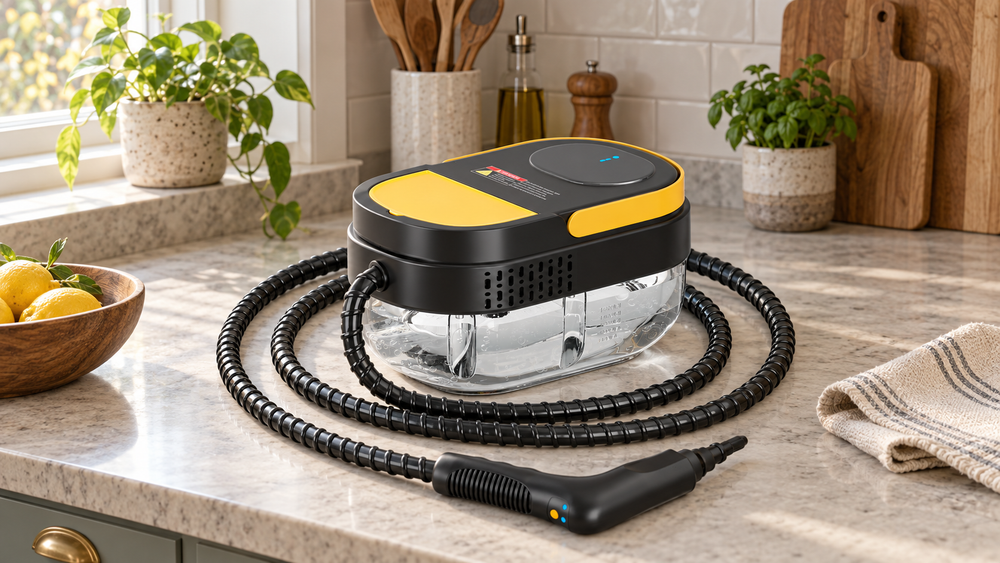
The Gautye G1 combines a 1.6 L tank with a hose. Check steam-safe surfaces, reach, attachments and the cleanup work it leaves behind.
The Gautye G1 separates the water tank from the tool in your hand. Its 1.6 L body stays on a stable surface while you work through a hose. That format is the main reason to consider it for several small cleaning jobs in one session.
It also creates two practical limits: you need somewhere safe for the body, and you need a cloth to collect loosened dirt. The G1 produces steam; it does not vacuum dirty water back into a recovery tank.
A cleaning session, from setup to putting it away
Picture a few nearby, steam-compatible detail jobs rather than an entire house. You need a safe position for the G1's tank, a clear cord route and enough hose reach to work without tugging the body. You also need somewhere for the used cloths and hot accessories afterwards. Those practicalities decide whether the larger tank feels convenient.
Before heating, remove loose debris using the method appropriate to the surface. Steam loosens material; it does not make that material disappear. A cloth or other surface-approved method is still needed to collect the residue. Repeatedly moving dirty moisture around can leave a disappointing result even when the steam has softened the soil.
Work in manageable sections so you can assess the finish and remove loosened dirt promptly. Keep the body stable as you change position. If the hose no longer reaches comfortably, follow the instructions for safely repositioning the equipment instead of pulling it toward you.
Cleanup belongs in the time estimate too. The machine and attachments need to cool, and the tank and tools need the care specified in the manual. A quick advertised warm-up is useful at the beginning, but it does not describe the total time from taking the cleaner out to putting it away.
Build a surface list before a shopping list
Start with the exact material and finish, not a room name. A bathroom can contain tile, painted trim, sealant, coated fixtures and other surfaces with different care requirements. The fact that one part tolerates a cleaning method does not establish that everything next to it does.
Joints, edges and adhesives deserve attention because the visible face is only part of the construction. Do not assume that a waterproof or sealed description permits heat and steam. Check the maker's instructions for the actual surface, and use its approved cleaning method when steam is prohibited.
Be especially cautious with a plan built around flooring. The G1's attachment range does not override flooring care restrictions. If most of the areas you want to clean cannot be steamed, the larger tank and short warm-up time are unlikely to justify the purchase.
Check the surface before the attachment
Make a short list of the places you want to clean, then check the surface manufacturer’s care instructions. A brush that reaches a gap does not establish that the finish, adhesive or seal beneath it tolerates steam.
For floors, this is particularly important. Shaw’s steam-cleaning guidance explains restrictions for its flooring. Other flooring needs its own manufacturer’s instructions; “sealed” is not a universal permission to use steam.
Choose jobs from the surface manufacturer’s care directions, not the range of attachments. If the surface maker prohibits steam, leave that material off the job list.
A brush that reaches a gap does not prove steam is safe
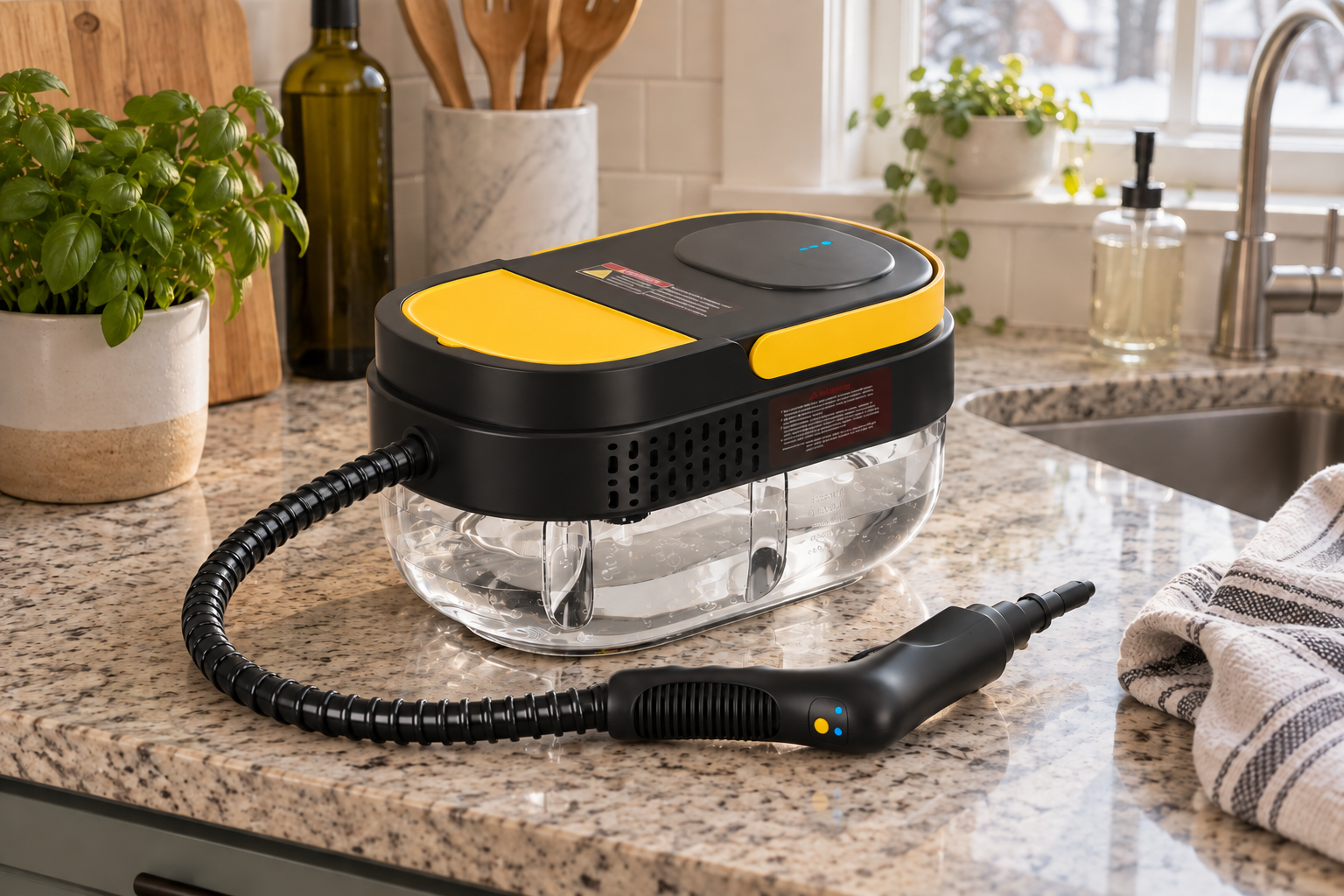
Gautye G1 steam cleaner
 Shop at Amazon.ca
Choose the attachment for the finish
A narrow nozzle and a brush solve different parts of a cleaning job. The nozzle directs steam; the brush adds mechanical contact. More aggressive contact is not automatically appropriate for a stubborn mark, particularly on a coated, polished or delicate finish.
Identify the materials of the brushes in the selected bundle and follow their intended uses. A metal-bristled accessory should never be treated as interchangeable with a softer brush just because both fit the hose. When in doubt, stop and consult the surface and cleaner instructions rather than experimenting on a conspicuous area.
Accessory counts can also include extension pieces, cloths and fittings. Count the tasks the useful attachments cover, not just the number of pieces in the box. Two well-matched tools you use regularly are more valuable than a large collection that stays in storage.
Keep tools used in different areas organised and clean them as directed. That makes the next session easier and avoids treating a visibly dirty brush as ready for a more sensitive surface. Do not add fragrance, detergent or descaling chemicals to the tank unless the G1's instructions explicitly permit the substance and method.
What the headline numbers mean
Gautye advertises a 15-second heat-up, three settings, 1,600 W power, about 100°C steam and 3 bar pressure. These figures describe the heating system; they do not predict the result on a particular stain.
Fast heat-up does not establish continuous steam output or how well a stain will release. Temperature also changes between the heater, nozzle and surface, so the headline figure cannot prove a sanitizing result.
The advertised four-metre cleaning reach should not be read as a four-metre hose. Confirm the hose and power-cord lengths separately. The body’s listed dimensions are about 22 × 15 × 18 cm; leave additional room for the hose connection and safe access.
What to expect from steam—and what to leave out
Steam can be part of a cleaning process on compatible materials, but it is not a universal answer to every stain. A permanent mark, damaged finish or discolouration may remain after surface dirt is removed. Increasing heat exposure or scrubbing pressure can make the underlying problem worse.
The absence of a recovery tank is an important distinction. The G1 does not pull dirty liquid out of fabric. If your central goal is extracting moisture from a sofa or carpet, its steam output should not be mistaken for that function. Likewise, a surface that looks cleaner has not thereby been shown to be disinfected.
Treat sanitation claims cautiously. The headline temperature does not establish the temperature reached across a surface or how long it remains there. Follow an appropriate validated method when disinfection is required rather than assuming any visible steam plume delivers the same result.
Steam and recently used attachments can burn. Keep people and pets away from the working area and follow the model-specific instructions for switching tools, releasing pressure and refilling. A water-only process still involves hot equipment and needs deliberate handling.
Storage and support before purchase
Measure a storage space for the body, hose and accessory container together. The body's dimensions do not describe the entire kit. A hose folded sharply to fit a tiny cupboard may be inconsistent with its care instructions, and loose small fittings are easy to misplace.
Ask whether replacement brushes, seals and other wear parts are available for this exact model. Get the manual before purchase if possible, including water requirements and maintenance directions. Local water conditions do not justify inventing a descaling recipe; follow the cleaner's specified procedure.
Check the return terms for an opened appliance and keep the packaging until you have confirmed the correct model, accessories and basic operation. Inspect the cable and housing before use. For a Canadian purchase, verify the applicable electrical certification on the delivered product rather than treating marketplace availability as approval.
A larger tank changes handling
The G1’s 1.6 L capacity means the tank body holds a meaningful amount of water. Put it on the stable surface required by the manual, within reach of the work, rather than pulling it around by the hose.
Plan the cord route before heating. It should not cross a wet work area or become something you step over repeatedly. Do not balance the machine on a narrow stair or ledge to gain extra reach.
Refilling and changing attachments involve hot equipment. Follow the model’s shutdown, cooling and pressure-release instructions. A fast start-up claim says nothing about when it is safe to open the tank.
Quick answers for a realistic buying decision
Is the G1 convenient for one tiny job?
It can handle a localized task on a permitted surface, but the full setup and cooldown still apply. Its larger tank makes more sense when you have several compatible areas within a manageable working route. Consider the whole session, not only the warm-up figure.
Does a bigger tank mean stronger cleaning?
No. Capacity affects the water available between refills. The result also depends on the material, type of soil, permitted technique and collection of loosened residue. Tank size should be chosen for the session, not used as a performance score.
Can it replace every cleaning product?
No single method suits every material or problem. Keep the surface maker's care instructions as the deciding reference. The G1 is best considered a tool for a defined set of compatible jobs, with its handling and maintenance requirements included in the decision.
Fifteen pieces are useful only if you need them
The advertised accessory count includes different tools, not fifteen different cleaning capabilities. Identify the nozzle and brush you would use for each approved surface. A stiff brush can damage a finish even when the steam itself is allowed.
Work on a small area first, following both sets of instructions. Wipe away loosened residue with a suitable cloth and check the result before continuing. More heat or a longer dwell is not automatically a better response to stubborn dirt.
After use, allow the machine to cool and follow its draining and storage directions. Keep the accessories together so the correct attachment is available next time.
The G1 is a reasonable format to investigate when you want a larger stationary tank and a hose for compatible small-area cleaning. It is a poor fit for a plan built around extracting moisture from upholstery or steaming surfaces whose care instructions prohibit it.
Gautye G1 steam cleaner
Shop at Amazon.caImages are AI-generated illustrations based on product references.

Sign up or sign in to join the conversation.