
Canadian winters have a way of sealing you inside with everything you brought in from outside — pet dander, cooking smoke, dry furnace dust, and whatever your neighbour's wood stove contributed to the neighbourhood air. Spring is not much kinder when pollen arrives and you still will not open eve...
Canadian winters have a way of sealing you inside with everything you brought in from outside — pet dander, cooking smoke, dry furnace dust, and whatever your neighbour's wood stove contributed to the neighbourhood air. Spring is not much kinder when pollen arrives and you still will not open every window because the heat pump is finally behaving. You notice it in the morning throat tickle, the layer of dust that returns two days after wiping a shelf, the way a pan-fried dinner lingers in the bedroom hours later.
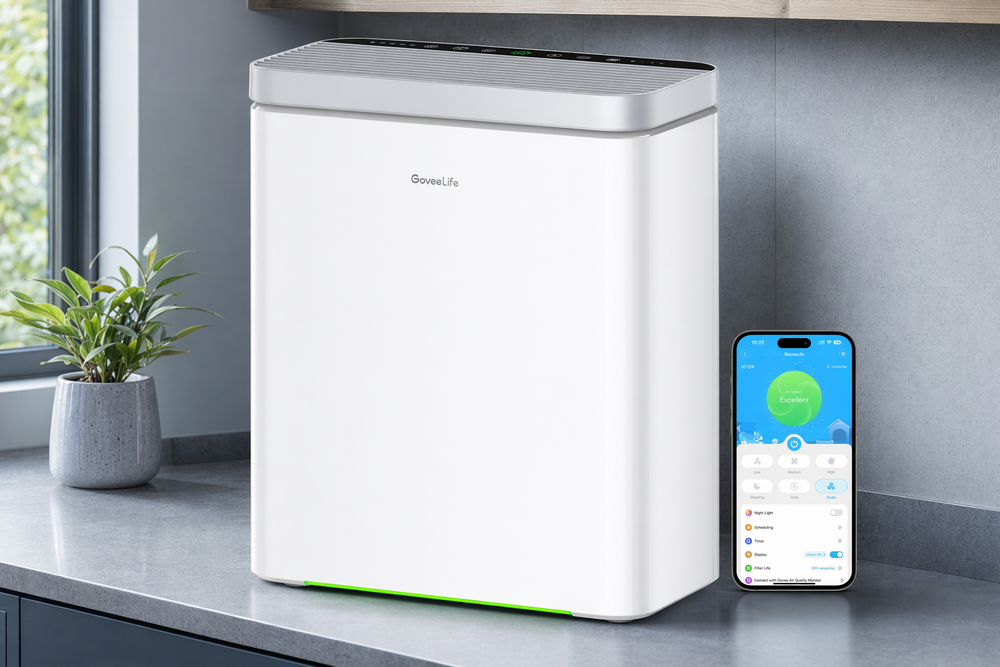
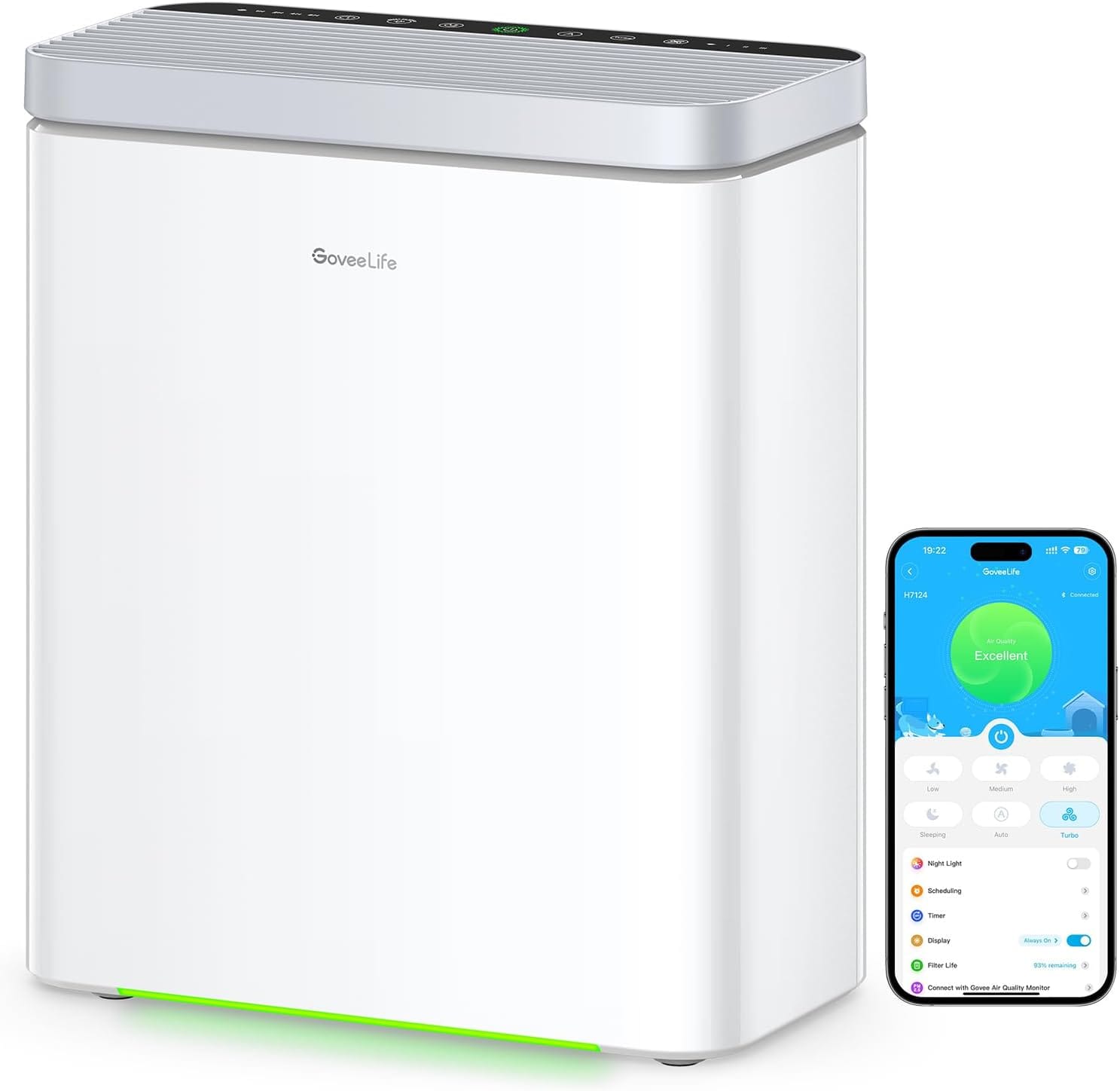
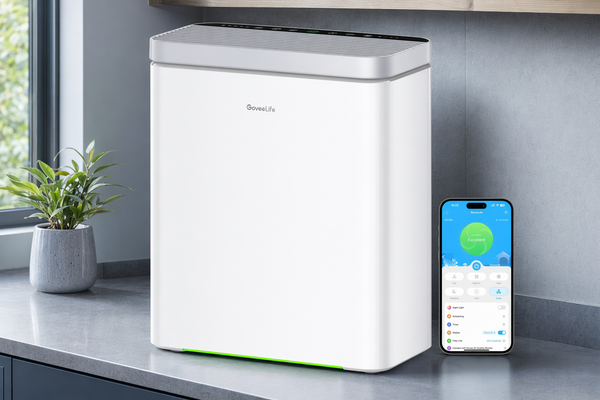
The GoveeLife Smart Air Purifier is built for people who want the machine to pay attention so they do not have to. It covers a claimed 1,046 ft² (~97 m²), runs a three-stage H13 HEPA filter, watches PM2.5 levels with a built-in sensor, and adjusts fan speed automatically — or from your phone, or through Alexa. That sensor-and-app combination is the product's personality. It is also where expectations can overshoot reality: no purifier magically fixes a drafty whole house on one setting, and smart features only help if you actually use them.

The snapshot
| GoveeLife Smart Air Purifier (H7124) | |
|---|---|
| What it is | H13 HEPA air purifier with PM2.5 sensor and smart controls |
| Claimed coverage | Up to 1,046 ft² (~97 m²) — one air change per hour at max CADR |
| CADR | ~135 CFM |
| Filtration | Washable pre-filter + HEPA + activated carbon (3-in-1 cartridge) |
| Noise | ~24 dB in sleep mode; audible on turbo |
| Smart features | Govee app, Alexa, IFTTT; RGB mood lighting; air quality colour indicator |
| Filter life | Replace main cartridge every 6–8 months (app tracks %) |
| Real price (CAD) | ~$130–150 for the unit; replacement filters ~$36–40 |
What buyers on Amazon are saying
The GoveeLife H7124 holds around 4.7 stars on Amazon.ca with hundreds of ratings — a strong score for a category where people love complaining about noise and filter costs. Amazon's AI review summary and verified buyer comments cluster into a few clear themes.
Air quality improvement is the headline positive. Buyers with pets, allergies, or cooking-heavy households repeatedly say dust settles slower, odours clear faster, and bedrooms feel fresher within days. Several Canadian reviewers mention wildfire smoke season specifically — not as a miracle cure, but as a noticeable reduction in haze and smell when the unit runs on auto or turbo.
Quiet operation and sleep mode come up almost as often. People running it in bedrooms praise sleep mode as genuinely unobtrusive — a soft hum rather than a white-noise machine shouting at you. The ability to turn off all lights via scheduling gets repeated mention from light-sensitive sleepers.
App and auto mode split the room. Fans love watching PM2.5 numbers drop in real time and setting schedules that ramp down at night. Skeptics note a quirk: the built-in sensor cannot trigger automations on its own in all scenarios — some advanced routines only work if you also own a separate Govee air quality monitor in another room, which makes little sense when the purifier already has a sensor.
The friction shows up in three places:
- Coverage optimism — Buyers who park one unit in an open-concept main floor expecting whole-home purification sometimes feel underwhelmed. The 1,046 ft² figure assumes ideal airflow in a single zone, not a two-storey house with closed doors.
- Filter replacements — Most accept the ongoing cost, but several wish replacement cartridges were cheaper or easier to find outside Amazon. The washable pre-filter helps, but the HEPA+carbon core still needs periodic swapping.
- Wi-Fi setup — A minority report 2.4 GHz pairing headaches (the unit does not support 5 GHz networks). Once connected, stability is generally fine; the initial setup frustrates people who skipped reading that detail.
Smaller notes: turbo mode is loud but effective; spraying air freshener near the unit sends PM2.5 readings spiking — which is actually the sensor doing its job; and the power cord is shorter than some would like for corner placement.
The honest shape of opinion: people who sized it for a large bedroom, living room, or open kitchen tend to love it. People treating it as whole-house HVAC replacement tend to feel misled by the square-footage marketing.
What it's actually trying to do
Air purifiers do not "create" clean air — they move dirty air through a filter and return cleaner air on the other side. Effectiveness comes down to three numbers working together: CADR (how much filtered air per minute), room volume, and how sealed the space is.
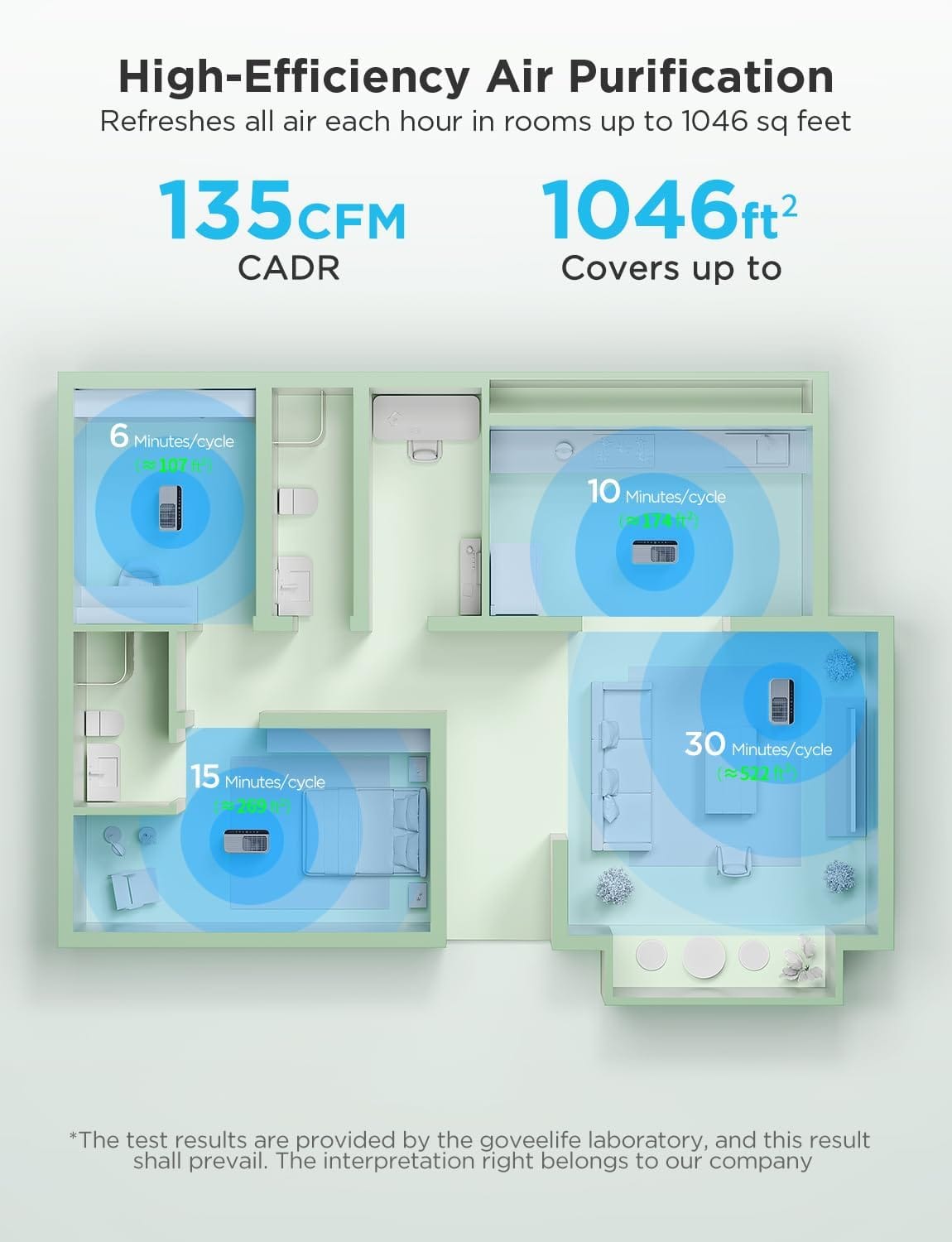
The GoveeLife unit targets roughly 135 CFM CADR. In plain language, that is enough to scrub a medium-to-large room's air reasonably well when the door is closed and ceilings are normal height. Leave every door open across 2,000 ft², and physics wins — one consumer purifier becomes a local improvement, not a building-wide fix.
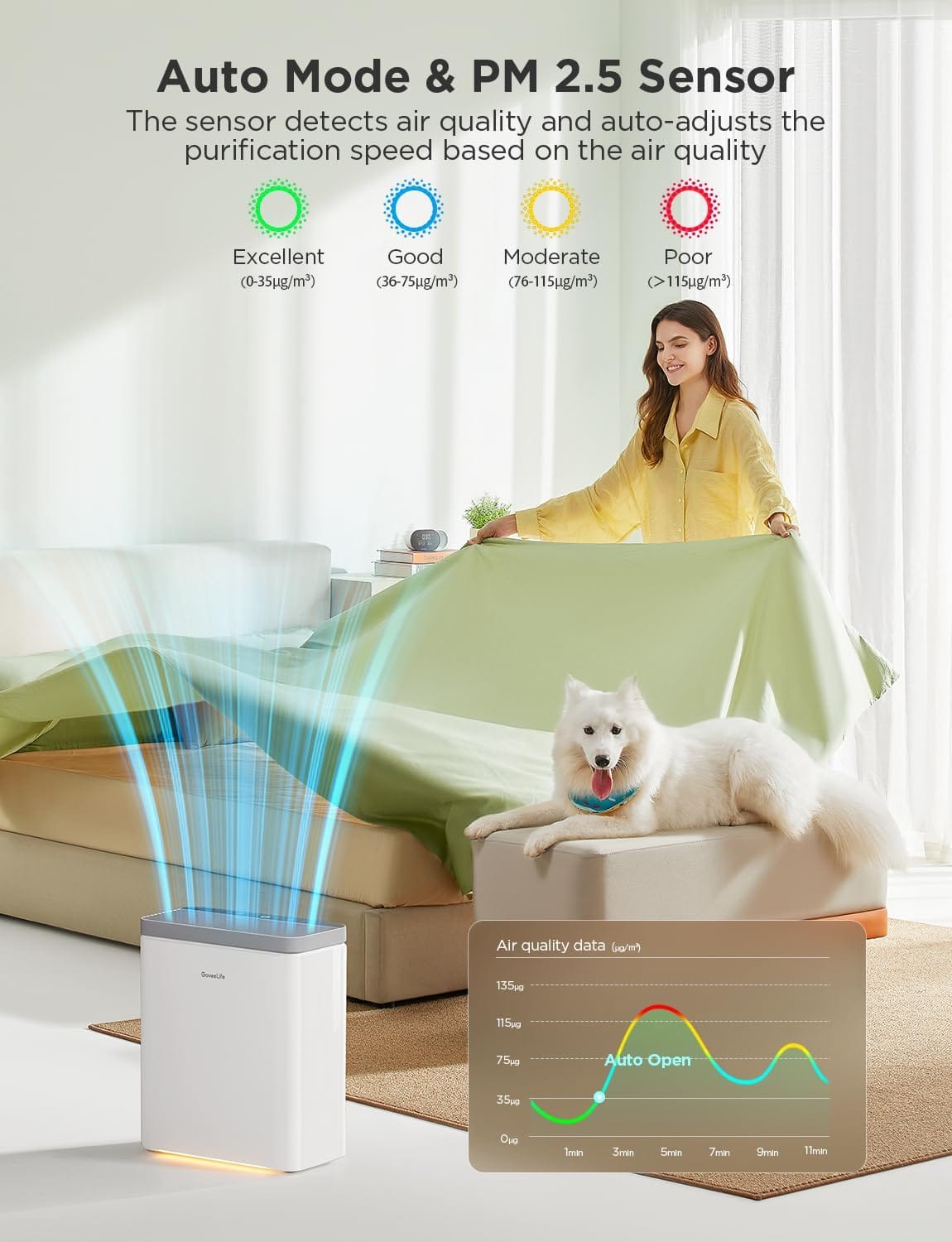
The PM2.5 sensor exists so the machine can stop running at full blast when the air is already clean — saving power and noise — and ramp up when you burn toast or the dog shakes itself out on the couch. That closed loop is what separates smart purifiers from dumb fans with filters glued on.
The square footage math nobody prints on the box
Marketing coverage numbers assume one air change per hour at maximum fan speed — industry shorthand, not a promise that your basement and upstairs will both sparkle.
For a 400 ft² living room with 8-foot ceilings (~3,200 ft³), one air change per hour needs a CADR around 53 CFM at minimum. This unit's 135 CFM CADR has headroom in that scenario — believable.
For an entire 1,500 ft² bungalow with open layout, air still mixes slowly across zones. One purifier in the living room helps the living room first. Bedrooms down a hall with closed doors lag behind. That is not failure; it is airflow.
Honest placement advice from buyer patterns: put it where you breathe — bedroom, home office, nursery — not in a hallway expecting miracles two rooms away.
Smart features: useful, gimmicky, or both?
The Govee app does more than on/off. You get historical PM2.5 graphs, filter life percentage, schedules, and RGB lighting if you want your purifier to glow purple during movie night.
Auto mode is the feature worth using daily. Leave it on auto, let the fan speed follow particulate levels, and forget about it. Buyers who treat it as a set-and-forget appliance report the best satisfaction.
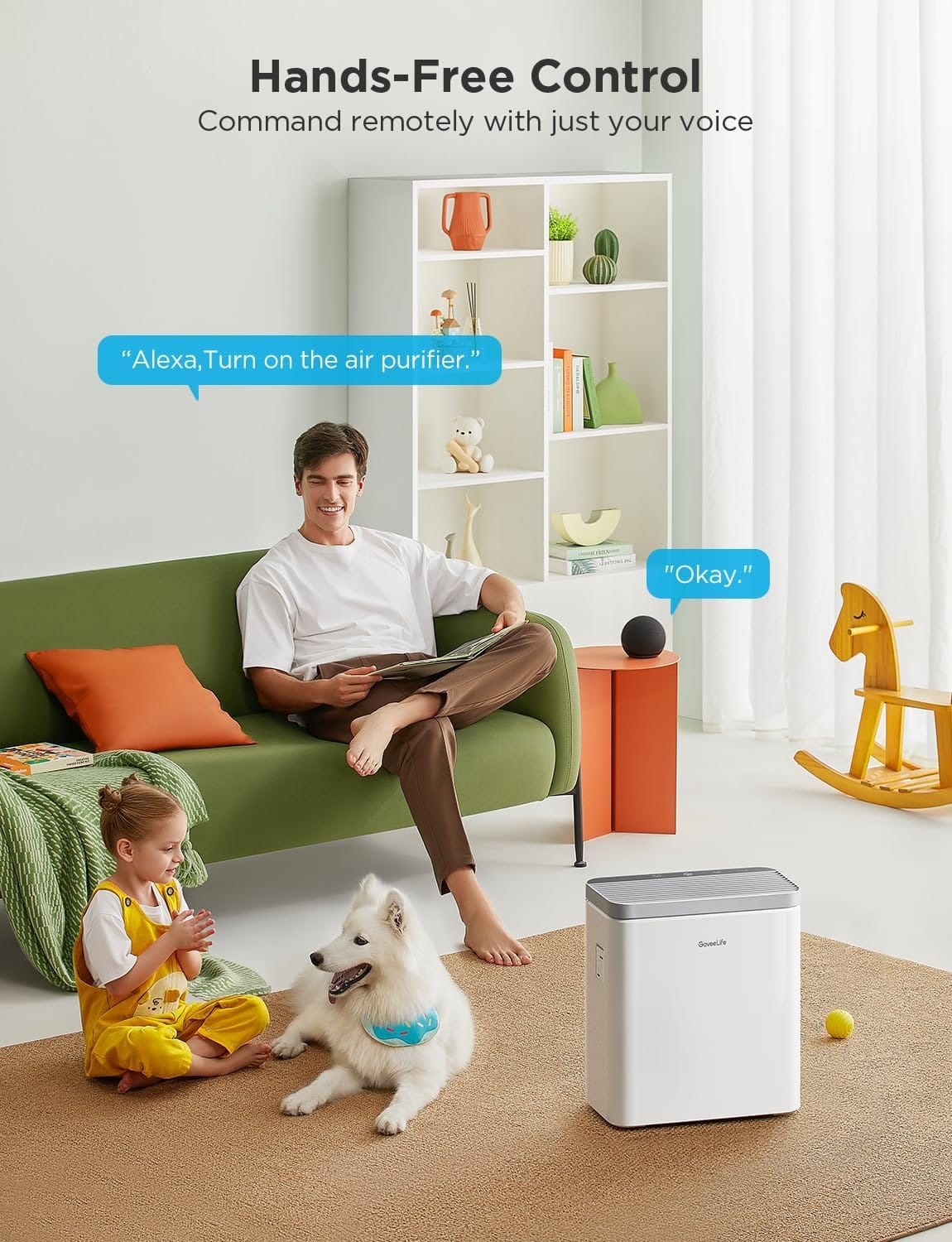
Alexa and IFTTT matter if you already live in that ecosystem — "Alexa, turn on the air purifier" before guests arrive is genuinely convenient. If you hate phone apps, the top touch panel still works without Wi-Fi once configured.
RGB lighting is polarizing. Some love the air-quality colour ring as ambient feedback; others turn every LED off and never look back. Neither camp is wrong.
The documented limitation — automations tied to a separate Govee monitor rather than the purifier's own sensor — annoys power users who read the fine print. Casual users rarely notice.
Filters, maintenance, and the real cost of ownership
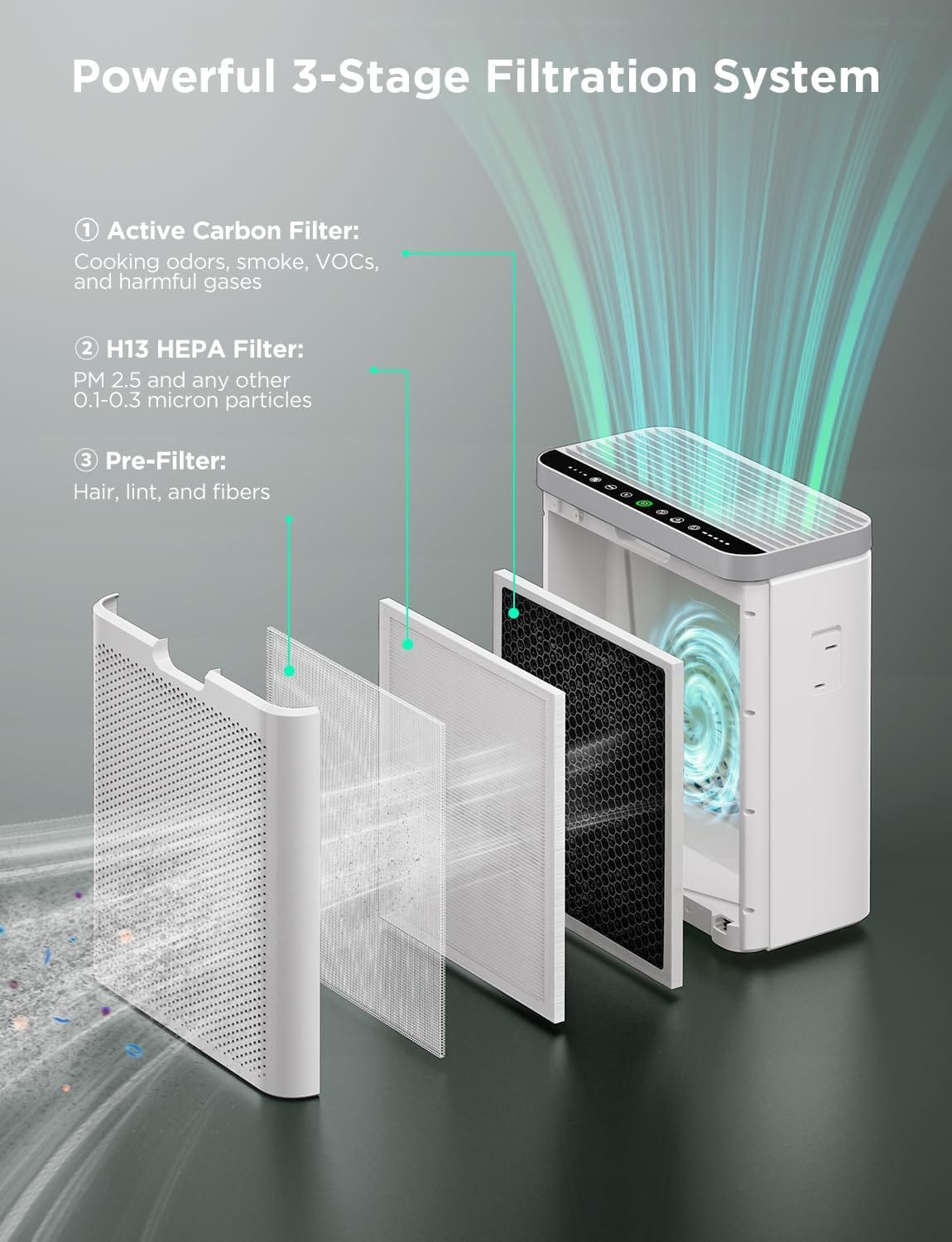
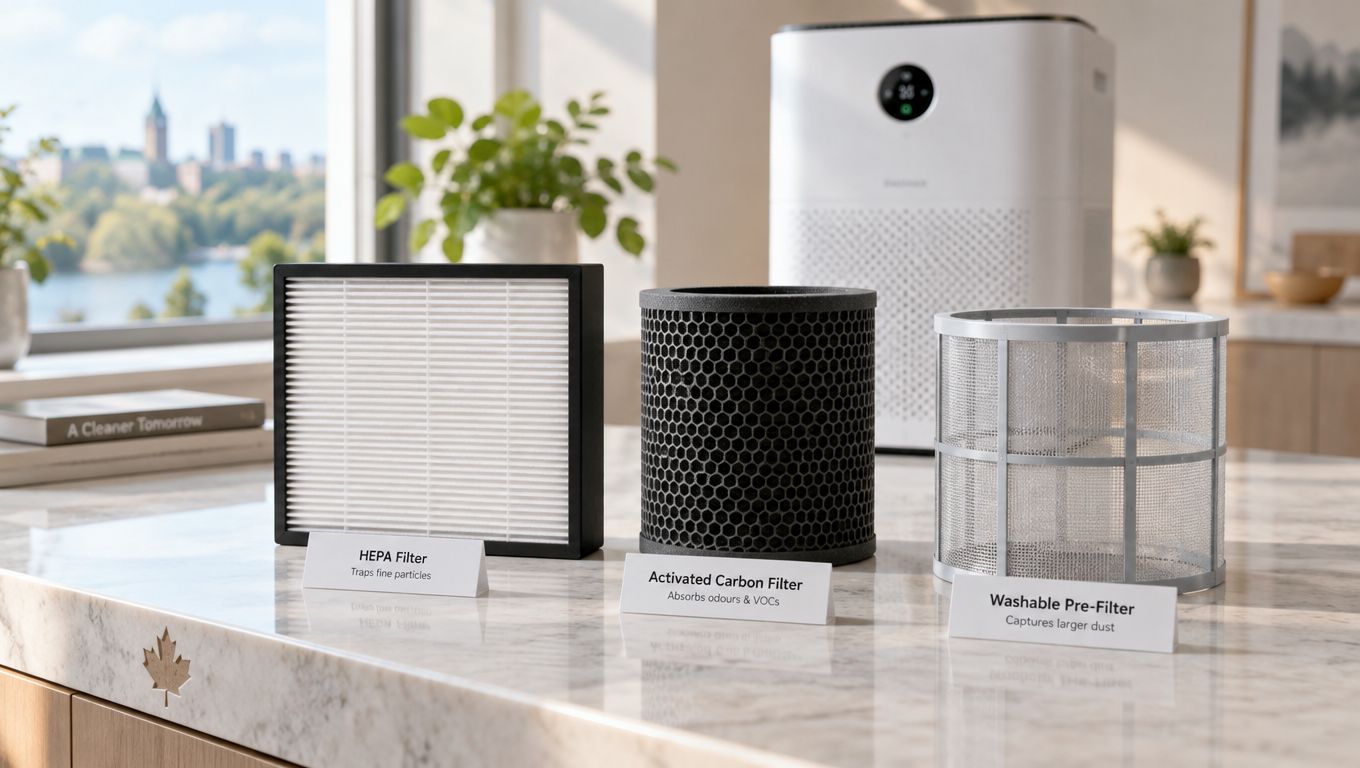
The three-stage cartridge captures 99.97% of particles down to 0.3 microns — standard H13 HEPA language, independently verified according to GoveeLife's listing. The washable pre-filter catches hair and large dust; rinsing it every few weeks extends the main filter's life and costs nothing but tap water.
The HEPA+carbon core needs replacement every 6–8 months depending on use — sooner with multiple pets, wildfire season, or constant turbo. At roughly $36–40 CAD per replacement on Amazon.ca, that is $55–80/year in consumables. Still cheaper than many premium brands that charge $80+ per cartridge, but not zero.
Search "GoveeLife H7124 replacement filter" on Amazon.ca when ordering — buyers who guess compatible filters sometimes get sizing wrong.
What it gets genuinely right
- Price-to-feature ratio — PM2.5 sensor, app control, and H13 filtration near $130–150 CAD competes well on features if not always on unit price.
- Sleep-mode quiet — Genuinely bedroom-friendly when lights are scheduled off.
- Auto mode that responds — Sensor-driven fan changes beat running high all day.
- Odour and smoke handling — Carbon stage plus strong airflow helps cooking smells and mild wildfire haze.
- Compact footprint — Tall tower design fits corners without dominating the room.
- Washable pre-filter — Small maintenance win that adds up over years.
Who should buy it — and who really shouldn't
This is your machine if you're:
- A pet owner tired of fur dust on every surface
- Someone with mild allergies who wants measurable PM2.5 feedback
- A renter or homeowner targeting one large room or open kitchen-living area
- Already using Govee smart home gear and want matching app control
- Looking for strong value without paying Dyson or Blueair prices
Walk away if you're:
- Expecting one unit to purify a multi-storey house evenly
- Allergic to apps — setup requires Wi-Fi for full features
- Need medical-grade air handling for severe respiratory conditions (consult a specialist; consumer purifiers are general wellness tools)
- Want silent operation on maximum fan — turbo is loud by design
- Unwilling to buy replacement filters twice a year
The decision, in three honest questions
- Is my problem one room or the whole house? One large room or open zone — this fits well. Whole house — buy multiple units or adjust expectations sharply.
- Will I use auto mode and change filters on schedule? A purifier with a clogged filter is an expensive fan. The GoveeLife rewards minimal attention, not zero attention.
- Do smart features matter to me? If yes, the app and Alexa integration punch above the price. If no, a simpler dumb purifier might save money — though you would lose the PM2.5 loop.
A few questions worth answering
Does it work for wildfire smoke in Canada?
It helps with particulate reduction and smoke odour in a closed room — buyers in BC and Alberta have noted improvement — but it is not respirator-level protection. Close windows, run on turbo during peak smoke, and understand one unit will not clear an entire home.
How loud is it really?
Sleep mode is whisper-quiet for most people. Medium is a gentle fan. Turbo sounds like a proper appliance working hard — fine for cooking emergencies, not for sleeping.
Can I run it without the app?
Yes. Touch controls on the unit handle power, fan speed, and mode. The app adds schedules, history, and lighting — it is not mandatory after initial Wi-Fi pairing if you prefer buttons.
How often do filters need replacing?
Plan every 6–8 months for typical home use; check the app's percentage tracker and inspect the pre-filter monthly. Pet-heavy homes and smoke events shorten that window.
What does it cost in Canada, all-in?
The unit runs about $130–150 CAD on Amazon.ca. Budget $90–120/year including one or two replacement filter cartridges depending on your air quality.
Looking for buyer guides that tell you the trade-offs, not just the highlights? More honest, Canadian-focused gadget coverage lives at celmin.ca.
Sign up or sign in to join the conversation.