
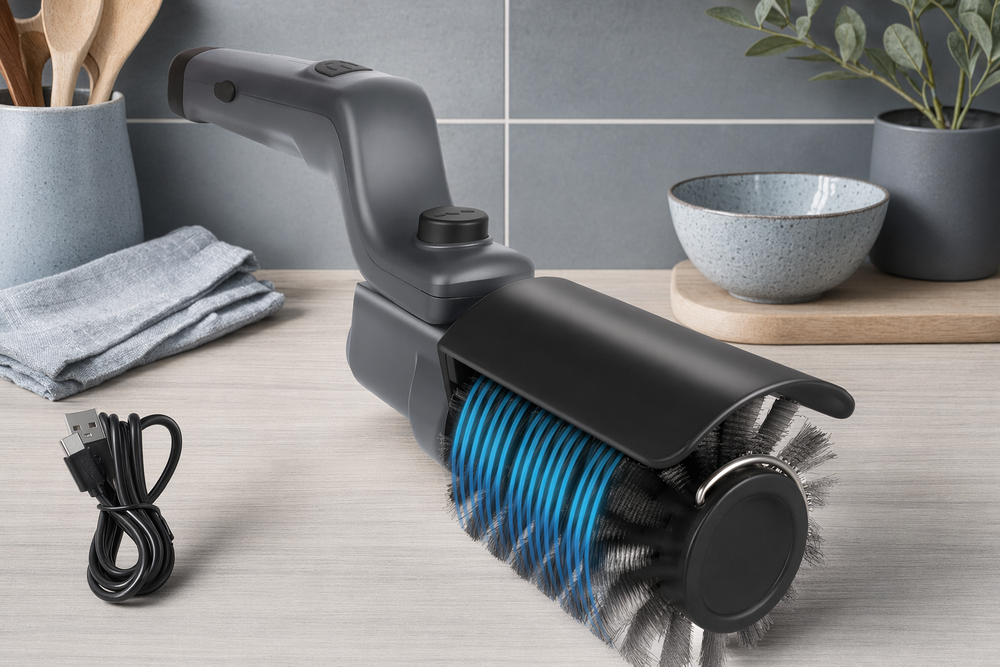

Every grill owner knows the moment: guests are inside, the burgers are resting, and you are outside with a balled-up foil wad and a wire brush that lost its fight with last summer's carbon. Manual grill brushes work — eventually — but they punish wrists, shed bristles people worry about swallowin...
Every grill owner knows the moment: guests are inside, the burgers are resting, and you are outside with a balled-up foil wad and a wire brush that lost its fight with last summer's carbon. Manual grill brushes work — eventually — but they punish wrists, shed bristles people worry about swallowing, and turn post-BBQ cleanup into the chore that makes you consider ordering pizza next time.
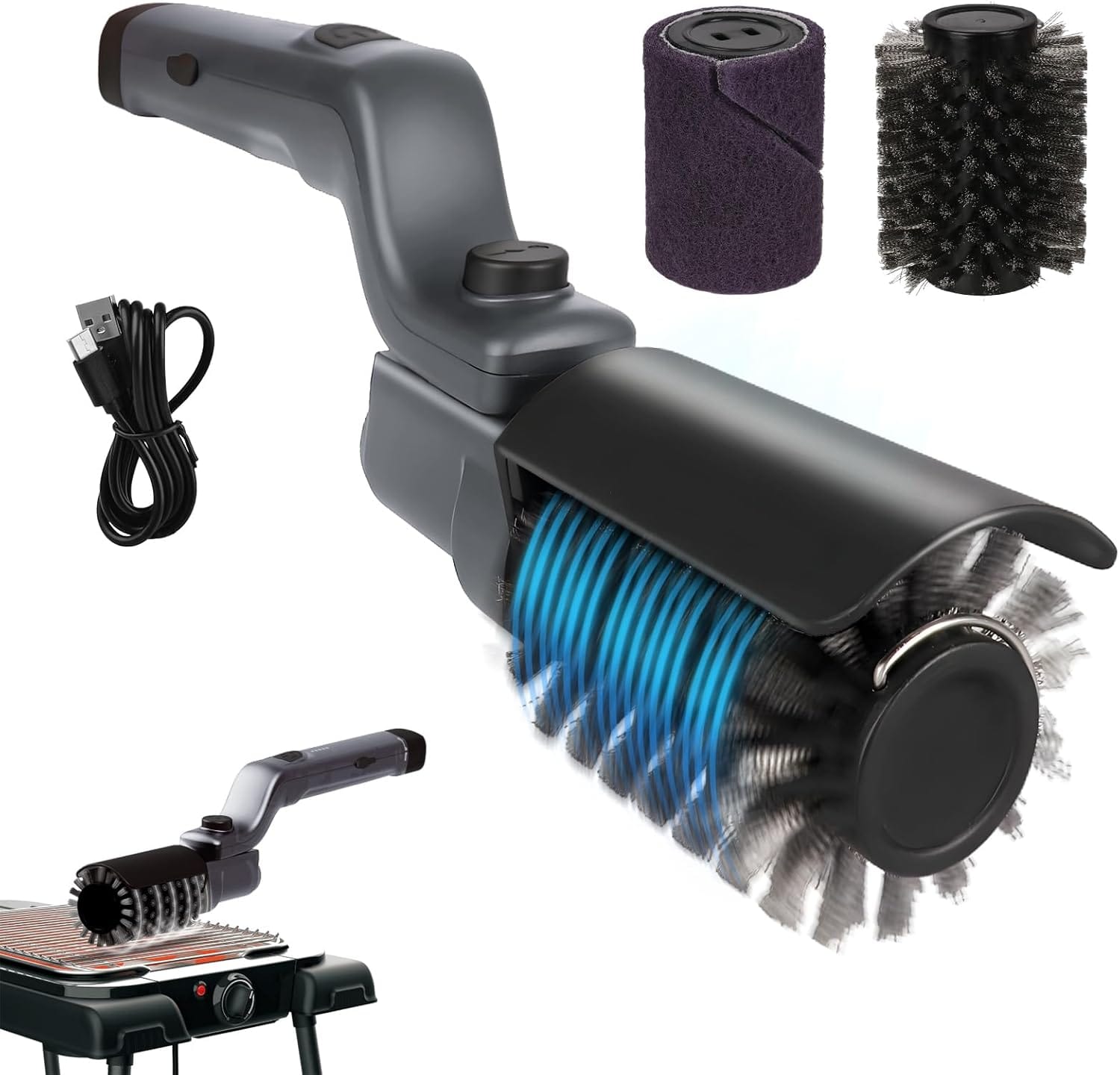
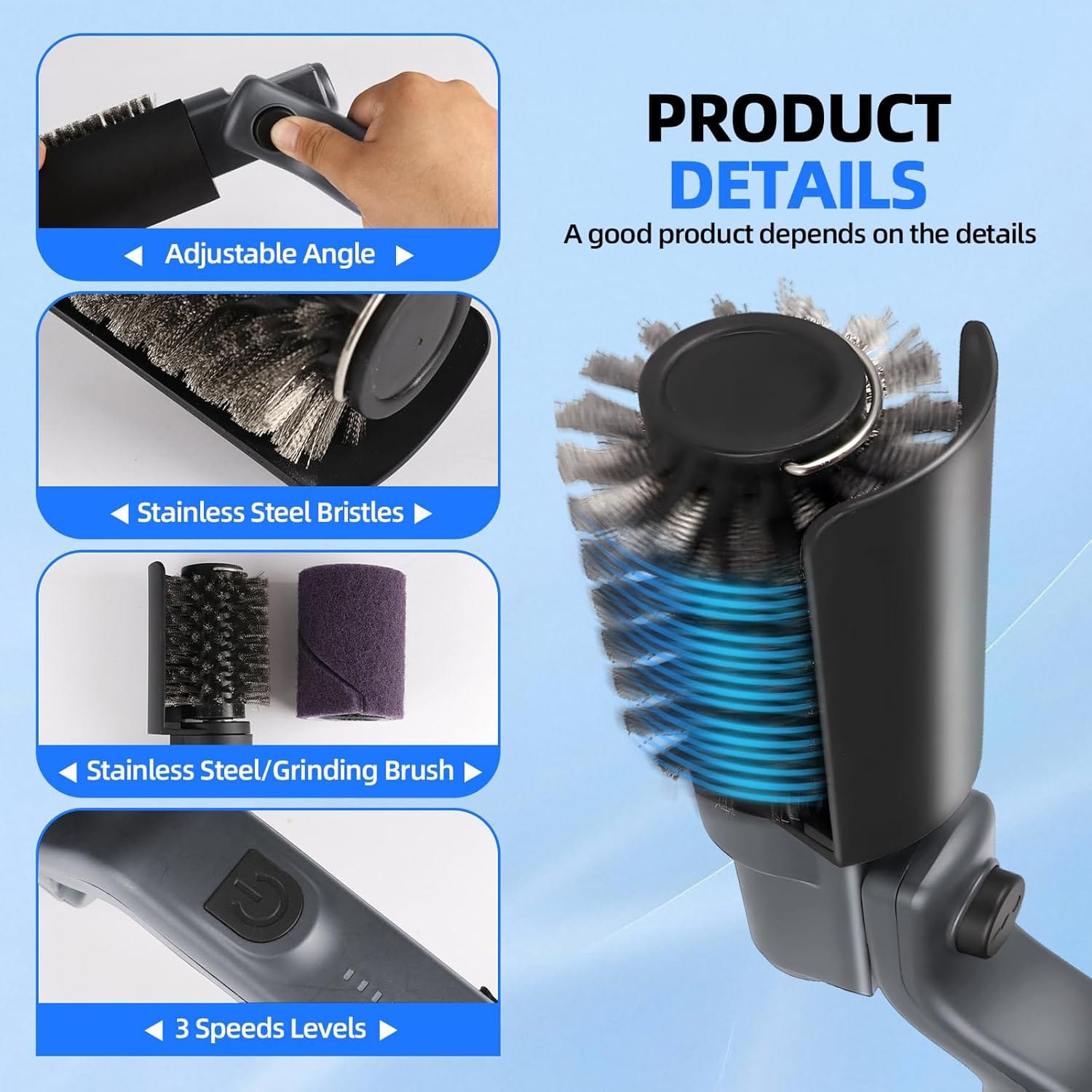
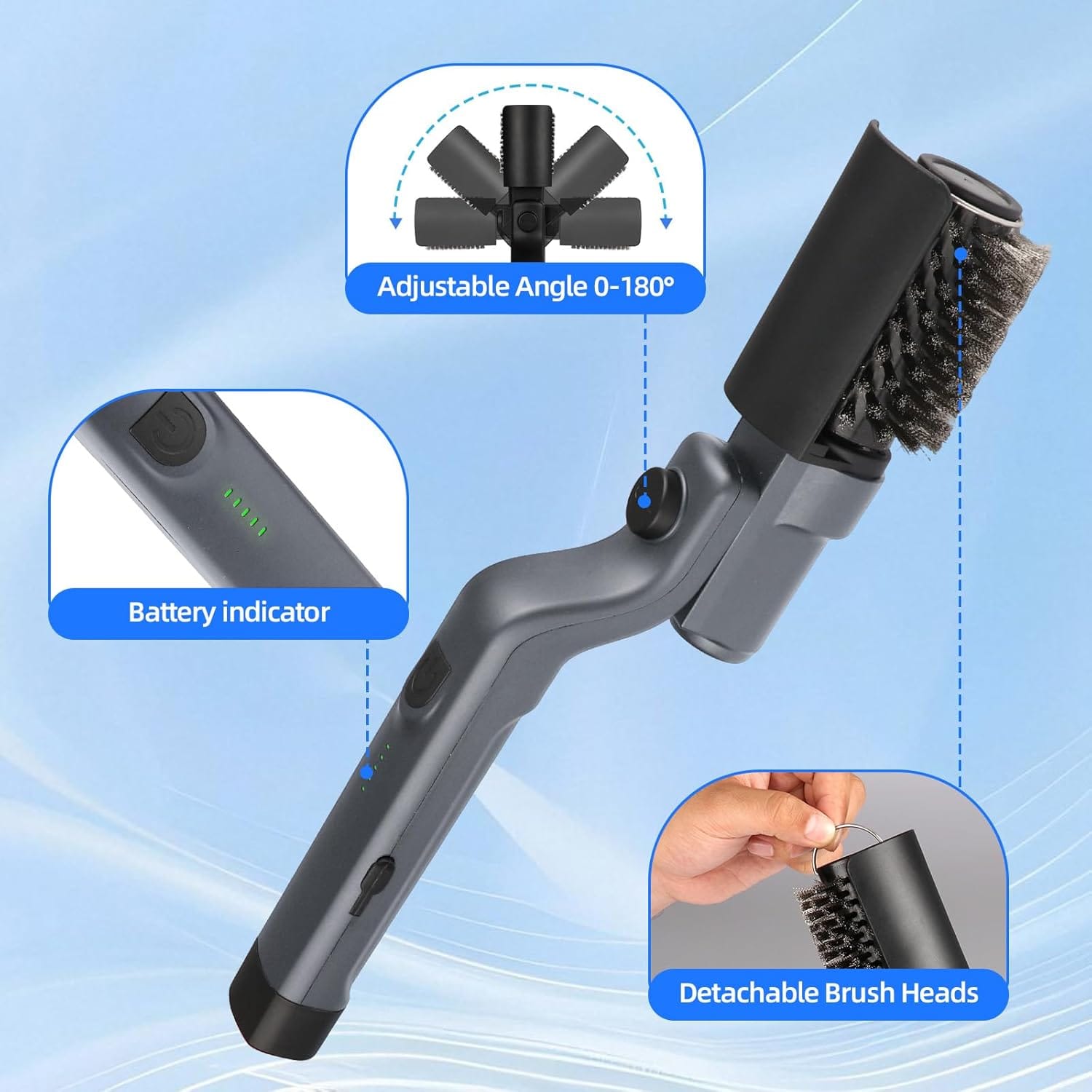
The Upgraded Electric Grill Brush is part of a newer category: cordless, rechargeable spinning brushes with stainless heads, adjustable angles, and multiple speed settings. Hold a button, press spinning bristles against the grates, let motor torque do the scraping. It will not replace a deep seasonal burn-off, and it is not magic on years of neglected buildup. But for weekly maintenance after ordinary cooks, it is the difference between a five-minute scrub and a twenty-minute arm workout.

The snapshot
| Cordless Electric Grill Brush | |
|---|---|
| What it is | Battery-powered rotary brush for grill grates and flat tops |
| Power | Rechargeable lithium — typically 90+ minutes runtime per charge |
| Speeds | 3 speed settings for light touch-up vs. heavy carbon |
| Head | Stainless steel bristles on a rotating drum — angle adjustable |
| Use case | Post-cook cleanup while grates are still warm (not stone cold) |
| Charge | USB — standard phone brick works |
| Real price (CAD) | ~$40–70 depending on promotions and bundle extras |
What buyers on Amazon are saying
Electric grill brushes as a category sit around 4.0–4.5 stars on Amazon.ca — newer product line, fewer ratings than decade-old manual brushes, but enough verified buyers that themes are visible. Amazon review summaries for this listing cluster around motor power, ergonomics, and bristle durability.
Time saved is the loudest praise. Reviewers describe cutting post-BBQ cleanup from twenty minutes to five, especially on gas grills with standard rod grates. The adjustable angle gets credit for reaching under bars without contortion — a genuine ergonomic win for taller kettle grills and deep Weber kettles.
Power on speed three impresses people with moderate buildup — last week's cook, not last year's neglect. Spinning stainless bites into grease and light carbon faster than hand scrubbing, and buyers with arthritis or shoulder issues call that out explicitly.
Friction appears in four recurring buckets:
- Heavy carbon still needs chemistry or fire — Buyers who skipped cleaning all season expect this brush to restore a grate to factory shine in one pass. It will not. Burnt-on layers from months of sauce need a burn-off, foil scrape, or degreaser soak first; the electric brush excels at maintenance, not archaeology.
- Bristle wear — Spinning metal against hot metal wears bristles. Most owners report one to two seasons of weekly use before replacement heads or diminished aggression. A minority see bristles detaching early — the classic wire-brush safety concern, even if these coils are generally heavier than cheap manual brushes.
- Battery and motor heat — Long sessions on high speed warm the handle. Reviews mention 10–15 minute continuous limits before the unit feels hot or slows — fine for a family grill, less ideal for cleaning a commercial flat top.
- Splash and grease spray — Spinning bristles throw grease droplets. Buyers surprised by mess on patios recommend lower speed first and a drop cloth — obvious in hindsight, rarely in marketing photos.
Smaller notes: warm grates clean easier than cold ones — physics of softened grease; cast iron grates need gentler speed to avoid stripping seasoning if that is your maintenance philosophy; and USB-C vs. micro-USB varies by batch — check the listing photos if cable standard matters to you.
Honest owner shape: weekly grillers who clean while the grate is still warm love it; once-a-summer users who expect restoration miracles return it.
What it's actually trying to do
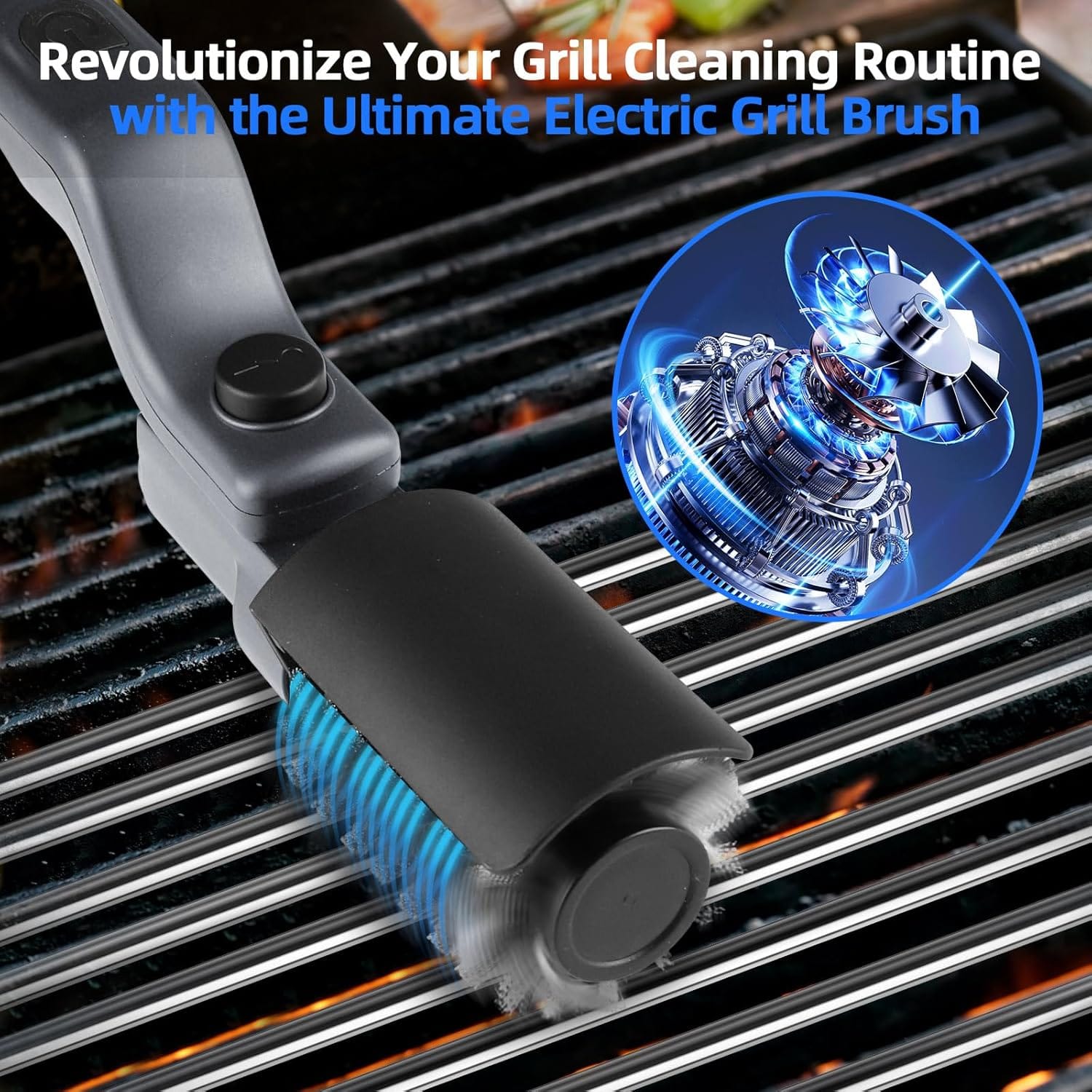
Manual brushes convert your shoulder into torque. Electric brushes convert battery wattage into rotational scrubbing at the grate surface — same principle as a powered toothbrush, scaled up and made less delicate.
The design bet is that maintenance frequency matters more than peak restoration power. If you run the brush after most cooks, carbon never becomes geology. If you wait until Labour Day, no handheld spinner replaces a proper burn-off.
Adjustable angle solves a boring but real problem: grill grates are vertical obstacles. A fixed-handle brush fights geometry; a hinged head tracks the bar.
Warm vs. cold — the physics of easier cleaning
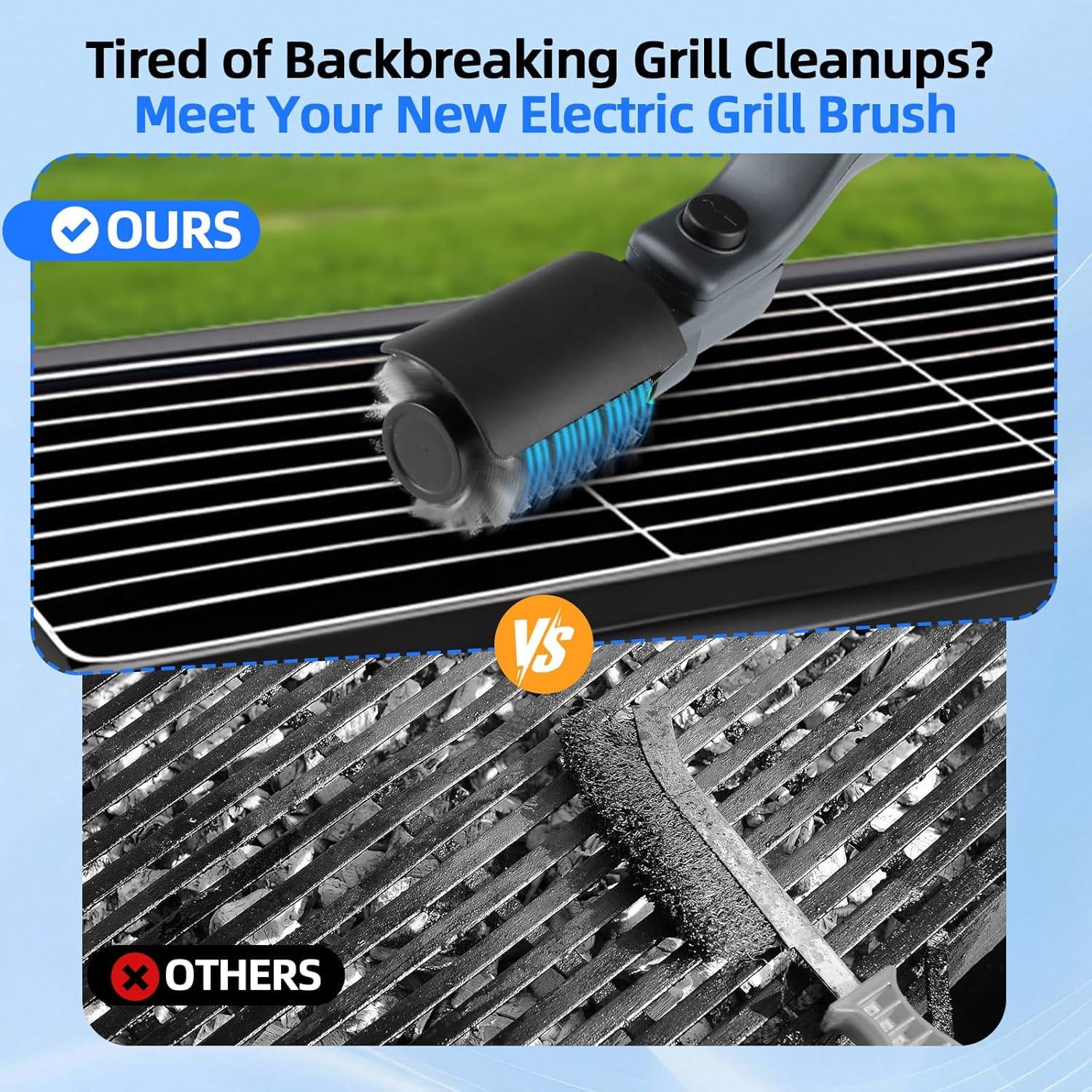
Grease polymerises as it cools. Warm residue yields; cold residue cements. Every serious griller already knows this intuitively — it is why chain-mail pads work better five minutes after the flame dies.
Electric brushes amplify the difference because spinning bristles need purchase on the surface. On cold, glazed carbon they skitter and feel weak; on warm grates they bite. Buyer reviews that say "weak motor" often describe cold-grate attempts or speed-one timidity on heavy buildup.
Practical workflow buyers repeat:
- Cook, rest meat, kill flame
- While grates are warm—not glowing — run speed 2–3 across bars
- Wipe with damp cloth, oil lightly if cast iron
Ten minutes later, when the grill is cool enough to cover, you are done.
Bristle safety and the wire-brush anxiety
Canada has seen periodic news coverage of ingested wire bristles from cheap manual brushes — enough that many households switched to wood scrapers, nylon pads, or coil brushes.
Electric rotary brushes use coiled stainless bundles secured differently from single-strand wires, but they are not risk-free. Inspect the head monthly; replace when bristles deform or shed. Never eat directly off a grate you have not visually checked — regardless of brush type.
If bristle anxiety is absolute, a steam cleaner or wooden scraper plus this brush on low is a hybrid path several reviewers describe.
What it gets genuinely right
- Wrist-friendly cleanup — Meaningful for arthritis, rotator issues, or simply hating chores
- Speed tiers — Light dusting on speed 1; aggressive pass on 3
- Angle adjustment — Reaches sides of bars manual pads miss
- Cordless convenience — No extension cord across a wet patio
- USB recharge — One less proprietary dock on the shelf
- Weekly habit enabler — Makes "quick clean tonight" realistic enough that people actually do it
Who should buy it — and who really shouldn't
This is your brush if you're:
- Grilling weekly on gas or charcoal and tired of manual scrubbing
- Someone with limited grip strength who still wants a clean grate
- A household that cleans warm right after cooks, not once a season
- Replacing an old wire brush you no longer trust for bristle shedding
- Willing to pre-treat heavy carbon before expecting spinners to finish the job
Walk away if you're:
- Cleaning once or twice a year only — invest in a burn-off and scraper instead
- Expecting flat-top mirror finish on a neglected commercial-style plate without chemicals
- Anxious about any metal bristle contact with food surfaces — use nylon/wood only
- On a strict minimalist path — a $8 manual brush still works with time
- Cleaning immediately after high-heat flare-ups while grates are still nuclear — wait for safe warm, not incandescent
The decision, in three honest questions
- Do I grill often enough that maintenance matters? Weekly → electric brush pays rent. Monthly → maybe a scraper suffices.
- Will I clean while the grate is still warm? If yes, the motor shines. If you always wait until morning, results disappoint.
- Is my buildup maintenance or archaeology? Maintenance → buy with confidence. Archaeology → burn-off first, brush second.
A few questions worth answering
Does it replace a wire brush completely?
For weekly maintenance on warm grates, mostly yes. For seasonal deep cleans or years of neglect, no — you still want burn-off, scraper, or degreaser first.
How long does the battery last?
Listing claims 90+ minutes per charge; real-world weekly grillers often charge monthly. High-speed heavy passes drain faster than light touch-ups.
Is it safe on cast iron seasoning?
Use lower speeds and avoid aggressive passes if you treat seasoning as sacred. Many cast-iron owners still prefer chain-mail or nylon for that reason — know your maintenance philosophy.
Do bristles fall into food?
Inspect the head regularly. Coiled stainless is generally more secure than cheap single-wire manual brushes, but no metal brush is zero-risk. Replace worn heads promptly.
What does it cost in Canada?
Budget $40–70 CAD depending on sales. Compare to professional grill cleaning services or the cost of a neglected grate that rusts through — the brush is the cheap insurance policy if you actually use it weekly.
Looking for buyer guides that tell you the trade-offs, not just the highlights? More honest, Canadian-focused gadget coverage lives at celmin.ca.

Discussion
Sign up or sign in to join the conversation.