
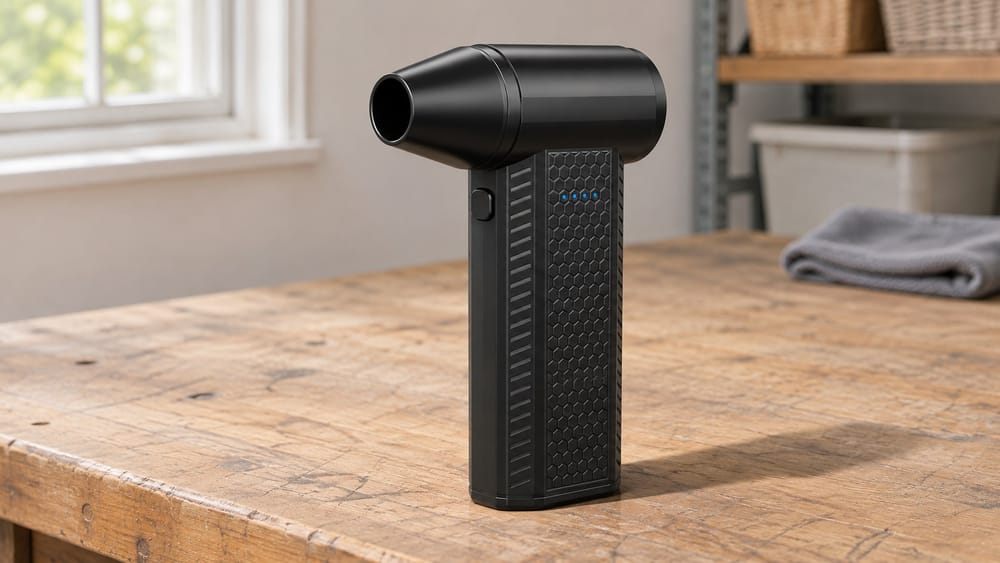
The fourq F4 offers four blower speeds and several attachments. Check the object’s care instructions, runtime and charging before using it.
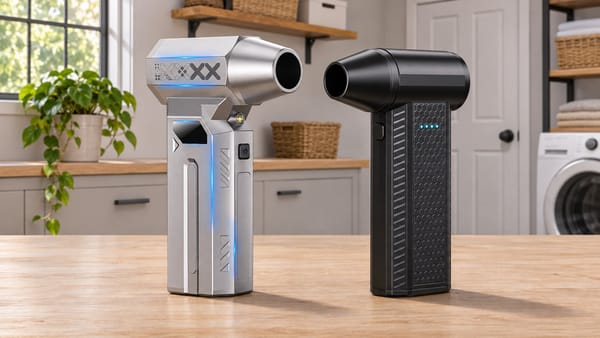
The fourq F4 is a rechargeable blower. It moves loose dust into the surrounding area; it does not collect it. That distinction matters before buying one for a desk or small workshop: decide where the dust will go and how you will remove it afterwards.
The seller advertises four speeds, five nozzles and three brushes. Those options can help direct airflow, but they do not make the tool suitable for every delicate object or electronic device.
Decide where the dust will end up
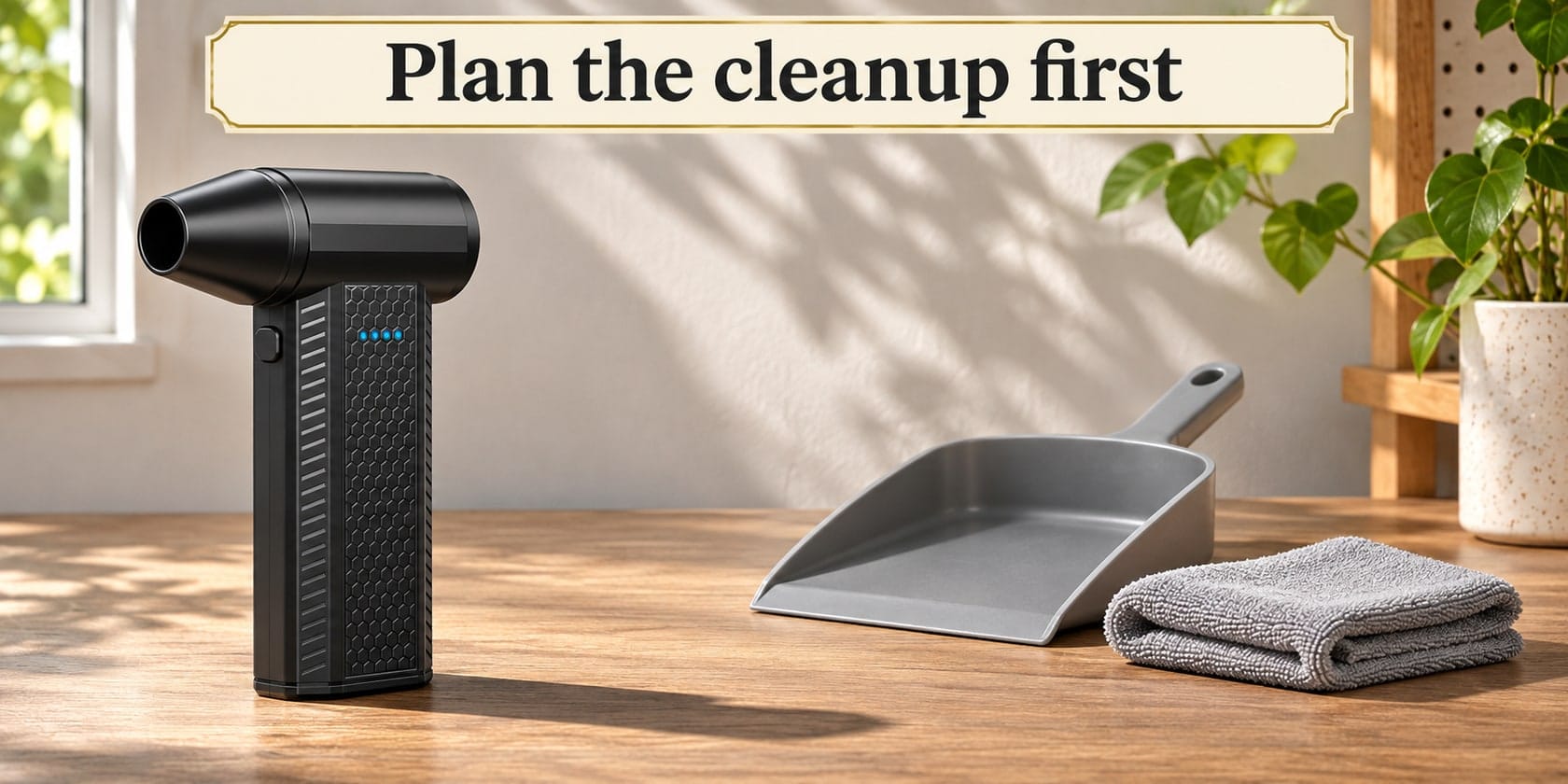
The F4 is easiest to justify for a recurring, approved dry-cleaning task where directed airflow helps reach an area that is otherwise awkward. Before buying, picture the complete job: what you are cleaning, where loose material can move and how you will collect it afterwards.
Blowing dust from one recess onto a clean surface nearby may simply create a second job. Clear the surrounding area, secure small loose items and choose a suitable working location before using airflow. Keep people, pets and anything that should not be exposed to displaced debris out of the path.
This is different from vacuuming. There is no collection cup receiving the dust, and the nozzle does not draw material toward it. If containing the debris is the main requirement, a blower may not solve the problem you actually have.
The same distinction applies to marks that are not loose dust. Sticky residue or a damaged finish will not necessarily improve with stronger airflow. Follow the object's approved cleaning method rather than increasing speed to make every task fit the tool.
What the four speed settings are useful for
Multiple settings give you a way to choose less airflow when the permitted task does not need the highest output. That control is more relevant than assuming every job should begin at maximum speed. Start within the object's and blower's instructions and assess whether the material is moving as intended.
Nozzle shape changes how the air is directed. A concentrated outlet may suit one permitted area while a wider flow suits another. The right choice depends on the object, clearance and approved technique; a smaller nozzle is not automatically a more effective or safer cleaning tool.
Check whether the control is easy to identify while holding the F4. You should be able to stop or change the setting without putting the nozzle against the object or obstructing the intake. Learn the button sequence in a clear area before working near anything delicate.
Rotor speed does not tell you the cleaning force
The headline claim is 130,000 rpm. That describes rotational speed, not the airflow reaching an object at a particular distance. Nozzle shape, outlet size and the selected setting also matter.
Rotational speed is not a promise that packed dust will lift or that a particular maintenance method can be replaced. Match the nozzle, airflow and distance to the item’s approved cleaning instructions.
Use it only where the item’s care instructions allow this kind of airflow. Begin conservatively with the permitted distance and setting. Small loose objects can move, and dust can spread into places you would rather keep clean.
fourq F4 air duster
 Shop at Amazon.ca
Match attachments to tasks, not to the accessory count
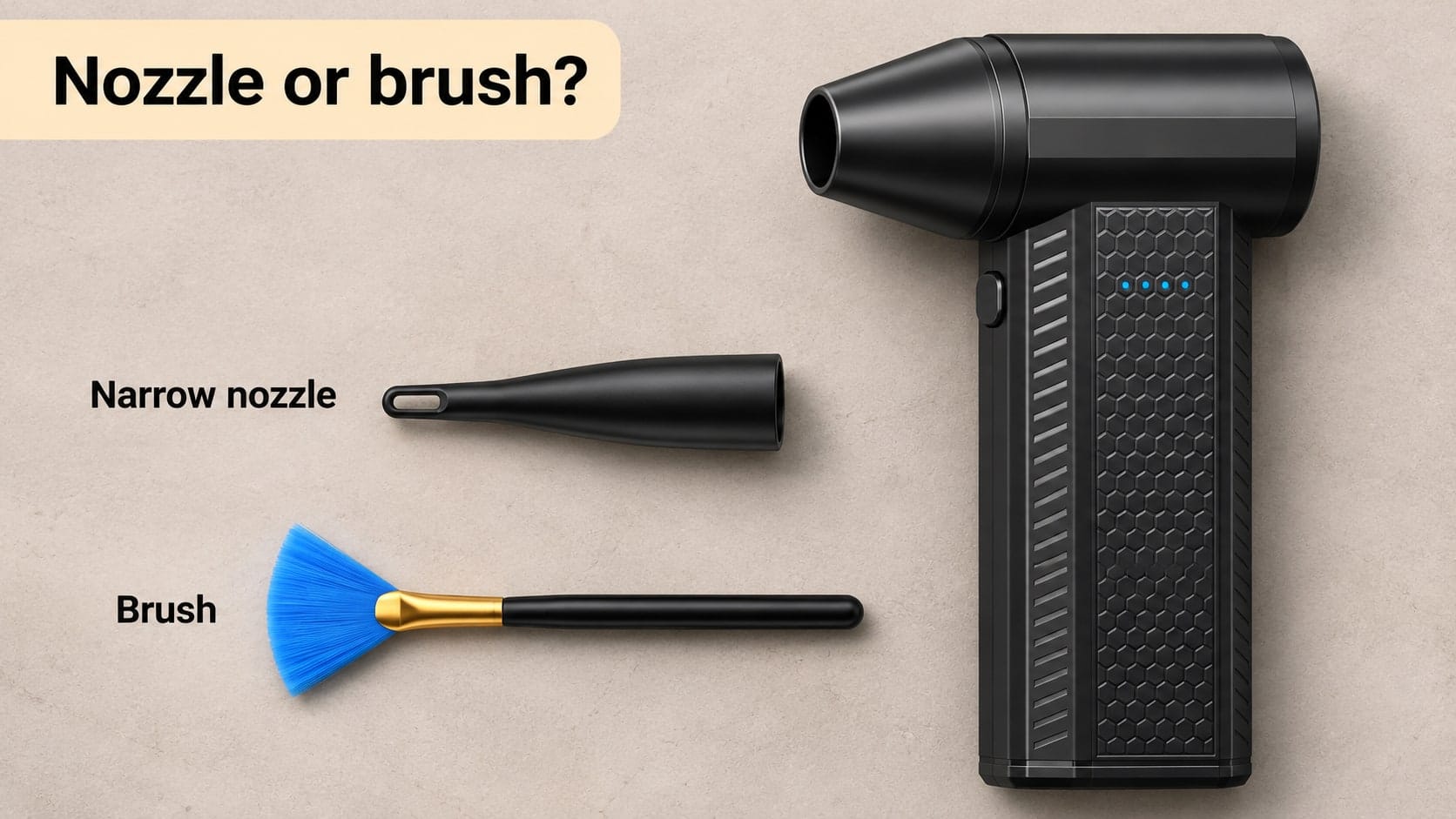
Spread the supplied nozzles and brushes out when the kit arrives and match them to the inventory. Look for the particular shape you need rather than assuming five nozzles represent five entirely different capabilities. An attachment that never suits your approved jobs contributes little to value.
Check how each piece attaches and detaches, following the manual. A loosely fitted nozzle can make control unpredictable, while forcing a part may damage the fitting. Keep the small pieces together so the suitable one is available when the next cleanup comes around.
Treat brush contact as a separate question from airflow. Bristle material and stiffness matter on finished surfaces and sensitive components. An included brush does not establish that brushing is permitted on the object you intend to clean.
Do not assume an attachment assortment makes the F4 suitable for inflation, drying or other advertised side uses without specific instructions and appropriate compatibility. If your purchase is mainly for dusting, judge the kit by that actual need rather than adding value for activities you may never perform.
Be careful with the computer-cleaning pitch
A blower advertised for electronics is not automatically approved for the device you own. Some computer manufacturers specifically advise against blowers; Dell’s general maintenance guidance is one example.
Read your equipment manufacturer’s instructions before directing air at vents, fans or internal parts. Do not open equipment or improvise a cleaning procedure unless those instructions permit it.
The included brushes need the same care. “For electronics” does not establish that every brush is appropriate for sensitive components or finished surfaces. If the approved method is different, use that method instead.
Electronics need the equipment maker's method
Check the instructions for the exact device before choosing a cleaning tool. Different materials and components can have different restrictions, and a broad electronics-cleaning label on an accessory cannot override them. Dell's guidance, linked below, is one clear example of a manufacturer that advises against blowers.
Avoid making an internal cleaning plan from a photograph of a computer beside the F4. Permission to clean an exterior surface does not imply permission to open the equipment or direct air at internal parts. If the required procedure is unclear, seek the equipment maker's guidance before proceeding.
This matters to the buying decision. If the only object you intend to clean prohibits a blower, the F4's speed settings and rechargeable battery are not reasons to buy it for that job. Resolve suitability first; compare accessories afterwards.
Battery capacity is not a timer
The 4,000 mAh specification describes battery capacity, while working time also depends on the setting and operating pattern. The advertised 20–30 minutes should not be treated as a guaranteed session at every speed. Ask for the conditions if uninterrupted use is important to you.
For short occasional jobs, charging between sessions may be manageable. For a longer cleanup, include any duty-cycle or cooling restrictions in the plan as well as battery life. A tool may need a pause before the battery is empty; the manual should determine that limit.
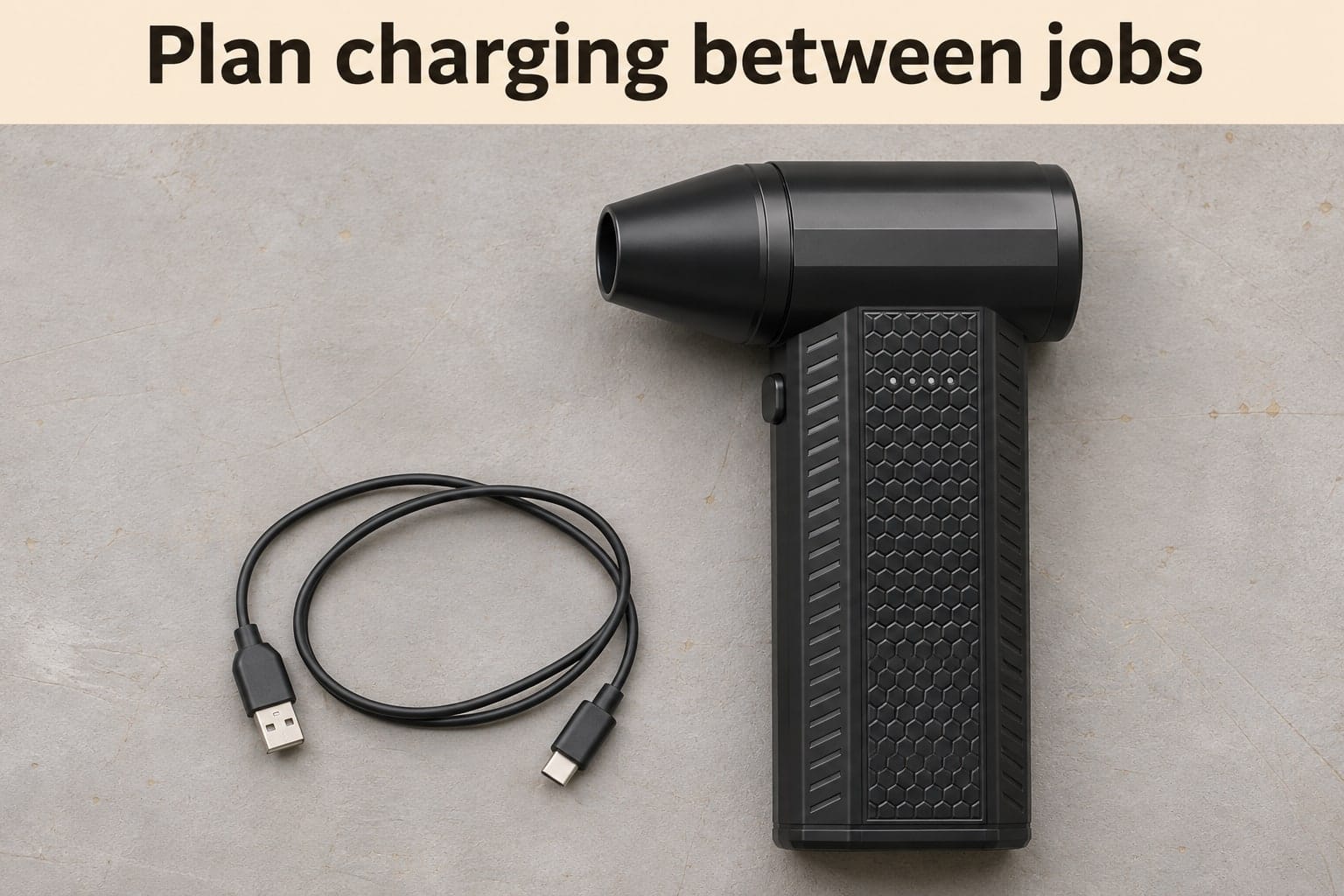
Check the charging input, expected charging time and included cable or adapter. A USB connector does not by itself establish fast charging, and a supplied cable does not necessarily include a wall power supply. Use the approved charging arrangement and follow the battery-care instructions.
Store the clean, dry tool and its accessories together. Leave intake openings unobstructed during operation and inspect the unit as directed. If the tool behaves abnormally, stop and consult its instructions rather than treating a protection feature as permission to continue.
Runtime is a session-planning question
The F4 lists a 4,000 mAh battery and around 20–30 minutes of runtime. Treat that as an advertised range; the speed used and test conditions are not clear enough to promise the same result for your work.
For occasional short bursts, charging between jobs may be manageable. For a long cleanup, a short runtime could become the limiting factor. Check the charging instructions, expected charging time and whether the required power adapter is included.
Keep the air intake clear while holding the tool. Stop if its instructions call for a cooling break. Do not assume that a rechargeable tool is designed for continuous use until the battery is empty.
Is a rechargeable air duster worth owning?
It can be useful when you have repeated tasks that allow this method and you are comfortable managing the displaced dust. Recharging offers a reusable power source, but it also adds a battery routine and the eventual question of service or replacement.
For one infrequent job, consider how often the F4 would actually come out of storage. The purchase price, storage space, charging and accessory organisation all belong in the value judgement. A long list of possible uses is less persuasive than two or three jobs you know are appropriate.
Will it replace a vacuum?
No. It moves air outward and does not collect debris. Decide how dust will be gathered afterwards, and choose another approved method when containment is the central requirement.
Does the highest speed clean best?
Not for every object. The allowed method, nozzle, distance and type of debris determine what is appropriate. Excess force can be undesirable, especially around small parts or delicate surfaces.
Can you rely on it for a long workshop session?
Only after confirming runtime and duty-cycle limits for the intended setting. Do not turn a maximum battery claim into permission for continuous operation or exposure to materials outside the tool's intended use.
What should decide the purchase?
An approved recurring task, a useful attachment, manageable charging and clear operating instructions. Those are practical reasons to consider the F4. The motor's rpm label is a much weaker basis for deciding whether it belongs in your cleaning kit.
Check the attachments when it arrives
Match the delivered nozzles and brushes to the offer you ordered. Confirm that they fit securely and can be removed without forcing them. Store the small pieces together; an accessory count is not much benefit once the useful nozzle disappears into a drawer.
The F4 is worth considering for approved dry-dust jobs where directed airflow is helpful. Its four settings and attachment assortment are concrete features. Whether it is right for a particular device still depends on that device’s care instructions, not the blower’s rpm claim.
fourq F4 air duster
Shop at Amazon.caImages are AI-generated illustrations based on product references.
Sign up or sign in to join the conversation.