
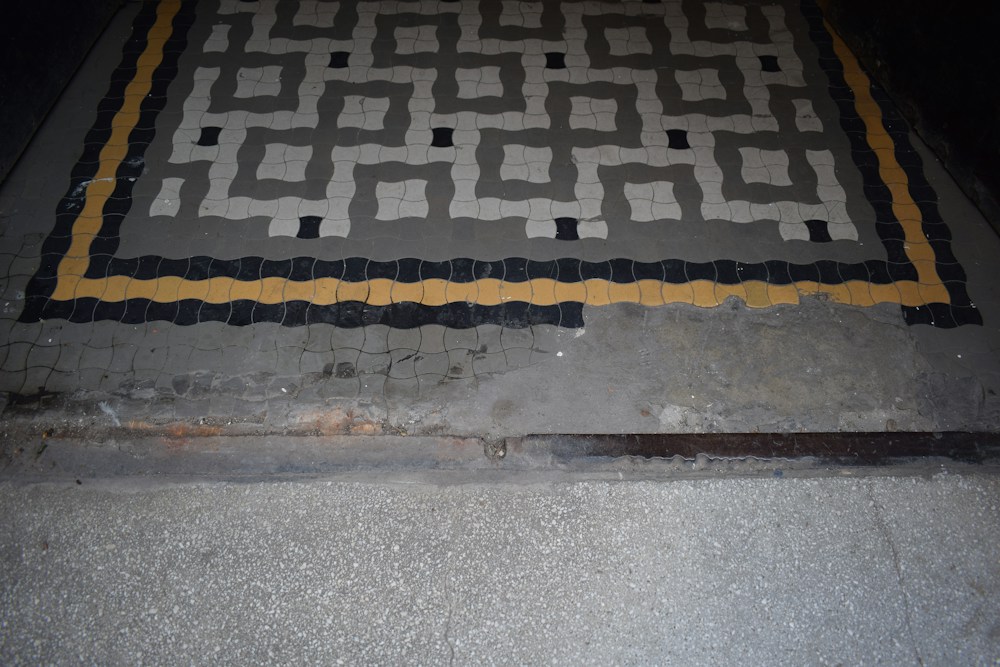
Tile floors are low-maintenance compared to carpet, but they come with their own cleaning challenge: grout lines. Dust, crumbs, and pet hair settle into those tiny grooves and stay there. A robot vacuum that works great on smooth hardwood might skip right over debris trapped in grout. You need su...
Tile floors are low-maintenance compared to carpet, but they come with their own cleaning challenge: grout lines. Dust, crumbs, and pet hair settle into those tiny grooves and stay there. A robot vacuum that works great on smooth hardwood might skip right over debris trapped in grout. You need suction power combined with a brush design that agitates debris out of those lines.
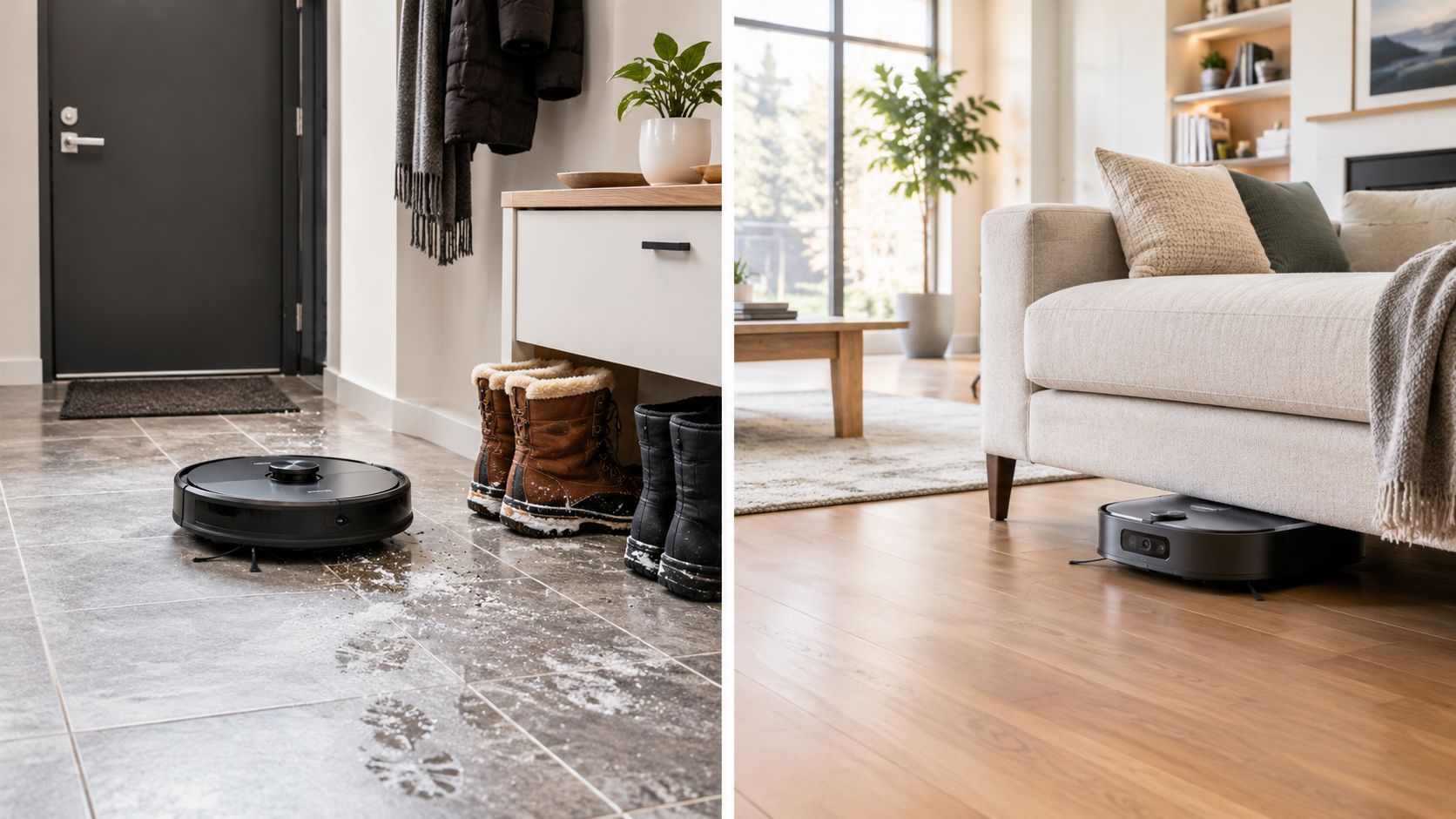
Canadian homes with tile—kitchens, bathrooms, entryways, and finished basements—also deal with tracked-in salt and sand during winter months. A good robot vacuum for tile needs to handle fine grit without scratching the surface and pick up the larger debris that accumulates in high-traffic areas.
Best Robot Vacuums for Tile Compared
| Robot Vacuum | Suction | Mop | Self-Empty | Grout Cleaning | Price |
|---|---|---|---|---|---|
| Roborock S8 MaxV Ultra | 10,000 Pa | Dual spinning | Yes | Excellent | ~$1,800 CAD |
| Roborock Q7 Max+ | 4,200 Pa | Basic drag | Yes | Very Good | ~$490 CAD |
| Ecovacs Deebot X2 Omni | 8,000 Pa | Dual spinning | Yes | Excellent | ~$1,200 CAD |
| iRobot Roomba j7+ | 2,200 Pa | No | Yes | Good | ~$630 CAD |
Best for Tile: Roborock S8 MaxV Ultra
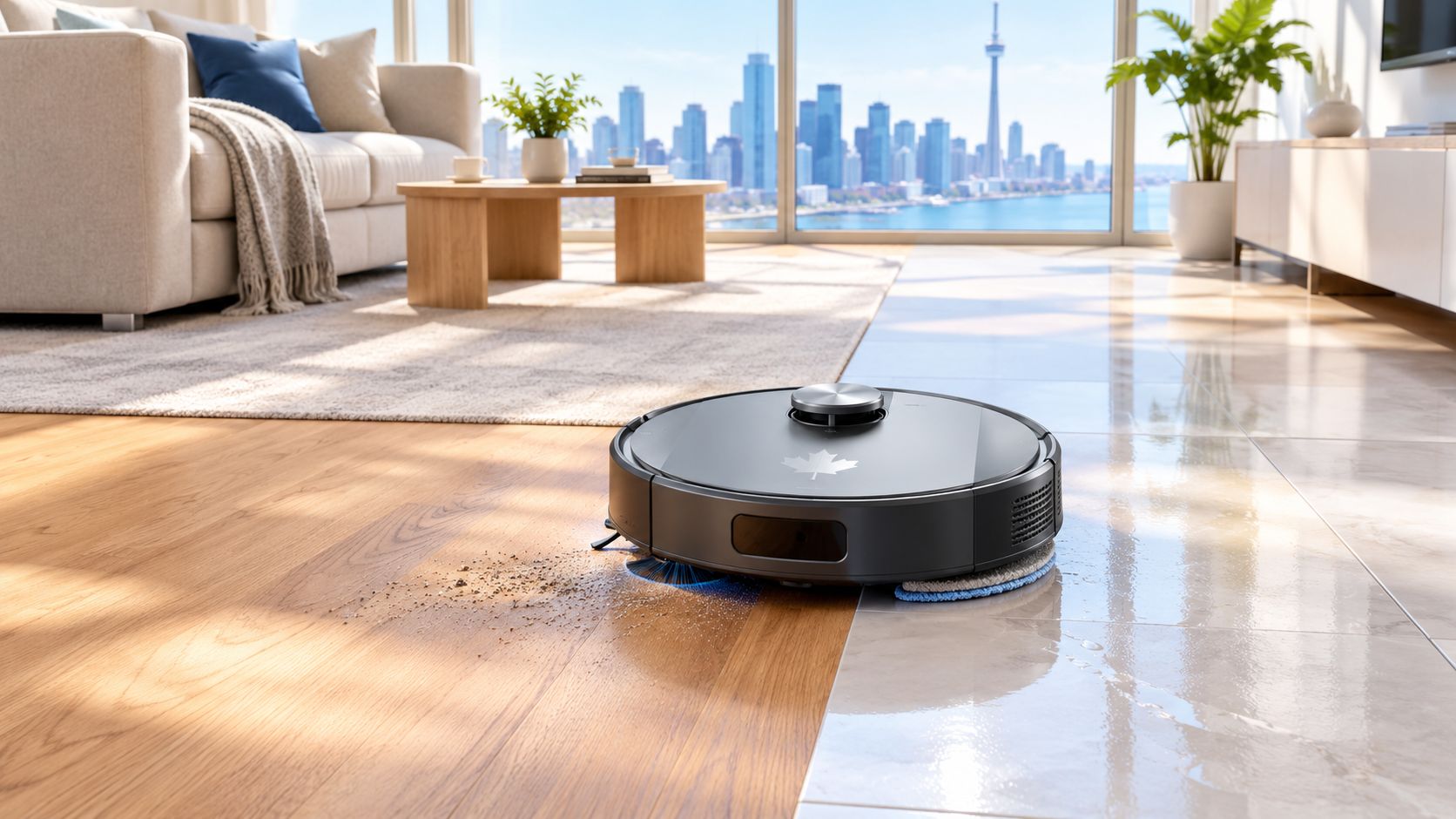
The S8 MaxV Ultra's 10,000 Pa suction pulls debris from grout lines that lower-powered robots miss. The dual spinning mop pads scrub tile surfaces with consistent pressure, leaving floors genuinely clean—not just vacuumed. The hot water mop washing in the dock keeps pads hygienic.
- Suction: 10,000 Pa
- Mop: Dual spinning, auto-lift on carpet
- Self-Wash: Hot water (60°C)
- Price: ~$1,800 CAD
For tile-heavy homes, a vacuum-mop combo is the ideal solution. The S8 MaxV Ultra vacuums debris from grout lines and then mops the tile surface in one pass.
Best Value for Tile: Roborock Q7 Max+
At $490 CAD, the Q7 Max+ delivers 4,200 Pa suction and basic mopping—enough for daily tile maintenance. The LiDAR navigation efficiently covers large tiled areas like open-concept kitchens and basements.
- Suction: 4,200 Pa
- Mop: Basic drag pad
- Price: ~$490 CAD
Tile Floor Tips
- Vacuum + mop combos are ideal for tile—vacuuming alone leaves residue in grout
- Schedule daily runs in kitchens and entryways where debris accumulates fastest
- Winter salt: Run the mop function after snowy days to prevent salt buildup that damages grout
- Avoid harsh chemicals in the robot's water tank—use manufacturer-recommended solutions only
| Tile Type | Best Approach | Recommended Suction |
|---|---|---|
| Ceramic | Vacuum + mop | 3,000+ Pa |
| Porcelain | Vacuum + mop | 3,000+ Pa |
| Natural stone | Vacuum only (careful with mop chemicals) | 4,000+ Pa |
| Textured tile | High suction + mop | 5,000+ Pa |
Got Questions? Let's Clear Things Up.
Can robot vacuums scratch tile floors?
No. Robot vacuums use rubber wheels and soft brushes that won't scratch ceramic or porcelain tile. However, if the vacuum picks up a small rock or piece of grit and drags it, it could potentially scratch softer natural stone tiles. Running the vacuum daily prevents debris buildup that could cause this.
Do I need a mop function for tile?
Strongly recommended. Vacuuming removes loose debris, but mopping removes the film of dust and grime that makes tile look dull. A vacuum-mop combo keeps tile floors looking freshly cleaned every day.
How does a robot vacuum handle grout lines?
The main brush agitates debris out of grout lines while suction pulls it into the dustbin. Higher suction (4,000+ Pa) is more effective at extracting embedded debris from grout. Spinning mop pads also help scrub grout lines clean.
Tile floors benefit most from a vacuum-mop combo robot. The Roborock S8 MaxV Ultra is the best overall, while the Q7 Max+ offers great value. Check our best robot vacuums guide or best robot vacuum mop combo for more options.
🤖
Take Our Free Robot Vacuum Finder Quiz
Answer a few quick questions and get personalized recommendations.
Start Quiz →
Sign up or sign in to join the conversation.