
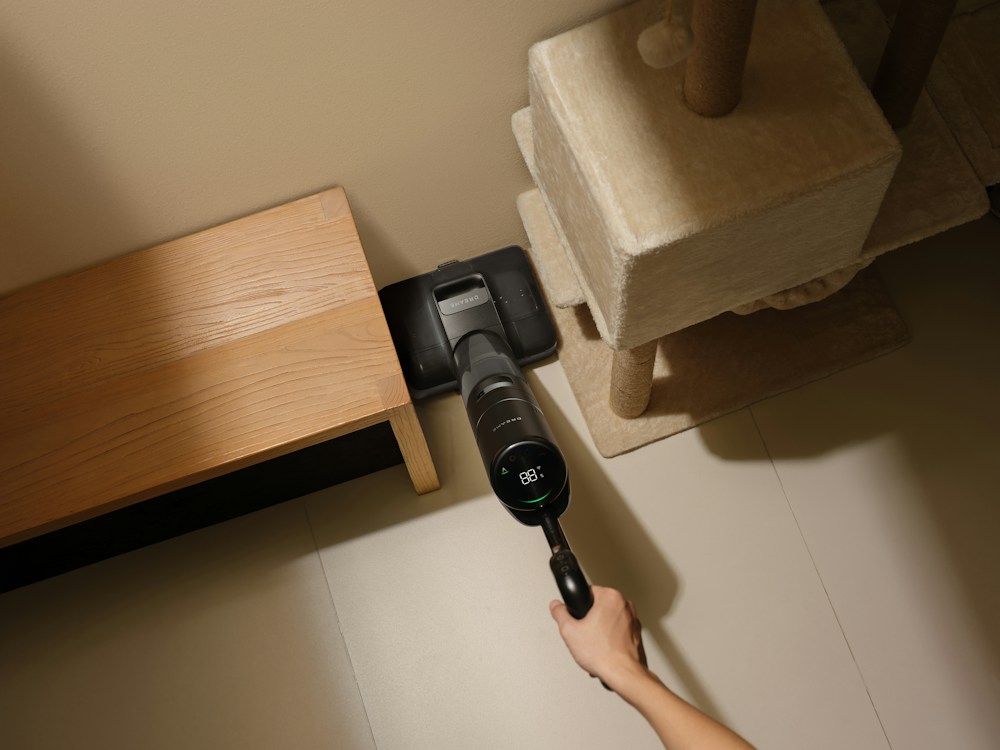
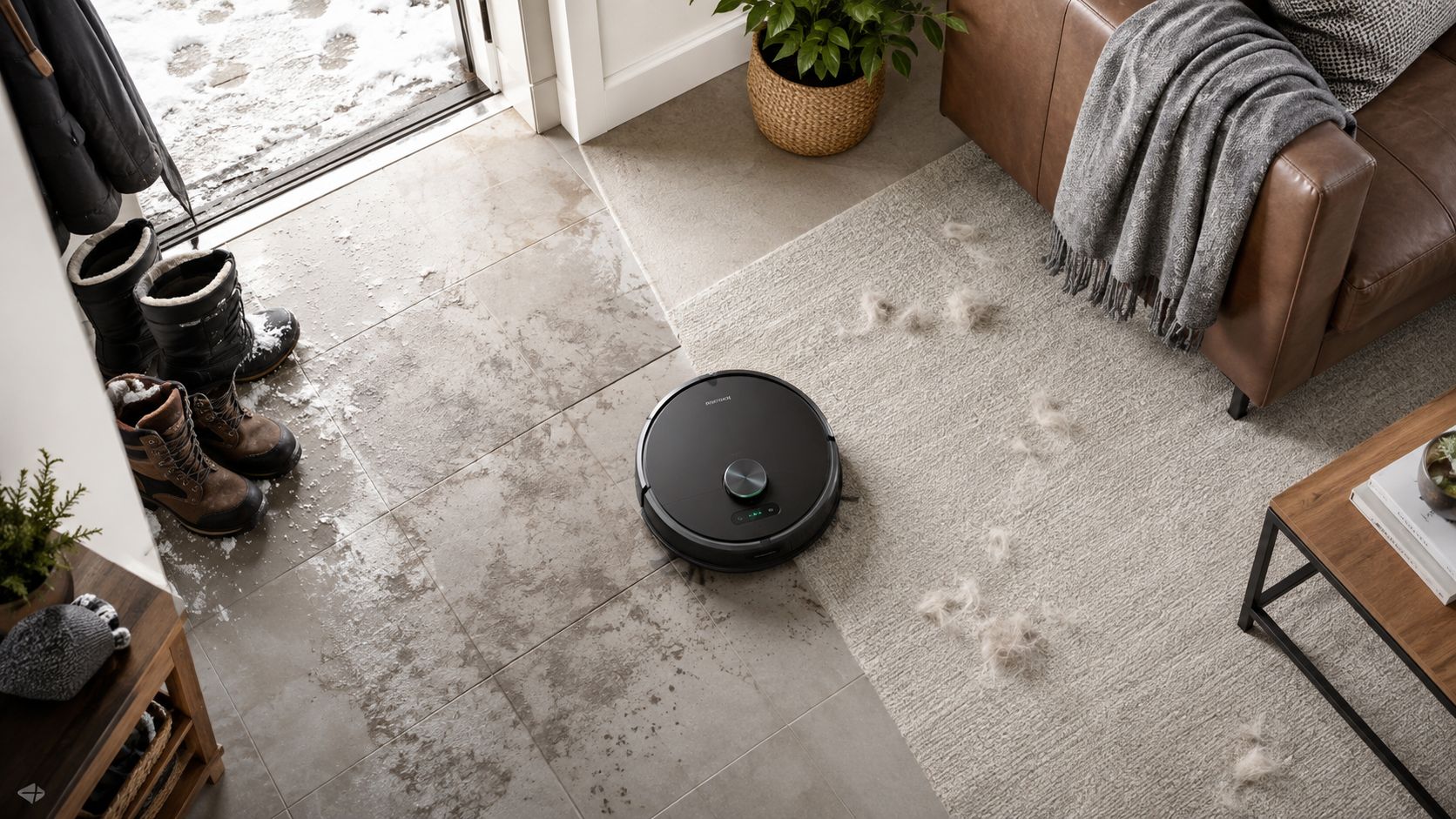
Hard floors—tile, laminate, vinyl, stone—are the easiest surfaces for a robot vacuum to clean. Dust and debris sit on top rather than embedding in fibers, so even moderate suction picks up everything. The real differentiator for hard floors is mopping capability and navigation quality.
Hard floors—tile, laminate, vinyl, stone—are the easiest surfaces for a robot vacuum to clean. Dust and debris sit on top rather than embedding in fibers, so even moderate suction picks up everything. The real differentiator for hard floors is mopping capability and navigation quality.
If your Canadian home is mostly hard floors, a robot vacuum-mop combo gives you the best results. Here's what works.
Best Robot Vacuums for Hard Floors
| Vacuum | Suction | Mop | Navigation | Self-Empty | Price |
|---|---|---|---|---|---|
| Roborock S8 MaxV Ultra | 10,000 Pa | VibraRise 3.0 | LiDAR + Camera | Yes | ~$2,500 CAD |
| Ecovacs Deebot X2 Omni | 8,000 Pa | Dual rotating | LiDAR + Camera | Yes | ~$1,650 CAD |
| Roborock Q7 Max+ | 4,200 Pa | Basic electronic | LiDAR | Yes | ~$490 CAD |
| Dreame L20 Ultra | 7,000 Pa | Dual rotating, extending | LiDAR + 3D | Yes | ~$1,530 CAD |
| Eufy RoboVac G30 | 2,000 Pa | No | Gyroscope | No | ~$280 CAD |
Best for Hard Floors: Roborock S8 MaxV Ultra
The vacuum + mop combo is the ideal setup for hard floors. The S8 MaxV Ultra vacuums debris and mops in the same pass. The VibraRise 3.0 mop scrubs at high frequency—it actually removes dried spills and sticky spots, not just pushes water around.
- Suction: 10,000 Pa
- Mop: VibraRise 3.0 (vibrating, auto-lift)
- Auto Mop Wash: Yes (hot water + hot air dry)
- Price: ~$2,500 CAD
For hard floors, the mop function matters more than raw suction. A vacuum-mop combo keeps hard floors genuinely clean—not just dust-free.
Best Value for Hard Floors: Roborock Q7 Max+
At ~$490 CAD, the Q7 Max+ offers LiDAR navigation, 4,200 Pa suction, and basic mopping. The electronic water tank provides consistent moisture. It won't deep-scrub like the S8 MaxV, but for daily maintenance mopping, it keeps hard floors noticeably cleaner.
- Suction: 4,200 Pa
- Mop: Electronic water tank
- Navigation: LiDAR
- Self-Empty: Yes
- Price: ~$490 CAD
Hard Floor Types and Robot Vacuum Compatibility
| Floor Type | Robot Vacuum Safe? | Mopping Safe? | Notes |
|---|---|---|---|
| Ceramic tile | Yes | Yes | No restrictions |
| Porcelain tile | Yes | Yes | No restrictions |
| Laminate | Yes | Yes (low water) | Avoid excess water at seams |
| Vinyl/LVP | Yes | Yes | No restrictions |
| Natural stone | Yes | Yes (low water) | Avoid acidic cleaners |
| Hardwood | Yes | Yes (low water) | Use rubber brushes only |
Mopping Tips for Hard Floors
- Tile: Use medium-high water flow. Tile handles moisture well.
- Laminate: Use low water flow. Excess water can seep into seams and cause swelling.
- Vinyl: Medium water flow is fine. Vinyl is water-resistant.
- Stone: Low-medium water flow. Use only water—no chemical cleaners.
Why Navigation Matters More on Hard Floors
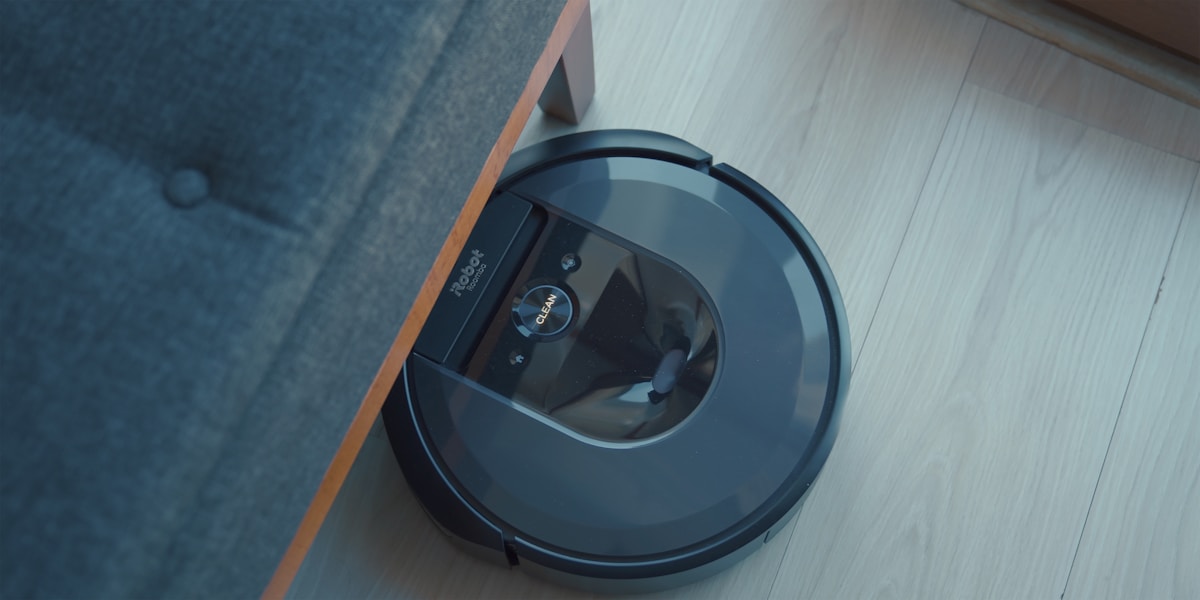
On hard floors, dust and debris are visible. If your robot vacuum misses a spot, you'll see it. LiDAR navigation creates efficient, methodical cleaning paths that cover every inch. Gyroscope and bounce navigation miss spots more frequently.
For hard floors, invest in a model with LiDAR navigation (Roborock, Dreame, Ecovacs) for thorough coverage.
📺 Watch: Best Robot Vacuums for Hard Floors 2026
Got Questions? Let's Clear Things Up.
Do I need a robot vacuum with mopping for hard floors?
It's not required, but it makes a significant difference. Vacuuming alone removes dust and debris, but mopping removes sticky residue, footprints, and fine particles that vacuuming misses.
Can robot vacuums handle grout lines in tile?
Yes. Most robot vacuums clean grout lines effectively. The mopping function helps keep grout cleaner by removing embedded dirt.
How often should I robot vacuum hard floors?
Daily is ideal. Hard floors show dust quickly, and daily runs keep them looking clean. If you have a mop combo, mop every 1-2 days.
Hard floors are the easiest surface for robot vacuums, and a mop combo makes them even better. The Roborock Q7 Max+ is the best value, while the S8 MaxV Ultra is the premium choice. Check our best robot vacuums for more options.
🤖
Take Our Free Robot Vacuum Finder Quiz
Answer a few quick questions and get personalized recommendations.
Start Quiz →

Discussion
Sign up or sign in to join the conversation.