

A smart sprinkler controller sits in one of the more practical corners of the smart-home world. It is not there for novelty. It is there to stop your lawn and garden from being watered like the weather never changes. Instead of blindly following the same timer every Tuesday and Friday, this type ...
A smart sprinkler controller sits in one of the more practical corners of the smart-home world. It is not there for novelty. It is there to stop your lawn and garden from being watered like the weather never changes. Instead of blindly following the same timer every Tuesday and Friday, this type of device checks conditions, skips watering when rain or freezing temperatures make it pointless, and lets you manage zones from your phone instead of crouching beside an aging garage-wall controller.
This article is not a hands-on review. Nothing here is based on personally installing or using this specific unit. The goal is simpler: explain what this Smart Sprinkler System appears to do, how this category typically works, what the listed features imply in real life, and who it actually makes sense for. If you are replacing an old sprinkler timer and want a calm, less salesy breakdown before spending about $179 CAD, this is for you.
Quick snapshot
| Question | What the Smart Sprinkler System actually is |
|---|---|
| Category | Outdoor & Garden |
| Made by | Unknown / check the current retailer listing |
| Typical price | ~$179 CAD (listing at the time of writing — verify current pricing) |
| Rating signal | 4.2/5 on the source listing |
| Best for | Homeowners replacing a basic irrigation timer who want weather-aware watering and app control |
| Skip if | You do not already have an in-ground sprinkler system, or you want a premium ecosystem brand with clearer long-term support |
Pro tip: Buy a smart sprinkler controller for its weather skips and easier scheduling — not for voice control. Saying "Alexa, water zone 2" sounds nice, but the real value is automatic restraint when rain, wind, or freeze conditions make watering wasteful.
What the Smart Sprinkler System actually is
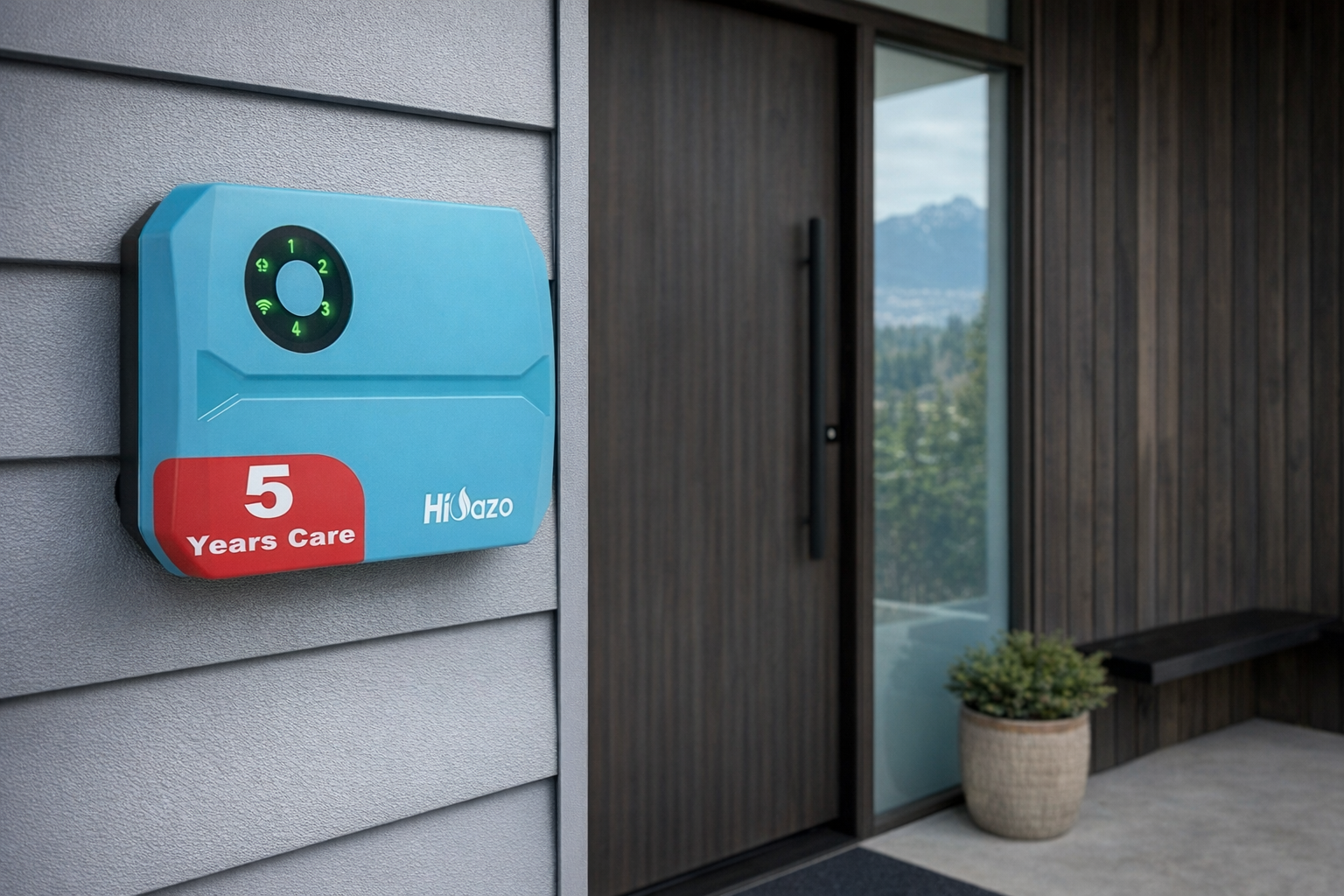
In plain English, this is a replacement brain for an existing irrigation setup. If your home already has sprinkler valves and zones in the yard, the Smart Sprinkler System takes over from the old wall-mounted timer and adds Wi-Fi, app-based scheduling, and weather-aware automation. It is not a sprinkler by itself, and it does not create an irrigation system where none exists. It is the controller layer.
WiFi-enabled smart sprinkler controller with weather intelligence and app control. Automates watering schedules based on local weather data including rain, freeze, and wind skip. Works with Alexa and Google Assistant for voice control. Easy DIY installation replaces existing sprinkler timer.
That description gets the main point right: this is really about making an existing sprinkler system less dumb. Instead of treating July, October, and a rainy week in May the same way, it adjusts around local conditions. That puts it in the same general lane as a well-known competitor like the Rachio 3 Smart Sprinkler Controller, which is probably the name many buyers already know. The difference, at least from the listing, is that this product appears to be aiming for the same core promise — weather-based control and app scheduling — at a lower price point than many established sprinkler-controller brands. That can be good value, but it also means you should be a bit more careful about app quality and long-term support.
Key features at a glance
- Wi-Fi-enabled smartphone app control for remote scheduling and adjustments
- Local weather intelligence to automatically adapt watering
- Rain, freeze, and wind skip to avoid unnecessary watering
- Alexa and Google Assistant compatibility for voice control
- Easy DIY installation designed to replace an existing sprinkler timer
- Customizable zone-based watering schedules for different lawn and garden areas
- Water usage tracking and savings reports to show how much watering is being reduced
How the Smart Sprinkler System actually works
The basic mechanism here is pretty straightforward. A typical in-ground irrigation system has a set of low-voltage wires running from a controller to different valve zones. One zone might cover the front lawn, another the back lawn, another a flower bed, and another a drip line for shrubs. A traditional timer opens those valves according to a fixed schedule. A smart controller does the same job, but with software making better decisions.
In this case, the listed features suggest three main layers working together:
- Zone scheduling. You create separate schedules for each sprinkler zone in the app. That matters because grass, flower beds, and drip irrigation often need different runtimes and frequencies.
- Weather-based adjustments. The controller reportedly checks local weather data and can skip watering for rain, freeze, and wind conditions. That is the heart of the product. If it is going to rain, or if temperatures are low enough to make watering unhelpful or risky, it pauses the schedule instead of blindly running.
- Remote control and reporting. Because it is Wi-Fi-enabled, you can change schedules from your phone and review water-use tracking or savings reports. That does not turn it into a precision water meter, but it can give a rougher, more useful picture than a basic timer with a tiny LCD screen.
The installation claim is also important. The listing says it is designed for DIY installation by replacing an existing sprinkler timer. In most homes, that means turning off power to the current controller, labeling the zone wires, moving those wires over one by one, connecting power, and then doing setup in the app. That is a much more manageable job than trenching a new irrigation system into the yard. Still, "easy DIY" only applies if you already have a functioning wired irrigation system and are comfortable dealing with low-voltage control wiring.
One thing worth noting: the product description talks about local weather data, not on-site physical sensors. That usually means it is pulling conditions from online weather services based on your location, rather than reading rain or soil moisture directly in your yard. That is normal for this category, and often good enough, but it is not the same as having a true soil sensor in your garden bed. Evaluate it like a smart scheduler, not a scientific irrigation instrument.
A realistic "day in the life" with Smart Sprinkler System
Based on the listed features and how this category generally works, here is what a normal day might look like.
- Morning. Your front lawn zone is supposed to run at 6:00 a.m., but overnight rain has moved into the forecast or already been detected through local weather data. The system applies a rain skip, and watering does not happen. That saves water, and just as importantly, it prevents the all-too-common sight of sprinklers soaking an already wet lawn.
- Midday. You notice one flower bed is drying out faster than the rest because it gets more sun. Instead of going to the garage and punching through an old button-based timer, you open the app and adjust that specific zone schedule. Zone-based control is where smart irrigation starts feeling genuinely useful rather than merely connected.
- Afternoon. A windy day rolls in. According to the listing, the controller can apply a wind skip. That matters because sprinklers in strong wind waste water by spraying sidewalks, fences, and the neighbour's driveway instead of the plants.
- Evening. You ask Alexa or Google Assistant to start or stop watering, or you check the app's water usage and savings report to see how often scheduled runs have been skipped. Voice control is not the star here, but remote visibility can help reassure you that the system is doing something smarter than a fixed timer.
Who the Smart Sprinkler System is actually for (and who it isn't)
Great fits
- Homeowners with an older in-ground irrigation system and a basic wall timer they are tired of programming.
- Busy families who travel in summer and want to adjust watering without being physically at home.
- People in places with unpredictable shoulder-season weather, where rain and freeze conditions can change quickly.
- Gardeners with multiple watering zones — lawn, shrubs, flower beds, drip lines — who need different schedules in different areas.
- Anyone trying to cut obvious irrigation waste without rebuilding the whole yard.
Poor fits
- Renters who do not control the sprinkler hardware or cannot replace the existing controller.
- Homes without a built-in wired irrigation system. This controller does not magically create one.
- Buyers who want a highly established ecosystem with lots of third-party support, dealer networks, and clearer brand history.
- People expecting perfect, sensor-grade precision for every plant bed. Weather-based automation helps, but it is still broad scheduling logic.
- Households with unreliable outdoor-adjacent Wi-Fi near the controller location, unless they are willing to improve signal coverage first.
Practical trade-offs
Install complexity
"Easy DIY installation" is believable for the right homeowner, but it is still wiring work. If you are replacing an existing timer, the job is often more about careful labeling and patience than technical brilliance. The big question is whether your current system is straightforward and documented, or whether it is one of those legacy setups with faded labels and mystery wires. If it is the latter, "easy" can become "annoying" quickly.
Also, smart controllers only solve the control side. If your valves are failing, heads are clogged, pressure is uneven, or one zone already behaves badly, this product will not fix those hardware issues. It is best thought of as a smarter switchboard, not a full irrigation rehab.
Weather intelligence versus real yard conditions
The rain, freeze, and wind skip features are the most compelling part of the listing. They are also the part most likely to be misunderstood. Weather intelligence based on local data is useful, but it is still a model of your conditions, not a direct reading of every square foot of your yard. A shaded backyard, a sunny boulevard strip, and a raised garden bed do not dry out at the same rate.
That does not make the feature bad — actually, it is a more honest and practical approach than many old systems that ignore weather entirely. But it means you still need to set sensible zone schedules in the first place. Smart irrigation works best when you start with decent assumptions and let weather adjustments refine them.
App dependence and brand support
Because the brand is listed as unknown here, long-term software support is the main cautious note. A smart sprinkler controller lives or dies by its app, cloud services, and firmware updates. If the app is polished, setup and daily use can be dramatically easier than an old timer. If the app is flaky, the whole experience feels cheaper than the hardware price suggests.
That is the trade-off with a ~$179 CAD controller competing in a space where better-known options often cost more. It may deliver most of the core value for less money, which is appealing. But smart-home buyers should always ask whether the software will still be maintained a few summers from now.
Where the Smart Sprinkler System fits in a smart home
This product makes the most sense as part of a fairly ordinary home setup, not as a centrepiece gadget. In a typical house, it would sit alongside:
- Alexa or Google Home for optional voice commands and simple integrations
- A mesh Wi-Fi system if the garage, basement, or exterior wall where the controller sits has weak signal
- Robot lawn mowers or outdoor smart lighting if you are building out more automated yard routines
- A weather-conscious lawn plan that includes actual seasonal adjustments, not just permanent summer settings
It also fits well with the reality of Canadian seasons, especially in places where spring and fall bounce between warm afternoons and near-freezing nights. A controller that can react to freeze skip conditions is much more useful there than a timer that runs the same schedule because nobody remembered to change it after a cold snap.
The best way to think about it is this: your irrigation heads, pipes, and valves do the physical work; the Smart Sprinkler System does the decision-making. It is the planning layer. That is valuable, but only if the rest of the system is already basically sound.
The buying decision, in plain terms
Three questions usually make the answer pretty clear.
- Do you already have a working multi-zone sprinkler system to control? If yes, this kind of upgrade can make sense. If no, this is the wrong place to start.
- Do you care more about weather-based skipping than about flashy smart-home features? If yes, you are looking at the right product category. That is the real benefit, not voice commands.
- Are you comfortable buying a lesser-known smart controller at about $179 CAD? If yes, the value case is straightforward. If you want maximum confidence in app quality and long-term support, a more established controller may be worth paying more for.
If you want a smarter replacement for a dumb irrigation timer and you are realistic about the limits, this looks like a sensible category buy — just verify app quality and compatibility before checkout.
Got Questions About the Smart Sprinkler System? Let's Clear Things Up.
Is this a hands-on review?
No. This is an informational explainer based on the retailer listing, stated features, and how smart sprinkler controllers generally work. It is meant to help you understand the product category and this listing's likely fit, not replace real-world installation testing.
Does this Smart Sprinkler System need an existing sprinkler setup?
Yes, that is the key assumption. The listing says it replaces an existing sprinkler timer, which means it is designed to take over control of a wired irrigation system that is already installed. If you do not already have valves and zones in place, this controller alone will not water your yard.
Does it use real sensors in the yard?
Based on the description provided, it uses local weather data for automation rather than listing dedicated on-site rain or soil sensors. That is common in this category and often good enough for broad lawn scheduling. Just do not mistake it for plant-by-plant moisture monitoring.
Can you control it with Alexa or Google Assistant?
According to the listing, yes — it works with Alexa and Google Assistant. That likely means basic voice commands for starting, stopping, or checking watering actions, depending on the app integration. Useful, yes, but still secondary to the weather-aware scheduling.
Is DIY installation realistic?
For many homeowners, yes, especially if they are replacing a normal irrigation controller and the current zone wires are clearly labeled. The job is usually much simpler than installing irrigation from scratch. Still, if your current setup is messy or undocumented, a quick visit from an irrigation technician may be money well spent.
What does it cost in Canada?
At the time of writing, the listing price is ~$179 CAD. Prices for smart-home and irrigation gear move around, especially on marketplace listings, so verify the current amount before buying. The source listing also shows a 4.2/5 rating signal.
Where can I verify the current listing or buy it?
The source retailer page is on Amazon, and that is the best place to check the latest pricing, compatibility notes, and customer feedback before ordering. You can find it here: Smart Sprinkler System listing. As always with lesser-known smart-home hardware, read the newest reviews more carefully than the marketing bullets.
Where is the Celmin Directory listing for this product?
For a catalog-style view of the same product — structured specs, pros and cons, similar picks, and FAQ — see Smart Sprinkler System on Celmin Directory.
If you're building a smarter home in Canada and want honest explainers on gadgets worth considering — plus the ones worth skipping — Celmin covers the full catalog without the marketing theater. More reviews, comparisons, and buyer guides at https://celmin.ca.


Discussion
Sign up or sign in to join the conversation.