

Smart kitchen appliances promise to revolutionize cooking — app-controlled ovens, WiFi-connected coffee makers, thermometers that text when dinner is ready. But at premium prices, the question every Canadian shopper should ask is simple: does the "smart" part actually make the food better, or is ...
Smart kitchen appliances promise to revolutionize cooking — app-controlled ovens, WiFi-connected coffee makers, thermometers that text when dinner is ready. But at premium prices, the question every Canadian shopper should ask is simple: does the "smart" part actually make the food better, or is it just a more expensive way to boil water?
The answer depends entirely on the product. Some smart kitchen gadgets genuinely solve problems that their non-smart counterparts can't. Others slap a WiFi chip on a $30 appliance and charge $200 for the privilege. This guide breaks down 10 popular smart kitchen appliances into three tiers: worth it, depends on your needs, and skip it.

📺 Watch: Chef Reviews Smart Kitchen Gadgets
How Smart Kitchen Appliances Were Evaluated
Each product was assessed on four criteria:
- Does the smart feature improve the cooking outcome? — Better food, more consistent results, or reduced failure rate
- Does it save meaningful time or effort? — Not just "control from your phone" but actual workflow improvement
- Is the premium over a non-smart alternative justified? — A $50 price bump for WiFi is different from a $500 one
- Is the app/connectivity reliable and well-maintained? — Dead apps and abandoned firmware kill smart products
With those criteria in mind, here's how 10 popular smart kitchen products stack up.
Tier 1: Worth It
These products justify their smart features with measurably better results, genuine convenience, or capabilities that non-smart alternatives simply can't match.
MEATER Plus Wireless Meat Thermometer — ~$120 CAD
Why it's worth it: The MEATER Plus solves the single biggest problem in home cooking — overcooking meat. The wireless probe with dual temperature sensors (internal and ambient) feeds data to an app that estimates finish time and accounts for carryover cooking. No wires trailing out of the oven door, no guessing, no cutting into a steak to check doneness.
The guided cook system walks users through target temperatures for different meats and doneness levels. The Bluetooth range extends to ~50 metres with the included repeater block, covering most Canadian homes comfortably.
Smart premium: $70 more than a basic instant-read thermometer ($50 CAD). The continuous monitoring, wireless design, and predictive finish times justify the gap.
Rating: 4.4 / 5 (45,000+ reviews)
Non-smart alternative: ThermoWorks ThermoPop (~$45 CAD) — excellent accuracy, but requires manual checking and provides no trend data or finish time estimates.
Dreo ChefMaker Combi Fryer — ~$499 CAD
Why it's worth it: The ChefMaker combines three cooking technologies — a precision cook probe, water atomization (steam injection), and super convection — into a countertop appliance that produces results closer to professional combi ovens costing $5,000+. The built-in probe monitors internal food temperature in real time and adjusts cooking parameters automatically.
Chef Mode offers curated presets with video-guided recipes through the app. The 4.3-inch touchscreen display handles standalone operation. The water atomization system adds moisture during cooking, which is the key differentiator from standard air fryers — it prevents the drying-out problem that plagues conventional air frying.
Smart premium: $300 more than a standard air fryer ($150–$200 CAD). The probe-based cooking, steam injection, and guided recipes represent a genuine leap in capability, not just connectivity.
Rating: 4.3 / 5 (685 reviews)
Non-smart alternative: Ninja Air Fryer Max XL (~$170 CAD) — solid air frying, but no probe, no steam, no guided cooking. The food quality gap is significant.
Greater Goods Nutrition Scale — ~$59 CAD
Why it's worth it: At ~$59 CAD, this is one of the most affordable smart kitchen products — and one of the most useful. The app connects to a nutritional database and calculates macros (calories, protein, carbs, fat) as food is weighed. For anyone tracking nutrition, meal prepping, or managing dietary restrictions, this eliminates the tedious step of manually looking up and calculating nutritional information.
The smart feature here isn't a gimmick — it transforms a basic kitchen scale into a nutritional tracking tool. The price premium over a standard kitchen scale (~$20–$30 CAD) is minimal.
Smart premium: ~$30 more than a basic digital kitchen scale. Easily justified for anyone who tracks nutrition.
Non-smart alternative: Any $25 digital kitchen scale — accurate weight, but zero nutritional data.
Tier 2: Depends on Your Needs
These products offer genuine smart features, but whether they justify the premium depends on specific use cases, cooking habits, and budget.
SPINN Coffee Maker — ~$299 CAD (Refurbished)
The case for it: The SPINN's app-controlled centrifugal brewing system grinds whole beans and produces espresso, drip coffee, and cold brew from a single machine. Scheduled brewing means waking up to freshly ground coffee. The zero-waste design eliminates pods entirely. At ~$299 CAD refurbished, it undercuts most semi-automatic espresso machines.
The case against it: No steam wand for milk-based drinks. The full feature set requires WiFi and the app. Users who drink simple drip coffee may find a $50 drip machine does the job.
Worth it if: Daily coffee is espresso or americano, pod waste is a concern, or the household drinks multiple coffee styles.
Skip it if: Lattes are the daily drink, or a basic drip machine already satisfies.
Non-smart alternative: Bonavita Connoisseur (~$200 CAD) — excellent drip coffee, no app, no espresso capability.
Tovala Smart Oven Pro — ~$813 CAD
The case for it: The Tovala combines a steam oven, convection oven, and toaster oven into one countertop unit. The smart feature is scan-to-cook: scan a barcode on Tovala's meal kits (or hundreds of grocery store products), and the oven automatically sets the correct cooking mode, temperature, and time. It switches between steam, bake, and broil mid-cook without intervention.
The case against it: At ~$813 CAD, it's expensive for a countertop oven. The scan-to-cook feature works best with Tovala's own meal kits, which require an ongoing subscription and have limited availability in Canada. Without the meal kits, it's a capable but pricey steam oven.
Worth it if: The meal kit subscription is appealing and available in your area, or the steam oven functionality is specifically desired.
Skip it if: Meal kits aren't of interest, or a standard toaster oven handles current needs.
Non-smart alternative: Breville Smart Oven Pro (~$350 CAD) — excellent toaster oven with Element IQ technology, no steam, no scan-to-cook.
Vitamix A3500 — ~$230 CAD
The case for it: The A3500 is Vitamix's smart flagship with a touchscreen, five preset programs, and wireless connectivity for app-based recipes. The self-detect technology recognizes container size and adjusts blending automatically. The build quality and motor power are top-tier — this is a blender that lasts decades.
The case against it: At $230 CAD, the smart features (touchscreen, app) add convenience but don't fundamentally change blending results. A Vitamix E310 ($450 CAD at full price) produces identical blending quality with manual controls. The "smart" premium buys convenience, not performance.
Worth it if: The touchscreen presets and self-detect containers appeal, or the price is found on sale.
Skip it if: Manual dial controls are fine, and the budget is tight. The blending motor is the same across Vitamix's lineup.
Non-smart alternative: Vitamix E310 (~$450 CAD) — same blending power, manual controls, lower price.
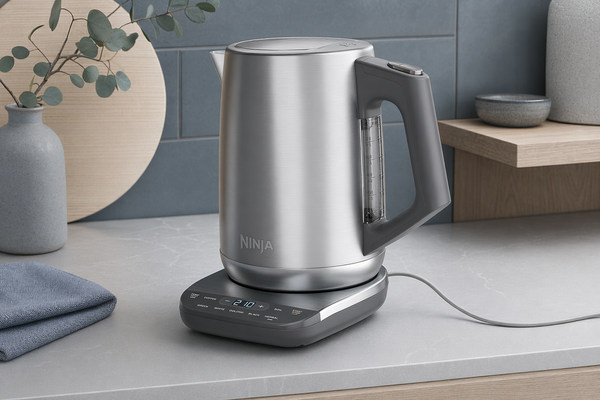
GoveeLife Smart Kettle — ~$125 CAD
The case for it: Precise temperature control via app or voice assistant (Alexa, Google Assistant). Set water to exactly 80°C for green tea, 96°C for French press, or 70°C for baby formula. The keep-warm function maintains temperature for up to 2 hours. Scheduling means hot water is ready at wake-up time.
The case against it: A gooseneck kettle with a temperature dial (~$60–$80 CAD) does the same thing without WiFi. The app adds remote start and voice control, but most people are standing in the kitchen when they want hot water.
Worth it if: Precise temperature matters (tea enthusiasts, pour-over coffee), or voice-activated boiling fits the smart home setup.
Skip it if: Boiling water is boiling water, and a $30 kettle works fine.
Non-smart alternative: Fellow Stagg EKG ($230 CAD) — precise temperature control, beautiful design, no app. Or any variable-temp kettle ($60–$80 CAD).
Tier 3: Skip It
These products charge a significant premium for smart features that don't meaningfully improve the cooking experience or justify the cost over simpler alternatives.
GE Profile Smart Mixer — ~$1,615 CAD
Why skip it: The GE Profile Smart Mixer features a built-in scale, auto-sense technology that adjusts speed based on resistance, and guided recipes through the SmartHQ app. It's a genuinely impressive piece of engineering. The problem is the price: ~$1,615 CAD for a stand mixer.
A KitchenAid Artisan (~$450 CAD) does 95% of what most home bakers need. The auto-sense speed adjustment is clever but solves a problem most bakers handle by glancing at the bowl. The built-in scale saves reaching for a separate scale — a $25 accessory. The guided recipes are available in countless free apps.
The math doesn't work. The ~$1,165 CAD premium over a KitchenAid buys marginal convenience, not better baking results. The dough, batter, and meringue come out the same.
Non-smart alternative: KitchenAid Artisan Series (~$450 CAD) — the gold standard for home baking, proven over decades, with a massive accessory ecosystem.
Revolution Toaster — ~$450 CAD
Why skip it: The Revolution InstaGLO toaster uses infrared heating elements and a touchscreen with preset modes for different bread types. It toasts faster and more evenly than conventional toasters, and the touchscreen looks sleek on the counter.
But it's $450 CAD. For a toaster. A Breville Smart Toaster ($100 CAD) with a "Lift and Look" feature and multiple bread settings produces excellent toast. A basic two-slice toaster (~$30 CAD) produces acceptable toast. The Revolution's faster heating and touchscreen are nice, but the price-to-improvement ratio is among the worst in the smart kitchen category.
Toast is toast. The Revolution makes marginally better toast at 10–15x the price of a perfectly adequate alternative.
Non-smart alternative: Breville Bit More Toaster (~$80 CAD) — excellent toast, "A Bit More" button for extra browning, fraction of the price.
LARQ Pitcher — ~$136 CAD
Why skip it: The LARQ Pitcher uses UV-C LED technology to purify water and claims to neutralize up to 99% of bio-contaminants. The smart feature is an app that tracks filter life and water consumption.
The issue: Canadian municipal tap water is already among the safest in the world. A Brita pitcher (~$35 CAD) with a standard carbon filter handles taste and chlorine concerns effectively. The LARQ's UV-C purification solves a problem that doesn't exist for most Canadian households on municipal water. For well water or travel, UV purification has merit — but a $136 pitcher with app tracking is overkill for the vast majority of Canadian kitchens.
Non-smart alternative: Brita Everyday Pitcher (~$35 CAD) — effective filtration for taste improvement, widely available replacement filters.
Smart vs Non-Smart: The Complete Comparison
| Product | Smart Price (CAD) | Non-Smart Alternative | Non-Smart Price (CAD) | Smart Premium | Worth the Premium? |
|---|---|---|---|---|---|
| MEATER Plus | ~$120 | ThermoWorks ThermoPop | ~$45 | +$75 | ✅ Yes |
| Dreo ChefMaker | ~$499 | Ninja Air Fryer Max XL | ~$170 | +$329 | ✅ Yes |
| Greater Goods Scale | ~$59 | Basic digital scale | ~$25 | +$34 | ✅ Yes |
| SPINN Coffee Maker | ~$299 | Bonavita Connoisseur | ~$200 | +$99 | ⚠️ Depends |
| Tovala Smart Oven | ~$813 | Breville Smart Oven Pro | ~$350 | +$463 | ⚠️ Depends |
| Vitamix A3500 | ~$230 | Vitamix E310 | ~$450 | -$220 | ⚠️ Depends |
| GoveeLife Kettle | ~$125 | Variable-temp kettle | ~$70 | +$55 | ⚠️ Depends |
| GE Profile Mixer | ~$1,615 | KitchenAid Artisan | ~$450 | +$1,165 | ❌ No |
| Revolution Toaster | ~$450 | Breville Bit More | ~$80 | +$370 | ❌ No |
| LARQ Pitcher | ~$136 | Brita Everyday | ~$35 | +$101 | ❌ No |
The Pattern: When Smart Kitchen Tech Works
Looking across all 10 products, a clear pattern emerges for when smart features justify their premium:
Smart features work when they:
- Monitor something humans can't — The MEATER Plus tracks internal meat temperature continuously and predicts finish time. No amount of experience replicates that precision without a probe.
- Automate multi-step processes — The Dreo ChefMaker adjusts temperature, steam, and convection automatically based on probe readings. Doing this manually requires constant attention.
- Provide data that changes behaviour — The Greater Goods scale turns weighing into nutritional tracking. The data itself is the product.
Smart features fail when they:
- Add connectivity to a simple task — Toasting bread doesn't benefit from a touchscreen. Boiling water doesn't need an app (for most people). Mixing dough doesn't require auto-sense speed adjustment.
- Solve problems that don't exist — UV-purifying already-safe Canadian tap water. Guided recipes for stand mixer users who already know how to bake.
- Charge luxury prices for incremental improvement — A $450 toaster makes slightly better toast. A $1,615 mixer makes the same bread as a $450 one.
What Canadian Shoppers Should Consider
Availability and Support
Not all smart kitchen products have equal support in Canada. Tovala's meal kit service has limited Canadian availability, which reduces the oven's core value proposition. SPINN's bean subscription ships to Canada but with additional shipping costs. MEATER and Dreo have strong Canadian Amazon availability and standard warranty support.
Before buying any smart kitchen appliance, verify:
- Canadian warranty coverage
- App availability in the Canadian App Store / Google Play
- Whether subscription features (if any) are available in Canada
- Replacement part availability
The WiFi Dependency Question
Every smart kitchen appliance relies on an app, a cloud service, or both. If the company shuts down or discontinues the app, the smart features disappear. Products that function well without connectivity (MEATER still reads temperature on the block display, Dreo ChefMaker works via its touchscreen) are safer bets than products where the smart feature IS the product.
Price Volatility
Smart kitchen appliance prices in Canada fluctuate significantly. The products listed here reflect typical Canadian retail pricing, but Amazon Prime Day, Black Friday, and Boxing Day sales can reduce prices by 20–40%. The SPINN at ~$299 CAD refurbished is already a deal; the Dreo ChefMaker frequently drops below $400 CAD during sales events.
Final Verdict
Smart kitchen appliances are worth it when the technology solves a real cooking problem — monitoring meat temperature, automating complex cooking processes, or tracking nutritional data. They're not worth it when the "smart" feature is a touchscreen on a toaster or an app for a kettle.
The best smart kitchen investments for Canadian homes in 2025:
- MEATER Plus (~$120 CAD) — the clearest value in smart kitchen tech
- Dreo ChefMaker (~$499 CAD) — genuine cooking capability upgrade over standard air fryers
- Greater Goods Nutrition Scale (~$59 CAD) — affordable and immediately useful for anyone tracking macros
The worst smart kitchen investments: anything that charges a massive premium for connectivity on a fundamentally simple appliance. A toaster doesn't need WiFi. A stand mixer doesn't need an app. And Canadian tap water doesn't need UV purification.
Buy smart where it makes the food better. Buy simple where it doesn't.
Discussion
Sign up or sign in to join the conversation.