

The Kaleidescape Strato C Movie Player sits in a fairly small and very expensive corner of home entertainment: the dedicated movie player for people who care about cinema-quality playback enough to build around it. This is not a streaming stick, not a Blu-ray player in the usual sense, and no...
The Kaleidescape Strato C Movie Player sits in a fairly small and very expensive corner of home entertainment: the dedicated movie player for people who care about cinema-quality playback enough to build around it. This is not a streaming stick, not a Blu-ray player in the usual sense, and not a cheap way to get 4K movies on a screen. It is a high-end component built for serious theater rooms, clean control-system integration, and one very specific promise: movies should play back at full quality, reliably, without the compromises that come with mainstream streaming.
This article is not a hands-on review. Nothing here is based on personally using the player in a home theater. Instead, the goal is to explain what the Kaleidescape Strato C Movie Player actually is, how it fits into the Kaleidescape ecosystem, and who it makes sense for once the marketing language is stripped away. If you have seen the price, wondered why anyone would pay it, and want the plain-English version before digging deeper, this is for you.
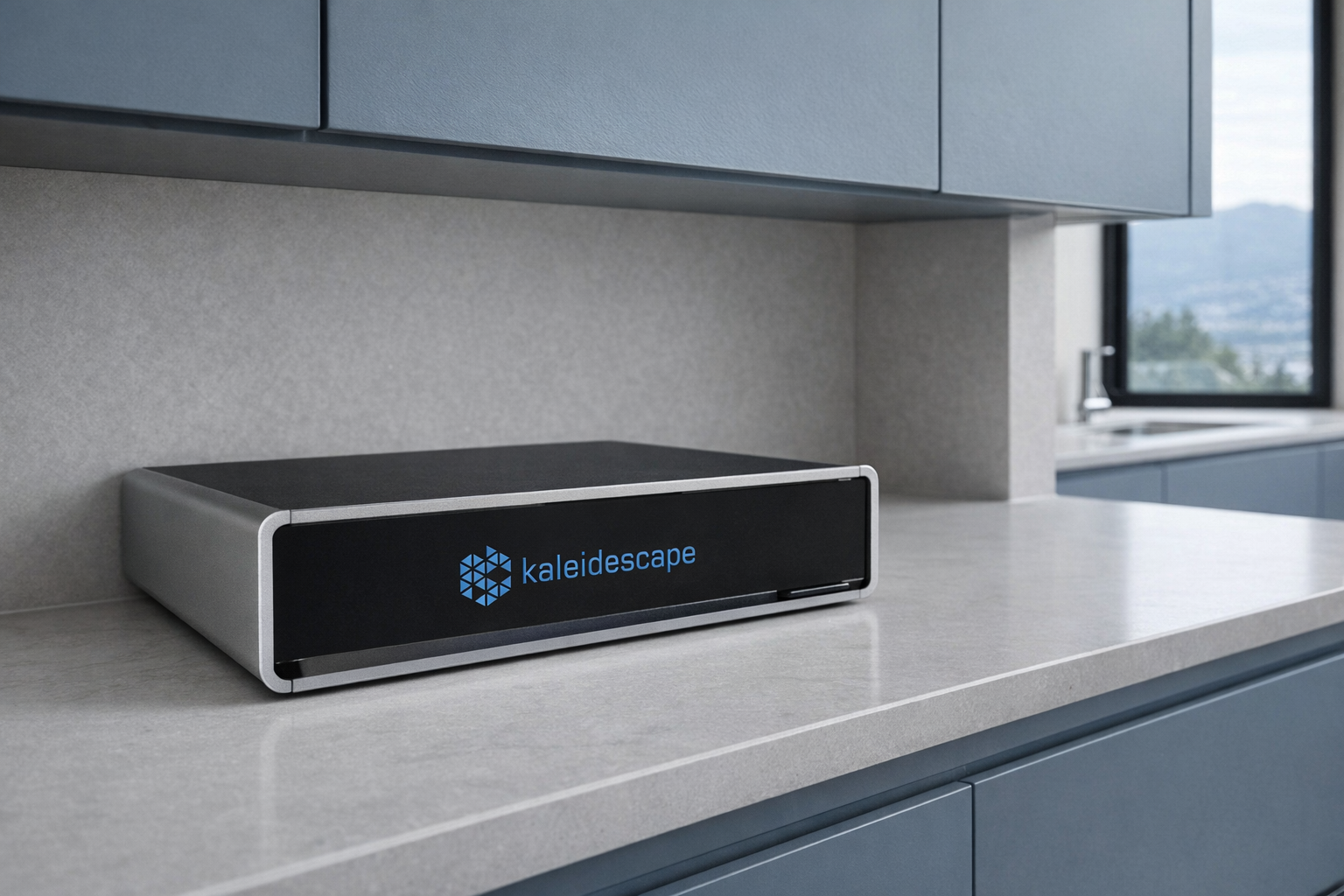
Quick snapshot
| Question | What the Kaleidescape Strato C Movie Player actually is |
|---|---|
| Category | Entertainment |
| Made by | Kaleidescape |
| Typical price | ~$4295 CAD (listing at the time of writing — verify current pricing) |
| Rating signal | Check current reviews |
| Best for | Dedicated theater owners, custom-install homes, buyers who want downloaded 4K movies instead of streaming compromises |
| Skip if | You mainly use Netflix, want disc playback, or are building on a normal streaming-box budget |
Pro tip: Do not evaluate the Kaleidescape Strato C Movie Player against an Apple TV 4K on price alone. Evaluate it against the cost of a full premium theater setup where reliability, automation, and full-bitrate playback actually matter.
What the Kaleidescape Strato C Movie Player actually is
In plain English, the Kaleidescape Strato C Movie Player is a premium box for people who want digital movies to behave more like high-end physical media than like streaming. Its core appeal is simple: instead of relying on internet speed and streaming compression in real time, it downloads films first and then plays them locally at bit rates up to 100 Mbps. That is the key idea. If you already have a projector, an AVR or processor, a serious speaker setup, and maybe a control system like Control4 or Crestron, the Strato C is meant to slot into that environment as a polished movie source.
The Kaleidescape Strato C is a premium 4K Ultra HD movie player designed for high-end home theaters. It delivers reference-quality video with HDR10 support and lossless multichannel audio including Dolby Atmos, Dolby TrueHD, DTS:X, and DTS-HD Master Audio. Movies are downloaded (not streamed) at bit rates up to 100 Mbps for flawless, buffer-free playback. The compact form factor fits two units in a single rack unit, and it integrates with popular home automation systems like Crestron, Control4, Savant, and Josh.ai.
What makes that meaningfully different from a mainstream box is the ecosystem around it. Compared with the Apple TV 4K, the Strato C is not trying to be an everything device with apps, casual streaming, rentals, games, and AirPlay convenience. It is much narrower and much more expensive. But it is also more honest about its purpose: movie-first playback, home-theater integration, and downloaded content rather than variable-quality streams. For the right buyer, that focus is the whole point. For everyone else, it can look like an absurd overbuild.
Key features at a glance
- True 4K Ultra HD playback at up to 60fps
- HDR10 high dynamic range support
- Lossless multichannel audio including Dolby Atmos, Dolby TrueHD, DTS:X, and DTS-HD Master Audio
- Downloaded playback at up to 100 Mbps, rather than live streaming
- Compact chassis with 2 players fitting in 1 rack unit
- Integration with Crestron, Control4, Savant, and Josh.ai
- Access to the Kaleidescape Movie Store
- Upscaling of Blu-ray and DVD content to 4K
- Assembled in the USA in a solar-powered factory
How the Kaleidescape Strato C Movie Player actually works
The Strato C is easiest to understand if you stop thinking of it as a normal streamer. With Netflix or Disney+, you press play and the box pulls a compressed stream from the internet in real time. The quality you get depends on the service, your network, and the platform's own bitrate limits. Kaleidescape takes a different route: you acquire movies through the Kaleidescape Movie Store, the titles are downloaded, and playback happens locally from there. That is why the company leans so hard on the "downloaded, not streamed" wording.
That design solves a very specific problem. In a theater room with a large projection screen, high-end speakers, and a carefully dialed-in audio chain, the weak link is often the source. Compression artifacts, audio compromises, and buffering are not always obvious on a 55-inch TV in a family room, but they can become a lot more noticeable in a serious setup. A downloaded file at up to 100 Mbps is a more predictable source. That's a more honest design than many premium media pitches, because it targets the part of the experience enthusiasts actually complain about.
There is also an important ecosystem layer here. The Strato C is designed to live comfortably inside custom installs, not just on an Ikea shelf under a TV. Its compact size means two units can fit in a single rack unit, which matters to integrators building multi-zone or stacked systems. And the listed compatibility with Crestron, Control4, Savant, and Josh.ai tells you exactly who Kaleidescape expects to buy it: households with centralized control, hidden racks, programmed remotes, scene-based automation, and a willingness to pay for polish.
Functionally, think of the product as working across four layers:
- Movie acquisition. You buy or access films through the Kaleidescape Movie Store rather than through a patchwork of third-party streaming apps.
- Local download. Movies are stored for playback before viewing, which avoids the variability of live streaming.
- Reference playback. The player outputs 4K Ultra HD, HDR10, and lossless formats like Dolby Atmos and DTS:X to your TV, projector, AVR, or processor.
- System integration. In a more advanced setup, the player can be tied into control platforms so movie playback becomes part of broader theater automation.
That last point is easy to overlook if you are shopping from a consumer-retail mindset. In a custom theater, the value is not only "picture quality." It is also that one button can lower lights, wake the projector, set the processor input, and start the film cleanly. The Strato C is built for that world.
A realistic "day in the life" with Kaleidescape Strato C Movie Player
Because this is an informational piece, here is a realistic day based on the listed features and the way these systems are typically used — not a tested account.
- Morning. A homeowner or integrator adds a newly purchased film from the Kaleidescape Movie Store to the library. Instead of planning around whether the internet will hold up at night, the title downloads ahead of time for local playback.
- Midday. In a media room or rack closet, the Strato C sits quietly as part of a larger system, potentially alongside control gear from Control4 or Savant. Its compact design matters here more than it would in a casual living room, because rack space is expensive and usually crowded.
- Evening. Movie time is where the product earns its keep. A 4K title plays back with HDR10 and lossless audio formats like Dolby Atmos, without the usual "why does this look softer than the disc?" feeling that can happen with mainstream streaming platforms.
- Late night. Someone revisits older library content, and the player's upscaling of Blu-ray and DVD material helps legacy purchases look better on a modern 4K display or projector. That does not magically turn DVD into native 4K, of course, but good scaling is still useful in real collections.
Who the Kaleidescape Strato C Movie Player is actually for (and who it isn't)
Great fits
- Homeowners with a dedicated theater room built around a projector, AVR or surround processor, acoustic treatment, and proper seating.
- Buyers already using Crestron, Control4, Savant, or Josh.ai, who want a movie source that fits their control ecosystem cleanly.
- Film collectors who have largely moved on from discs but still care deeply about bitrate, lossless audio, and consistent playback quality.
- People building a premium media room where $4295 CAD is only one part of a much larger system budget.
- Integrators and design-conscious households that care about rack efficiency, hidden hardware, and clean installation.
Poor fits
- Anyone who mainly watches Netflix, Prime Video, YouTube, or sports apps and just wants one simple box under the TV.
- Shoppers hoping this doubles as a standard disc player. The Strato C is about Kaleidescape's movie ecosystem, not spinning UHD Blu-rays.
- Apartment dwellers or family-room viewers using a midrange soundbar, where the jump from good streaming to this level may be hard to justify.
- Budget-conscious buyers comparing it to a Roku Ultra, Apple TV 4K, or game console and expecting the value math to work out similarly.
- People who dislike closed ecosystems and prefer the flexibility of open app platforms or physical media ownership.
Practical trade-offs
Cost and ecosystem lock-in
The first trade-off is obvious: ~$4295 CAD is a huge amount of money for a movie player. And that is before you start thinking about the rest of the system it is really designed for. This is not the kind of purchase where the hardware cost stands alone; it makes the most sense when attached to a projector, premium audio, a proper network, and maybe a custom install budget.
There is also a platform commitment here. The Strato C's appeal depends heavily on the Kaleidescape Movie Store and the broader Kaleidescape way of doing things. That can be convenient and polished, but it is still a narrower ecosystem than mainstream app-based streaming. Evaluate it like a premium component system, not like a universal media box.
Content flexibility
This is a movie-first appliance, not a do-everything entertainment hub. If your household jumps constantly between Netflix originals, live sports apps, random YouTube videos, and rented titles across five services, a mainstream streamer will feel more flexible. The Strato C is strongest when your priority is sitting down to watch a film properly, not browsing a dozen content silos.
The upscaling support for Blu-ray and DVD content is useful, but it is also worth staying realistic. Better scaling can improve presentation on a 4K screen, especially in a carefully tuned room, but it does not create detail that was never there. Marketing pages sometimes glide past that distinction; buyers should not.
Installation and system matching
A Strato C can technically be thought of as a single component, but it is clearly built with higher-end installations in mind. The mention that two players fit in 1 rack unit is not there for ordinary condo living-room setups. It is there because this product is meant to live in equipment racks, structured wiring spaces, and professionally configured theaters.
That is not a flaw, but it does mean system matching matters. If the rest of your setup is a basic TV and a soundbar, the player is overkill. If the rest of your setup is a projector, a 7.2.4 or similar immersive audio layout, and a control system, it starts to look more proportionate.
Where the Kaleidescape Strato C Movie Player fits in a smart home
The Strato C fits best as the premium movie source inside a larger entertainment stack. In practical terms, that often looks like this:
- Projector or premium 4K TV from brands like Sony, JVC, LG, or Samsung
- AV receiver or surround processor from Denon, Marantz, Anthem, or Trinnov
- Speaker system capable of making use of Dolby Atmos or DTS:X
- Control system such as Crestron, Control4, Savant, or Josh.ai
- Kaleidescape Strato C Movie Player as the movie library and playback engine
That stack matters because the Strato C is not trying to be the centre of every entertainment task. It is the specialist component for movie night. Let an Apple TV 4K or similar handle casual streaming apps in another input if that is your household's style, and let the Strato C handle the serious film sessions. That division of labour usually makes more sense than trying to force one box to be everything.
In a broader smart-home context, the integration angle is the real story. A good theater scene can dim Lutron lighting, drop the screen, power on the projector, set the right audio mode, and cue the movie through a single command. That is where a product like this belongs: not as a gadget, but as one disciplined part of a much larger system.
The buying decision, in plain terms
Before buying a Kaleidescape Strato C Movie Player, three questions usually get you to the right answer fast:
- Do you have a theater setup good enough to reveal the difference? If you are using a projector or a serious 4K display with proper surround audio, the downloaded high-bitrate approach makes more sense. If you are watching through a modest TV and soundbar, it probably does not.
- Are you comfortable buying into Kaleidescape's ecosystem? The player's value depends on the movie store, the platform, and the closed-system experience being a positive for you rather than a limitation.
- Do you want a dedicated movie component, not a general entertainment box? If yes, the Strato C is doing a specific job very well on paper. If no, a mainstream streamer is the saner buy.
If those answers are all yes, the Kaleidescape Strato C Movie Player is a sensible luxury component; if even one is a firm no, it is probably the wrong kind of expensive.
Got Questions About the Kaleidescape Strato C Movie Player? Let's Clear Things Up.
Is this a hands-on review?
No. This is an informational explainer based on the listed product details, official positioning, and what products in this category are generally designed to do. It is meant to help you understand fit, not replace a full hands-on evaluation.
Does the Kaleidescape Strato C Movie Player stream movies like an Apple TV or Roku?
Not in the usual sense. The key distinction is that Kaleidescape emphasizes downloaded playback rather than live streaming, with movie files delivered at up to 100 Mbps. That approach is aimed at more consistent quality and avoiding buffering during playback.
Does it play discs?
Based on the listed information, the Strato C is presented as a digital movie player tied to the Kaleidescape ecosystem and movie store, not as a conventional UHD Blu-ray disc player. If disc playback is important to you, check the current product page and broader Kaleidescape lineup carefully before buying.
Does it support Dolby Atmos and other high-end audio formats?
Yes, according to the listing. The player supports lossless multichannel audio including Dolby Atmos, Dolby TrueHD, DTS:X, and DTS-HD Master Audio. That makes it a better fit for full surround systems than for simple TV-speaker setups.
Is it mainly for custom installers and luxury theaters?
That is the clearest reading of the feature set. Support for Crestron, Control4, Savant, and Josh.ai, plus the note that two players fit in 1 rack unit, points strongly toward dedicated theater rooms and professionally integrated homes rather than casual living-room use.
What does it cost in Canada?
At the time of writing, the listed price is roughly ~$4295 CAD. Pricing at this level can change with exchange rates, dealer structure, and system bundles, so verify the current price before making a decision.
Where can I verify the current specs or buy it?
The best place to confirm current details is Kaleidescape's own product page, since premium AV products can change in configuration or availability over time. The listing is here: Kaleidescape Strato Movie Players.
Where is the Celmin Directory listing for this product?
For a catalog-style view of the same product — structured specs, pros and cons, similar picks, and FAQ — see Kaleidescape Strato C Movie Player on Celmin Directory.
If you're building a smarter home in Canada and want honest explainers on gadgets worth considering — plus the ones worth skipping — Celmin covers the full catalog without the marketing theater. More reviews, comparisons, and buyer guides at https://celmin.ca.


Discussion
Sign up or sign in to join the conversation.