
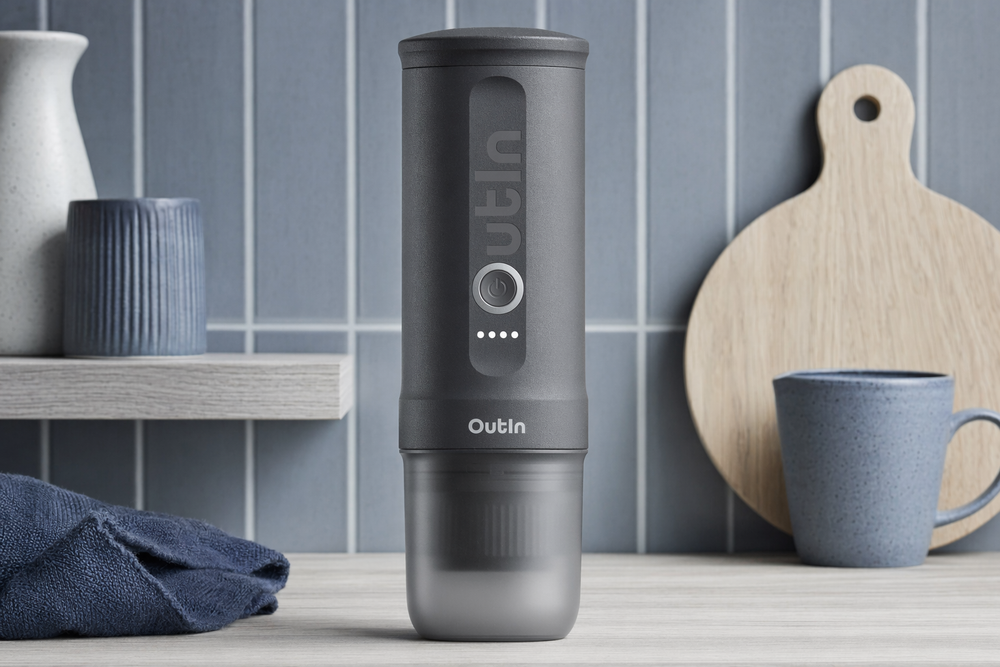
Hotel coffee is a category of disappointment. The in-room drip machine that smells like yesterday's lobby. The lobby urn that has been sitting at 72°C since 5 a.m. The $7 latte from the café downstairs that costs more than parking. If you travel for work, camp on long weekends, or simply refuse t...
Hotel coffee is a category of disappointment. The in-room drip machine that smells like yesterday's lobby. The lobby urn that has been sitting at 72°C since 5 a.m. The $7 latte from the café downstairs that costs more than parking. If you travel for work, camp on long weekends, or simply refuse to start a Tuesday in a Thunder Bay motel with brown water in a styrofoam cup, you have already thought about bringing your own brew kit.
The travel coffee market splits into two philosophies that sound similar in marketing copy but diverge the moment you pack a bag. Electric espresso machines like the OutIn Nano carry their own heat — battery, heating element, pressure pump — so you pour in cold water and wait for a real shot. Manual immersion brewers like the AeroPress Original carry simplicity — no electronics, no charging, just hot water from whatever kettle the hotel forgot to clean and two minutes of plunger work.
This field guide teaches the mechanics first: what espresso actually requires, what immersion brewing delivers instead, and how Canadian trip types map to each machine. Then we walk through the OutIn Nano and AeroPress as the two travel tools we keep reaching for — not because they win every category, but because they solve different packing problems honestly. If you already know whether you need to carry heat or carry a plunger, skip to our companion essay, Carry the Heat or Carry the Simplicity? OutIn Nano vs AeroPress. If you want the physics before the product map, keep reading.
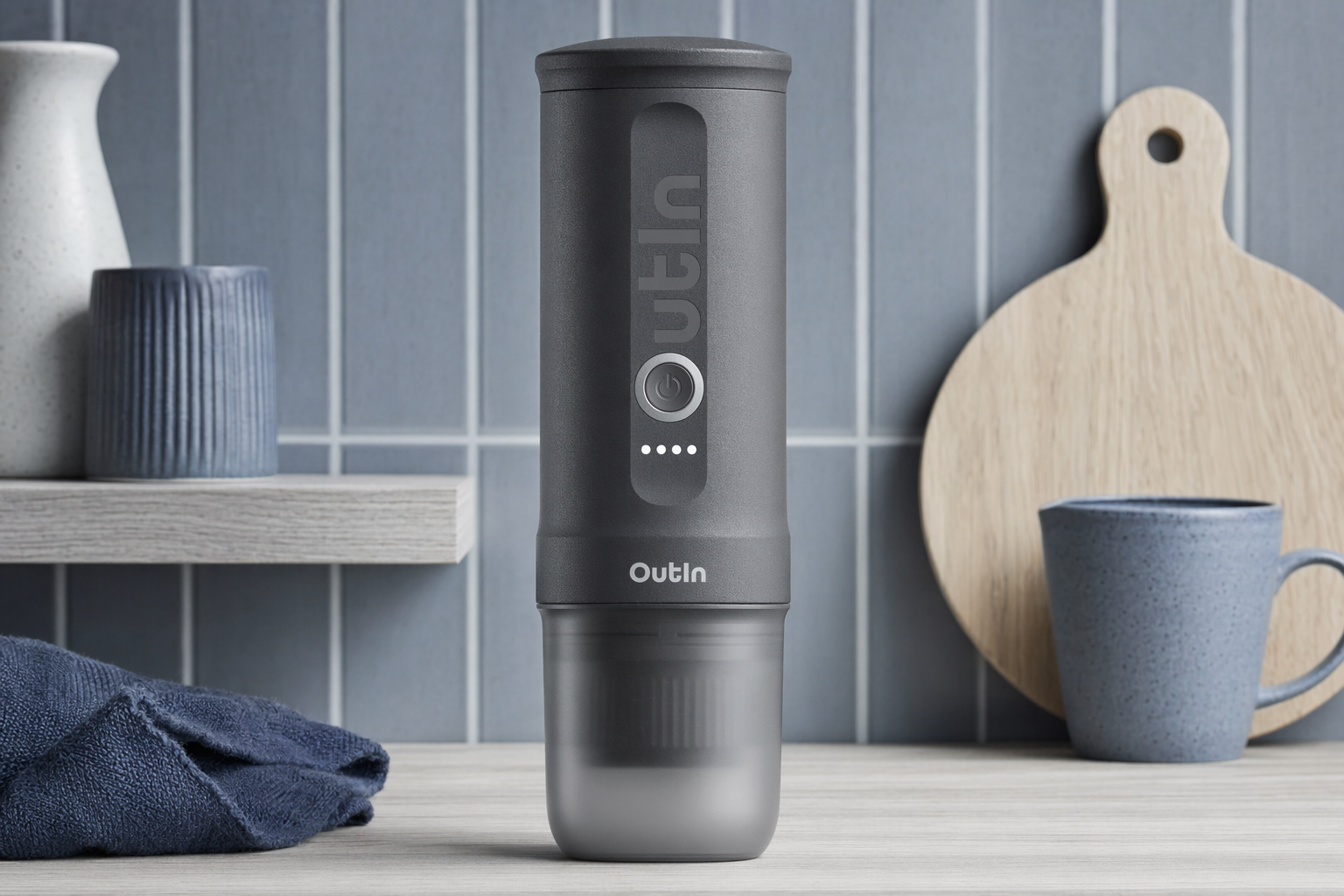
Espresso vs strong coffee: two different extraction problems
Marketing blurs these categories constantly. "Espresso-style." "Rich concentrate." "Barista quality." The physics underneath is less forgiving.
True espresso forces water through a compact bed of finely ground coffee at roughly nine bars of pressure — about nine times atmospheric pressure — with water arriving at the puck between 90–96°C. The combination extracts quickly: oils emulsify into crema, soluble compounds concentrate, and the result is a small, dense shot measured in grams, not millilitres. A proper double might be 18 grams in, 36 grams out in 25–30 seconds. The pressure is not optional decoration; it changes which compounds dissolve and how the cup feels on your tongue.
Immersion brewing — French press, AeroPress, clever drip — steeps grounds in water, then separates liquid from solids through a filter. Pressure is lower. AeroPress adds hand force through a plunger, but you are nowhere near nine bars. Extraction is gentler, bitterness is lower, and the cup is a concentrate you drink straight or dilute into an Americano-style drink. It can taste excellent. It is not espresso, and pretending otherwise is how Amazon reviews turn bitter.
Espresso is a pressure-and-temperature equation. Immersion is a time-and-filter equation. Both can travel. They do not produce the same cup.
The practical question for travellers is not "which makes better coffee" — it is which cup you actually want when the only infrastructure is a USB port, a kettle, or neither.
What travel adds to the equation
Kitchen espresso hides complexity behind countertops: grinder, kettle, scale, knock box, outlet. Travel strips the support structure.
Heat becomes the bottleneck. Every manual portable espresso maker — Picopresso, Nanopresso, STARESSO, and the rest — assumes you will supply water already hot. That is fine at home. In a hotel room with a slow in-room kettle, a campsite without power, or a rental car cup holder, "find 92°C water" becomes the hardest step. Electric machines like the OutIn Nano bet that carrying a battery is easier than hunting heat.
Power becomes a trade. USB charging is everywhere in 2026 — hotel desks, cars, power banks — but "everywhere" is not "unlimited." A self-heating espresso maker draws serious current to warm water from cold. Budget for charge cycles the way you budget for film in a disposable camera.
Simplicity becomes insurance. The AeroPress has no battery to die, no firmware to update, no charger wattage debate. Its dependency is simpler and more universal: hot water and a mug. If you can solve those two variables, the brewer works indefinitely.
This article covers the electric-vs-immersion pair only. If your search also includes hand-pump portable espresso machines, that comparison belongs in a separate field guide built around Picopresso, STARESSO, and similar tools — a different heat assumption entirely.
At a glance: OutIn Nano vs AeroPress Original
| OutIn Nano | AeroPress Original | |
|---|---|---|
| Brewing method | Battery-powered espresso (~20 bar, self-heating) | Manual immersion + hand pressure |
| Heat source | Built-in — cold water in, ~92°C shot out | You supply hot water (kettle, hotel pot, camp stove) |
| Power required | USB-C, 15W+ charger; 3–5 shots from cold per charge | None |
| Cup style | Espresso shot with crema; 8 g stock dose (upgrade basket recommended) | Concentrated coffee; dilute for Americano |
| Brew time | ~200 seconds from cold water | ~2 minutes active |
| Weight / pack size | ~670 g, ~23 cm tall, stainless steel | ~200 g, fits drawer or side pocket |
| Coffee format | Fresh grounds + Nespresso pods (adapter) | Any grounds; paper micro-filters |
| Price (CAD) | ~$250–270 + ~$55–60 Basket Plus | ~$50–55 |
| Best trip | Hotel desk, car, office with USB | Backpack, campsite with kettle, any hot-water situation |
| Deep dive | Living with the OutIn Nano | Living with the AeroPress |
Neither row declares a winner. They solve different travel equations.
OutIn Nano: carry the heat, accept the battery
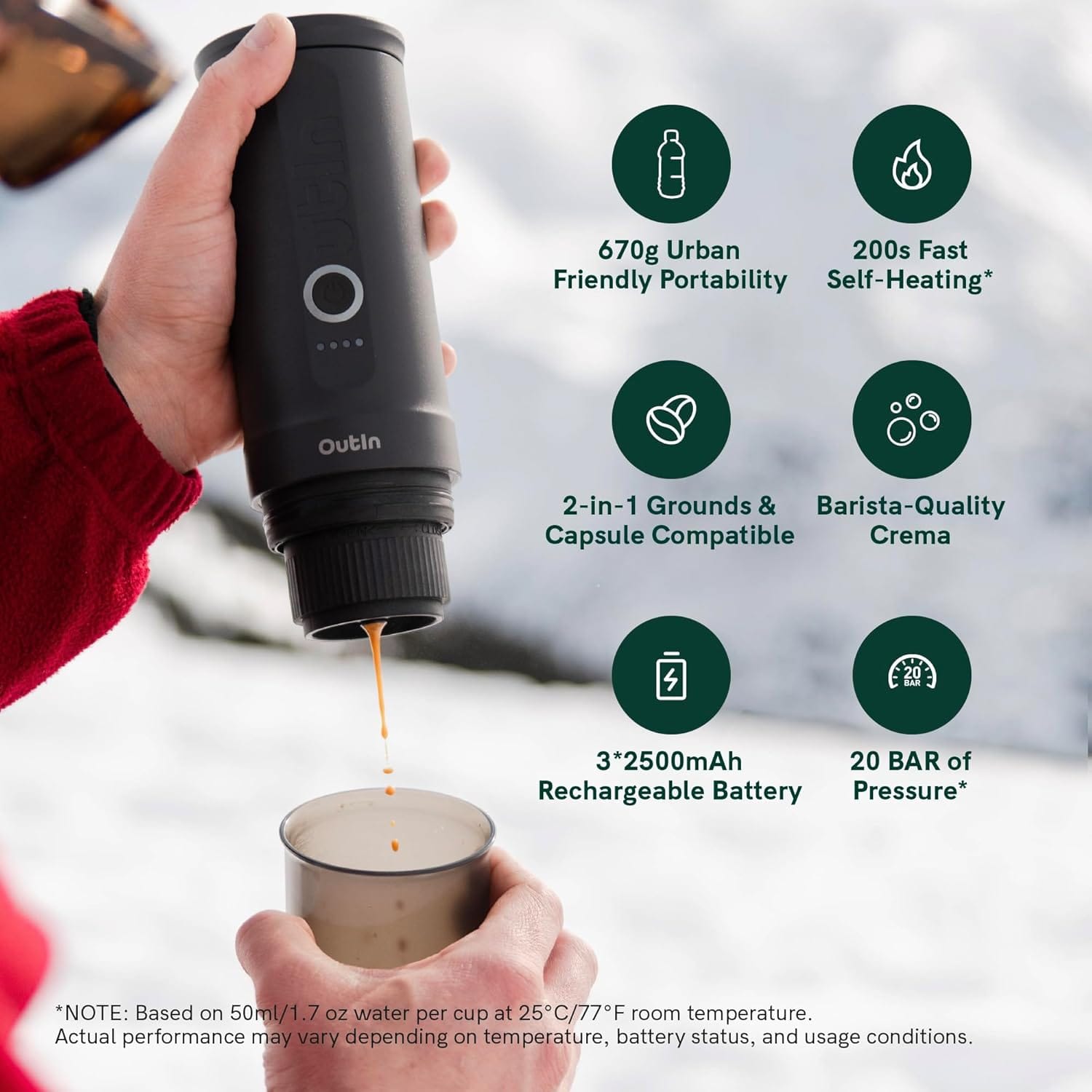
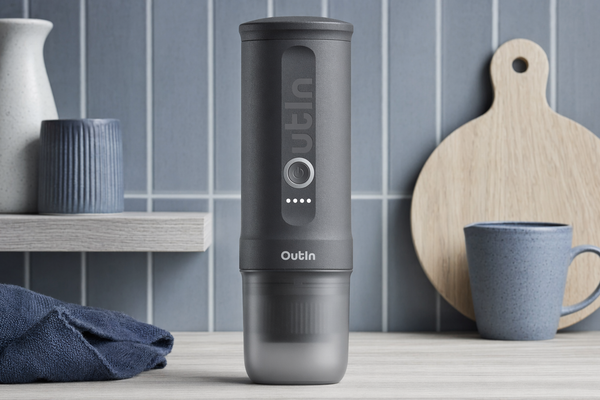
The OutIn Nano exists to break the kettle dependency that every other portable espresso maker quietly assumes. Pour cold water, press one button, wait roughly three minutes, and pull a hot shot with real crema — no hand pumping, no hunting a kitchenette appliance at 6 a.m.
The engineering bet is straightforward and expensive: pack enough lithium into a 23-centimetre stainless cylinder to heat a shot's worth of water and pressurize it to 20 bar. Water has high specific heat — it takes enormous energy to warm — which explains nearly every limitation that follows.
Battery math, honestly stated. From cold tap water, expect three to five shots before the 7,500 mAh pack needs recharging. The "200+ shots" figure on marketing materials assumes pre-heated water, which means you did the costly heating step externally — the very kettle the Nano was bought to replace. Think of it as two modes sharing one shell:
- Cold-water mode — true off-grid convenience for a solo morning cup; perfect for one traveller, one shot, USB power nearby.
- Pre-heated mode — near-unlimited brewing if you were boiling water anyway; battery sips because you supplied the heat.
The Nano cannot brew while charging. A dead battery is no coffee until it recharges — roughly 45 minutes to two hours depending on your charger. There is no manual fallback the way a hand-pump machine always has your arm.
Charger wattage matters. Underpowered 5W phone bricks generate "it arrived broken" reviews. The Nano needs 15W+ (5V/3A) USB-C. Use a tablet-class adapter or a decent power bank and charging behaves; use a junk drawer brick and it flashes errors.
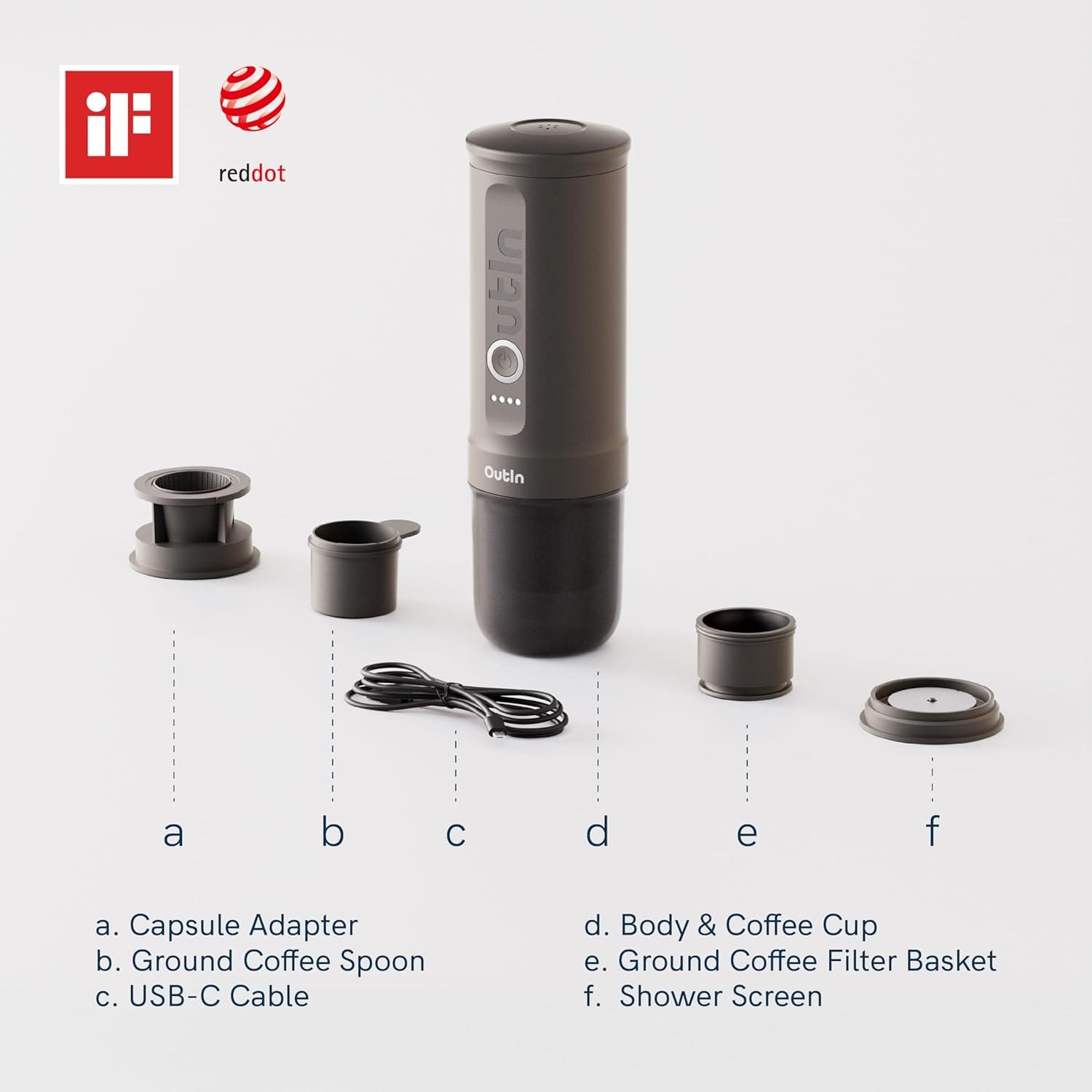
The basket nobody warns you about. The Nano ships with an 8-gram basket — closer to a polite ristretto than a full café single. Most owners who care about cup volume treat the OutIn Basket Plus ($55–60 CAD) as mandatory rather than optional. It bumps dose to roughly 12–14 grams for fuller body without leaving the self-heating travel lane. Budget **$310–330 all-in** before a grinder. Our Basket Plus buyer guide covers compatibility (Nano OTEM-01 only), pod limitations, and when the upgrade is not worth it.
Grind and pods. Fresh grounds outperform Nespresso pods in this machine — pods frequently under-extract into weak, incomplete shots. Grind should be espresso-fine but often performs best a hair coarser than a countertop machine; a stalled puck is almost always grind, not defect.
What it gets right:
- Self-heating delivers — no kettle ritual, one button, operable half-awake
- Stainless build survives daily bag abuse
- Tight portafilter seal; no scale buildup in a standing tank
- Included cup doubles as a travel lid
Who it fits: road-trippers and hotel workers with USB power; car commuters wanting a real shot in the cup holder; condo dwellers avoiding counter-clutter espresso machines; anyone leaving instant hotel coffee behind with fresh grounds.
Who should look elsewhere: multi-day off-grid campers without power; group brewing needing many shots in a row; crema purists who will accept a kettle for a Picopresso-class cup; buyers unwilling to manage charge, grind, and rinse cycles.
For battery curves, charger troubleshooting, and long-term reliability patterns, read our OutIn Nano honest buyer guide.

AeroPress Original: carry the plunger, find hot water
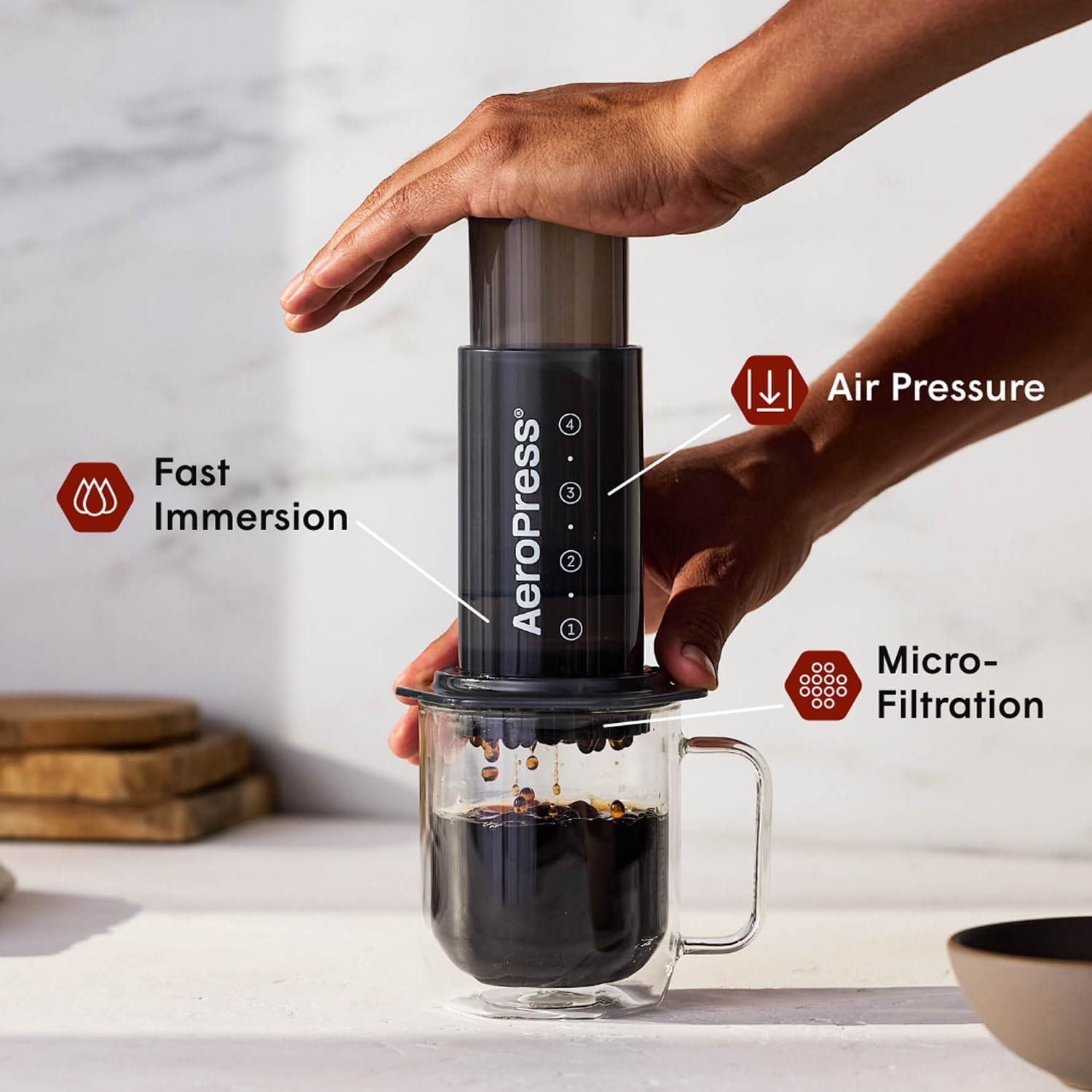
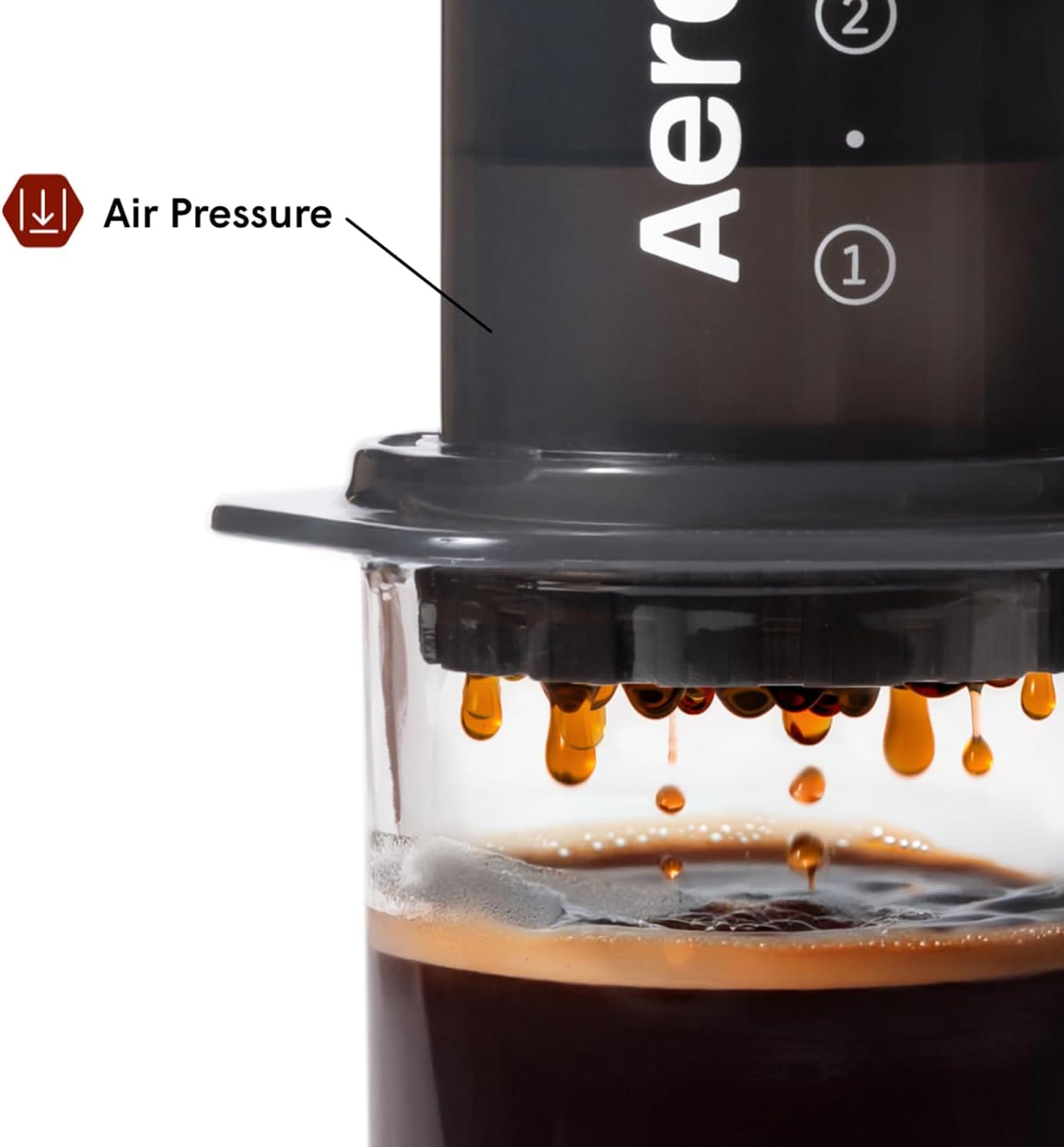
The AeroPress Original occupies the lane espresso machines cannot reach without outlets and counter space. Invented by Aerobie frisbee designer Alan Adler, it hybridizes immersion and pressure: grounds steep briefly in the chamber, then a plunger forces brew through a paper micro-filter under hand pressure. Lower pressure than espresso — gentler extraction, fewer bitter compounds, virtually no sediment.
The result is a concentrate you drink straight or dilute. Not crema. Not nine bars. Excellent coffee in about two minutes with cleanup measured in seconds — rinse, push the puck out, done.
The only-hot-water test. Canadian travellers describe the same workflow: grounds and filters packed in the chamber, hot water from a hotel kitchenette kettle or camp stove, cup that beats lobby drip by a wide margin. Office workers escape pod-machine mediocrity without claiming the break-room espresso machine. The constraint is universal — water between 90–96°C and a mug. Everything else travels.
Grind and temperature. Most weak-cup complaints trace to grind too coarse or water not hot enough. AeroPress wants medium-fine — finer than drip, coarser than true espresso. Water just off boil, thirty seconds to settle, is the common recipe. Dial both once and consistency follows within days.
Inverted vs standard. Standard: assemble on mug, add grounds and water, steep, press — simple, slight drip before press. Inverted: chamber on plunger, flip onto mug, press — less early drip, more dexterity. Pick one and commit; ideology debates online exceed the flavour difference for daily use.
What it gets right:
- Cup quality per dollar — among the strongest value propositions in coffee gear at ~$50–55 CAD
- Speed — two-minute routine including cleanup
- Portability — lightweight, durable, hotel and trail friendly
- Clean cups — paper filters eliminate French press grit
- Longevity — years of daily use; plunger seals are cheap replacements
Who it fits: solo drinkers wanting one excellent cup fast; travellers where hot water is guaranteed but outlets are not; budget buyers leaving bitter drip behind; condo kitchens with no space for a machine.
Who should look elsewhere: brunch hosts serving groups one cup at a time; crema chasers wanting espresso texture; pour-over lovers already happy with their ritual; buyers unwilling to buy paper filter refills.
The AeroPress honest buyer guide covers inverted-method opinions, Original vs Go vs Clear, counterfeit warnings, and seal replacement — details we will not repeat here.
Trip types: which machine matches your bag
Hotel desk with USB, no trustworthy kettle. The OutIn Nano was built for this. Cold water from the bathroom tap, button, wait, shot. Keep a 15W+ charger or power bank in the bag. Add the Basket Plus if the stock 8 g dose feels polite.
Hotel with kitchenette kettle, no desk outlet drama. AeroPress wins on weight, price, and zero charge anxiety. The kettle does the heat work; you do two minutes of plunger.
Car and office commuter. Nano in the cup holder with a car USB port is a real workflow — self-contained, one cup, no shared break-room politics. AeroPress works if your office has a kettle and you do not mind the ritual at your desk.
Backpack camping with stove or fire. AeroPress plus a small kettle or pot is the reliable pair. The Nano's battery dies eventually off-grid; plan charge cycles honestly or carry a substantial power bank.
Long-haul flight. Neither machine brews at 35,000 feet. TSA and CATSA generally allow empty brewers in carry-on; check current liquid rules for pre-ground coffee. Brew before security or at the hotel — not in the aisle.
Weekend cabin, group of four. Neither tool serves brunch efficiently — one cup at a time frustrates hosts.
Who should skip both
Some travel coffee problems sit outside this pair.
You only drink drip and drink it happily. Lobby coffee is fine. Save the bag space.
You need true café milk drinks. Neither machine steams milk. A travel milk frother or accepting black coffee is the honest fork.
You want countertop espresso at home. Buy a home machine; portable tools are compromises dressed as solutions.
You need manual portable espresso without electronics. Picopresso and STARESSO live in a different comparison — hand pressure, your kettle, no battery ceiling. This guide stays on electric vs immersion.
Frequently asked questions
Can I use Nespresso pods in the OutIn Nano?
Yes, with the included adapter — but fresh grounds consistently outperform pods in owner reports. Pods tend to under-extract into weaker shots. If pods are your primary format, temper expectations or consider whether a pod machine at home already solves the problem.
Do I need a grinder for the AeroPress?
Not strictly — any beans ground medium-fine work, and pre-ground from a roaster is acceptable with dose tweaking. Fresh grind helps noticeably; a compact hand grinder is the best upgrade after the brewer itself.
Can I bring these through airport security in Canada?
Empty brewers generally pass carry-on screening. Ground coffee is allowed; check CATSA liquid rules if carrying pre-brewed coffee. Batteries inside the Nano should stay in carry-on per airline lithium guidance — verify with your carrier before flying.
How many shots does the Nano really make per charge?
Three to five from cold water. Pre-heated water stretches the count dramatically because heating — not pumping — consumes most of the battery. The Nano cannot brew while plugged in.
Is the AeroPress actually espresso?
No — and honest reviewers say so. It makes an excellent concentrated coffee with lower pressure, no crema, and flexible dilution. If espresso texture is the goal, the OutIn Nano or a home machine is the correct category.
OutIn Nano or AeroPress for a first travel brewer?
Follow the heat question. If you will often have USB but not a kettle, Nano. If hot water is easy and weight matters, AeroPress. For the lifestyle framing rather than the spec map, read Carry the Heat or Carry the Simplicity?.
The bottom line
Travel coffee in Canada is a packing decision disguised as a taste decision. Electric espresso — the OutIn Nano — carries heat so you do not have to, at the cost of battery math, charger wattage, and an honest all-in price once the Basket Plus enters the picture. Manual immersion — the AeroPress — carries simplicity so you only need hot water, at the cost of accepting concentrated coffee instead of crema.
Name the trip: hotel desk, campsite, car, office. Name the infrastructure: USB, kettle, neither. Pick the machine whose dependency matches what you will actually have at 6 a.m. Then read the deep dives for ownership quirks, and the philosophy essay if you are still staring at both Amazon tabs.
Sign up or sign in to join the conversation.