
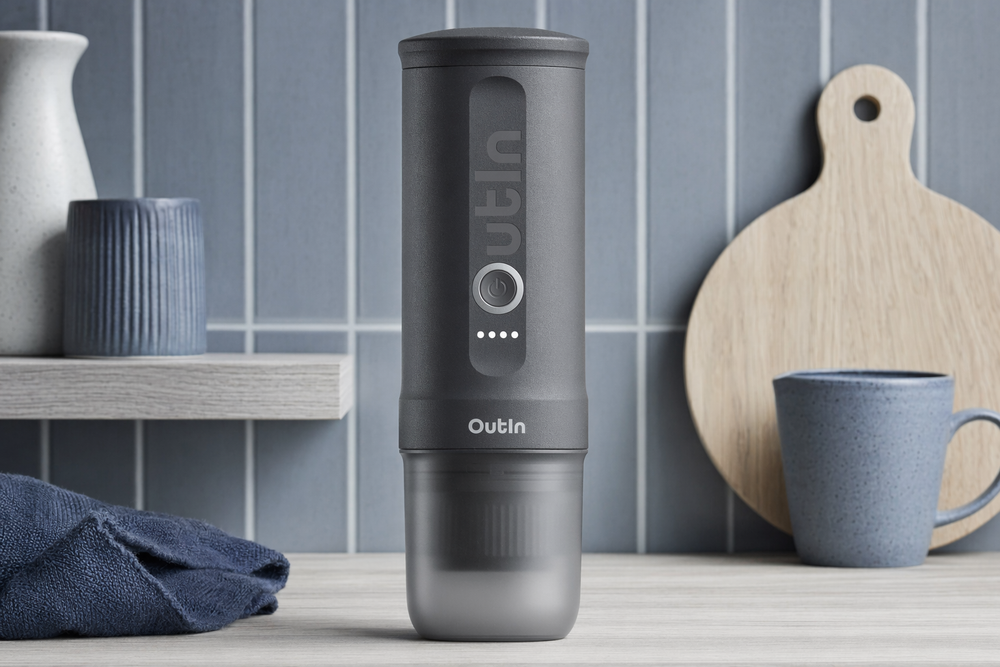
Every portable espresso maker ever built has quietly relied on a kettle. Picopresso, Nanopresso, STARESSO — clever machines, all of them, and all of them hand you the pressure but leave the hardest part of espresso, the *heat*, as your problem to solve. That's fine at a kitchen counter. It falls ...
Every portable espresso maker ever built has quietly relied on a kettle. Picopresso, Nanopresso, STARESSO — clever machines, all of them, and all of them hand you the pressure but leave the hardest part of espresso, the heat, as your problem to solve. That's fine at a kitchen counter. It falls apart in a hotel room, a parked car, or a tent at 6 a.m. when the only hot water for a kilometre is whatever you can convince a tired in-room kettle to produce.
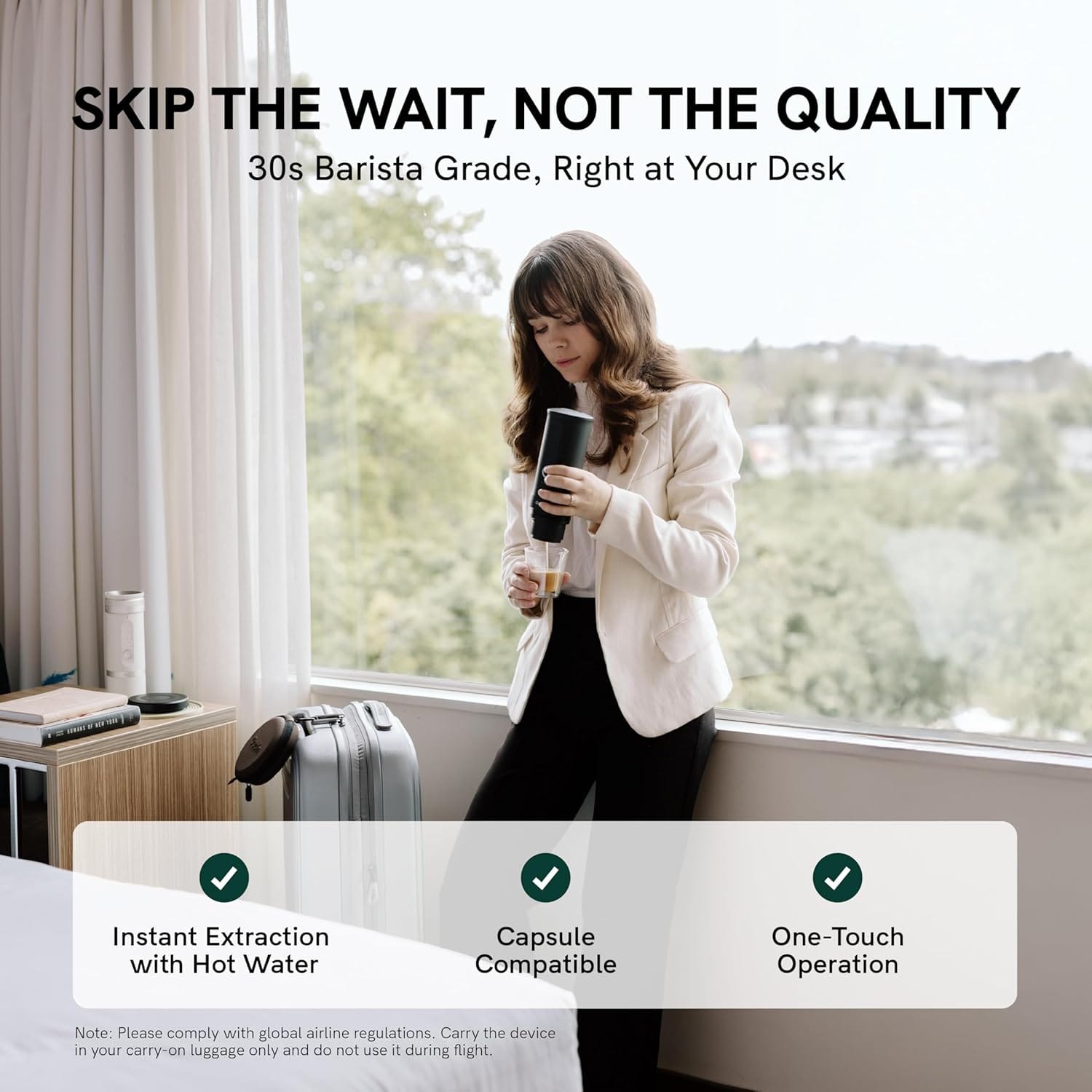
The OutIn Nano exists to break that dependency. It carries its own battery and its own heating element, so you pour in cold water, hold a button, and let it do the part every other machine refuses to. That single decision — to carry the heat — is what makes the Nano special, and it's also the root of every limitation it has. Understand the trade and you'll know within a paragraph whether this is your machine.

The snapshot
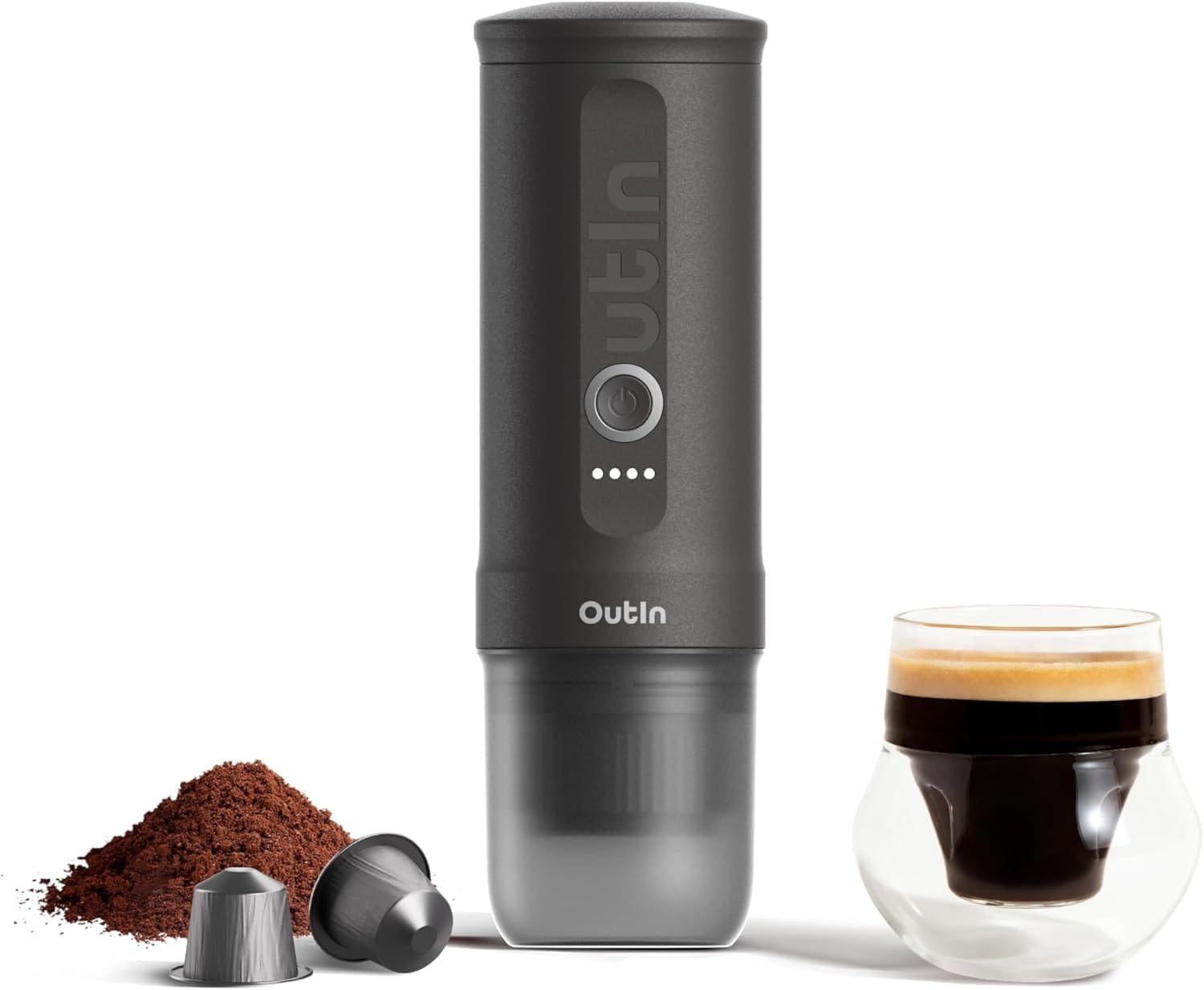
| OutIn Nano | |
|---|---|
| What it is | Battery-powered, self-heating portable espresso maker |
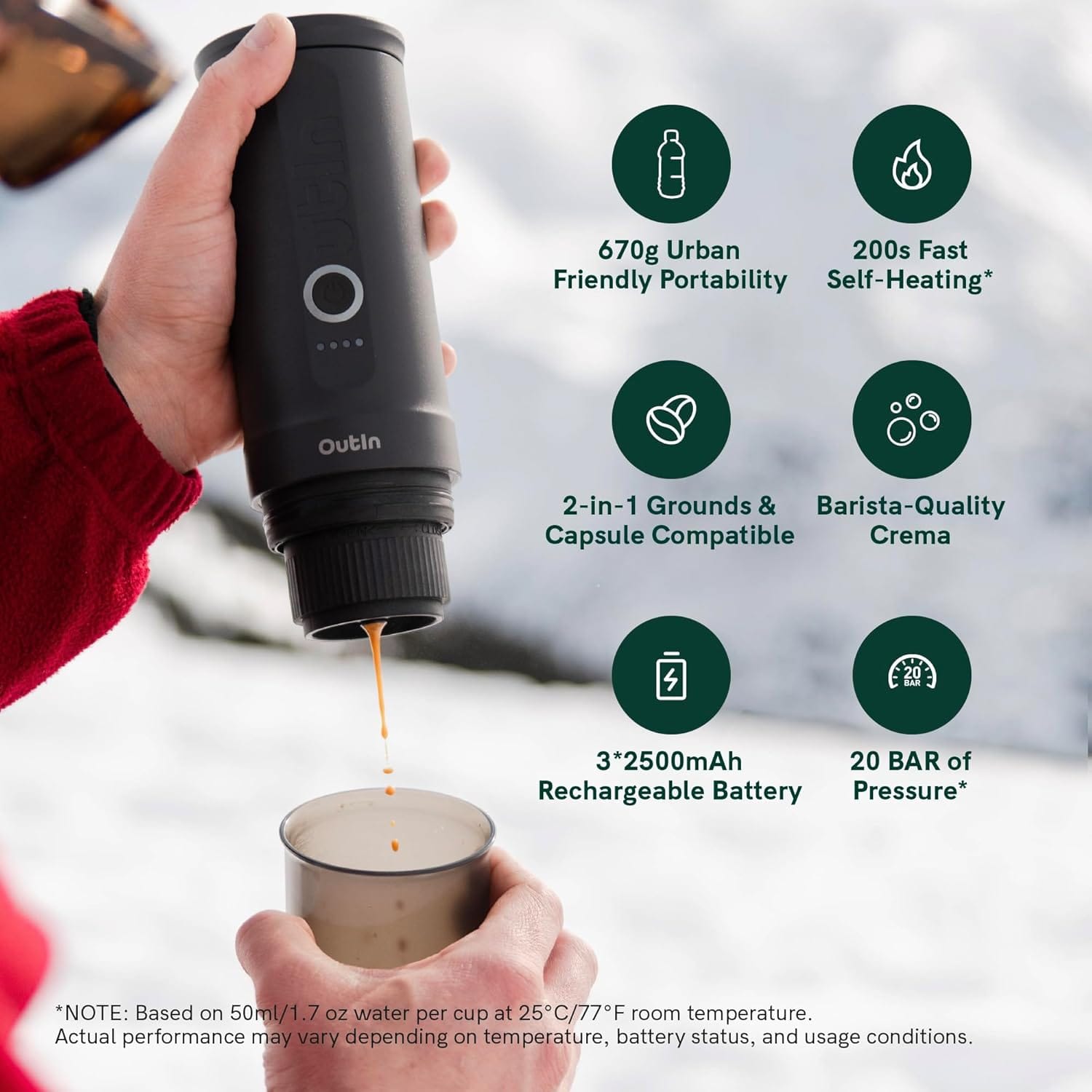
| Pressure / temp | 20 bar, heats to ~92°C (198°F) in ~200 seconds |
| Battery | 7,500 mAh (three 2,500 mAh cells), USB-C — needs a 15W+ charger |
| Shots per charge | 3–5 from cold water, 200+ if you pre-heat |
| Weight / size | ~670 g, ~23 cm tall, stainless steel |
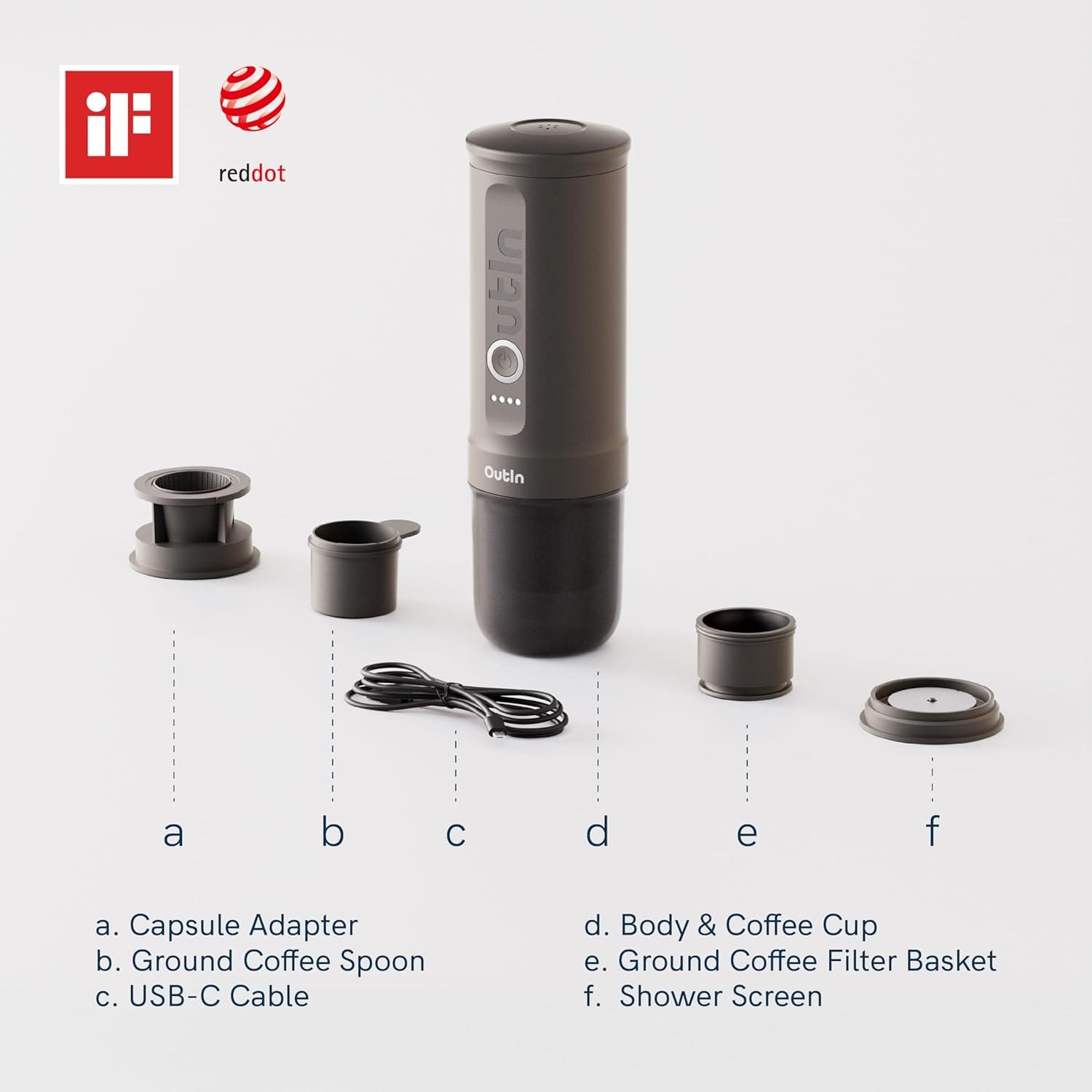
| Coffee | Fresh grounds + Nespresso pods (via adapter); ships with an 8 g basket |
| Real price (CAD) | ~$170–200, plus ~$40 for the larger basket most people end up buying |
What buyers on Amazon are saying
The OutIn Nano sits around 4.3 stars on Amazon.ca with thousands of ratings across colour variants — not a perfect score, but enough volume that the patterns are real. Amazon’s own review summary clusters buyer feedback into a few themes that line up with what you’ll feel in daily use.
Coffee quality is the most-mentioned positive. A large share of reviewers say the cup exceeds what they expected from something this small — real crema, strong flavour, and results they compare favourably to countertop machines. The consistent caveat in those happy reviews: fresh ground coffee beats Nespresso pods in this machine. Pods work for convenience on the road, but several buyers describe pod shots as weaker or under-extracted.
Portability and ease of use are nearly unanimous positives. Reviewers call it light, packable, and simple enough that setup on a camping trip or hotel desk takes minutes. One-button brewing comes up again and again — no pumping, no kettle hunt.
The friction shows up in three places buyers talk about openly:
- Battery life from cold water — Many verified buyers report two to three hot shots before the battery needs a recharge when the machine heats room-temperature water. That matches the physics we covered above, not a defect. A common tip in reviews: pour in pre-heated water if you can, and you’ll stretch the charge dramatically (this is also how OutIn’s “200+ shots” marketing makes sense).
- Charger wattage — Underpowered 5W bricks show up constantly in “won’t charge” complaints. Buyers who switch to a 15W+ USB-C adapter usually report the problem disappears.
- Reliability mixed bag — Most long-term reviews are fine, but a minority report the unit stopping after dozens of uses — heating without brewing, or water getting where it shouldn’t. Several of those reviewers mention OutIn replacing the unit under warranty, which is worth factoring into your risk calculus.
Smaller but recurring notes: the 8 g basket feels tight (Basket Plus recommended), ground coffee is messier than pods in the small chamber, and you cannot brew while plugged in — so a flat battery mid-trip means waiting for a charge.
None of this replaces trying the machine yourself, but it’s the honest shape of owner opinion: people who matched the Nano to travel-with-power life tend to love it; people who expected all-day off-grid brewing from cold water tend to feel misled by the marketing.
What it's actually trying to do
Good espresso needs water around 90–96°C arriving at the coffee at roughly nine bars of pressure. The pressure part is mechanical and portable machines have solved it for years. The heat is the stubborn part, and it's stubborn for a reason physicists have a name for: water has a high specific heat, meaning it takes a genuinely large amount of energy to warm it up. That's wonderful for a hot water bottle and miserable for a pocket-sized battery.
The Nano's whole engineering bet is that it can pack enough lithium energy into a 23-centimetre cylinder to heat a shot's worth of water from cold and still pressurize it to a hot 20 bars. And it pulls it off — about 200 seconds from cold tap water to a real, hot shot. The first time you do it in a hotel room with no kettle in sight, it feels a little like a magic trick.
But that high specific heat never goes away, and it explains nearly everything the machine does next.
The battery math, explained properly
People see "7,500 mAh" and "200+ shots" on the same page and expect a machine that brews all week. Here's why it doesn't, and why that's not a defect.
Almost all of the Nano's energy goes to heating, not pumping. Raising cold water to 92°C is the expensive act. So from cold water, the honest number is three to five shots before the battery is spent. The "200+" figure on the box is real, but it assumes you pour in water you've already heated — in which case the machine barely sips power because you've done the costly part for it. The quiet irony is that the 200-shot scenario requires the very kettle the Nano was bought to replace.
So think of the Nano as two machines sharing one shell:
- Cold-water mode — a true off-grid brewer that gives you a handful of shots, perfect for a solo traveller and one morning cup.
- Pre-heated mode — a near-unlimited convenience brewer, ideal if you were going to boil water anyway and just want a clean, fast shot.
Two more consequences worth burning in. It can't brew while charging, so a dead battery is simply no coffee — there's no manual fallback the way a hand-pump machine always has your arm. And recharging takes roughly 45 minutes to two hours. On a multi-day trip with no power, plan around that honestly, or carry a power bank.
Why a basic phone charger won't wake it up
This one quietly generates "it arrived broken!" complaints, and it's the same physics again. A machine that heats water needs to pull power fast, so it demands a 15-watt-plus (5V/3A) charger. An old 5W phone brick can't deliver enough current; the Nano will flash and beep rather than charge properly. Use a tablet-class charger or a decent power bank and it behaves perfectly. Nothing is wrong with the unit — it's just hungrier than a phone.
The basket nobody warns you about
The Nano ships with an 8-gram basket, and 8 grams is below the dose that makes a satisfying drink — it's closer to a ristretto's worth of coffee than a full single. The fix is the larger "Basket Plus," roughly $40, and most owners who care about the cup treat it as mandatory rather than optional. That makes the honest, all-in price closer to $210–240 CAD, before a grinder. It's not a hidden fee so much as an unadvertised one — factor it in and you won't feel ambushed.
The grind, and why pods are the weak spot
Two flavour lessons tend to land the same way for everyone who lives with this machine.
First, fresh grounds beat Nespresso pods here. The Nano accepts pods through an adapter, and it's convenient, but pods frequently under-extract — the shot comes out weak and incomplete. The machine is simply happier with fresh coffee you ground yourself.
Second, grind size is the difference between a great shot and a stalled machine. Espresso grind has to be fine, but too fine and the puck becomes a wall the water can't cross — the machine chokes and nothing flows. Counterintuitively, the Nano often performs best a hair coarser than a standard espresso grind. If your shots won't pour, your grind is almost always the culprit, not the machine. This is the same lesson every espresso device teaches; the Nano just teaches it a little more loudly.
What it gets genuinely right
Strip away the trade-offs and there's a lot here to love, and it's consistent:
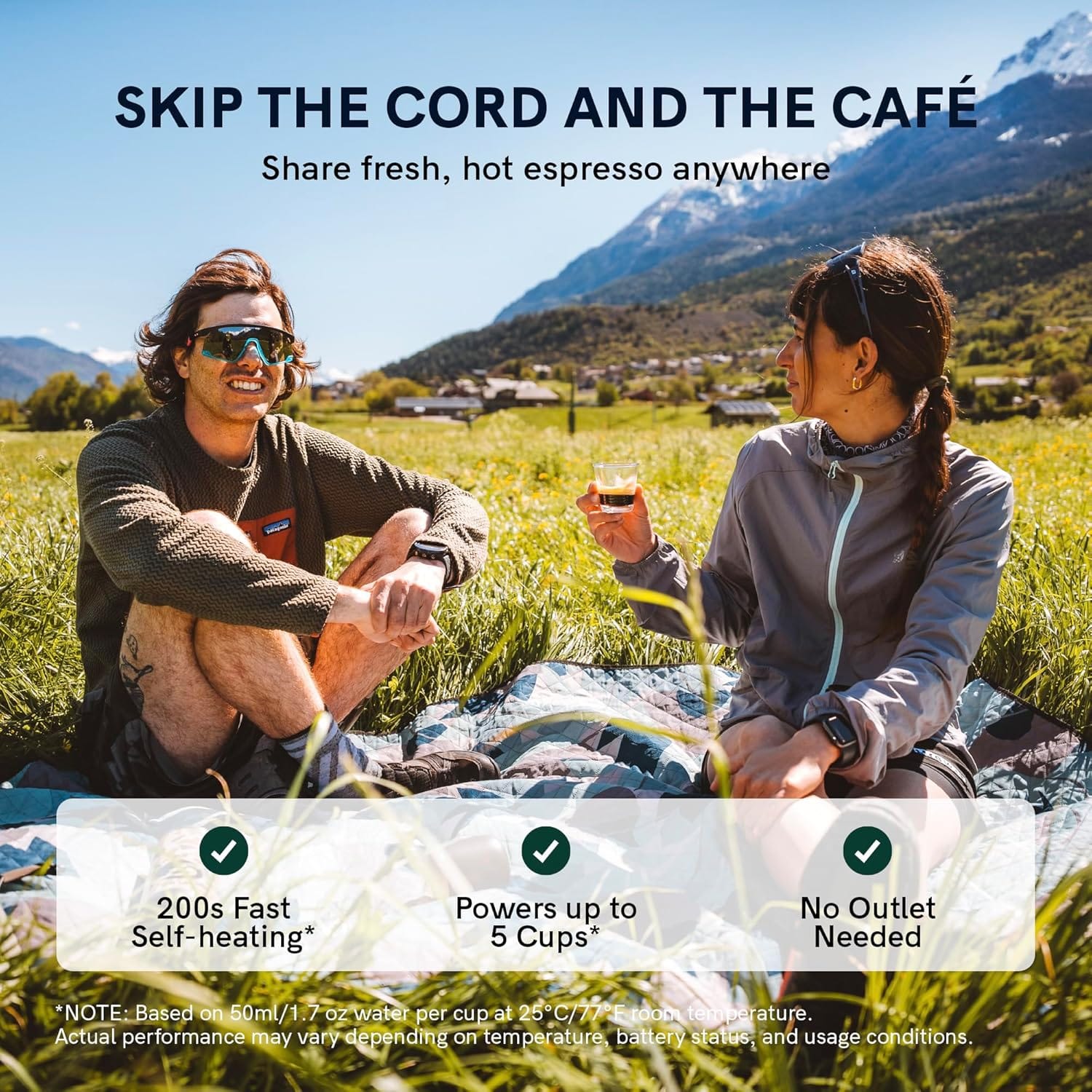
- The self-heating is the whole point, and it delivers. No kettle, no hand-pumping, no rhythm to learn — just a cold pour and a hot shot.
- The build feels above its price. Stainless steel, solid in the hand, the kind of object that survives being dropped into a bag day after day.
- It stays sealed. The portafilter seal holds tight over time rather than slowly weeping the way some portables do, and because it heats fresh water each time, scale doesn't accumulate in a tank.
- One button. It's genuinely operable half-awake, which is exactly when most of us need it.
- It packs clean. The included cup doubles as a lid, so it travels without dripping through your bag.
Who should buy it — and who really shouldn't
This is your machine if you're:
- A road-tripper or hotel traveller who hates bad drip coffee and has USB power nearby
- An office worker with a power bank but no kettle ritual
- A car commuter who wants a real hot shot in the cup holder
- A condo dweller who wants the occasional espresso without surrendering counter space
- Someone leaving instant or pod hotel coffee behind, and willing to use fresh grounds
Walk away if you're:
- A multi-day off-grid camper with no power — the battery will run out and leave you with a heavy paperweight (a manual Picopresso or Nanopresso is the wiser tool)
- Feeding a household or a group and needing many shots in a row
- A crema purist chasing the single best cup — the Picopresso wins that fight
- Unwilling to manage charge level, grind, and the occasional rinse
- Expecting café latte art straight out of the box
The decision, in three honest questions
- Will I often want coffee where there's power but no kettle? If yes, the Nano's entire reason to exist is pointed at your life. If you always have a kettle, you may be paying for self-heating you'll never use — a manual machine costs less and makes a comparable shot.
- Am I a solo or occasional drinker, or feeding a group off-grid? Solo and occasional, three-to-five cold shots is plenty. A group or a long off-grid stretch, plan for a power bank or choose a manual machine.
- Will I use fresh ground coffee, or am I really buying this for pods? Fresh grounds get you the shots people rave about. Mostly pods, temper your expectations — that's not where this machine shines.
A few questions worth answering
How many espressos does it really make per charge?
Three to five from cold water. The 200+ figure needs pre-heated water, which means you needed a kettle anyway and lost the machine's main advantage.
Why won't mine turn on or charge?
Almost always an underpowered charger. It needs 15W+ (5V/3A) — not a 5W phone brick — because heating water draws power fast. It also won't brew while it's plugged in.
Ground coffee or Nespresso pods?
Fresh grounds, comfortably. Pods tend to under-extract in this machine. If you lean on pods, keep your expectations modest.
Does it hold up over time?
Well — tight seals, no scale buildup, and it survives drops. The one unavoidable caveat is the lithium battery itself, which like every rechargeable device makes slightly fewer shots per charge as the years pass.
What does it really cost in Canada, all-in?
Budget roughly $170–200 for the machine plus ~$40 for the larger basket — call it $210–240 — before a grinder if you need one. Prices and box contents shift with promotions, so it's worth a glance at the current Amazon.ca listing before you commit.
Looking for buyer guides that tell you the trade-offs, not just the highlights? More honest, Canadian-focused gadget coverage lives at celmin.ca.
Sign up or sign in to join the conversation.