
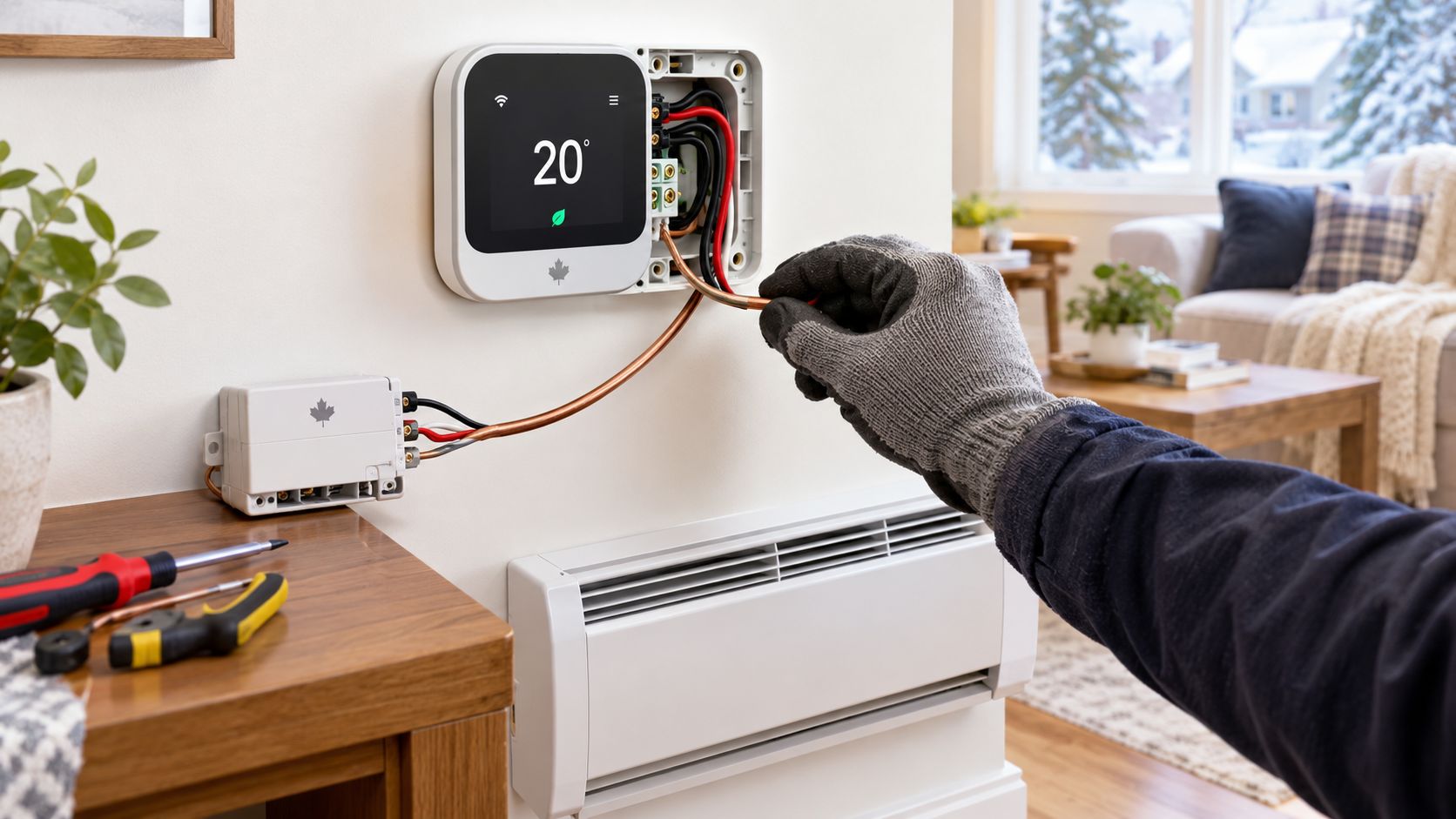
You're standing in front of the wall thermostat with the breaker off, the old control in one hand and a new smart thermostat box on the counter. Then you look at the wires. They're thicker than the ones in the online installation video, and the Nest-style thermostat you were considering suddenly looks like the wrong tool for the job.
That's a common Canadian-home surprise. Electric baseboard heat uses a different kind of thermostat from the low-voltage controls used with many furnaces, and the right choice depends on more than whether a product says “smart.” Start at the breaker panel, then sort out electrical compatibility, installation permission, and whether the savings are worth the comfort trade-off.
Table of Contents
- The Baseboard Thermostat Problem in a Canadian Home
- Why Baseboard Heat Is Not a Low-Voltage System
- Checking Your Home for Compatibility Before You Shop
- Three Wiring Paths for Baseboard Heat
- Installation Realities in Condos, Rentals, and Older Homes
- What Smart Thermostats Save You in Canada
- What to Look for and What to Expect to Pay in 2026
- Putting It All Together and Common Questions
The Baseboard Thermostat Problem in a Canadian Home
The old thermostat may look simple: a dial or buttons on the wall, one room that gets too warm, and no way to adjust the heat from your phone. The assumption is just as simple: remove the old unit, connect a smart replacement, and set a schedule. With electric baseboards, that assumption can lead to buying a thermostat that isn't designed for your heating circuit.
Baseboard heating is familiar in Canadian apartments, condos, and older homes. Instead of a central furnace sending warm air through ducts, electric heaters warm individual rooms. A wall thermostat may control one heater or several, and the wiring at the wall can carry the same line voltage that powers the heating circuit. That's why the wires, breaker, and model specifications matter before you shop.
The regional context is significant in British Columbia. BC Hydro reports that 41% of B.C. homes primarily use electricity for heating, including 69% of apartments and condominiums, 48% of townhomes, and 26% of detached homes in its housing breakdown (BC Hydro's analysis of electric heating in B.C.). For condo and apartment residents, baseboard compatibility isn't an obscure edge case. It's a practical buying requirement.
This guide is for you if a wall thermostat controls electric baseboard heat, and you're trying to decide what can replace it safely and sensibly. It won't tell you to ignore your building rules or guess at wiring. The useful answer starts with identifying the circuit and the thermostat you have, then choosing a replacement that's explicitly rated for that setup.
Practical rule: Don't shop by app features first. Shop by the electrical system the thermostat must switch.
Why Baseboard Heat Is Not a Low-Voltage System
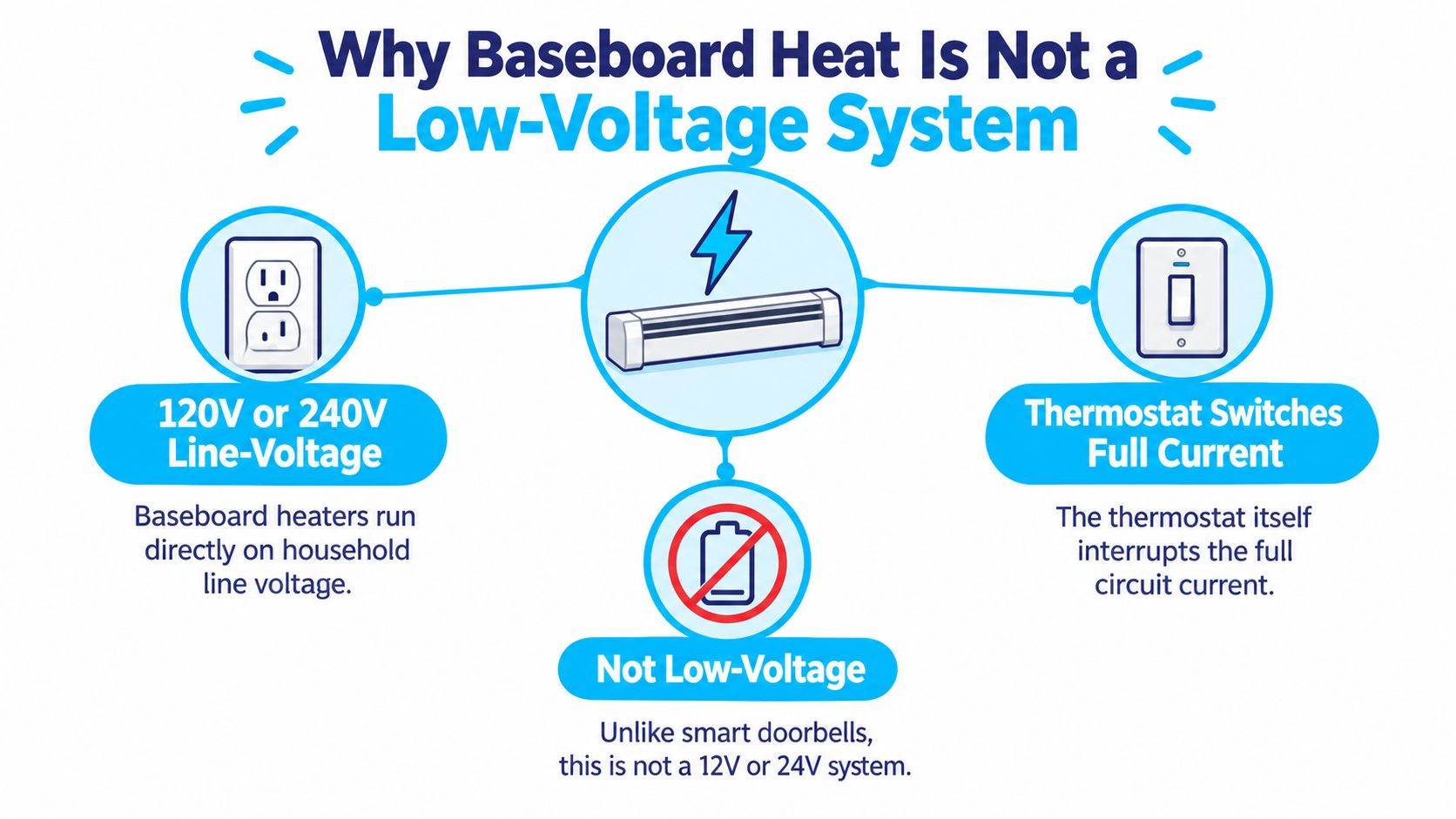
Most smart thermostats made for central furnaces are designed to control a low-voltage circuit, often through a small signal sent to HVAC equipment. A thermostat for electric baseboard heat is a different device: it switches the line-voltage circuit that supplies power to the heater. A familiar low-voltage thermostat isn't a safe drop-in substitute.
Think of the low-voltage thermostat as a doorbell button. It sends a small control signal, and other equipment does the heavy work. A line-voltage baseboard thermostat is more like a heavy-duty switch in the power path: when it calls for heat, it closes the circuit serving the heater; when the room reaches its setting, it interrupts that circuit.
That difference changes what “compatible” means. A thermostat must match the system's voltage and be rated for the load it controls. A thermostat that can connect to Wi-Fi or works with a voice assistant still isn't suitable if it can't switch the baseboard circuit directly.
Read the device category before the app features
A direct-replacement smart baseboard thermostat is built for line-voltage heating. A typical smart thermostat for central HVAC is not. Connecting a low-voltage unit directly to a baseboard circuit can damage the thermostat and create a serious electrical hazard.
Some low-voltage devices can control electric heat indirectly through a properly selected relay or contactor. That's a system design, not a shortcut. The switching component must be suitable for the electrical load, and the setup may need professional assessment.
Celmin's smart thermostat review can help you compare product features, but don't use a general smart-thermostat feature list as proof of line-voltage compatibility. Confirm the model's stated use, voltage range, and load rating before you buy.
Treat the wires and breaker as warning signs
Thicker conductors and a dedicated breaker are reasons to slow down, not invitations to identify wires by colour and experiment. The thermostat enclosure can contain conductors carrying dangerous voltage, even when the wall control itself looks basic. If you can't confidently identify the circuit and the manufacturer's wiring diagram, leave the cover closed and call a licensed electrician.
Checking Your Home for Compatibility Before You Shop
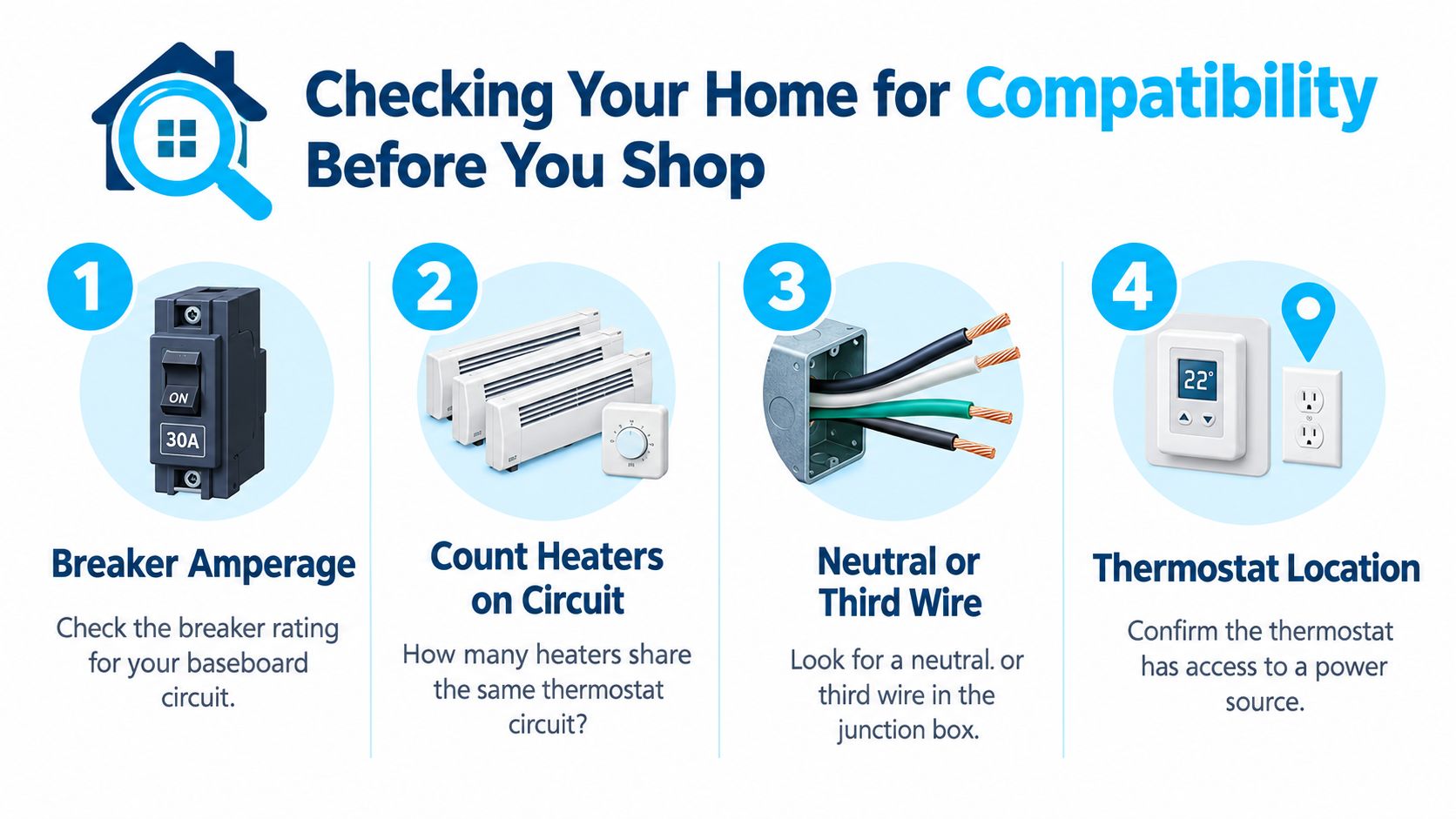
Before you compare apps or prices, collect the details a manufacturer needs to establish whether a thermostat fits your installation. Start at the panel, but don't remove covers or handle conductors. You're gathering information, not doing electrical work.
Check the circuit and the heaters it serves
First, note the breaker rating. Look at the label on the panel and record which breaker serves the room or thermostat. If the label is unclear, don't guess by switching breakers while someone is working on the heater. An electrician can identify the circuit safely.
Next, find out what shares the thermostat. One wall control might serve a single baseboard, multiple heaters in a room, or more than one heating element. The thermostat's load rating must cover the actual connected load. If you can't tell from accessible labels or building records, make that a question for the installer.
Confirm the heater type and thermostat wiring
Check the heater nameplate and the existing thermostat's model information, if accessible without opening electrical equipment. Record the heater type and voltage, then verify that the smart thermostat supports that specific kind of electric heat. Fan-forced heaters and electric floor heating aren't automatically interchangeable with baseboard systems. Floor-heating controls may require a different product category and sensor arrangement.
A neutral or third conductor can affect whether a particular electronic thermostat has the wiring it needs, but wire colours alone don't prove what each conductor does. Never rely on a generic online diagram to identify wiring in your home. Give the model and a clear description to the manufacturer or electrician.
Consider the location and building setup
Some thermostats need a power source or a particular wiring configuration. A model may be electrically suitable for a heater yet fail to work with the wiring at the thermostat location. In condos and rentals, there's another gate: the building owner or strata may need to approve the work before anyone replaces a wall control.
If you can't answer what the thermostat controls, what voltage the system uses, and whether the building allows replacement, you're not ready to order.
Write down the heater model, existing thermostat model, breaker information, and number of heaters controlled. Those details turn a vague compatibility question into something a supplier, manufacturer, or electrician can answer.
Three Wiring Paths for Baseboard Heat
Two condo rooms can have identical-looking baseboards and still need different thermostat setups. Choose the wiring path from the circuit information, including the breaker, connected heater load, and existing control arrangement. A familiar thermostat brand or a matching wall plate won't settle the electrical question.
There are three practical options. Start with direct replacement, and consider separate switching equipment only when the circuit calls for it.
| Path | Best For | Installation Fit |
|---|---|---|
| Direct-replacement smart line-voltage thermostat | A compatible room circuit with a suitable wall thermostat | A replacement only when the work is permitted and you're qualified |
| Low-voltage thermostat with a relay | A circuit that a properly matched relay can switch | Requires a designed switching arrangement, not a casual thermostat swap |
| Low-voltage thermostat with a contactor | A larger heater bank or arrangement needing separate power switching | Plan for professional assessment and additional components |
Get an installed quote for each circuit, covering the thermostat, any switching equipment, and labour. Comparing a direct-replacement device's retail price with a complete relay or contactor installation gives you a misleading cost comparison.
Choose direct replacement when the circuit fits
A smart line-voltage thermostat designed for baseboards is the cleanest route when it supports the heater type, voltage, and total connected load. It replaces the existing wall control and keeps power switching inside a device designed for that system. There's no separate switching arrangement to accommodate.
The catch is the load behind the wall control. If one thermostat runs several heaters, the replacement must handle their combined load. Wiring and mounting requirements also have to match the manufacturer's specifications.
Read the model specifications before buying. A retailer's “smart thermostat” label says nothing useful about whether the device can switch your baseboard circuit. Electrical suitability also doesn't establish whether you're authorised to install it.
Use relays and contactors for a designed setup
A low-voltage smart thermostat can control baseboard heat through a properly matched relay. The relay switches the heating circuit; the thermostat provides the control signal. Have a qualified installer design that arrangement rather than treating a furnace thermostat as a direct replacement.
A contactor may suit a larger heater bank or a system needing separate power switching. It adds equipment, space requirements, and installation work, so choose it because the circuit needs that arrangement.
For a typical condo room, check direct-replacement line-voltage options first. For multiple heaters or unusual older wiring, have an electrician assess the whole circuit before purchasing either a relay-based setup or a contactor.
Installation Realities in Condos, Rentals, and Older Homes
The electrical question is only half the job. Before a thermostat comes off the wall, figure out who is authorised to approve and perform the work. A tenant, condo owner, and detached-home owner can face different rules even when their heaters use the same kind of thermostat.
Get permission before touching a rental or condo control
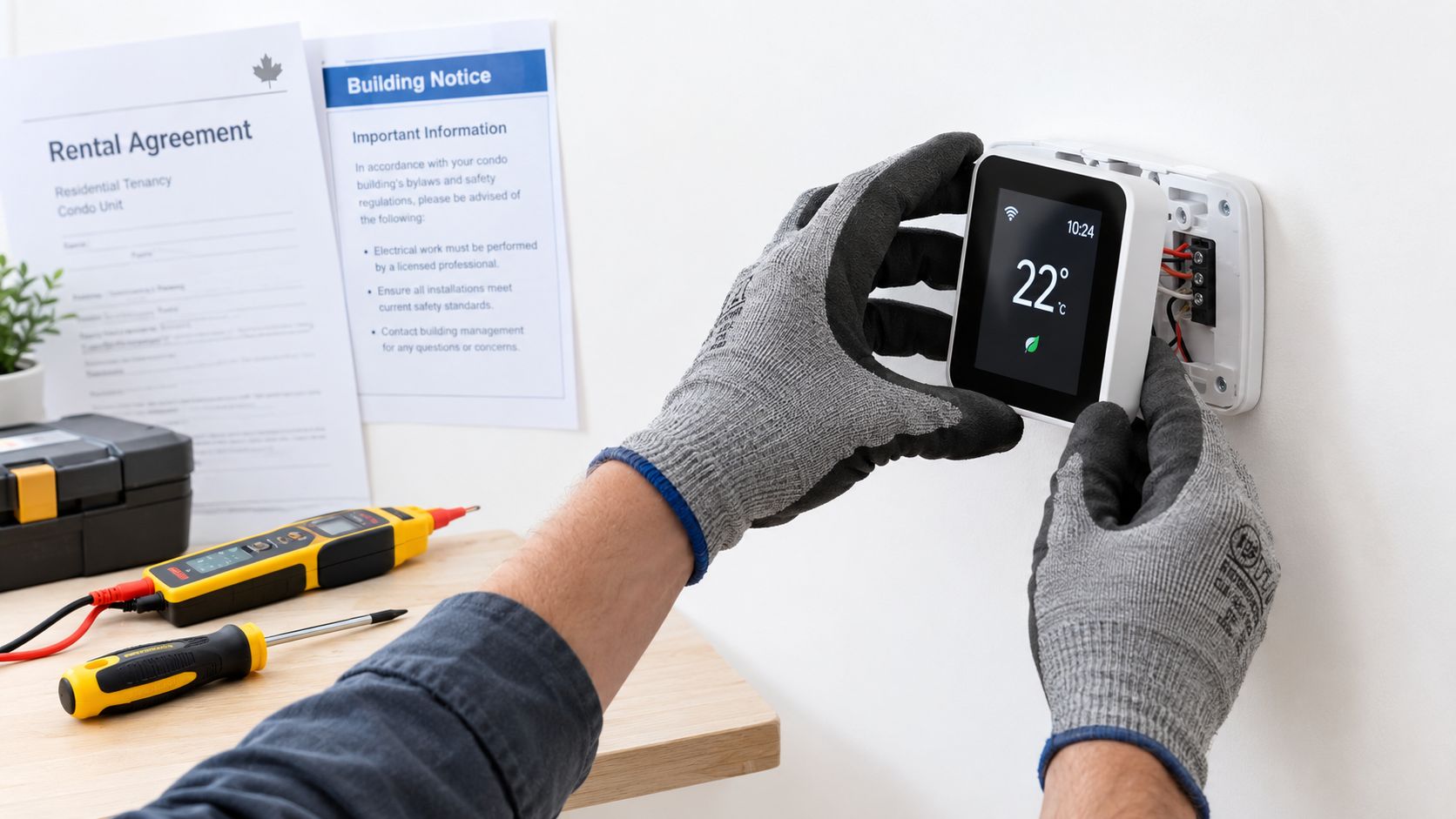
If you rent, ask the landlord in writing before replacing a thermostat. The landlord may require a specific model, a licensed electrician, or restoration of the original control when you move out. A thermostat that fits the circuit can still be an unauthorised alteration.
Condo owners should check strata rules and ask the property manager whether approval, contractor credentials, or installation documentation are required. The thermostat may be inside your unit, but that doesn't mean the building has no say over electrical work. Keep approval and installer records with the appliance information.
Celmin's guide to smart-home devices for renters covers the broader permission question for connected home equipment. For a baseboard thermostat, get approval before you order, not after the device arrives.
Know when the job needs a professional
Shutting off a breaker is necessary before electrical work, but it doesn't make you qualified to identify conductors or confirm that a circuit is de-energised. Follow the thermostat manufacturer's instructions and the electrical rules that apply in your province or territory. If you're unsure whether the installation is permitted as DIY work, or if the circuit has multiple heaters or unfamiliar wiring, use a licensed electrician.
For a detached-home owner, a straightforward replacement may look simple, but the load and wiring still have to match the new thermostat. An older home may have previous alterations, unclear panel labels, or a thermostat controlling more than one heater. Those are reasons for an on-site assessment, not for improvising.
A short installation walkthrough can help you understand what a professional may do, but it doesn't replace a site-specific check.
Treat incentives as part of the installed cost
The B.C. government has announced a fall 2026 program targeting electric-baseboard homes, offering up to five free thermostats valued at about $350 per home, with accessibility provisions for condo and apartment residents (B.C. program announcement). Check the official program terms and timing before relying on it. A free thermostat doesn't automatically cover installation labour, guarantee your wiring qualifies, or replace the need for landlord or strata approval.
What Smart Thermostats Save You in Canada
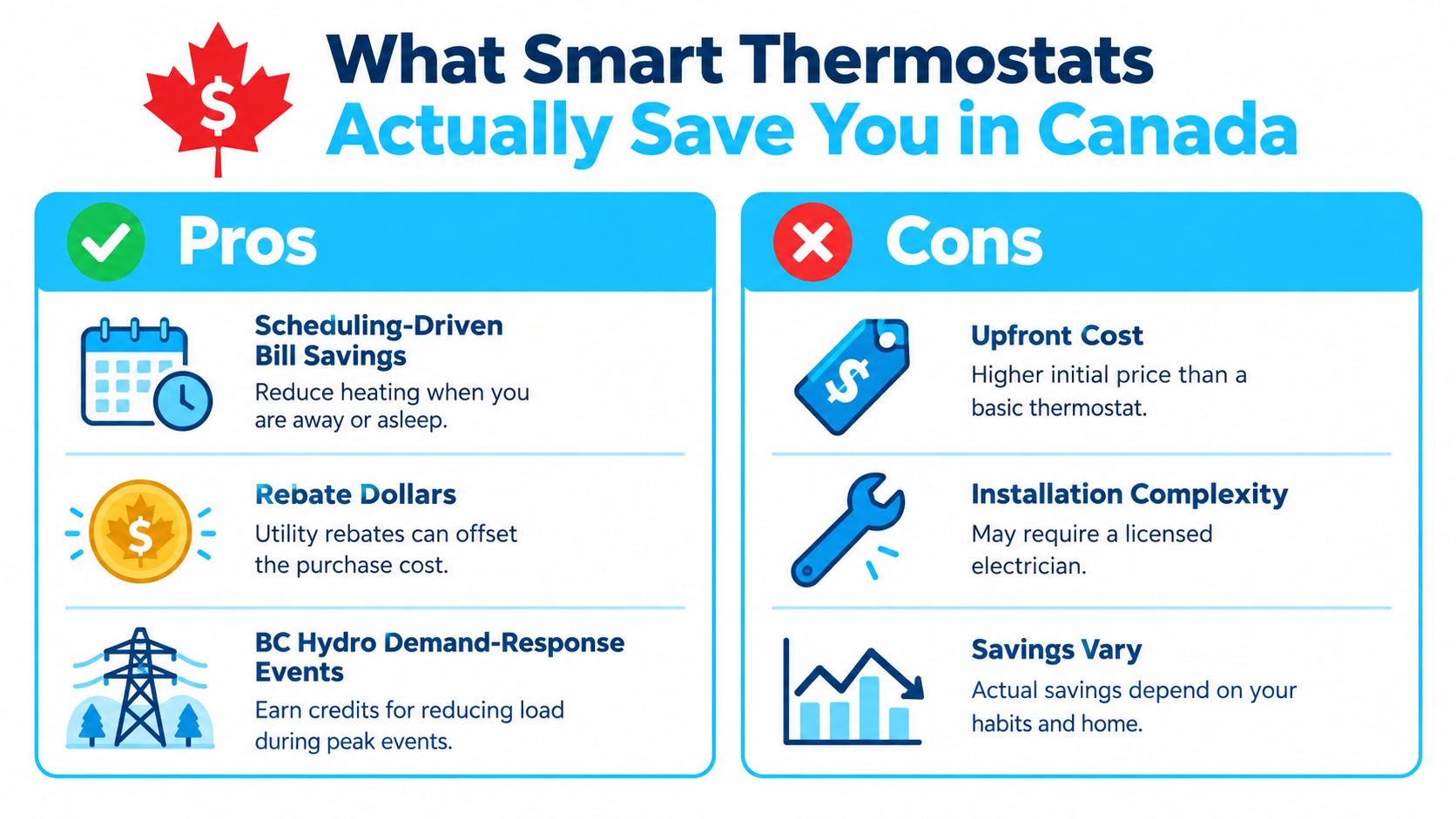
If your baseboards heat empty rooms all day, scheduling gives you a clear place to cut waste. Keep three items separate when comparing the savings pitch: lower electricity use, an upfront rebate, and payments or credits for demand-response participation. A rebate reduces purchase costs. Scheduling changes heating use. Demand response gives the utility some control over when your rooms receive heat.
BC Hydro estimates average space-heating electricity savings of 9%; its example uses a 1,000-watt baseboard running six hours per day during the heating season, consuming about 900 kWh annually and costing more than $100, so applying that reduction gives roughly 81 kWh per year, or about $9 to $11 at the rates used in BC Hydro's analysis and example.
Treat that as an example, not your payback forecast.
Start with the rooms you leave heated while nobody uses them. If you already turn those thermostats down, automation has less waste to eliminate. Insulation, weather, occupancy and electricity rates also affect the result. Set schedules around your household's routines, then compare consumption before assuming the thermostat has paid for itself.
Demand response is a comfort choice
BC Hydro's program may remotely lower indoor temperatures by a couple of degrees during peak events lasting up to four consecutive hours; its fact sheet also estimates average space-heating reductions of 9% and potential savings of up to $150 per year for efficiently controlled baseboards (BC Hydro's smart-thermostat program fact sheet).
Keep that savings estimate separate from any participation payment. Before enrolling, read the event and opt-out terms. Decide whether a winter setback suits your home and whether rooms recover before you need them. A home office or a room occupied by a baby, older adult, pet or someone sensitive to temperature changes deserves closer attention than an empty room.
If steady warmth matters more than participation, skip enrollment. Electrical compatibility and permission to install the thermostat don't settle that comfort decision.
For a fuller view of household consumption, use Celmin's smart-home energy monitor guide to consider monitoring alongside your heating schedules.
What to Look for and What to Expect to Pay in 2026
A good buying decision begins with the circuit, not a price filter. Once an electrician or manufacturer confirms the requirements, compare products by how well they handle everyday room control and by what the complete installation will cost.
Take this feature list shopping
- Line-voltage rating: Confirm the thermostat is designed for your baseboard system and matches its voltage and load requirements.
- Heater-type support: Check carefully if you have fan-forced heat, electric floor heating, or multiple heaters on one control.
- Straightforward event controls: If you're considering a utility program, make sure you can see when an event is active and understand how to opt out.
- Useful room grouping: Group controls only when the product and wiring support the arrangement. Don't assume one app setting can safely combine separate circuits.
- Readable everyday controls: Choose an interface that the people in your home can operate without hunting through menus or relying on an app.
- Clear installation requirements: Read the manufacturer's wiring and installation guidance before purchase, and ask whether professional installation is needed.
Price the installed system, not just the thermostat
There isn't one dependable 2026 CAD price for all three wiring paths. A direct-replacement thermostat, a relay arrangement, and a contactor installation involve different parts and labour, so check current Canadian listings and ask a local electrical contractor for a quote based on your circuit. Amazon.ca can be useful for checking model availability, but a trade supplier or electrician can help verify the exact part and whether the proposed setup suits your home.
My recommendation is to choose a direct-replacement smart line-voltage thermostat when it matches the circuit and your building approves the work. It's the most straightforward option for a typical room. Treat a professionally designed relay or contactor arrangement as the specialist route for unusual circuits, not the default upgrade.
The value pick isn't the cheapest box. It's the compatible thermostat that gives you the scheduling and controls you'll use without adding unnecessary equipment or installation complexity. Skip any model whose specifications don't clearly identify it as suitable for your heater type, or whose event settings leave you uncertain about who controls the room temperature.
Putting It All Together and Common Questions
The decisions that matter are straightforward: identify the circuit, confirm permission to replace the thermostat, and decide whether the product's controls fit your comfort priorities. Don't treat a smart thermostat as a universal wall-control swap.
Can tenants install one? Get the landlord's written approval first. Will insurance be affected? Ask your insurer or property manager about their requirements, and use a qualified electrician when needed. What if one control serves several heaters? Have the connected load checked against the thermostat's rating. Outside BC Hydro territory? Check your local utility's current incentives and program rules rather than assuming B.C. offerings apply.
Celmin publishes Canadian-focused buying guides and practical reviews to help you compare smart-home devices and check the details that matter before you buy. If you're choosing a baseboard thermostat, visit Celmin to explore its smart-home coverage and make a better-informed decision for your home.

Sign up or sign in to join the conversation.