
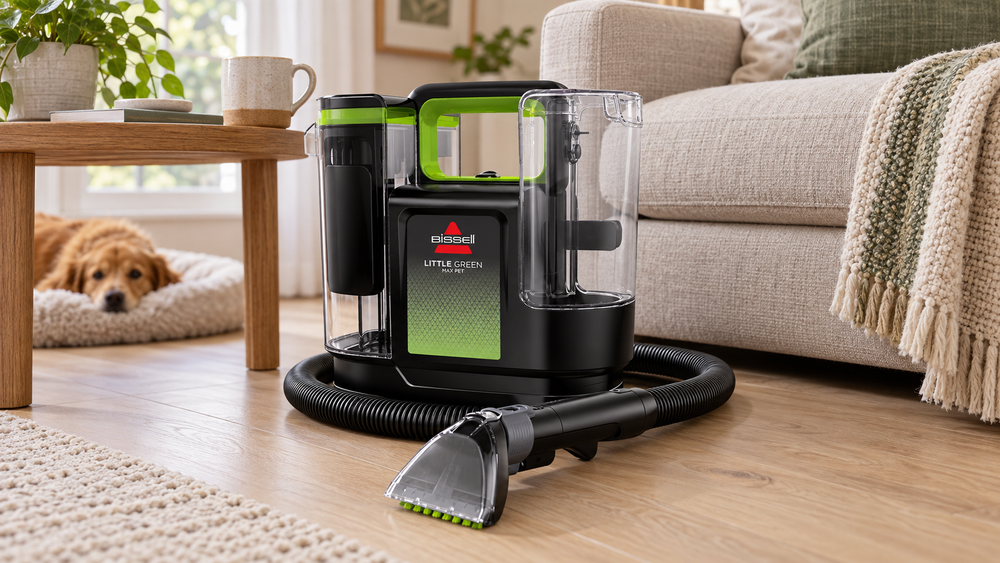
BISSELL 3860B for fabric spot jobs: tools, reach, drying, cleanup and the limits that matter before buying.
The BISSELL Little Green Max Pet 3860B is a sensible purchase for a home where small fabric messes keep happening: a drink on a sofa cushion, muddy marks on carpeted stairs, or a spill on a fabric car seat. It gives you a way to apply cleaning solution and recover dirty water from a local area, without setting up a full-size carpet cleaner.
Its appeal is easy to understand. You can bring the cleaning head to the stain, control where the solution goes, and collect the recovered liquid in a separate tank. The less obvious part is everything around that short cleaning session: checking the fabric, positioning the machine, allowing drying time, and washing the wet parts afterwards.
Our verdict: the 3860B suits recurring spot-cleaning jobs on compatible fabrics, especially when carrying weight and simple controls matter. Its value is weaker if your main task is washing entire rooms, steam-cleaning hard surfaces, or treating furniture that cannot be wet-cleaned. Here is how to decide whether its particular combination of tools, reach and upkeep fits your home.
What the Little Green Max Pet actually does
The 3860B is a corded spot extractor. The hand tool applies a water-and-formula mixture, its cleaning surface helps work on the mark, and suction pulls recovered liquid into the dirty-water tank. Fresh solution and recovered water stay separate.
There is no internal heater and no steam mode. Warm water comes from the tap when you fill the tank. That distinction matters if you picture a steam jet treating bathroom grout: this machine is designed around fabric extraction, and adding hotter water does not turn it into a steamer.
Think of the small head as a way to control the area you are treating. It is useful around a cushion seam or an isolated stair mark. Across a whole sectional, that same head means repeated hand movements, repositioning, and more cleaning up afterwards. The right question is how often you have a small, suitable job for it.
Specifications that affect daily use
| Detail | What it means at home |
|---|---|
| About 3.7 kg / 8.2 lb before added water | Portable, but a filled machine weighs more |
| 32 US fl oz / about 0.95 L tank capacity | Compact tanks suit spot jobs rather than uninterrupted whole-room work |
| 4.8 ft / about 1.46 m hose | Keep the body close to the work; check stair and sofa access |
| 15 ft / about 4.57 m cord | Plan a clear route to a suitable socket |
| No heater or steam output | Water, compatible formula and extraction do the cleaning |
The Canadian 3860B specifications put the machine at approximately 3.7 kg before added water. Both the clean and dirty tanks are listed at 32 US fl oz, or about 0.95 L each. Those are separate capacities; they do not make a single 1.9 L supply tank.
The hose and cord solve different problems. The cord determines where you can place the machine relative to a socket. The hose determines what the hand tool can reach from that position. Adding their lengths together does not tell you whether the nozzle will comfortably reach a car footwell or the top of a flight of stairs.
Before ordering, consider three locations: the cupboard where it will live, the surface where its body can sit during cleaning, and the sink where you will empty and rinse the removable parts. A cleaner that fits neatly into all three is much easier to make part of an ordinary routine.
What the pet tools add
The 3860B includes a Self-Cleaning Tough Stain Tool and a specialized Pet Hair Removal Tool. The bristled and rubberized cleaning surfaces give you different ways to work on fabric messes. Match the tools and formula supplied with the exact Canadian bundle when ordering; accessories can vary across the Little Green range.
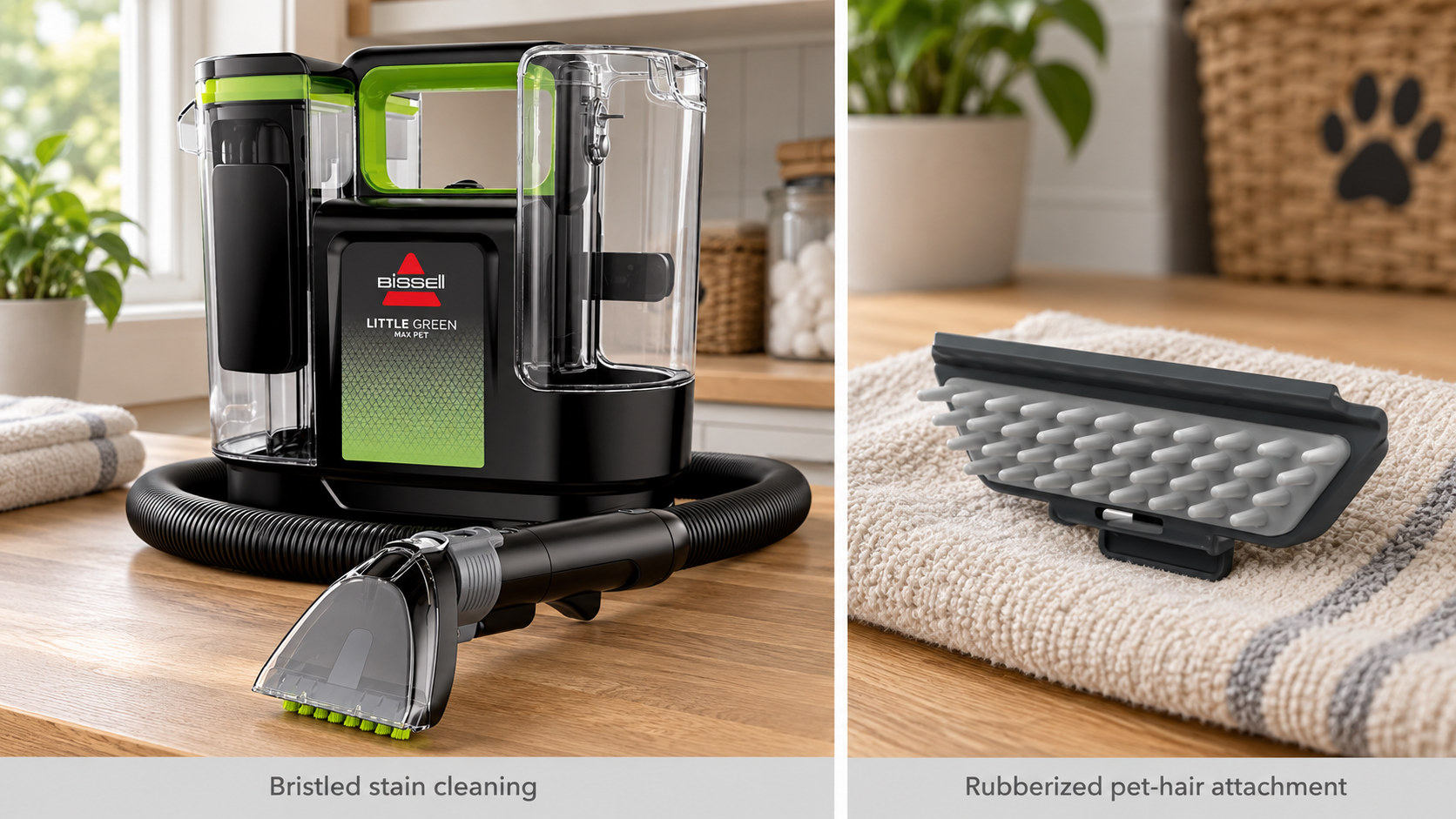
The hair tool is useful when fur is part of the mess, but loose hair and dry debris still deserve attention before the wet-cleaning stage. Vacuum compatible fabric first so you are concentrating the extractor on the residue that needs solution and recovery. A cushion covered only in dry fur may simply need dry cleaning with the appropriate vacuum attachment.
It also helps to separate the two meanings of “pet cleaning.” Lifting hair from the surface and removing a liquid accident from upholstery are different tasks. The tools give you options for each; they do not establish that contamination deep inside padding has been removed.
BISSELL Little Green Max Pet 3860B
 Shop at Amazon.ca
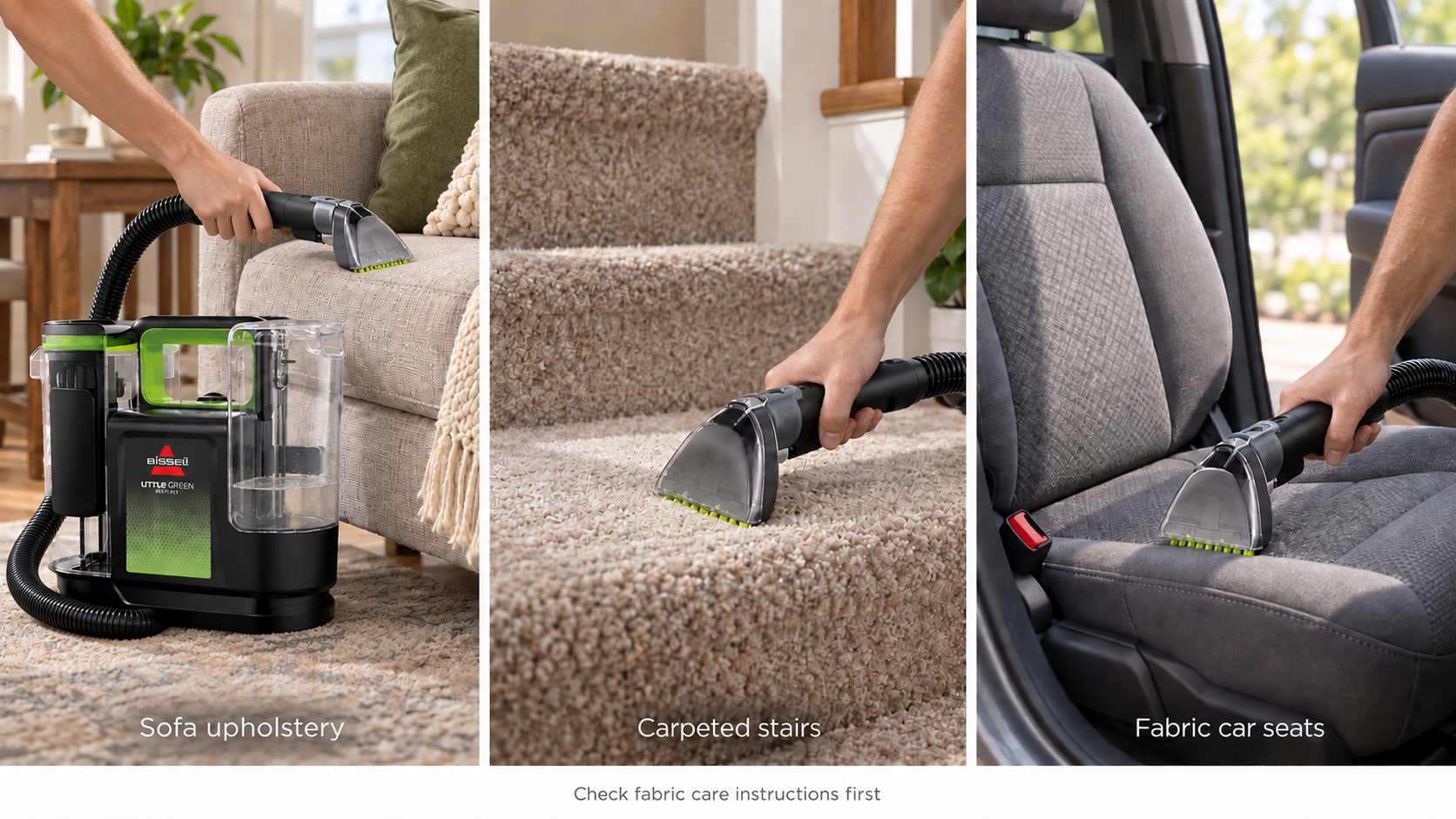
Will it work on your sofa, stairs or car seats?
Start with the upholstery label and the furniture maker's cleaning instructions. BISSELL's upholstery guidance identifies W and WS fabrics as candidates for its water-based cleaning approach. S, X and dry-clean-only instructions call for a different method. A missing label is a reason to ask the furniture maker before treating a visible area.
Even on suitable upholstery, test the approved solution in an inconspicuous area and assess it after drying. Colour, texture and finish matter as well as the disappearance of the original mark. A hidden-area test is especially useful on a piece whose previous cleaning history you do not know.
Sofa cushions and arms
For an isolated spill, a hand tool gives you control around the affected area. For general soiling across several cushions, decide how you will clean consistently and where everything can dry before starting. Doing one patch in a heavily used seating area may leave a noticeable difference between that patch and the surrounding fabric.
A removable cover does not automatically mean the cushion or its filling can be saturated. Follow the care directions for the complete item. Plan to keep the cleaned seating area out of use until it is appropriately dry, rather than assuming a quick surface pass makes it ready for someone to sit down.
Carpeted stairs
The practical issue is where the machine can stand securely while the nozzle reaches each tread. Check the hose route with the machine switched off before cleaning. If reaching the next step would pull on the hose connection, reposition the body instead of stretching to finish the section.
This is where portability becomes more than a weight figure. You need to manage the cleaner, hose and cable while moving between work areas. Someone who finds lifting awkward should think through that sequence before deciding a compact extractor will make stair cleaning convenient.
Fabric car interiors
Check the vehicle's upholstery instructions, then plan access to the seats and footwells from a stable machine position. Move loose items and deal with crumbs and dry debris first. Keep liquids away from electrical components and follow any restrictions around heated or powered seats.
Vehicle upholstery and child car seats are different products with different care requirements. Do not transfer a cleaning method from one to the other. Child-seat covers, harnesses and padding need the restraint manufacturer's specific instructions.
A cleaning routine that makes sense
The most useful habit is to prepare the whole job before filling the machine. Have the material's care directions, the correct formula, access to a suitable outlet and a plan for drying. Then follow the 3860B setup and cleaning instructions:
- Remove loose dry debris from the area using an appropriate vacuum.
- Fill with warm tap water and compatible formula to the appropriate tank markings. The water limit is 60°C; never use boiling water.
- Seat the tanks and attachment correctly, and place the body level and stable.
- Apply solution and gently work the area as directed. Release the spray trigger for recovery passes, keeping the suction channel in contact with the fabric.
- Monitor the recovery tank and stop to empty it at its maximum fill level.
Choose the small-area or large-area fill markings to suit the job. A tiny cushion spill does not automatically require a full tank of prepared solution. Following the markings also gives you a repeatable routine, rather than guessing a stronger mixture each time a mark looks stubborn.
Separate applying solution from recovering it. Holding the spray trigger throughout every pass keeps adding liquid when your immediate goal may be to remove moisture. A deliberate recovery pass is part of the cleaning process, not an optional finishing gesture.
The transparent tool can help you see liquid moving, but the colour of the recovered water does not tell you how much moisture remains inside the material. Judge the result after the fabric has dried, and stay within its permitted cleaning method throughout.
Set realistic expectations for stains and drying
An extractor can remove accessible soil and cleaning liquid. It cannot restore colour that has already been lost or reverse every permanent change to a fibre. BISSELL's stain guidance also describes marks associated with over-wetting and stains that return as material dries.
That makes the response to a stubborn patch important. More water, more formula and harder scrubbing are not a dependable escalation plan. If the approved treatment is no longer improving the area, stop and reassess the stain and material. Specialist help may be more appropriate than another round of soaking.
Pet odour deserves the same care. A cleaner can recover liquid from the area the tool reaches, while the source of a smell may extend deeper. A mark looking lighter immediately after cleaning is not proof that an odour problem has been resolved. Persistent contamination should not become a cycle of repeatedly wetting the same padding.
There is no useful universal drying promise for every sofa and car seat. Fabric construction, padding, the amount applied, extraction and room conditions all matter. Build the job around a period when the item can remain unused. That makes this an easier appliance to live with than treating every spill as a five-minute job from cupboard to cupboard.
Carrying, reach and storage
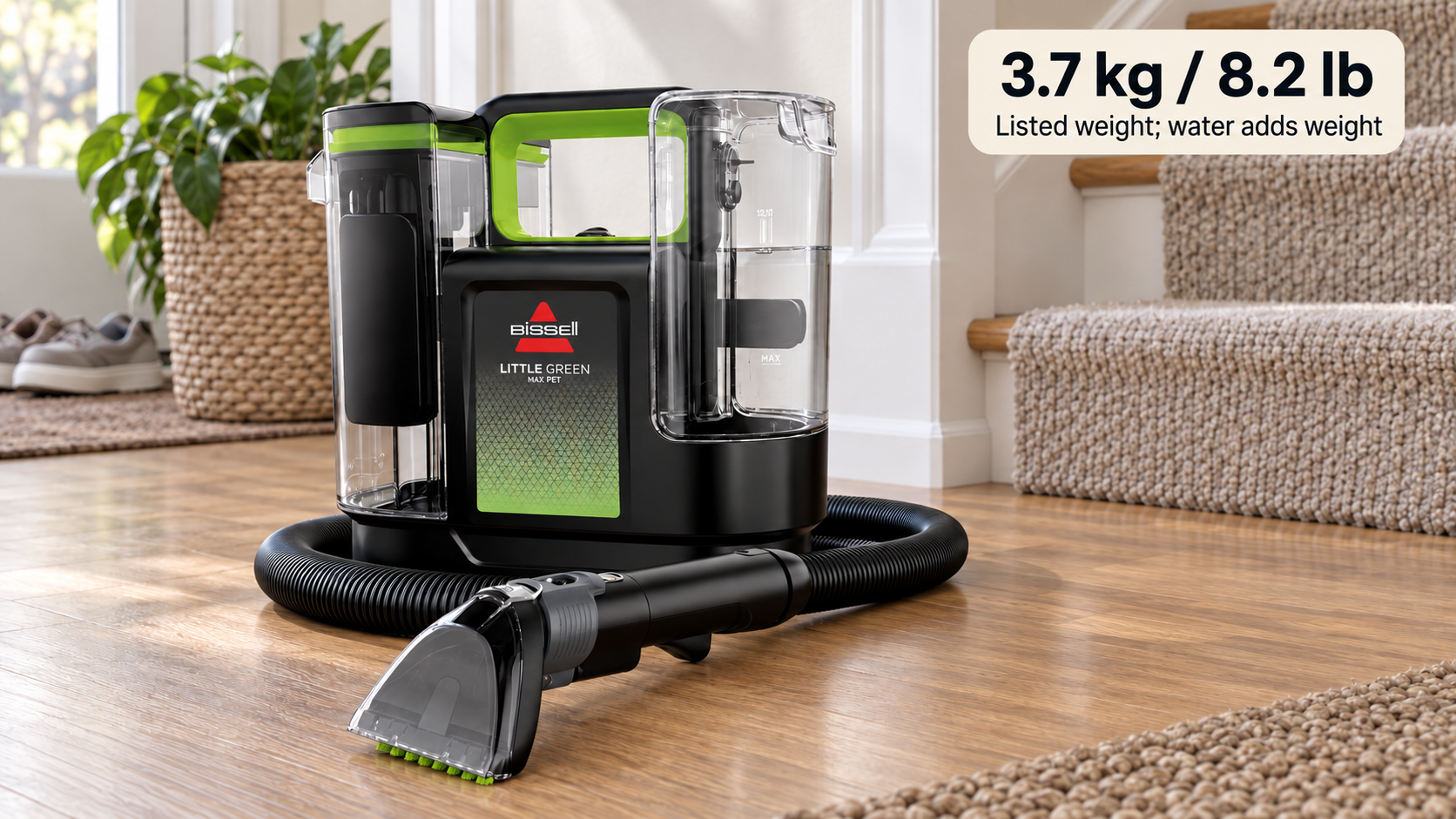
The approximately 3.7 kg starting weight is attractive if the machine moves between floors. A filled cleaner is heavier, and the hose and cable still need to be managed. Try to judge the whole journey from storage to the spill, rather than comparing the empty weight with an object you lift briefly at waist height.
The body needs a level resting place during use. It should not hang from the hose or balance on a furniture edge to gain reach. Move it between sections with the machine stopped, using the carrying handle, then check that the cord and hose have a clear path before continuing.
For a Canadian home, winter storage is worth planning. Keep the cleaner in a protected indoor location where it will not freeze. A convenient garage shelf is a poor choice if the space drops below freezing; residual water can remain inside a wet-cleaning appliance even after you have emptied the tanks.
Cleaning the machine after each job
The self-cleaning tool helps flush the cleaning path. It does not wash every removable part or leave the dirty-water tank dry. The last few minutes of ownership belong at the sink, even when the stain itself took little time to treat.
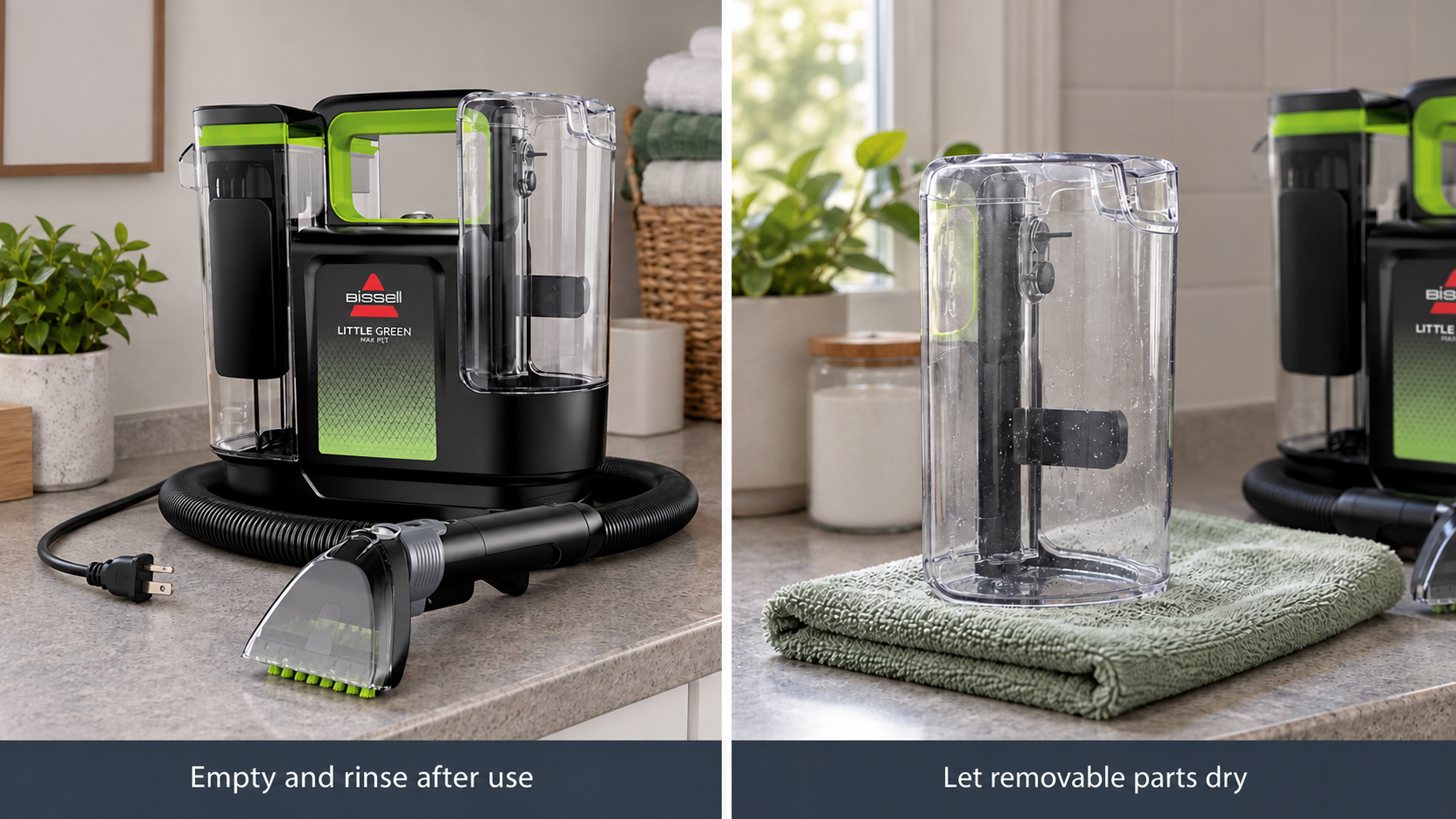
Use the powered hose-flushing procedure specified for your tool, then switch off and unplug before removing parts for manual cleaning. Empty recovered liquid, rinse permitted components, clear trapped debris and let parts dry before reassembly. The maintenance guide covers the tank, tool, hose and seals separately.
Pay attention to the small contact areas, not just the obvious dirty water. Hair around the tool and debris around a tank seal are easy to miss when putting everything away quickly. Keeping the float free to move and the lid properly seated matters for the next cleaning session.
Give the removable parts somewhere to dry and keep the tool pieces together. This is a practical purchase consideration for a small flat: the appliance may fit in a cupboard, but you still need temporary space for the maintenance routine. Storing a wet, dirty machine and hoping the next use will flush it out makes ownership less pleasant.
What to check if pickup becomes weak
A sudden change in suction does not immediately establish a failed motor. With the machine switched off and unplugged for inspection, check the dirty tank's level, lid fit, float movement and seating. Inspect the removable tool for trapped hair or debris and the hose for visible damage. These are starting points in BISSELL's model-specific suction troubleshooting.
Once correctly assembled, the extraction channel also needs proper contact with the surface during use. If it skims above the fabric, the cleaning motion may look convincing without recovering liquid effectively. Check technique as well as the machine before applying more solution.
Stop using damaged equipment. If the simple checks do not restore normal operation, follow the support procedure rather than opening the body or improvising repairs. Knowing where the model's troubleshooting page is can be more useful than keeping an unverified cleaning tip saved on your phone.
Running costs and Canadian ownership
The ongoing purchase is compatible formula, with replacement tools or parts potentially needed over time. How much formula you use depends on the size and frequency of your jobs. A trial bottle is a starting supply, so compare the replacement bottle size and recommended dilution when assessing running costs.
There is no sensible savings claim without knowing your alternative. If you regularly need local spot treatment, owning a small extractor can be convenient. If you are buying it for one large, difficult cleanup, compare the entire task—including your time, drying arrangements and likely result—with having that job handled professionally.
The Canadian manual specifies a limited three-year warranty, subject to its full terms. Keep the purchase receipt and check that the seller, model and Canadian service arrangements match your order. The 3860B product support page is a useful place to start for help and documentation.
Questions worth answering before buying
Can it replace a regular vacuum?
Keep your dry-cleaning routine. The Little Green's main reason to be in the cupboard is a wet spot-cleaning job on suitable fabric. Bringing it out for ordinary crumbs or loose fur adds filling and rinsing work to a task that may only need the vacuum.
Do you need pets to find it useful?
No. Drinks, food marks and everyday fabric spills can create the same need for local extraction. Judge the machine by the messes and materials in your home; the pet branding does not restrict its purpose to pet owners.
Is it a good choice for cleaning an entire sofa?
It can be a candidate when the upholstery permits the method, but consider the scale of the task. You will work section by section with a small tool and then manage drying. If full-sofa cleaning is the main reason for buying, that time commitment matters more than the convenience of treating one cushion.
Can you put a different cleaner in the tank?
Use formula approved for this machine and follow its filling instructions. A household cleaner being safe on a countertop does not establish that it is suitable for the extractor's internal parts or for your upholstery. Avoid inventing mixtures to make an old stain respond faster.
Is the BISSELL 3860B worth buying?
The strongest case is a home with repeated small messes on wet-cleanable fabric, an accessible storage spot, and someone willing to finish the rinse-and-dry routine. The machine's compact format and focused hand tool have a clear purpose in that setting.
Its limitations matter just as much: hand cleaning takes time across large areas, the body needs to sit close to the work, and extraction does not guarantee that every stain or odour disappears. If your materials are compatible and those practical requirements fit your routine, the Little Green Max Pet 3860B is a reasonable tool to keep ready for the next local mess.
BISSELL Little Green Max Pet 3860B
Shop at Amazon.caImages are AI-generated illustrations based on product references.

Sign up or sign in to join the conversation.