
The Even Realities G2 sits in a very particular corner of the wearables market: smart glasses for people who are curious about heads-up information, but not interested in strapping a camera rig to their face. That sounds obvious, but it matters. Most smart-glasses conversations still get pull...
The Even Realities G2 sits in a very particular corner of the wearables market: smart glasses for people who are curious about heads-up information, but not interested in strapping a camera rig to their face. That sounds obvious, but it matters. Most smart-glasses conversations still get pulled toward recording, streaming, or social-media novelty. The G2 appears to be aiming somewhere calmer: lightweight everyday glasses with a tiny display, translation features, and AI prompts, while avoiding one of the biggest trust-killers in this category — the camera.
This is not a hands-on review. Nothing here is based on personally wearing the glasses. The goal is simpler and, frankly, more useful for many buyers: explain what the Even Realities G2 actually is, what the listed features imply in day-to-day use, how it compares with better-known smart glasses like Ray-Ban Meta Smart Glasses, and who it genuinely makes sense for before you spend roughly $830 CAD.
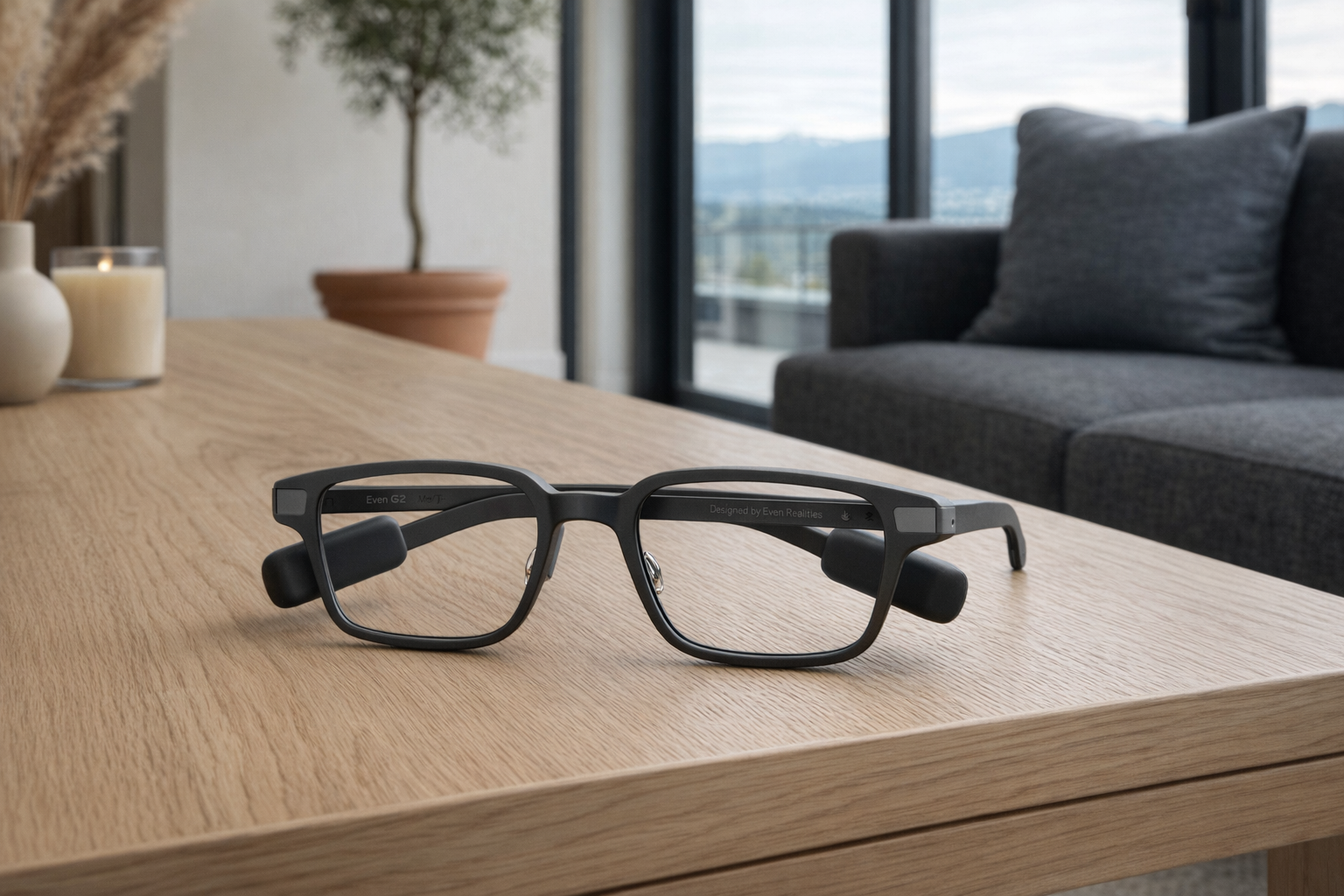
📺 Watch: Even Realities G2 in context
Quick snapshot
| Question | What the Even Realities G2 actually is |
|---|---|
| Category | Smart Glasses |
| Made by | Even Realities |
| Typical price | ~$830 CAD (listing at the time of writing — verify current pricing) |
| Rating signal | Check current reviews |
| Best for | Privacy-conscious early adopters, travelers, bilingual users, and people who want heads-up info without a camera |
| Skip if | You want photo/video capture, full AR, or a budget-friendly first wearable |
Pro tip: Treat the Even Realities G2 like premium eyewear with selective smart features, not like a phone replacement. If you go in expecting subtle prompts and glanceable information, the concept makes sense. If you expect a sci-fi computer on your face, it probably won't.
What the Even Realities G2 actually is
In plain English, the Even Realities G2 is a pair of lightweight smart glasses that tries to keep the smart part restrained. The big selling points are easy to read: a micro-LED floating display, a 36g titanium frame, real-time translation in 33 languages, and no camera. That last part is not just a spec bullet; it is the entire personality of the product. These glasses seem built for people who want information in front of their eyes without advertising to everyone around them that they might be recording.
Even Realities G2 are privacy-forward AI smart glasses with a micro-LED display and no camera. Weighing just 36g with titanium frames, they feature ambient AI prompts, real-time translation in 33 languages, IP65 water resistance, and support for prescription lenses. Controlled via the optional Even R1 smart ring.
That combination makes the G2 noticeably different from Ray-Ban Meta Smart Glasses. The Meta glasses lean hard into cameras, speakers, social capture, and voice-driven assistant features. The Even Realities G2 appears to head in the opposite direction: less "look what I can record," more "show me useful information discreetly." For a lot of people, that is a more honest answer to what smart glasses should be right now. It also means giving up the flashy part of the category.
Key features at a glance
- Micro-LED floating display for heads-up visual information
- No camera for a more privacy-forward design
- Titanium frames with a listed weight of just 36g
- AI prompts for glanceable assistance
- Real-time translation in 33 languages
- IP65 water resistance for rain, sweat, and everyday exposure
- Prescription lens compatibility from -12 to +12 diopters
- Optional Even R1 smart ring control for hands-light input
How the Even Realities G2 actually works
The core idea is simple: instead of making you constantly pull out your phone, the Even Realities G2 places a small amount of information into your field of view through its micro-LED display. "Floating display" is the marketing phrase, but the practical interpretation is more useful: it is meant to show limited, glanceable information rather than immersive augmented reality. Think prompts, translated text, and likely short pieces of context — not a giant virtual monitor hovering in front of your face.
The second important part is what the glasses do not include. No camera means no photo capture, no point-of-view videos, and no visual AI system that scans whatever you are looking at. That simplifies the privacy story, and for some buyers it will be the whole reason to care. It also narrows the product's ambition. These are not trying to be all-purpose AR glasses. They are trying to be socially acceptable, wearable smart glasses with fewer red flags.
Control appears to be split between the glasses themselves, a companion phone setup, and the optional Even R1 smart ring. That ring matters because smart glasses are awkward if every interaction depends on touching the frame or talking aloud in public. A ring-based control method suggests the company understands that subtle input is part of the product, not a side feature. If it works well, that's thoughtful design. If it doesn't, it becomes one more accessory to charge and keep track of.
A realistic way to think about the G2 is in three layers:
- Optics layer: the micro-LED system puts small bits of information into view.
- Software layer: AI prompts and translation features provide the content worth displaying.
- Wearability layer: the 36g frame, titanium build, prescription support, and IP65 resistance determine whether you'll actually keep wearing it after the novelty wears off.
That third layer is more important than brands like to admit. Smart glasses fail all the time not because the software is bad, but because people stop wanting something heavier, fussier, or stranger-looking than normal glasses on their face for 8 or 10 hours a day.
A realistic "day in the life" with Even Realities G2
Because this is an informational explainer rather than a review, the best way to picture the G2 is through what the listed features imply.
- Morning. You put on the glasses the way you would normal eyewear, especially if they're fitted with prescription lenses. The lightweight 36g frame matters here: if the weight is close enough to regular glasses, the smart features have a chance of becoming routine rather than a special-event gadget.
- Midday. While commuting, walking into meetings, or moving through a busy workday, the micro-LED display could surface short prompts or contextual information without forcing a phone check every five minutes. That is the ideal use case for heads-up wearables: fewer interruptions, not more.
- Afternoon. In a multilingual setting — travel, conferences, tourism, or even a restaurant interaction — the real-time translation feature in 33 languages becomes the marquee function. The important expectation to keep grounded is that translation support can be genuinely useful without being magical. It may smooth over short exchanges; it will not replace actually knowing the language.
- Evening. Walking home in light rain, stopping at the store, or wearing them outside on a damp day is where the IP65 rating matters. That suggests meaningful protection against dust and water spray, which is what you want from a wearable meant for daily life rather than careful indoor-only use.
Who the Even Realities G2 is actually for (and who it isn't)
Great fits
- People who already wear glasses daily and want smart features without jumping to a bulky headset.
- Frequent travelers who would genuinely use live translation and prefer subtle help over pulling out a phone constantly.
- Privacy-conscious professionals who like the idea of smart glasses but do not want a visible camera pointed at coworkers or clients.
- Early adopters who are willing to pay ~$830 CAD for a refined niche wearable instead of waiting for the category to get cheaper.
- Bilingual or multilingual users who move between languages regularly and want quick support in the background.
- People who hate the social weirdness of camera glasses but still want heads-up information.
Poor fits
- Buyers expecting these to function like full augmented-reality glasses with rich overlays, navigation-heavy visuals, or giant virtual screens.
- Anyone who specifically wants to take photos, record video, livestream, or use visual AI features from their eyewear.
- People looking for a low-cost experiment. At this price, this is not a casual impulse buy.
- Users who dislike companion accessories and may not want to deal with an optional control ring on top of glasses and a phone.
- Shoppers who rarely wear glasses and are unlikely to adapt to face-worn tech for long stretches.
- Anyone hoping one device will replace their smartphone, earbuds, and smartwatch all at once.
Practical trade-offs
Privacy
The G2's no-camera design is its clearest practical advantage. Smart glasses create instant suspicion when bystanders cannot tell whether they're being recorded. By skipping the camera entirely, Even Realities removes the biggest social and privacy objection in one move.
That said, "privacy-forward" does not mean "privacy-free." AI prompts and translation still imply software, account systems, and some degree of data handling through companion services. Before buying, it is worth checking the current app permissions, account requirements, and how translation or AI data is processed. No camera is a major win, but it is not the same thing as zero data concerns.
Comfort and fit
The listed 36g weight and titanium frames are not filler specs. They are the whole battle. Smart glasses only work as a category if people forget they are wearing electronics. At 36g, the G2 is at least aiming at everyday wear rather than "tech demo on your face."
Prescription compatibility also matters more than flashy software claims. Support for -12 to +12 diopters means the product is trying to meet real-world vision needs, not just appeal to people with perfect eyesight. Evaluate this like premium glasses first and a gadget second. If the fit, lens process, or frame style does not suit you, the smart layer will not rescue it.
Ecosystem and long-term value
A niche wearable at ~$830 CAD lives or dies on long-term software support. Translation tools, AI prompts, app compatibility, and optional accessories like the Even R1 smart ring all depend on a living ecosystem. That is not unique to Even Realities; it is just the reality of connected wearables.
This is where caution is healthy. Premium smart glasses often look most convincing on launch pages and least convincing three years later if the app support fades or features shift. That does not mean the G2 is a bad bet. It means you should buy it for the features clearly offered now, not for imagined future upgrades.
Where the Even Realities G2 fits in a smart home
The G2 is not really a smart-home control centre, and it does not need to be. Its better role is as a personal interface layer that sits on top of the devices you already use.
A realistic setup might look like this:
- Your phone remains the real computing hub.
- AirPods, Pixel Buds, or other earbuds still handle most audio privately and comfortably.
- Apple Home, Google Home, or Alexa continue running lights, thermostats, cameras, and routines.
- A smartwatch still handles fitness, notifications, and quick taps better than most glasses can.
- The Even Realities G2 adds glanceable visual prompts and translation where pulling out a phone is awkward.
That makes the G2 closer to a premium wearable companion than a platform reset. It is not replacing your smart home stack; it is giving you a different window into some of the information around it. That is a more believable job description than the usual "future of computing" pitch.
There is also a quiet workplace angle here. In offices, retail, hospitality, or events, camera-free smart glasses are easier to justify than recording-first glasses. If the G2 succeeds anywhere beyond enthusiasts, that may be the opening: places where discreet prompts and translation are welcome, but visible recording hardware is not.
The buying decision, in plain terms
Before buying the Even Realities G2, three questions do most of the work:
- Do you want smart glasses, or do you actually want camera glasses? If photos, video, and visual capture matter to you, you are looking at the wrong product.
- Will you benefit from heads-up prompts or translation often enough to justify about $830 CAD? This price only makes sense if the features fit your routine, travel, or work in a recurring way.
- Are you willing to treat this like premium eyewear with software attached? That means caring about comfort, prescriptions, fit, app support, and ecosystem durability — not just the novelty of a floating display.
If those answers are mostly yes, the G2 looks like one of the more thoughtful smart-glasses concepts currently on sale. If not, waiting a generation or sticking with your phone is probably the smarter move.
Got Questions About the Even Realities G2? Let's Clear Things Up.
Is this a hands-on review?
No. This is an informational explainer based on the product listing and the broader smart-glasses category. The goal is to clarify what the Even Realities G2 appears to offer, not to present first-hand testing impressions.
Does the Even Realities G2 have a camera?
No. According to the listing, one of its central design choices is that it has no camera. That is a big differentiator versus products like Ray-Ban Meta Smart Glasses and will be a major plus for buyers focused on privacy and social acceptability.
Can you put prescription lenses in the Even Realities G2?
Yes, according to the listed features, the glasses support prescription lenses from -12 to +12 diopters. That is important because smart glasses are much easier to justify when they can replace your regular pair instead of becoming a second thing to carry around.
Is the Even Realities G2 water resistant?
The listing says the glasses have IP65 water resistance. In practical terms, that suggests protection against dust and water spray, which is useful for commuting, sweat, and light rain. It does not mean you should treat them like swim goggles or dunk them in water.
What is the Even R1 smart ring, and do you need it?
The Even R1 is listed as an optional smart ring for controlling the glasses. Optional is the key word here: it appears to be a convenience accessory rather than a mandatory part of the package. If you value discreet input, it could be appealing; if you already dislike managing multiple wearables, it may feel like one extra thing too many.
Where can you verify the current specs or buy the Even Realities G2?
The safest place to check current details, availability, and any updates to features is the official product page here: Even Realities G2. That matters because smart wearable listings can change over time, especially around software features and accessory options.
What does it cost in Canada?
At the time of writing, the listed price is roughly ~$830 CAD. For most people, that puts the G2 firmly in premium-gadget territory, not casual-tech territory. Check the current store page before buying, because pricing, bundles, and lens-related costs can shift.
Where is the Celmin Directory listing for this product?
For a catalog-style view of the same product — structured specs, pros and cons, similar picks, and FAQ — see Even Realities G2 on Celmin Directory.
If you're building a smarter home in Canada and want honest explainers on gadgets worth considering — plus the ones worth skipping — Celmin covers the full catalog without the marketing theater. More reviews, comparisons, and buyer guides at https://celmin.ca.
Discussion
Sign up or sign in to join the conversation.