
Canadian summers have a rhythm: June arrives with relief, July brings humidity you can wear, and by August the bedroom feels like a held breath. A basic box fan pushes air in one direction until you reposition it — then you reposition it again. Ceiling fans help if you have them. Most apartments ...
Canadian summers have a rhythm: June arrives with relief, July brings humidity you can wear, and by August the bedroom feels like a held breath. A basic box fan pushes air in one direction until you reposition it — then you reposition it again. Ceiling fans help if you have them. Most apartments do not.
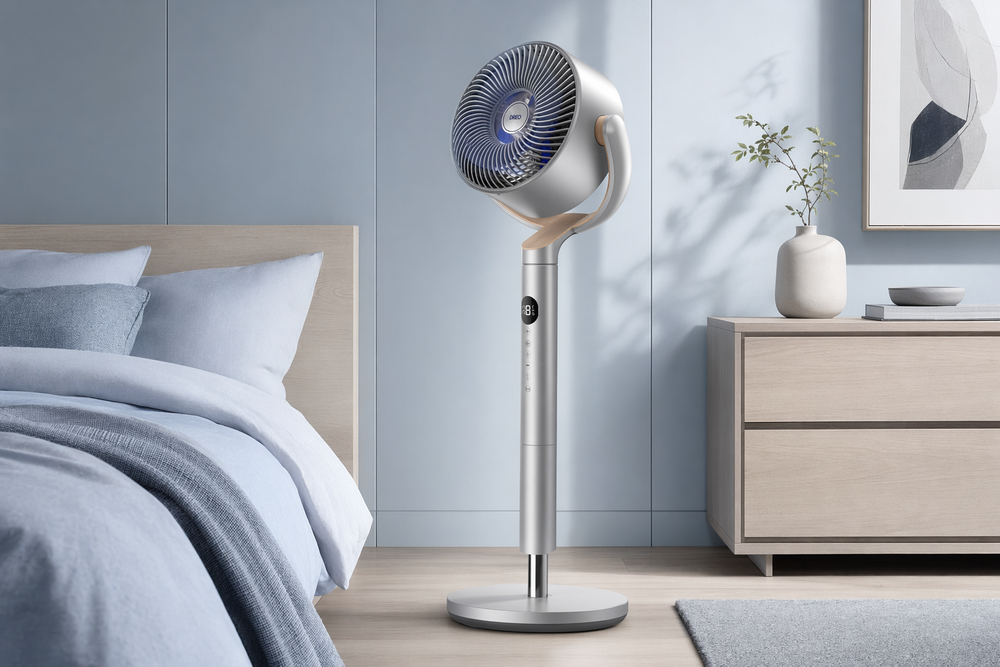
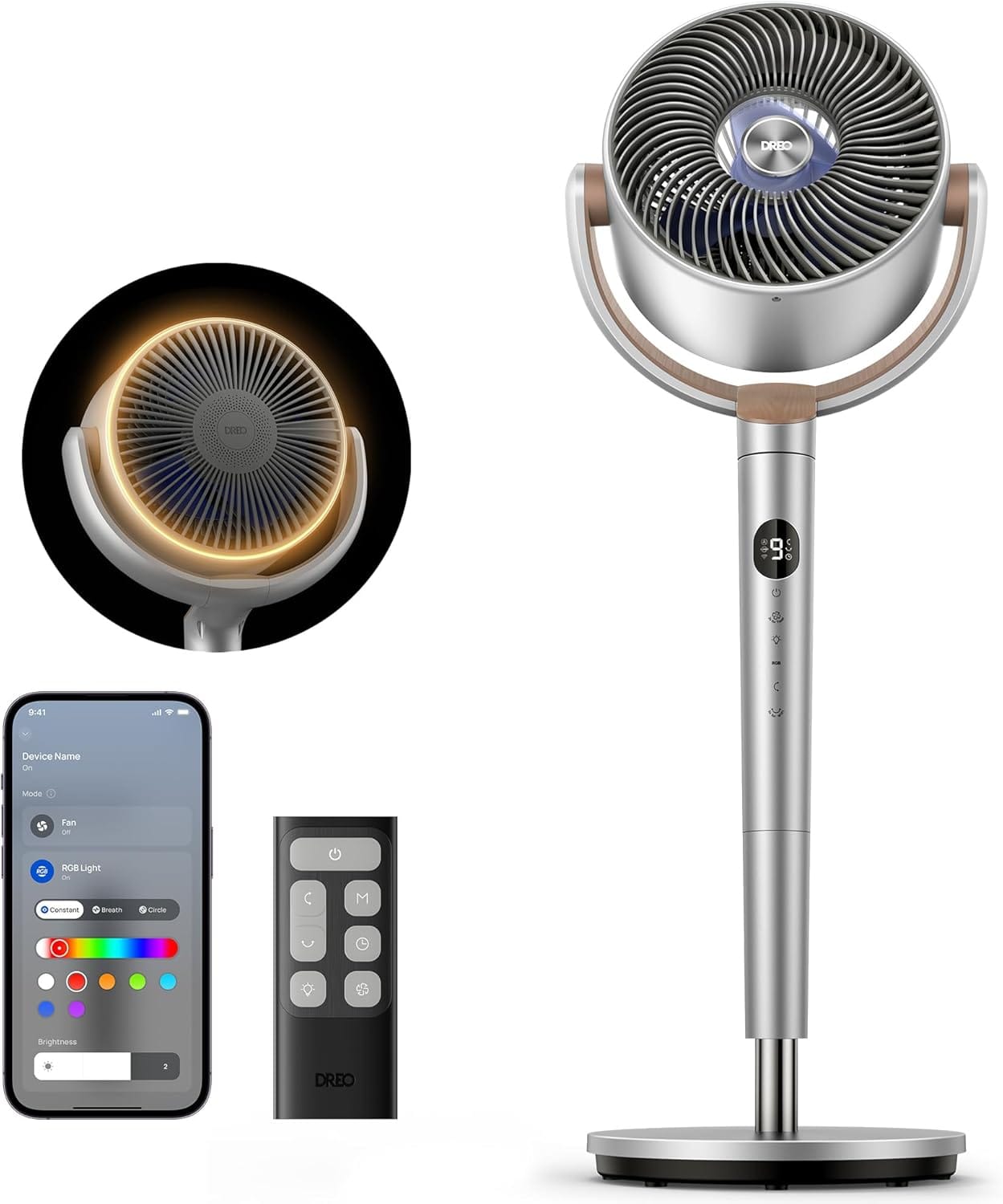
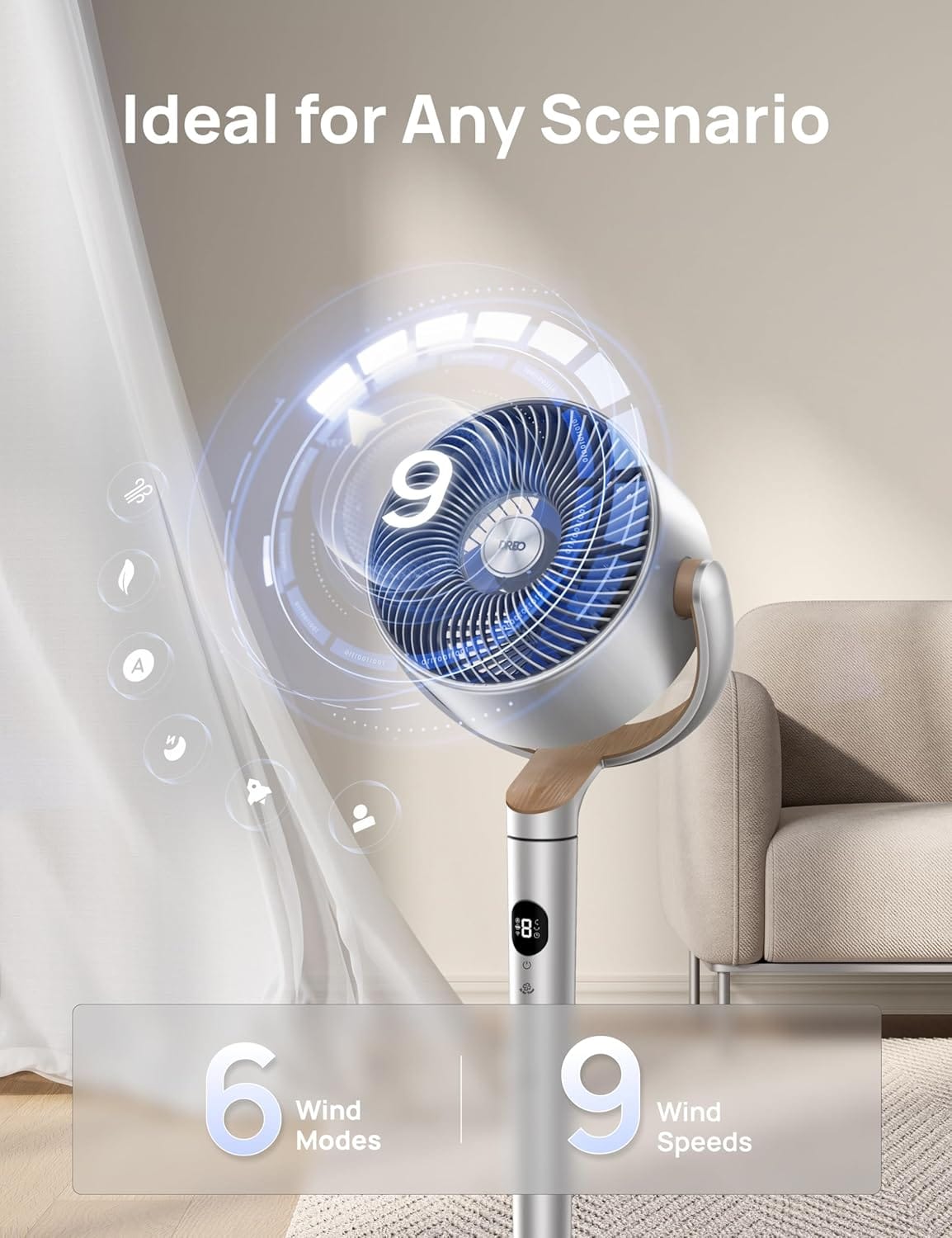
The DREO Smart Omni Oscillating Fan tries to solve the geometry problem. It is a pedestal fan that oscillates both horizontally and vertically — up to 120 degrees in each axis — so airflow can sweep a room rather than blast one stripe across the floor. Add a quiet DC motor, nine speeds, six modes, app and voice control, and an optional RGB light ring, and you have a fan that behaves more like climate equipment than a seasonal afterthought.

The snapshot
| DREO Smart Omni Fan | |
|---|---|
| What it is | Smart pedestal fan with 120° + 120° omni-directional oscillation |
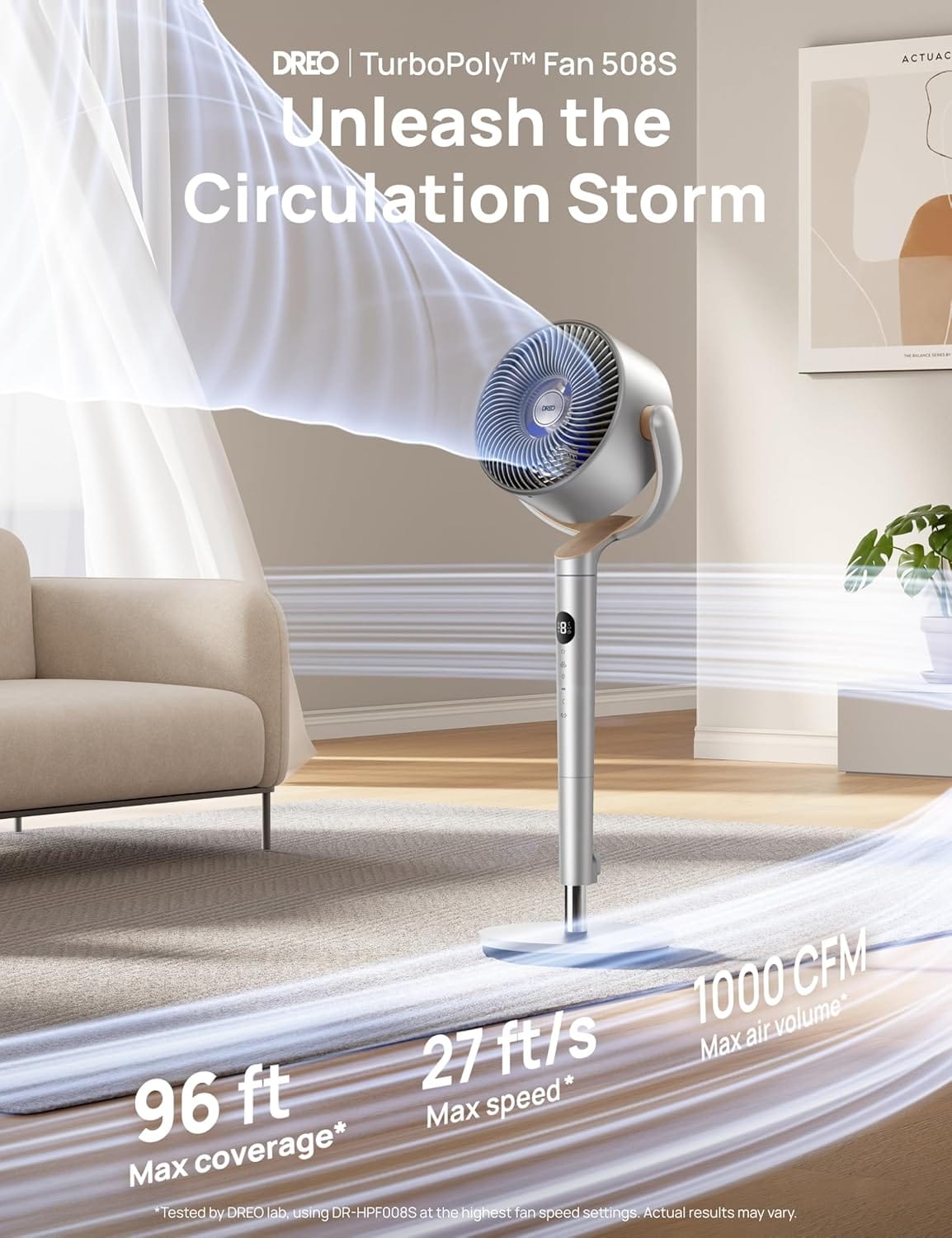
| Airflow | Up to ~90 ft range, DC motor, 9 speeds, 6 modes |
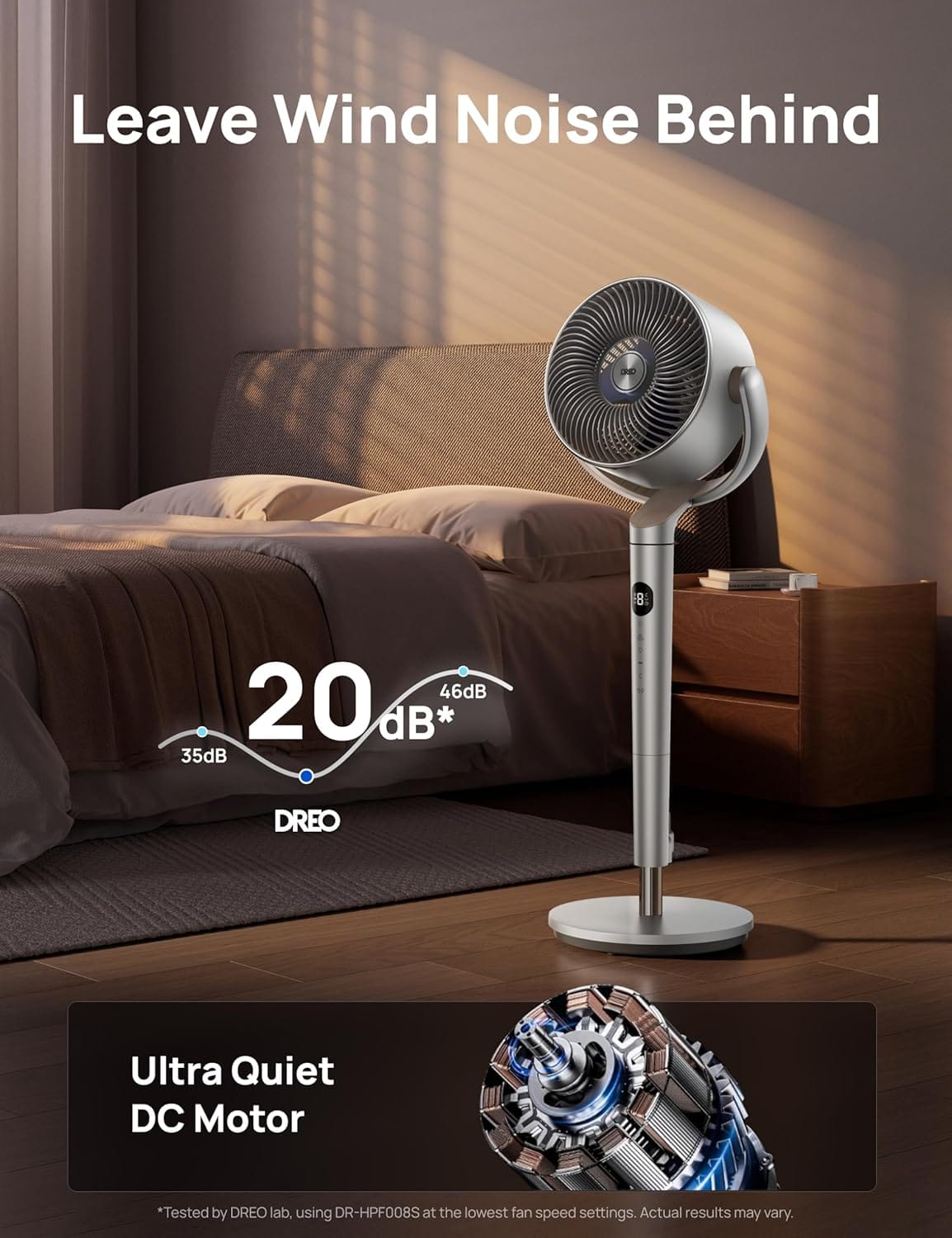
| Noise | As low as ~20 dB on low settings; louder at top speeds |
| Height | Adjustable pedestal, roughly 37–42 inches |
| Smart features | Wi-Fi app, Alexa/Google voice, remote, 8-hour timer |
| Extras | RGB mood lighting (can be turned off) |
| Real price (CAD) | ~$140–170 on Amazon.ca depending on colour and promotions |
What buyers on Amazon are saying
DREO’s omni-directional smart pedestal fans cluster around 4.5–4.6 stars on Amazon.ca with thousands of ratings across colour variants — strong volume, clear patterns. Amazon’s review summary for this product family highlights a few recurring themes.
Quiet operation at low and medium speeds is the loudest positive. Bedroom buyers describe speeds 1–4 as whisper-quiet — white-noise territory, not appliance territory. Nursery and home-office mentions are common. The caveat baked into happy reviews: speeds 8–9 are audibly louder, closer to a conventional fan at full blast. Still acceptable for many, but not silent.
Airflow and oscillation earn enthusiastic notes. Reviewers like that horizontal and vertical sweep together — the room feels evenly stirred rather than one cold lane across the bed. The adjustable height and tilt get credit for aiming airflow without moving the whole unit.
Smart controls split the room. Fans of the DREO app praise scheduling, speed presets, and turning the RGB off from the phone. Detractors report occasional Wi-Fi dropouts after router reboots or flaky 2.4 GHz networks — usually fixed by re-pairing, but annoying when it happens mid-heatwave.
The friction shows up in three places:
- Price versus basic fans — At roughly $150 CAD, it costs several times a dumb box fan. Satisfied buyers call it an investment; sceptical ones say good product, too much money.
- Build feel — Most find the base stable. A minority mention plastic parts that feel less premium than the price tag, or slight wobble if the pedestal is not fully tightened during assembly.
- RGB lighting — Some love the night-light feature; others wish it did not exist and appreciate that it can be disabled in the app.
Overall shape of opinion: people who wanted a quiet, whole-room bedroom fan with smart scheduling tend to keep it. People who only needed occasional desk airflow often feel they overbought.
What it's actually trying to do
A fan’s job sounds simple: move air. In practice, comfort depends on where the air goes and how loudly it gets there. Traditional pedestal fans oscillate on one axis — left to right — while blowing at a fixed vertical angle. Hot spots persist above the bed, in corners, near the ceiling.
DREO’s omni design adds vertical oscillation to horizontal sweep. The head nods while it pans, distributing airflow across a volume instead of a plane. Combined with a DC motor — more efficient and quieter than many AC motors at low speed — the fan targets sleep-friendly cooling in medium-sized Canadian bedrooms and living rooms.
The smart layer is not decoration. Scheduling lets you ramp down after midnight. Voice control matters when you are already in bed. The 8-hour timer caps runtime for overnight use. Whether you need all of that depends on how often you reach for your phone instead of a remote — but the hardware works without the app if Wi-Fi misbehaves.
The DC motor and the noise curve
DC motors are why this fan can claim ~20 dB at low speed. Decibels are logarithmic — every ten points doubles perceived loudness — so the gap between speed 3 and speed 9 is larger than the number suggests.
For sleep, most owners live between speeds 2 and 5. For a heatwave afternoon in a shared living room, 7–9 pulls its weight and makes noise you will notice. That is physics, not a defect. If you need hurricane force silently, no fan delivers; if you need silent sleep cooling, this category of DREO fan is among the better options reviewers cite.
Omni oscillation — when it matters and when it does not
Dual-axis sweep shines in bedrooms and offices where people sit in different places — airflow finds you without manual repositioning. It matters less in a narrow hallway or a single desk setup where one fixed angle would suffice.
The RGB ring sits at the base. In a dark bedroom it can serve as a faint wayfinding light; in a minimalist space it can feel gimmicky. The app lets you kill it — a feature worth using on night one.
Smart setup and the 2.4 GHz reality
Like most smart home gear, this fan wants 2.4 GHz Wi-Fi. Mesh networks that steer devices to 5 GHz cause pairing headaches. Amazon reviews mention re-adding the fan after router swaps — a five-minute fix, but plan for it.
Alexa and Google integration work for basic commands — turn on, set speed, set timer — once paired. The remote remains the fastest control when your phone is across the room. None of this replaces the fan if the internet dies; local controls still work.
What it gets genuinely right
- Genuinely quiet low-speed operation for Canadian bedroom summers.
- Whole-room airflow via dual-axis oscillation — the headline feature earns its name.
- Granular speed control — nine steps beat three-speed box fans for fine-tuning.
- Flexible placement — adjustable height suits beds, sofas, and standing desks.
- Smart scheduling — auto shutoff and ramp-down without getting out of bed.
- Remote plus app plus voice — redundancy that matches different household habits.
Who should buy it — and who really shouldn't
This is your fan if you're:
- Sleeping in a medium bedroom that overheats in July and August
- Working from home and wanting steady, quiet airflow without constant repositioning
- Already using Alexa or Google and wanting fan control in that ecosystem
- Willing to pay more than a box fan for quieter, smarter cooling
Walk away if you're:
- Cooling a large open-concept space alone — one fan may not be enough regardless of oscillation
- On a tight budget — a $40 tower fan still moves air
- Impatient with smart-home setup — Wi-Fi pairing frustration is a known minority complaint
- Sensitive to any night-time light — even dim RGB may annoy unless disabled immediately
The decision, in three honest questions
- Will I mostly use this at night at low speed? If yes, the quiet DC motor is the reason to look here. If you only need daytime blast cooling, a cheaper fan may suffice.
- Is whole-room sweep worth premium pricing? Dual-axis oscillation is the differentiator. Fixed-angle needs do not require it.
- Am I comfortable with app setup for scheduling? The fan works locally without it, but you lose the best convenience features.
A few questions worth answering
How loud is it really at night?
Speeds 1–4 are routinely described as bedroom-quiet. Top speeds are noticeably louder — plan to cap overnight speed in the app.
Does it need Wi-Fi to work?
No. Remote and onboard controls function offline. Wi-Fi unlocks app scheduling and voice assistants.
Will one fan cool a whole apartment?
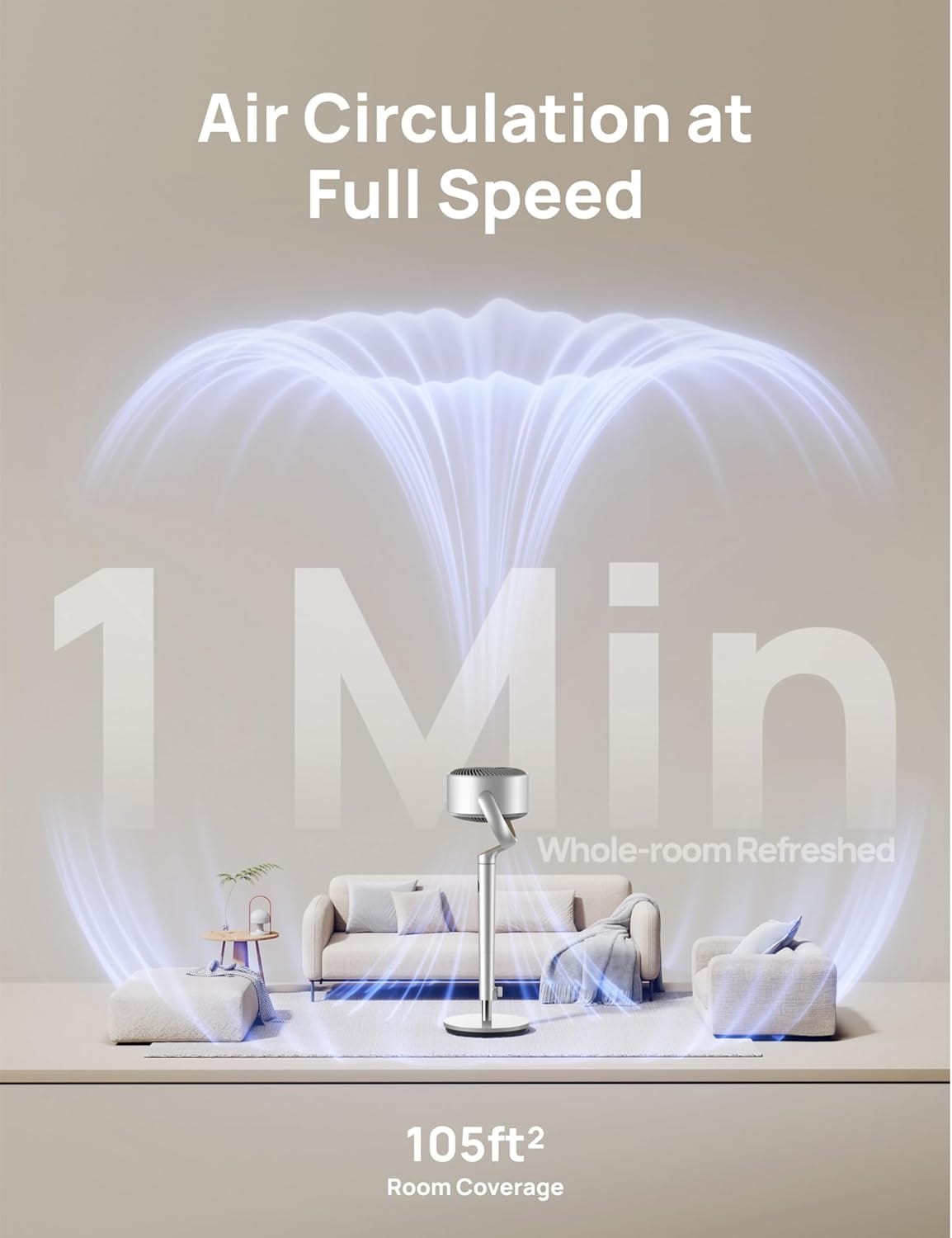
It covers a medium bedroom or living area well. Open floor plans or multi-room cooling may need more than one unit or additional ventilation.
Can I turn off the RGB light?
Yes — through the app or modes that disable lighting. Do this on setup if you sleep in total darkness.
What does it cost in Canada?
Budget roughly $140–170 CAD on Amazon.ca; list prices near $170 with periodic sales. Verify the current listing — colour variants and promotions shift pricing.
Looking for buyer guides that tell you the trade-offs, not just the highlights? More honest, Canadian-focused gadget coverage lives at celmin.ca.
Sign up or sign in to join the conversation.