
Basements are where Canadian houses hide their air quality sins. Concrete holds moisture smell. Furnaces stir dust you forgot existed. The cat litter box lives one room over from the TV you binge under a blanket for six months of the year. Opening windows is not always an option — not at minus tw...
Basements are where Canadian houses hide their air quality sins. Concrete holds moisture smell. Furnaces stir dust you forgot existed. The cat litter box lives one room over from the TV you binge under a blanket for six months of the year. Opening windows is not always an option — not at minus twenty, not during pollen season, not when wildfire smoke turns the horizon orange.
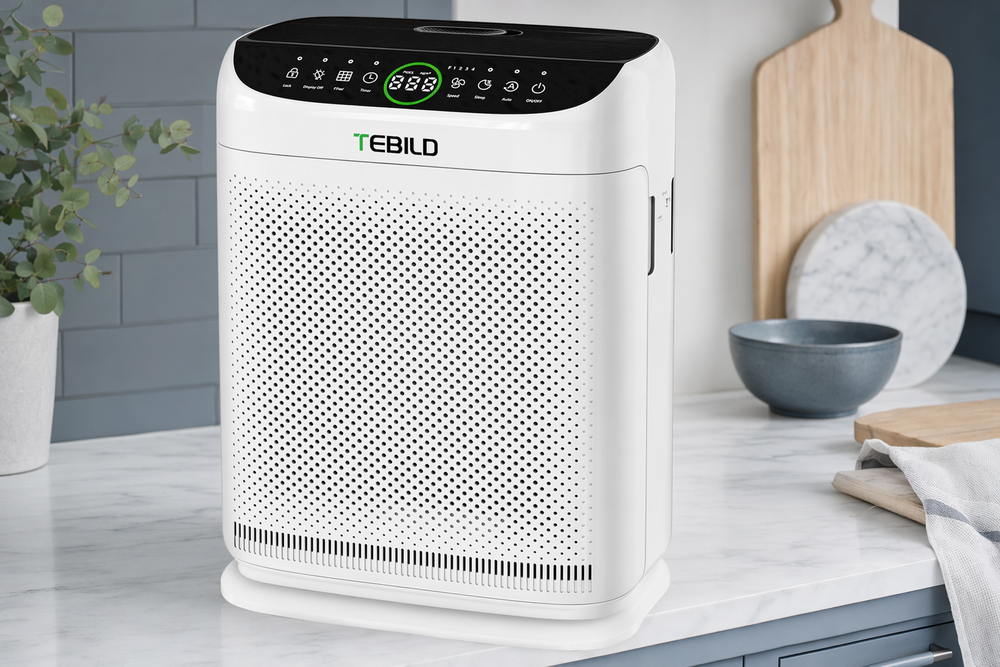
The TEBILD Air Purifier arrives with a number designed to stop scrollers mid-swipe: 2,500 ft² of claimed coverage, a built-in PM2.5 monitor, HEPA filtration, and a price that undercuts established brands by a wide margin. For a large open basement, a combined kitchen-living space, or a small business floor, that headline is exactly what you want to hear. The honest question is not whether it moves air — it does — but whether one box in the corner can live up to square-footage marketing written for ideal lab conditions.

The snapshot
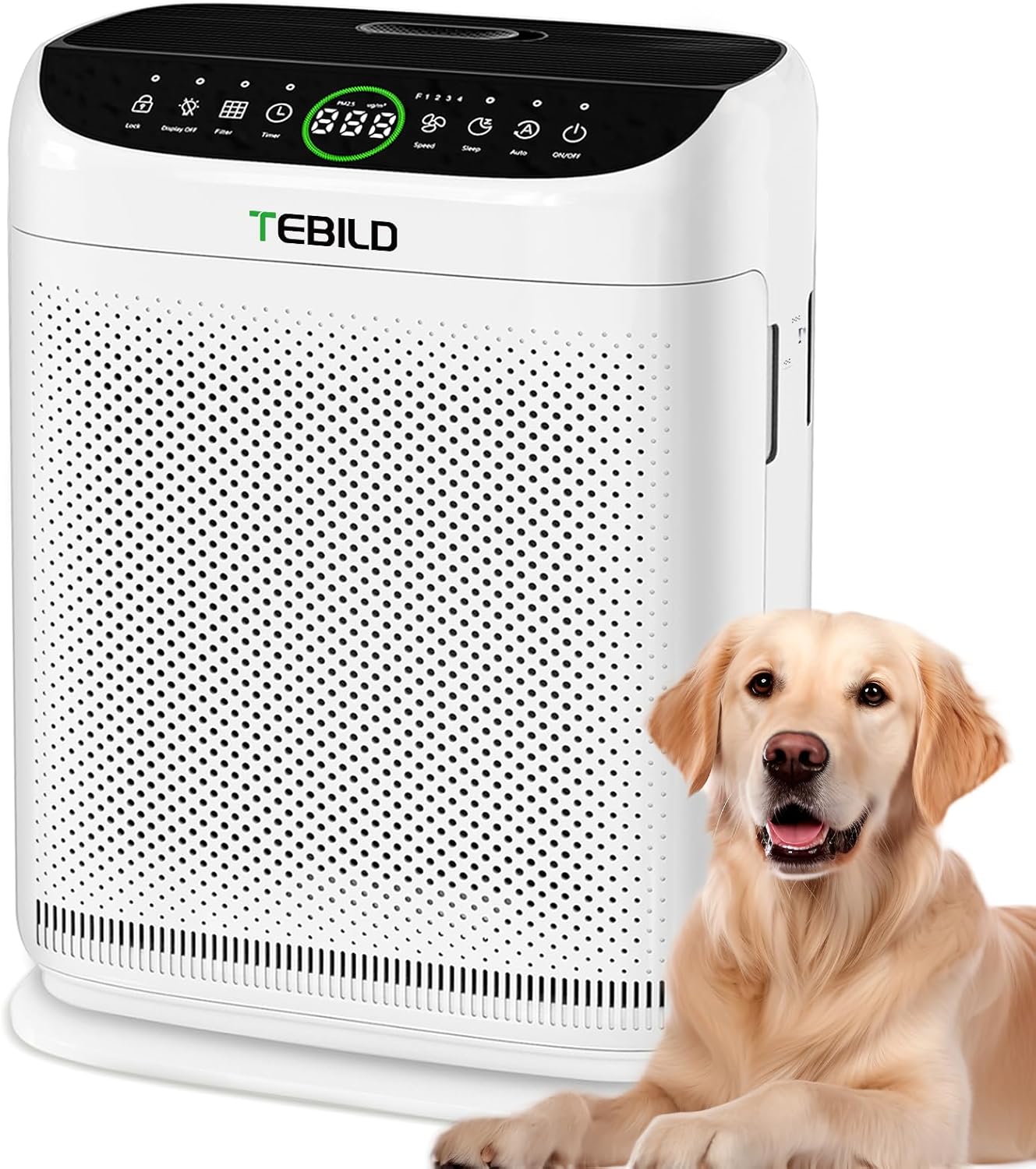
| TEBILD Air Purifier (ZX001) | |
|---|---|
| What it is | Large-room HEPA purifier with PM2.5 sensor and colour air-quality display |
| Claimed coverage | Up to 2,500 ft² (also marketed at 3,000 ft² on some listings) |
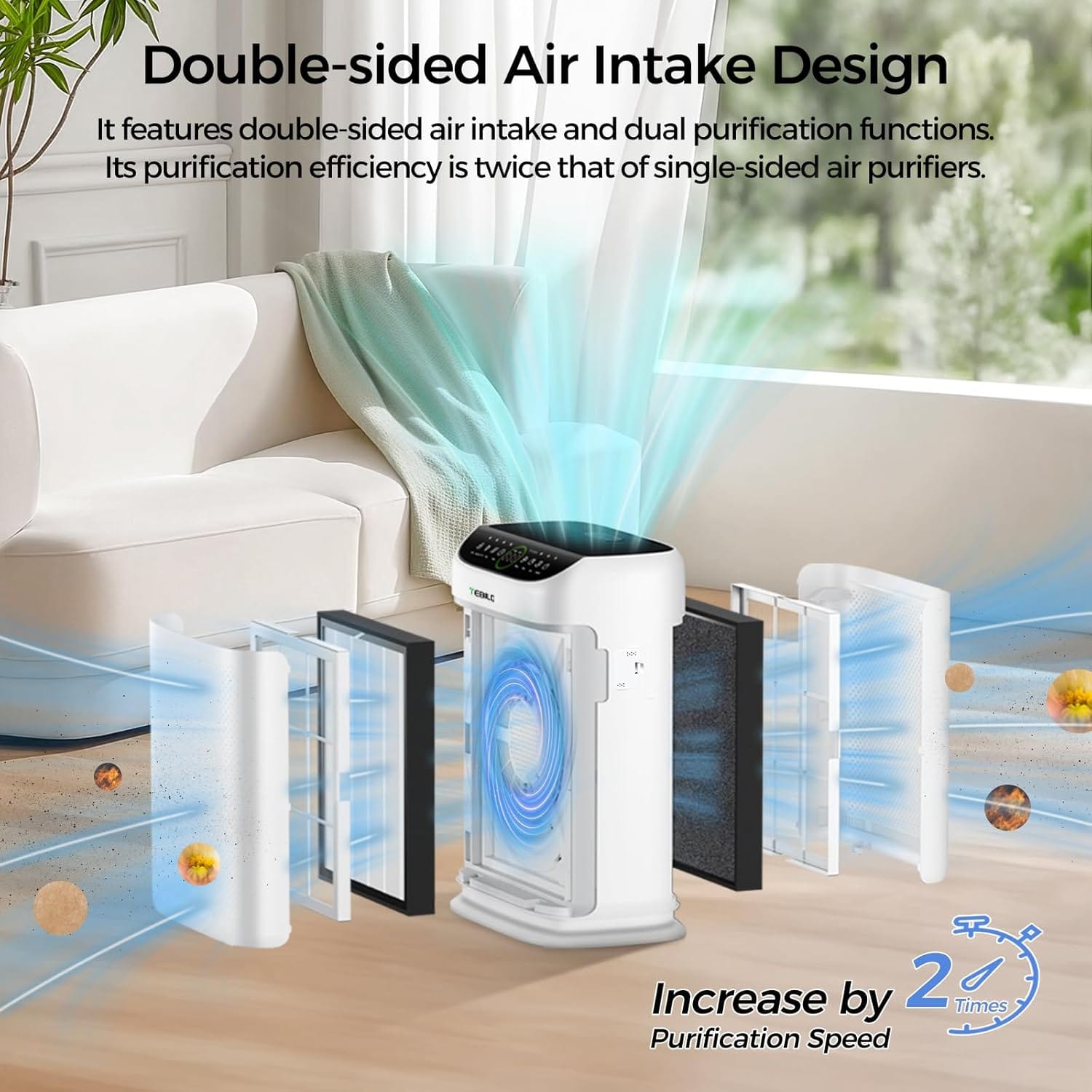
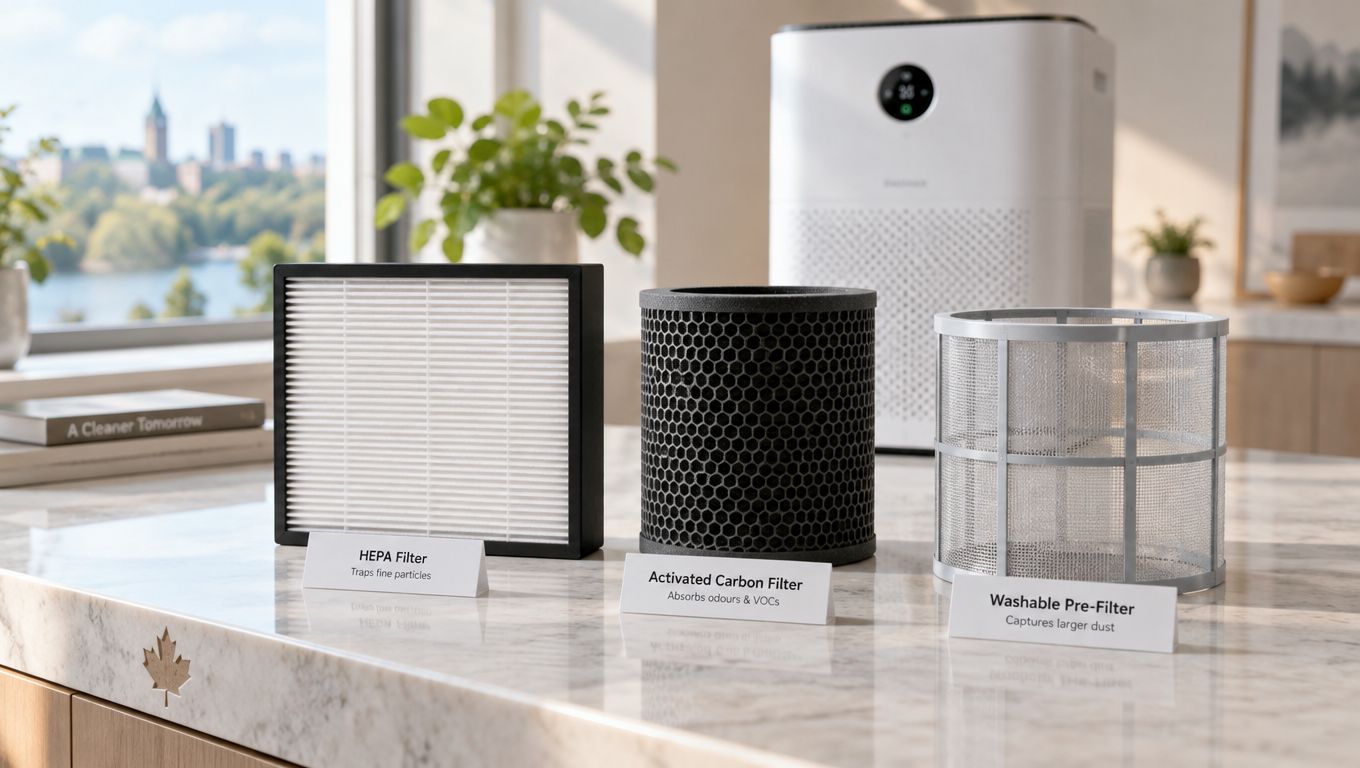
| Filtration | HEPA + activated carbon + washable pre-filter; double-sided air intake |
| Sensor | Built-in PM2.5 monitor with green/yellow/red indicator |
| Modes | Auto, sleep, 4 fan speeds, 12-hour timer |
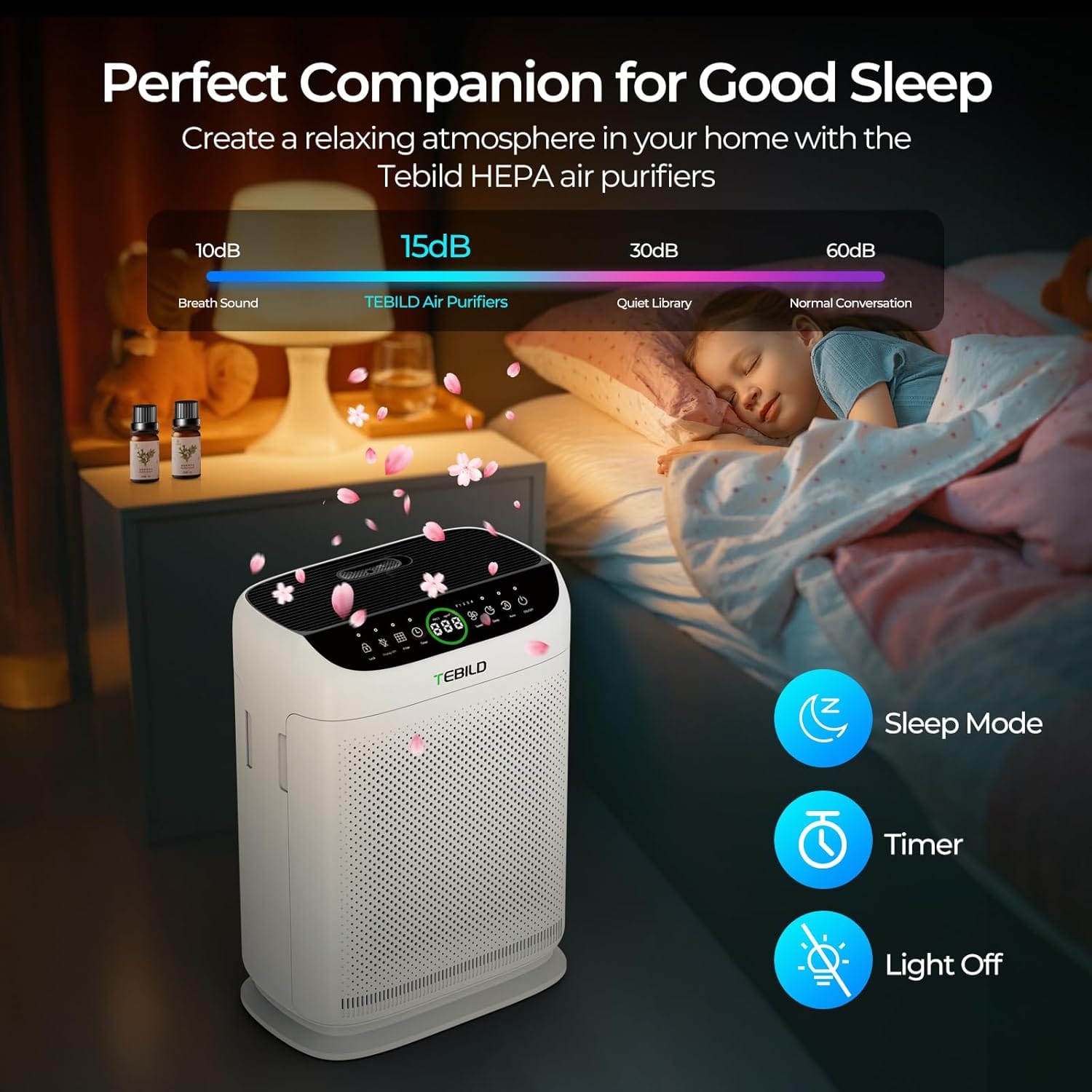
| Noise | Sleep mode marketed under 15 dB; higher speeds audible |
| Extras | Remote control, touch panel, optional aromatherapy tray, child lock |
| Real price (CAD) | ~$110–120 for the unit; replacement filters ~$30 |
What buyers on Amazon are saying
The TEBILD holds around 4.5 stars on Amazon.ca with 500+ ratings — an unusually high volume for a newer brand, which makes the review patterns worth taking seriously. Roughly 77% are five-star, with most criticism concentrated in one-star outliers rather than a broad middle ground.
Performance in large rooms dominates the positive reviews. Buyers placing it in open living areas, basements, and open-concept main floors repeatedly say air feels cleaner within hours, dust accumulates slower, and cooking or pet odours dissipate faster than without a purifier. Several mention running it during Canadian wildfire season and seeing the PM2.5 indicator shift from red toward green over time — not instant magic, but visible progress.
Quiet operation and ease of use show up constantly. Sleep mode earns praise from bedroom users who say they forget it is running. The remote control — stashed inside the unit on arrival, which catches some people off guard — gets credit for simple speed changes from the couch. Filter access and the washable pre-filter are described as straightforward.
Value for money is the other recurring theme. At roughly $120 CAD, buyers compare it favourably to units costing twice as much and express pleasant surprise at build quality for the price tier.
The friction clusters differently than on premium brands:
- Coverage skepticism from informed buyers — People who understand CADR math note that 2,500 ft² at one air change per hour requires more airflow than any unit this size physically delivers at normal fan speeds. They still like the purifier — they just place it realistically in 600–1,000 ft² zones rather than expecting whole-house miracles.
- Brand unfamiliarity — TEBILD is not Levoit or Coway. A minority of buyers worry about long-term filter availability and warranty support. Replacement filters on Amazon (~$30) ease that concern for most.
- Occasional quality-control outliers — Rare reports of units arriving with rattling fans, stuck buttons, or sensors that never move off one colour. Amazon's return window covers most of these; the brand advertises a two-year warranty for persistent issues.
Smaller notes: the aromatherapy tray is divisive — nice if you want essential oil diffusion, pointless if you do not; the display is bright unless you dim it for night use; and auto mode sometimes ramps aggressively when PM2.5 spikes from cooking — which is correct behaviour, but surprises people expecting whisper mode during dinner prep.
Honest summary: buyers who wanted affordable, visible air cleaning in a big single room tend to rate it highly. Buyers who bought solely on the 2,500 ft² headline without reading between the lines occasionally feel disappointed upstairs.
What it's actually trying to do
Consumer air purifiers share a simple loop: pull room air through a filter, exhaust cleaner air, repeat until particulate levels drop. Effectiveness depends on filter efficiency, airflow volume, and how much air in the space actually passes through the unit.
TEBILD's engineering emphasis is airflow architecture — dual-sided intake to pull from both faces, a tall tower form factor, and a motor tuned for high fan speeds when auto mode detects elevated PM2.5. The built-in sensor closes the loop: instead of guessing whether you need turbo after frying bacon, the machine sees particulate spikes and responds.
That is the honest capability. The 2,500 ft² number is a marketing maximum derived from ideal one-pass-per-hour math at top speed in a sealed box — not a guarantee that your split-level in Mississauga becomes hospital air because one purifier arrived from Amazon.
Translating "2,500 ft²" into where to put it
Industry coverage figures assume:
- Eight-foot ceilings
- One complete air exchange per hour at maximum CADR
- Minimal leakage to other zones
Real Canadian homes have stairwells, closed bedroom doors, and furnaces mixing air unpredictably. A purifier in the basement improves basement air first. The upstairs hears about it eventually, but slowly.
Practical guidance from satisfied buyers: treat this unit as a large-zone workhorse — one open main floor, a finished basement suite, a big home office, a daycare playroom — not as centralized HVAC for a 2,500 ft² ranch with six separate rooms.
If your space is closer to 400 ft², it will cycle air aggressively and PM2.5 readings should drop quickly. If your space is truly 2,000+ ft² open concept, expect improvement near the unit within hours and gradual mixing elsewhere — or buy a second unit for another floor.
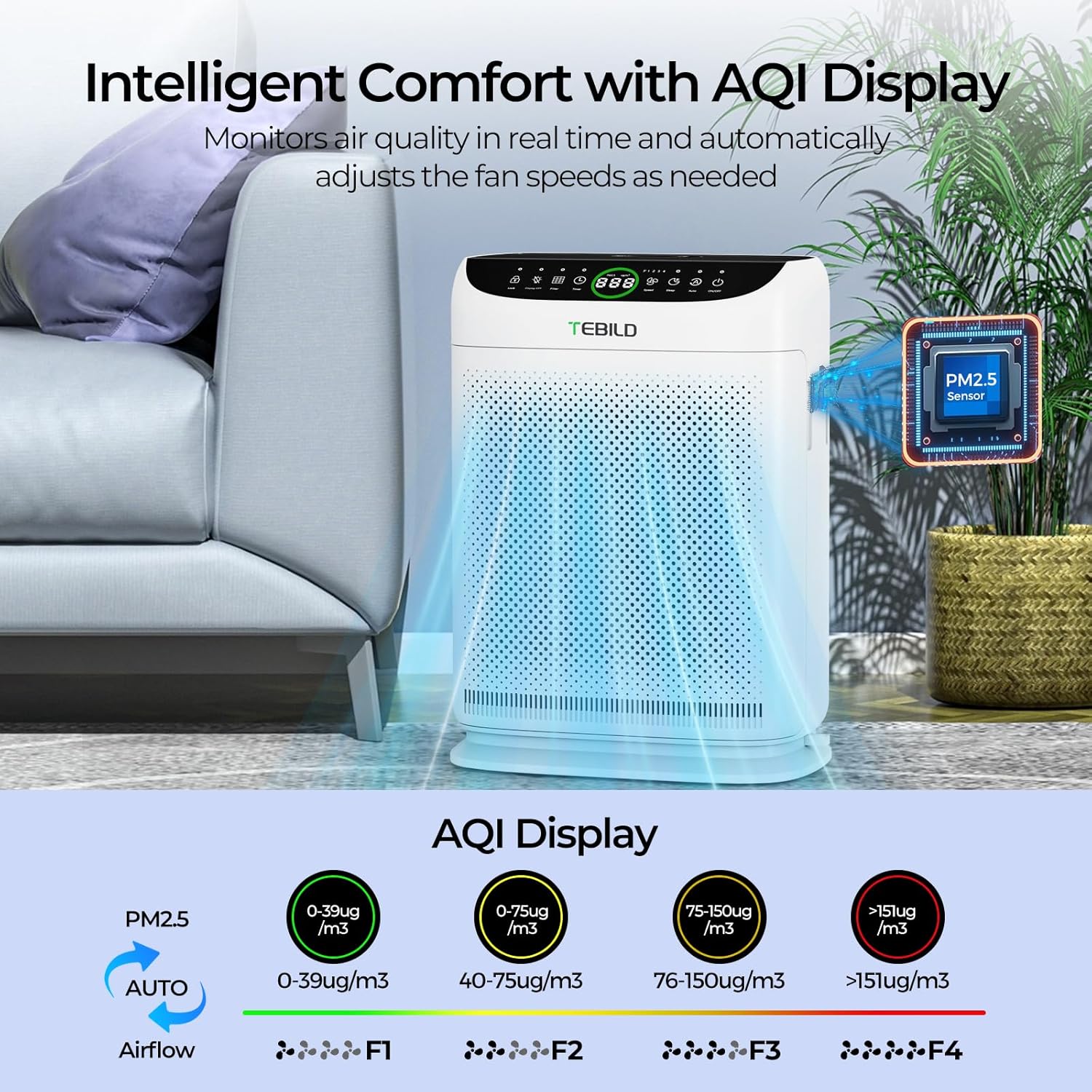
Auto mode, the PM2.5 display, and when to ignore both
The colour ring — green, yellow, red — gives at-a-glance feedback that dumb purifiers lack. Auto mode ties fan speed to those readings so you are not manually bouncing between sleep and turbo.
Two lessons buyers learn quickly:
Cooking fools the sensor temporarily. Pan-frying sends PM2.5 through the roof. The unit roars to life. That is correct. Open the kitchen door, run turbo for twenty minutes, and numbers settle.
Air fresheners and aerosols spike readings too. Several GoveeLife owners discovered this; TEBILD behaves similarly. The purifier is measuring particles, not judging your scent choices.
Sleep mode dims noise and display but trades speed. Use auto during the day, schedule sleep at night — a pattern repeated across happy long-term reviews.
Filters, the remote, and long-term ownership
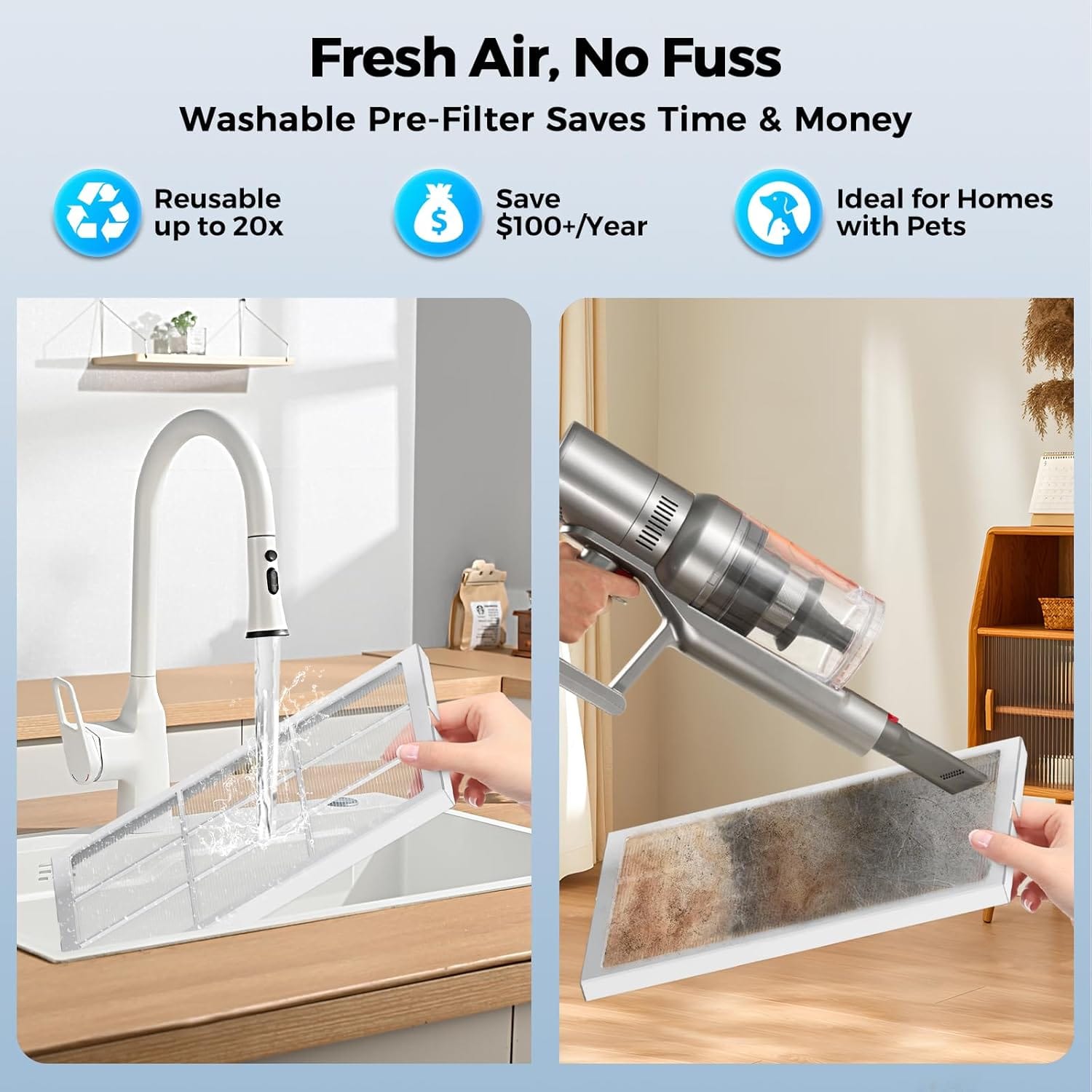
The washable pre-filter is the maintenance habit worth building. Vacuum or rinse it every two to four weeks; the HEPA core lasts longer and pulls easier. Replace the main filter every 6–8 months — sooner with pets or smoke — at roughly $30 CAD for TEBILD-branded replacements on Amazon.ca.
The remote lives inside the shipping bag in the unit cavity. Multiple confused one-star reviews turned into five-star updates once owners found it. Check there before contacting support.
Certifications listed (CARB, ETL, ozone-free) matter if you are ozone-sensitive — this is a filter-and-fan machine, not an ionizer that produces secondary pollutants.
What it gets genuinely right
- Aggressive price — Meaningful HEPA + sensor + remote near $120 CAD is hard to ignore.
- Visible air quality feedback — The PM2.5 ring turns abstract "clean air" into something you can watch drop.
- Dual intake airflow — Moves a lot of air on high; buyers in large rooms notice.
- Quiet sleep mode — Legitimately usable in bedrooms once display brightness is managed.
- Simple operation — Touch panel plus remote; no mandatory app or Wi-Fi pairing.
- Low filter cost — Replacement cartridges undercut premium brands significantly.
Who should buy it — and who really shouldn't
This is your machine if you're:
- Finishing a basement or open main floor and want affordable particulate control
- A pet owner dealing with hair and litter-box odour in a large single zone
- Someone who prefers buttons and remotes over app ecosystems
- Budget-conscious but unwilling to skip HEPA and a real sensor
- Dealing with seasonal smoke and want turbo mode on demand
Walk away if you're:
- Expecting one purifier to normalize air quality across an entire multi-storey home
- Brand-loyal and uncomfortable with a lesser-known manufacturer
- Needing whisper-silent operation on maximum fan — high speed is audible by physics
- Looking for smart home integration — this is not an Alexa-native appliance
- Sensitive to bright displays at night without adjusting settings first
The decision, in three honest questions
- Do I need one big room cleaned well, or a whole house? One big room — strong fit. Whole house — budget for multiple units or a central air solution.
- Am I buying on coverage numbers or on CADR reality? If you calibrate expectations to a large zone, satisfaction tracks with reviews. If you need the full marketing square footage, you will feel shortchanged.
- Can I maintain filters? At this price, the machine is disposable-adjacent if you never change filters. The pre-filter rinse and twice-yearly cartridge swap keep it honest.
A few questions worth answering
Is 2,500 ft² coverage real?
It is a theoretical maximum at top fan speed under ideal conditions. In daily use, think one large open zone — basement, great room, big office — rather than an entire house footprint.
Where is the remote?
Inside the unit, in the protective shipping bag. Open the filter door or check the cavity before assuming it was missing from the box.
Does it need an app?
No. Wi-Fi and apps are not part of this product. Control is via touch panel and infrared remote — a plus for privacy-minded buyers, a minus if you wanted Alexa routines.
How often should I replace filters?
Rinse the pre-filter every few weeks; replace the HEPA+carbon cartridge every 6–8 months, or when airflow drops noticeably. Budget about $30 CAD per replacement.
What does it cost in Canada?
The unit lists around $120 CAD on Amazon.ca. All-in first-year cost with one spare filter lands near $150–160 CAD — still well under many sensor-equipped competitors.
Looking for buyer guides that tell you the trade-offs, not just the highlights? More honest, Canadian-focused gadget coverage lives at celmin.ca.
Sign up or sign in to join the conversation.