
Canadian summers are short and dry spells are not. You leave for a long weekend in July and return to tomatoes wilted into guilt, or you forget the front beds entirely because rain happened once on a Tuesday. Manual hose timers helped for decades — dial a duration, walk away — but they cannot che...
Canadian summers are short and dry spells are not. You leave for a long weekend in July and return to tomatoes wilted into guilt, or you forget the front beds entirely because rain happened once on a Tuesday. Manual hose timers helped for decades — dial a duration, walk away — but they cannot check the forecast, pause for rain, or let you fix a mistake from the cottage.
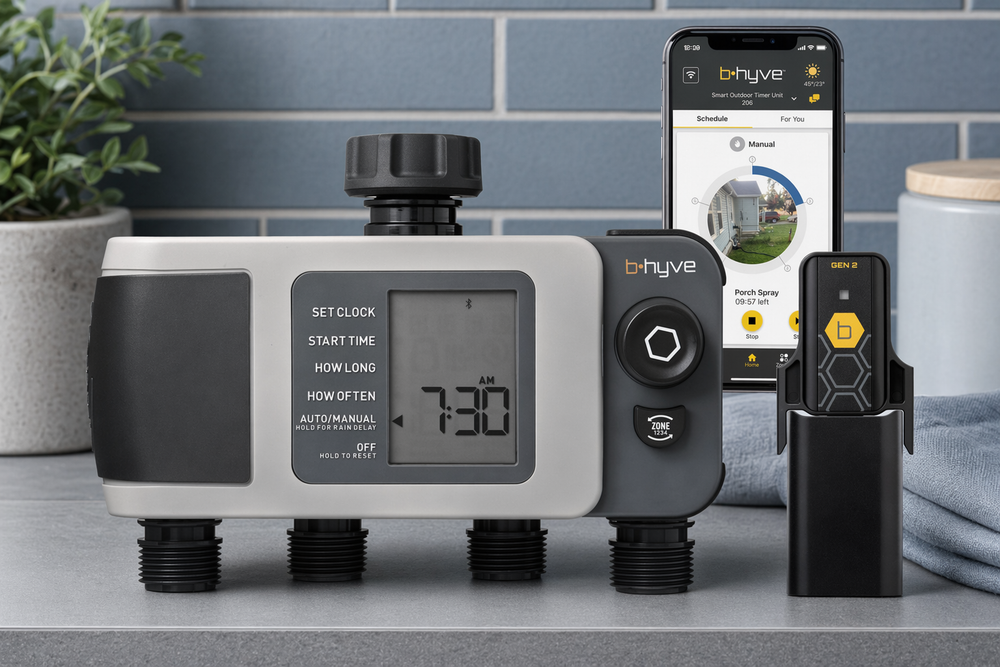
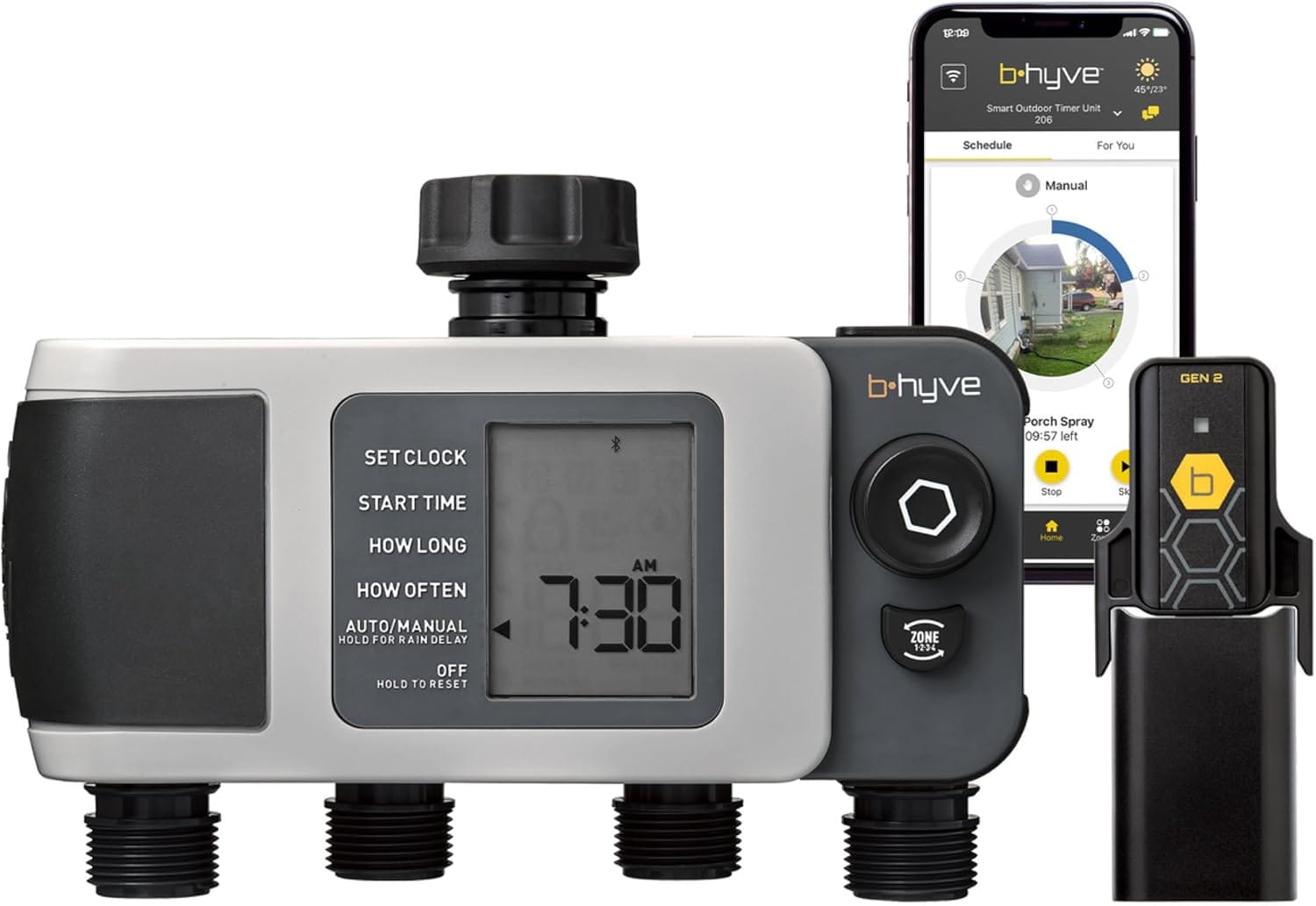
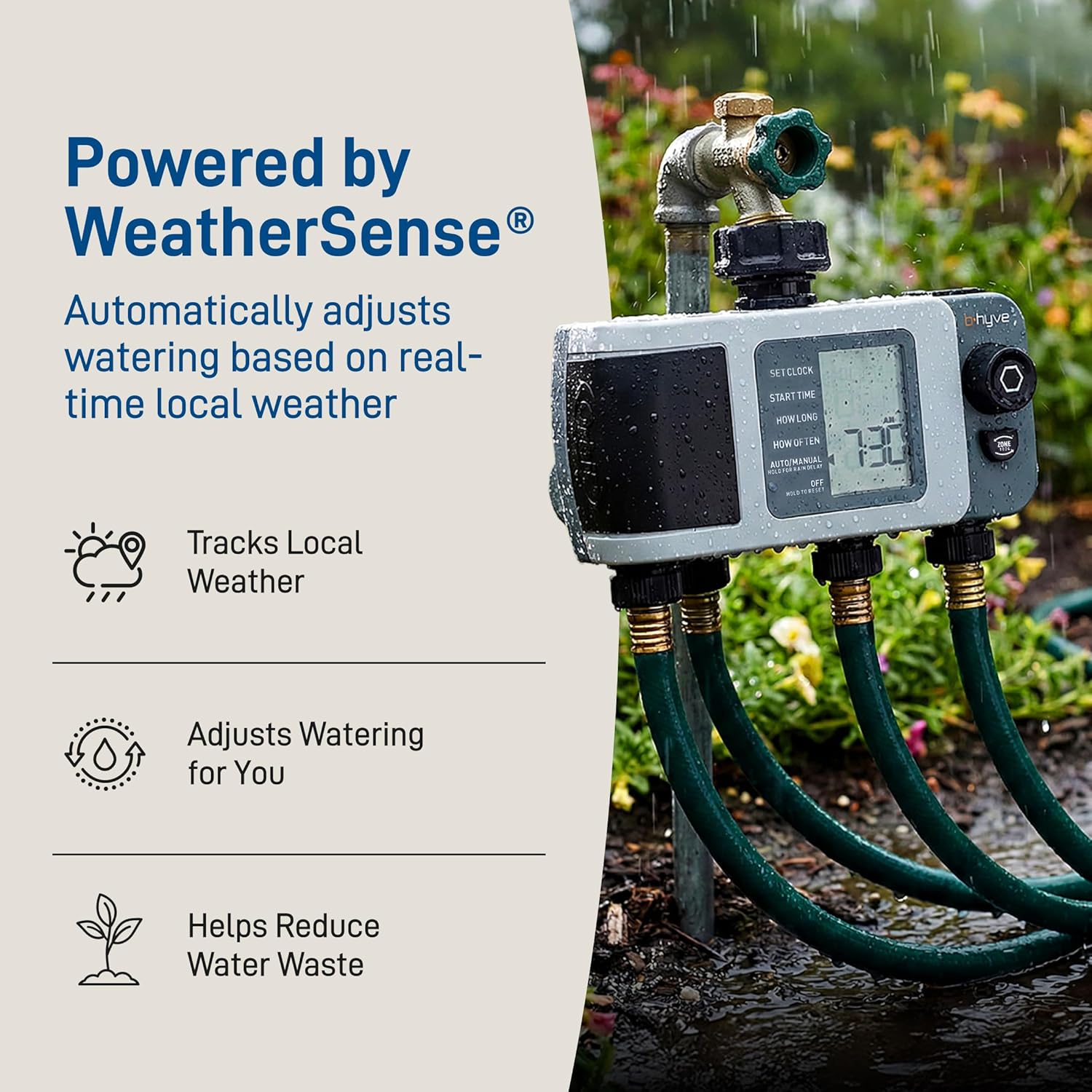
The Orbit B-hyve XD 4-Port Smart Hose Watering Timer (model 24639) is Orbit's answer for people who want sprinkler intelligence without trenching irrigation pipe. One Wi-Fi hub, four independently controlled hose outlets, app schedules, weather-aware adjustments, and Alexa/Google voice hooks. It is not invisible like underground irrigation, and it will not survive a Canadian winter on the spigot. But for raised beds, drip lines, and suburban yards where hoses already exist, it is the most practical upgrade short of hiring a landscaper.

The snapshot
| Orbit B-hyve XD (24639) | |
|---|---|
| What it is | 4-zone Wi-Fi hose timer with hub — screws onto outdoor spigot |
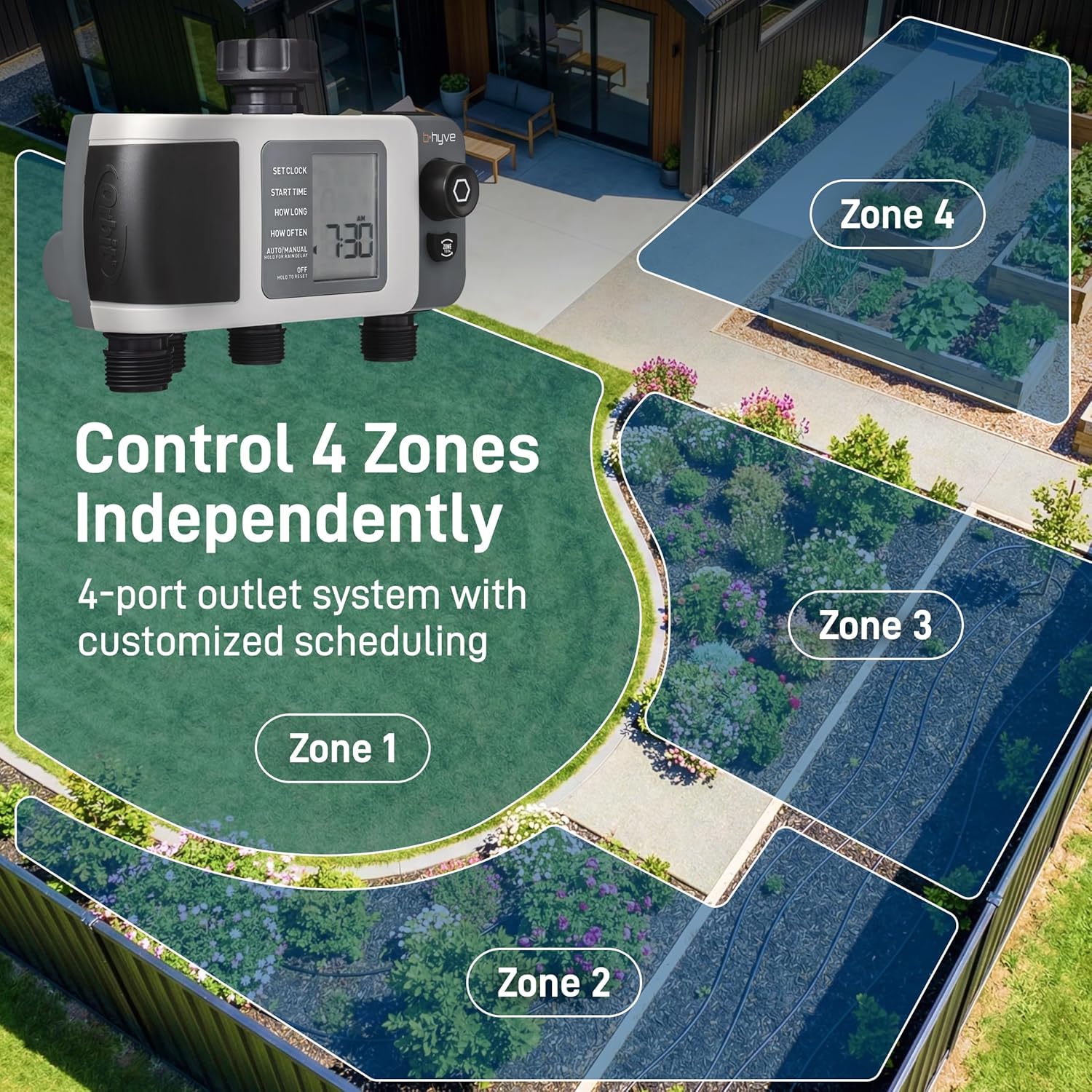
| Zones | 4 independent outlets — run drip, soaker, or sprinkler hoses separately |
| Connectivity | 2.4 GHz Wi-Fi via included hub (plugs into outlet or uses USB power) |
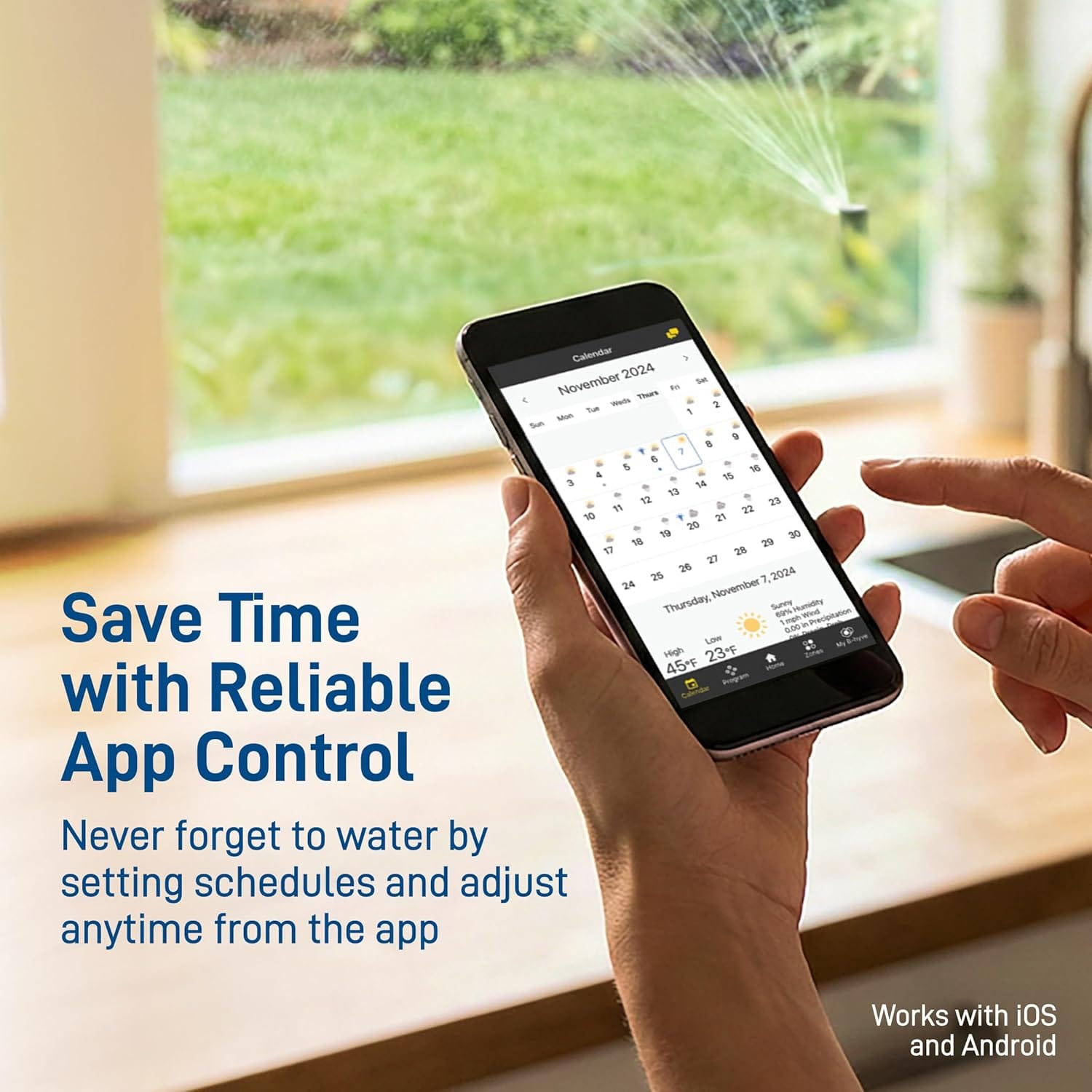
| App | B-hyve iOS/Android — schedules, manual runs, weather skip |
| Smart features | Weather-based adjustments (with location), rain delay, seasonal scaling |
| Voice | Amazon Alexa, Google Assistant |
| Flow | Depends on hose and pressure — typical residential 40–80 PSI |
| Real price (CAD) | ~$130–180 for the 4-port XD kit |
What buyers on Amazon are saying
The B-hyve XD line generally sits around 4.0–4.4 stars on Amazon.ca with thousands of ratings across the 2-port and 4-port variants — enough data that praise and complaints both repeat.
Multi-zone control is the clearest win. Reviewers with vegetable beds, front lawns, and hanging baskets on one spigot describe the four outlets as "finally independent" — tomatoes on a morning drip, lawn on a separate evening cycle, without buying four separate timers. Setup in the B-hyve app earns praise when Wi-Fi cooperates: naming zones, setting durations, copying schedules across days.
Weather-aware watering gets mixed but mostly positive mention. Buyers who enter accurate addresses see the system skip or shorten runs after rain — a genuine water bill and plant-health benefit in Ontario and BC dry spells. Skeptics note forecast data is only as good as your postal code and local microclimate; a shaded backyard in Vancouver behaves differently from the app’s regional guess.
Friction clusters in predictable places:
- Wi-Fi and hub placement — The hub needs stable 2.4 GHz within range of the timer body on the spigot — often outside the house. Buyers who tuck the hub in a far interior room report drop-offs. Extension cords, outdoor-rated outlet boxes, and hub placement near a window or exterior wall fix most issues.
- Winter storage — Canadian buyers who leave plastic timers on outdoor taps through freeze-thaw cycles see cracked bodies and valve failures. Orbit expects indoor storage below freezing — drain, disconnect, bring inside by late October in most provinces. Reviews blaming "stopped working in spring" often trace to freeze damage, not electronics.
- Flow and pressure limits — Running four heavy sprinkler zones simultaneously on one spigot reduces pressure; buyers report weak spray when schedules overlap. Stagger start times is the practical fix — the app supports it, but defaults do not always stagger for you.
- App UX learning curve — B-hyve is functional, not elegant. First-week reviews mention confusion between programs, zones, and smart watering credits. Persistent users say it clicks after a weekend of tuning; impatient users return the unit before finishing setup.
Smaller notes: AA battery backup for clock retention during power blips; manual override buttons on the unit for gardeners who do not want to open the app with muddy hands; and drip vs. spray requiring different runtimes — 20 minutes of drip is not 20 minutes of oscillating sprinkler.
Honest buyer shape: homeowners with existing hoses and modest gardens love the upgrade; people expecting professional irrigation-controller precision or set-and-forget without seasonal maintenance tend to feel underserved.
What it's actually trying to do
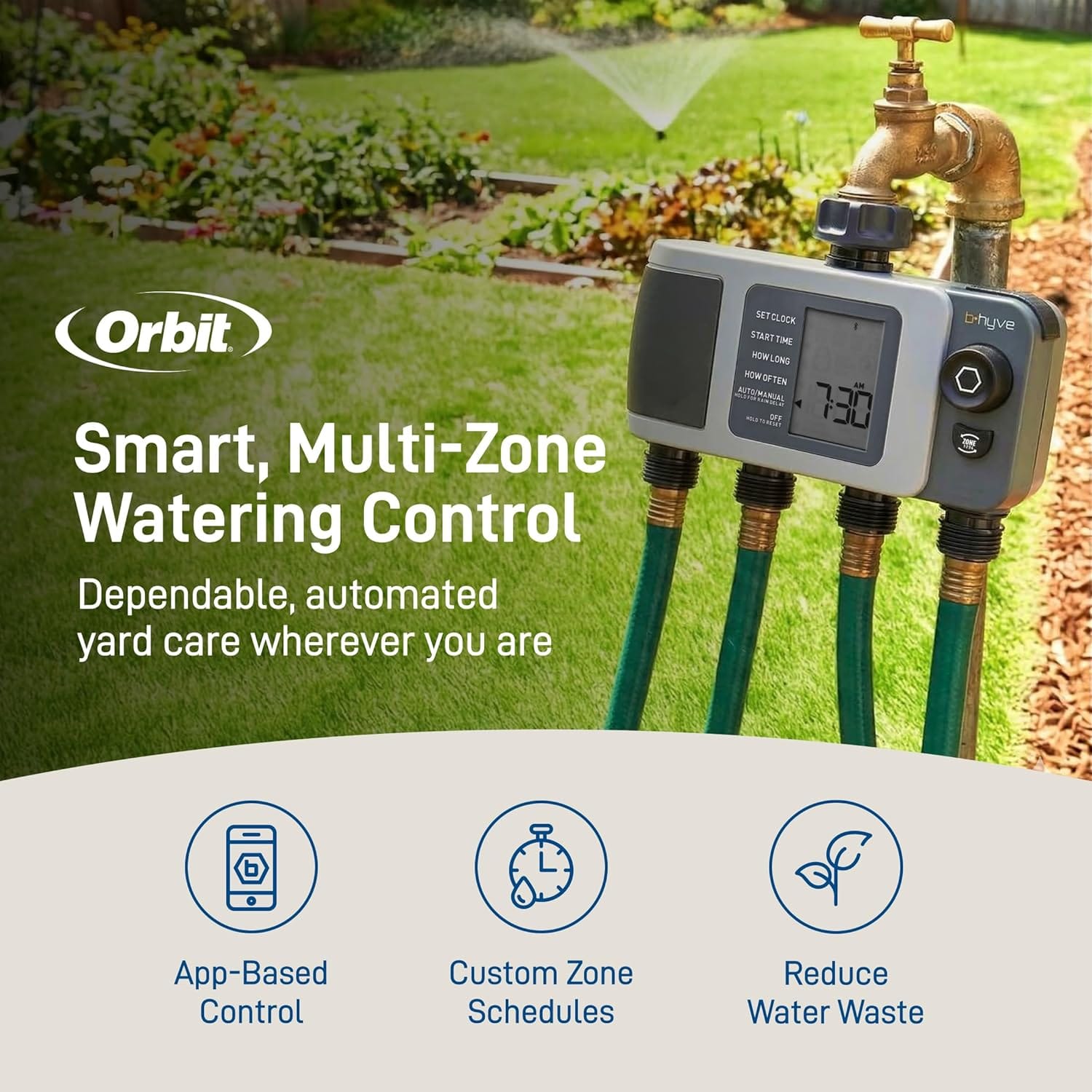
Underground irrigation controllers assume you already paid for trenches, valves, and backflow preventers. Battery dial timers assume you are okay walking to the spigot every time the forecast changes. B-hyve XD targets the middle: hose-native automation.
Each outlet is a solenoid valve. The hub talks Wi-Fi to Orbit's cloud and your phone. Schedules live in the app but cache locally enough to run basic timers if the internet blips — though remote changes obviously need connectivity.
The engineering compromise is outdoor consumer plastic at a sub-$200 price point. You get four zones and smart weather hooks; you do not get metal valve bodies rated for decades of Calgary winters on the tap.
The Canadian winter problem, explained properly
This is the section Canadian listings underplay and buyer reviews scream.
Water expands when it freezes. A timer with residual water in the valve body, left on an exterior spigot through −15 °C, will crack — maybe the first year, maybe the third, but the odds are poor. Orbit's manual is explicit: remove and store indoors when hard freezes arrive.
The honest annual rhythm for most provinces:
- April/May — Reinstall, check washers, pair hub, test each zone for leaks
- June–September — Run smart schedules, tweak for heat waves
- October — Drain lines, disconnect timer, store hub and body inside
Treat it like a garden tool, not a permanent fixture of your siding. Buyers who do this report three to five seasons of service; buyers who do not populate the one-star reviews.
Four zones on one spigot — the pressure math
A standard residential outdoor tap delivers finite flow. Splitting it four ways does not create four full-pressure streams — physics again.
What works well:
- Zone 1: Drip irrigation to raised beds (low flow, long runtime)
- Zone 2: Soaker hose along a fence line
- Zone 3: Oscillating sprinkler — alone, not concurrent with zone 3
- Zone 4: Hanging basket drip spikes
What frustrates people:
- Four impact sprinklers scheduled at 6:00 a.m. together — weak coverage everywhere
- Long hose runs with kinks — timer thinks it watered; plants disagree
Stagger zone start times by 15–30 minutes in the app. Test each line manually once before trusting a whole summer schedule.
B-hyve vs. dumb timers vs. buried irrigation
| Approach | Cost | Best for |
|---|---|---|
| Mechanical dial timer | $15–40 | One zone, no Wi-Fi, zero cloud |
| B-hyve XD 4-port | ~$130–180 | Multi-zone hoses, weather skip, app control |
| Buried irrigation + pro controller | $2,000+ | Full-yard permanent install |
B-hyve wins when you already water with hoses and want smarter scheduling without construction. It loses when your yard is large enough to need hydraulic zone design a hose timer cannot approximate.
Who should buy it — and who really shouldn't
This is your timer if you're:
- Running multiple drip or soaker lines from one backyard spigot
- A vegetable gardener tired of manual watering while at the cottage
- A suburban homeowner who wants rain-aware skips without a sprinkler company invoice
- Renting a house with outdoor taps and permission to hose-water
- Already in the Orbit ecosystem with B-hyve Wi-Fi sprinklers indoors
Walk away if you're:
- Leaving gear outside through Canadian winters without accepting replacement risk
- Expecting four high-pressure sprinklers simultaneously on one tap
- On 5 GHz-only Wi-Fi with no 2.4 GHz path to the exterior wall
- Needing potable-water backflow certification for a regulated municipal hookup — consult local codes
- Managing a commercial orchard — this is residential-scale hardware
The decision, in three honest questions
- Will I store it indoors every winter? If no, buy a cheap mechanical timer you are okay destroying, or invest in buried irrigation.
- Do I need four zones or one? Orbit sells 2-port XD for less if you only water one bed — do not pay for ports you will never plumb.
- Is my Wi-Fi reachable at the spigot? Walk outside with your phone on 2.4 GHz before unboxing. Weak signal at the tap means hub placement experiments — or a mesh node relocation — before success.
A few questions worth answering
Does B-hyve work with drip irrigation?
Yes — drip and soaker hoses are the ideal use case. Set longer runtimes and lower expected flow than for oscillating sprinklers.
Will it survive a Canadian winter outdoors?
Not reliably. Drain and store indoors before hard freezes. Freeze-cracked valves are the most common long-term failure mode in northern reviews.
How many hoses can run at once?
Physically four outlets can open together; practically you should stagger high-flow sprinklers so pressure stays usable.
Does it need a hub?
Yes — the XD kit includes a Wi-Fi hub that bridges the timer to your network on 2.4 GHz.
What does it cost in Canada?
Budget $130–180 CAD for the 4-port XD kit, plus hoses and drip hardware if you are upgrading from scratch. Compare to one season of forgotten-plant replacements and the price feels less abstract.
Looking for buyer guides that tell you the trade-offs, not just the highlights? More honest, Canadian-focused gadget coverage lives at celmin.ca.
Sign up or sign in to join the conversation.