

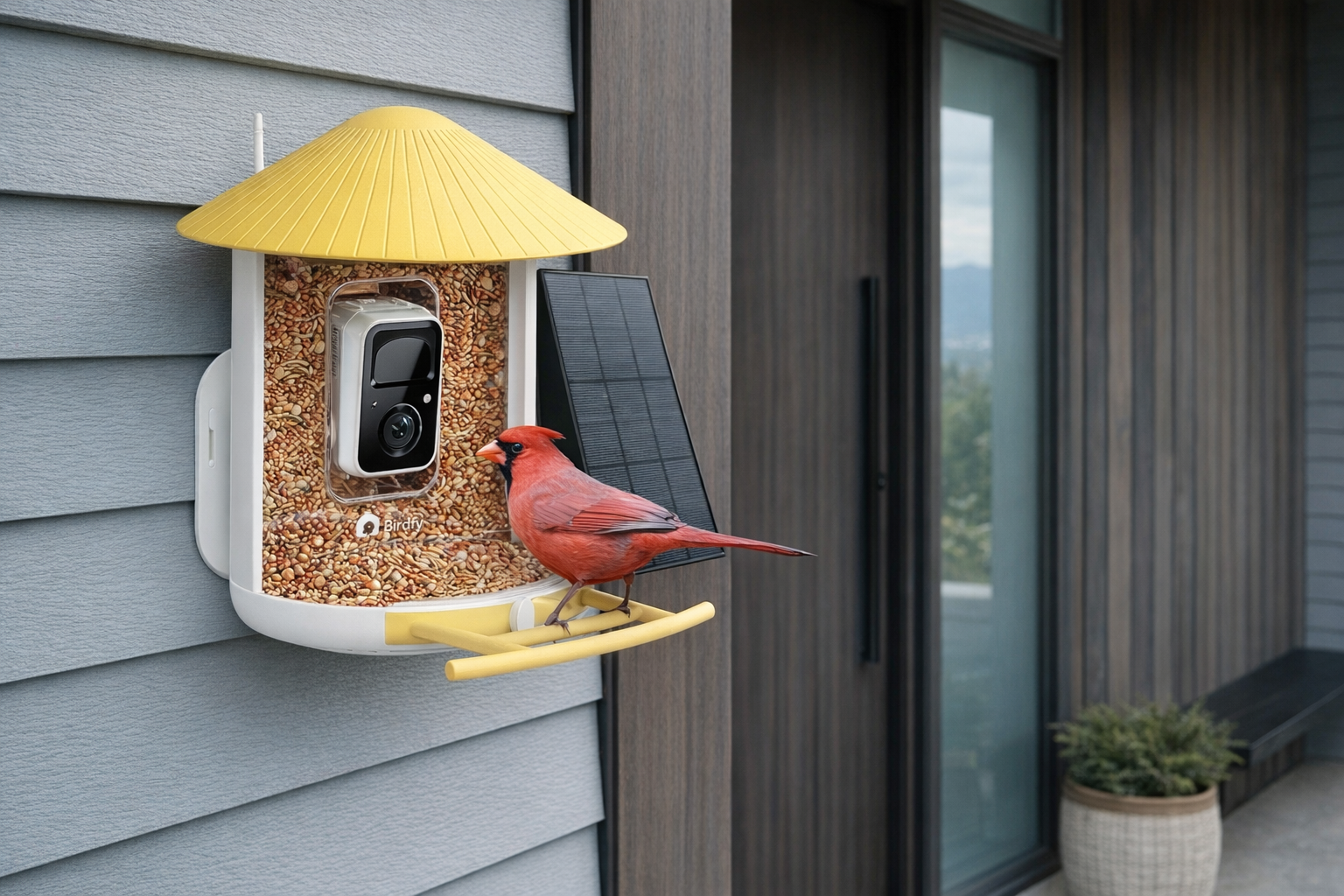
The Netvue Smart Bird Feeder sits in a very specific corner of the outdoor-gadget world: part bird feeder, part security camera, part wildlife-notification machine. It is not just a decorative feeder with a lens bolted onto it. The point is to let you see visiting birds up close on your phone...
The Netvue Smart Bird Feeder sits in a very specific corner of the outdoor-gadget world: part bird feeder, part security camera, part wildlife-notification machine. It is not just a decorative feeder with a lens bolted onto it. The point is to let you see visiting birds up close on your phone, capture clips automatically, and, depending on the plan you choose, get some level of AI help identifying what landed there. That sounds charming, and often it is. But it also helps to strip away the marketing glow and ask the obvious questions: how useful is the camera, what does the AI actually add, and what extra work comes with hanging electronics outside and filling them with bird seed?
This is not a hands-on review. Nothing here is based on personally testing the product. Instead, this is a plain-English explainer built around the listing details, the Birdfy category more broadly, and what these camera feeders usually imply in real use. If you are curious about whether a smart bird feeder is a genuinely fun backyard gadget or just another subscription-shaped novelty, this is the calmer version of that conversation.
Quick snapshot
| Question | What the Netvue Smart Bird Feeder actually is |
|---|---|
| Category | Outdoor & Garden |
| Made by | NETVUE |
| Typical price | ~$209 CAD (listing at the time of writing — verify current pricing) |
| Rating signal | 4.4/5 on the source listing |
| Best for | Backyard birdwatchers, gift buyers, retirees, families who want wildlife alerts on their phone |
| Skip if | You dislike app-dependent gadgets, do not want another outdoor camera, or will not keep up with seed refills and cleaning |
Pro tip: Buy this as a birdwatching gadget first, not as a smart-home camera. If you would not enjoy cleaning a feeder, adjusting placement, and experimenting with seed to attract different birds, the app features will not rescue it.
What the Netvue Smart Bird Feeder actually is
In plain English, the Netvue Smart Bird Feeder is an outdoor bird feeder with an integrated camera system that sends bird visits to your phone. The appeal is obvious: instead of spotting a chickadee from the kitchen window for three seconds, you get a close-up image or clip, often with an alert and possibly an AI species suggestion depending on the Birdfy software tier. It is basically a feeder that turns casual bird traffic into a stream of little wildlife notifications.
That blank description block is unusual, but the product itself is still easy to place. Netvue's Birdfy line is built around the same basic promise competitors like the Bird Buddy Smart Bird Feeder have popularized: hang a feeder outside, connect it to Wi‑Fi, and let the camera do the patient watching for you. The difference is not that one is "magic" and the other is not. It is more about ecosystem style, app experience, add-ons, and how much you are willing to accept subscriptions and cloud processing as part of the package.
What matters most is setting expectations correctly. This is not a wildlife camera trap for deep woods use, and it is not a replacement for a proper home-security camera either. It is a feeder designed to create a better view of birds that choose to land on it. If birds are not visiting, or if the feeder is placed badly, the smart parts have nothing to work with. That is a more honest way to think about it than "AI birdwatching."
Key features at a glance
- Integrated camera bird feeder design for close-up views of visitors
- Phone-connected alerts and live viewing through the companion app
- Automatic capture of bird photos or videos when activity is detected
- AI bird identification angle through the Birdfy ecosystem, depending on the current software offering
- Outdoor placement for decks, gardens, fences, or yards with good visibility
- Gift-friendly concept for people who enjoy birdwatching but do not want binoculars in hand all day
How the Netvue Smart Bird Feeder actually works
The mechanism is simple, even if the marketing makes it sound more exotic. First, it is still a bird feeder. You fill it with seed, mount or hang it somewhere birds feel comfortable approaching, and wait for traffic. The smart part comes from the built-in camera and app connection, which are there to capture visits and push them to your phone rather than making you stand by the window.
A typical camera feeder like this works in three layers. First, the feeder attracts birds the old-fashioned way: location, food, and consistency. Second, motion or presence triggers the camera to record or snapshot activity. Third, the app organizes those captures, sends notifications, and may layer on bird-recognition features through cloud processing. That last part is where the "AI" language usually enters. In practice, AI bird ID is best treated as a convenience tool, not as a field guide that never makes mistakes.
The most important technical dependency is Wi‑Fi. A smart bird feeder is only "smart" if it can connect reliably from wherever you mount it. If your router barely reaches the back fence, the experience will be worse than the listing suggests. And unlike a normal feeder, this product also adds power management, app setup, firmware updates, and weather exposure to the equation. That does not make it a bad idea. It just means it belongs closer to the smart-camera world than to the world of purely passive garden décor.
There is also a subtle but important distinction between capturing birds and identifying birds. Capturing is the hardware job: lens, motion detection, image quality, and outdoor reliability. Identifying is the software job: app interface, cloud classification, and whatever subscription model Birdfy is using at the time you buy. People tend to blend those together, but they are separate. You might love the camera and feel lukewarm about the AI, or vice versa.
A realistic "day in the life" with Netvue Smart Bird Feeder
Because this is an informational piece, the examples below describe what the listed concept and category imply — not a verified test log.
- Morning. You get a phone alert while making coffee because a bird landed at the feeder shortly after sunrise. Instead of squinting through the window, you open the app and watch a short clip or live view. This is the basic promise of the product, and for many buyers it is the whole reason to own one.
- Midday. A second visitor shows up, and the app sorts another image into your feed. If AI bird ID is enabled in your setup, the system may suggest a species. That can be genuinely useful for casual birdwatchers, though it is wise to treat suggestions like an assistant, not a final ruling.
- Afternoon. You notice fewer alerts than expected, so you check placement. Maybe the feeder is too exposed, too close to constant foot traffic, or the seed mix is not attracting the local birds you hoped for. This is where smart feeders become more like backyard projects than plug-and-play gadgets.
- Evening. You review the day's captures, save a few favourites, and realize the feeder also needs attention as a physical object. Seed levels need topping up, debris needs clearing, and the camera view needs to stay unobstructed. That maintenance loop is part of the ownership experience whether the product page emphasizes it or not.
Who the Netvue Smart Bird Feeder is actually for (and who it isn't)
Great fits
- People with a visible yard, deck, or garden who already enjoy feeding birds and want closer views than a window can offer.
- Gift buyers shopping for a parent or grandparent who loves backyard wildlife and is comfortable using a phone app.
- Families with kids who are curious about nature and would enjoy seeing bird visits show up as little event notifications.
- Apartment or condo residents with a suitable balcony setup, strong Wi‑Fi reach, and building rules that allow feeders.
- Casual birdwatchers who are interested in AI ID as a starting point, not as a replacement for their own curiosity.
Poor fits
- Anyone hoping this will work like a set-it-and-forget-it decorative feeder with no maintenance.
- Households with weak outdoor Wi‑Fi coverage or no interest in troubleshooting connected devices.
- Buyers who dislike subscriptions on principle, especially if bird-recognition features are central to the appeal.
- People who want a serious security camera for property monitoring; this is aimed at birds, not porch protection.
- Anyone unwilling to clean feeders regularly, which matters both for hygiene and for keeping the camera view usable.
Practical trade-offs
Bird attraction and placement
This is the least glamorous part of the product, but it is the most important. A smart bird feeder does not create bird activity out of nowhere. It improves your view of bird activity if your location, feeder placement, and seed choice are working. If you mount it in a noisy, exposed spot with lots of human traffic, birds may avoid it. If you put it too close to cover where predators lurk, that can also reduce visits.
There is some trial and error here. You may end up moving it, changing feed, or waiting a couple of weeks for birds to treat it as normal. Evaluate it like gardening, not like installing a smart bulb. The feeder is only as interesting as the birds willing to use it.
Cleaning and ongoing maintenance
A regular feeder needs upkeep. A camera feeder needs the same upkeep, plus extra care for the lens and electronics. Seed husks, dust, droppings, rain spotting, and spider webs can all interfere with the view. If the perch area gets messy, the AI and motion capture become less useful because the camera is now looking through clutter.
This is also where the product becomes less "cute gadget" and more "outdoor object you manage." Filling the seed reservoir is one job. Cleaning for bird health is another. Keeping the camera angle clear is a third. None of that is hard, but it is real work, and it should be part of the buying decision.
Subscriptions, AI, and cloud dependence
The phrase "AI bird ID" sounds more self-contained than it usually is. In products like this, bird identification and advanced app features often depend on the brand's cloud service, not just on the hardware hanging outside. That means the ongoing experience may vary with software updates, account options, and paid plans.
That is not automatically bad. Cloud processing can be smarter than on-device guessing. But it does mean you should separate the $208.79 CAD hardware purchase from the longer-term app ecosystem. If the feeder's camera view is the main attraction, you may be perfectly happy without premium AI features. If species ID is the whole reason you want it, check the current Birdfy terms before buying. That is a more practical mindset than assuming "AI" is permanently included forever.
Where the Netvue Smart Bird Feeder fits in a backyard setup
The best place for this product is not really in the centre of a smart home dashboard. It fits better in a backyard or balcony wildlife setup that already has a few basics in place.
For example, a sensible pairing might look like this:
- A reliable outdoor Wi‑Fi signal, often helped by a mesh system such as eero or Google Nest Wifi Pro
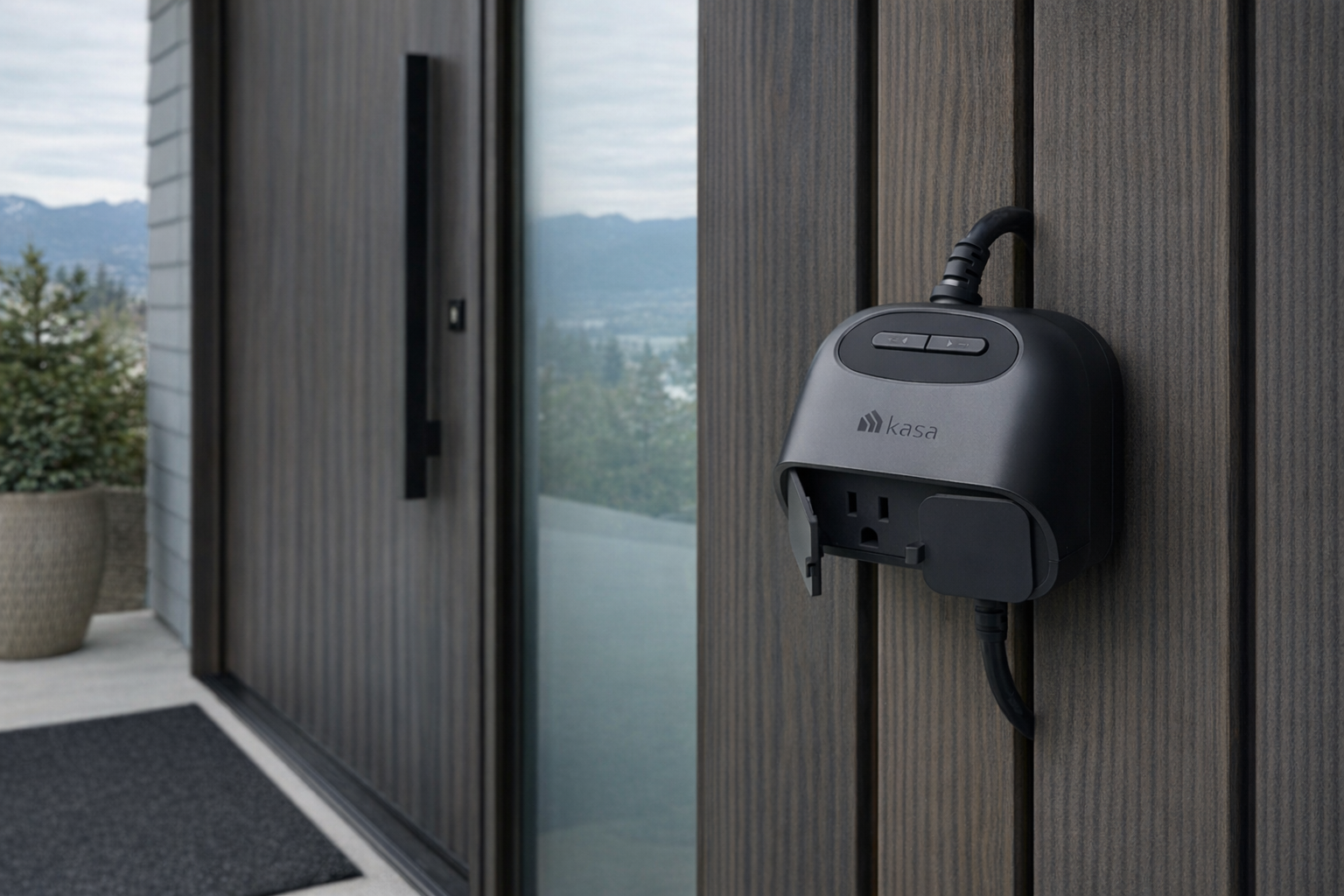
- A standard outdoor smart plug if you are also running nearby garden lighting or a small fountain
- A traditional seed storage bin indoors so refills are easy and dry
- A separate security camera, like a Google Nest Cam Outdoor or Ring Stick Up Cam, if your actual goal is property monitoring
That separation matters. The Netvue Smart Bird Feeder is best treated as a hobby gadget for wildlife enjoyment, not as your backyard surveillance plan. It can absolutely live alongside other outdoor smart gear, but it serves a different purpose. Think delight, not infrastructure.
For colder parts of Canada, there is another practical note: winter can be great for feeder traffic, but outdoor electronics and batteries also have a harder time in freezing weather. Check the current spec page for weather and operating guidance before assuming year-round performance will be identical in January and July.
The buying decision, in plain terms
Before buying the Netvue Smart Bird Feeder, three questions usually bring the answer into focus:
- Do you actually want to feed birds regularly, or do you mostly like the idea of getting nature clips on your phone? If the feeder itself feels like a chore, the novelty may fade fast.
- Is your outdoor Wi‑Fi good enough where the feeder will live? If the connection is weak at the deck rail or garden post, the smart features will feel flaky no matter how good the app is.
- Are you comfortable paying roughly $209 CAD for a feeder-camera hybrid, and possibly more over time for app features? This is a lifestyle purchase, not a practical household essential.
Three yeses make it a sensible buy. If even one of those is a strong no, a simple feeder or a pair of binoculars may be the better call.
Got Questions About the Netvue Smart Bird Feeder? Let's Clear Things Up.
Is this a hands-on review?
No. This is an informational explainer based on the product listing, the Birdfy category, and what these camera-enabled feeders generally deliver. It is meant to help you think through fit, not to stand in for direct testing.
What does AI bird ID actually mean here?
In this category, AI bird ID usually means the app attempts to recognize the species shown in captured images or clips. That can be convenient for casual users, but it should be treated as a helpful suggestion system rather than a perfect expert birder. Accuracy can vary by lighting, angle, region, and software plan.
Does the Netvue Smart Bird Feeder work without birds actually visiting it?
Not in any meaningful way. The camera can be connected and ready, but the whole experience depends on birds landing at the feeder. Placement, seed choice, local species, and patience matter more here than they do with most indoor smart gadgets.
Do I need to clean a smart bird feeder more carefully than a normal one?
Yes, realistically you do. You still have the normal hygiene responsibilities of a feeder, but you also need to keep the camera view clear of seed dust, debris, and weather grime. If you neglect that, both the bird-health side and the camera side get worse.
Where can I verify the current listing or buy it?
The easiest place to verify the current product page, price, and any updated Birdfy subscription details is the retailer listing here: Netvue Smart Bird Feeder on Amazon. That is also where you should confirm current availability, since smart-garden gadgets often shift in price over time.
Is it better than the Bird Buddy Smart Bird Feeder?
That depends on what you care about. The Bird Buddy Smart Bird Feeder is the obvious name-brand comparison because it targets the same use case: app-connected bird visits with AI-style identification features. The real decision usually comes down to ecosystem preference, current pricing, accessory options, and how comfortable you are with each brand's app and subscription approach.
What does it cost in Canada?
At the time of writing, the listed price is about ~$209 CAD. More exactly, the supplied listing price is $208.79 CAD, but retailer pricing can move around, so it is worth checking the current listing before buying.
Where is the Celmin Directory listing for this product?
For a catalog-style view of the same product — structured specs, pros and cons, similar picks, and FAQ — see Netvue Smart Bird Feeder on Celmin Directory.
If you're building a smarter home in Canada and want honest explainers on gadgets worth considering — plus the ones worth skipping — Celmin covers the full catalog without the marketing theater. More reviews, comparisons, and buyer guides at https://celmin.ca.


Discussion
Sign up or sign in to join the conversation.