

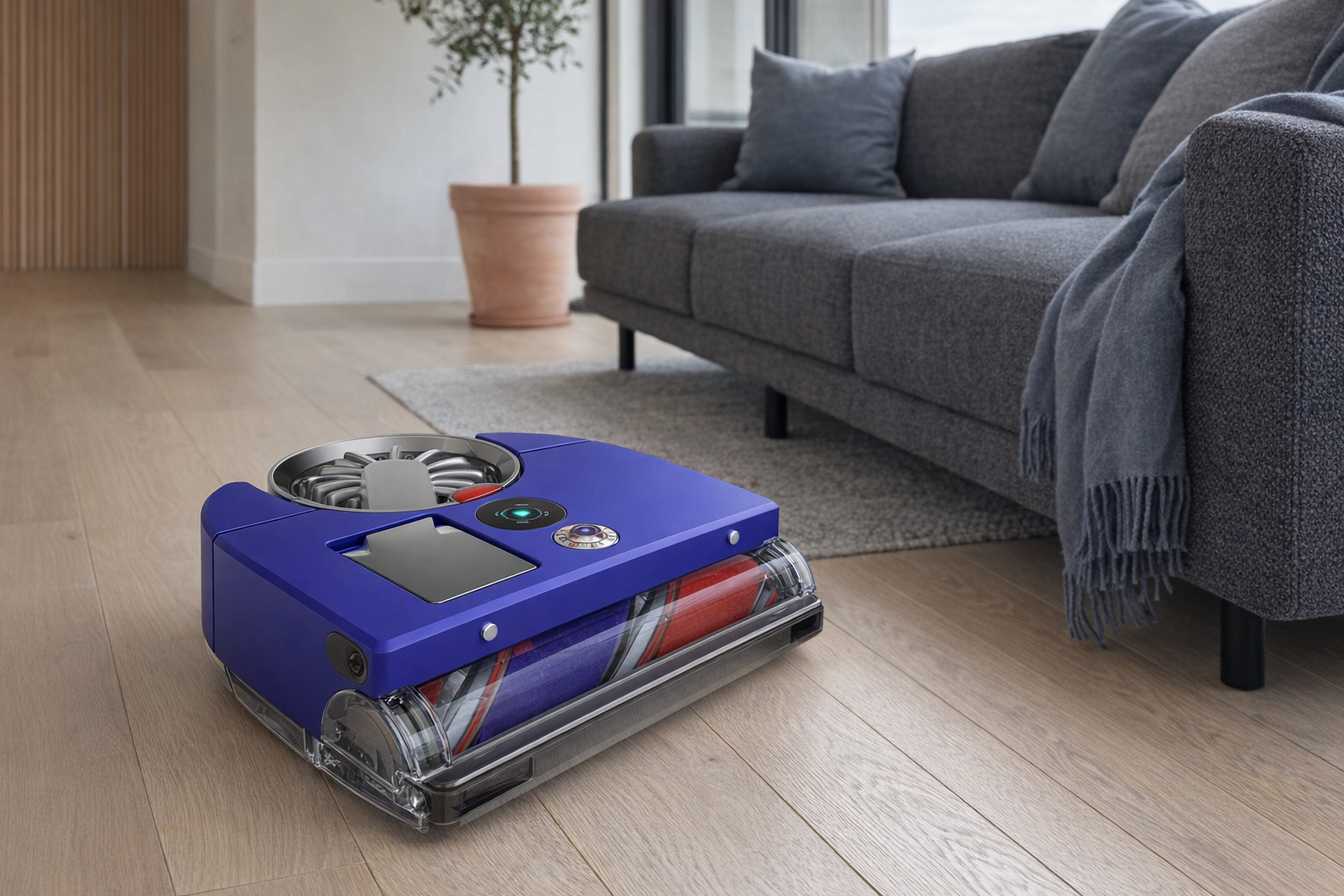
The Dyson VisNav Robot Vacuum sits in an awkward but interesting corner of the robot-vac market. It comes from a brand better known for upright vacuums, cordless sticks, and air purifiers than for autonomous floor cleaners. That matters, because people tend to bring strong assumptions to a Dy...
The Dyson VisNav Robot Vacuum sits in an awkward but interesting corner of the robot-vac market. It comes from a brand better known for upright vacuums, cordless sticks, and air purifiers than for autonomous floor cleaners. That matters, because people tend to bring strong assumptions to a Dyson robot: high suction, premium pricing, unusual engineering, and at least a little marketing drama. The VisNav looks like Dyson's attempt to bring its vacuum-first identity into a category usually dominated by brands like iRobot Roomba and Roborock.
This article is not a hands-on review. Nothing here is based on personally using the Dyson VisNav Robot Vacuum in a real home. The goal is simpler and more useful: explain what this product appears to be, where it fits in the robot-vacuum market, what the listed pricing and category imply, and who should think carefully before buying one. If you are trying to figure out whether this is a serious home-cleaning tool or just an expensive Dyson badge on a robot, this is the calmer breakdown.
Quick snapshot
| Question | What the Dyson VisNav Robot Vacuum actually is |
|---|---|
| Category | Robot Vacuums |
| Made by | Dyson |
| Typical price | ~$400 CAD (listing at the time of writing — verify current pricing) |
| Rating signal | 3/5 on the source listing |
| Best for | Dyson-curious buyers, homes that want automated vacuuming, people comparing premium-brand robots at a discount-looking price |
| Skip if | You want a proven value leader, deep public track record, or certainty around features before buying |
Pro tip: Treat the Dyson VisNav Robot Vacuum like a specialized floor-maintenance gadget, not a full replacement for a good cordless vacuum. Robot vacuums handle routine upkeep well; they are rarely your one and only cleaner.
What the Dyson VisNav Robot Vacuum actually is
In plain English, the Dyson VisNav Robot Vacuum is a self-driving floor vacuum meant to patrol your home and pick up everyday dust, crumbs, hair, and debris without needing you to push it around. The "robot" part is obvious, but the more important question is what kind of robot it is. Dyson tends to frame products around cleaning performance first, so the VisNav is best understood as an autonomous vacuum cleaner with Dyson branding and navigation tech layered on top — not as a broad all-in-one housekeeping machine.
Because no feature list or formal description was supplied in the product data here, it is worth being cautious. The name itself strongly suggests a vision-led navigation system — "VisNav" reads like shorthand for visual navigation — which would place it in the same general design conversation as camera-guided robot vacuums that map rooms and avoid getting lost. That usually means a product that is trying to clean in a more structured way than older bounce-around robots.
The most obvious comparison is the iRobot Roomba j7, which is one of the better-known camera-guided robot vacuums in the mainstream market. The Dyson VisNav Robot Vacuum appears to target a similar buyer — someone who wants automated, mapped cleaning rather than random movement — but with Dyson's reputation for vacuum engineering as the selling point. Whether that translates into better real-world results is something the listing alone cannot prove, but it is a fair lens for understanding the product.
Key features at a glance
- Robot vacuum form factor for automated floor cleaning
- Dyson-branded cleaning approach aimed at buyers who already trust the company for vacuums
- Navigation-focused positioning implied by the "VisNav" naming
- Hands-off routine cleaning for dust, crumbs, and daily maintenance
- App-connected, mapping-style category expectations typical of modern robot vacuums
- Premium-brand product at a listed price of about $400 CAD, which is notable in a segment that can go much higher
How the Dyson VisNav Robot Vacuum actually works
A robot vacuum like the Dyson VisNav Robot Vacuum generally works by combining three things: a motorized suction system, a brush system that pulls debris inward, and a navigation stack that helps it move through rooms without wandering aimlessly. Dyson's whole identity in floorcare is built around airflow and dust pickup, so it is reasonable to assume the cleaning head and suction path are central to how this robot is pitched, even more than the software.
The "VisNav" name suggests the navigation side is not an afterthought. In this class of product, that usually means the robot uses a camera or visual sensors, paired with onboard processing and app-based mapping, to understand walls, furniture, and room layout. That matters because robot vacuums live or die on navigation. Strong suction sounds impressive on a product page, but if the robot misses half the room, gets stuck under dining chairs, or fails to return reliably, the cleaning performance becomes academic.
In practical terms, the workflow for a robot vacuum in this category usually looks something like this:
- Mapping or initial orientation. The robot learns the shape of the space, either on a first run or gradually over several cycles.
- Routine cleaning runs. Once it understands the layout, it follows a more deliberate route instead of just pinballing around.
- Edge and obstacle handling. It tries to get close to baseboards, chair legs, and furniture without constantly tangling itself.
- Docking and recharge. It returns to its base when the battery is low or the cleaning job is done.
That all sounds standard because it is standard now. The real question is not whether the Dyson VisNav Robot Vacuum belongs to that modern robot-vac template — it almost certainly does — but whether Dyson has done enough to justify choosing it over more established robot-vac specialists. A 3/5 rating signal on the source listing suggests some caution is warranted. That does not mean the product is bad; it means you should read the current listing carefully and not assume the Dyson logo settles the matter.
A realistic "day in the life" with Dyson VisNav Robot Vacuum
Because this is an informational explainer, the scenario below is based on what this category normally does and what the product naming and listing imply — not on first-hand use.
- Morning. The Dyson VisNav Robot Vacuum runs on a schedule while everyone is getting ready or out of the house. It does the daily pass through the kitchen and main hallway, picking up breakfast crumbs, tracked-in grit, and yesterday's dust before it has time to build up.
- Midday. In a home office or condo, it makes a second targeted pass through high-traffic areas. This is where mapping-style robot vacuums usually make more sense than random ones: the robot should be able to focus on rooms that actually need attention instead of wasting battery circling the same table.
- Afternoon. Pet hair, entryway debris, and little dry messes are the classic robot-vacuum workload. A unit like this is meant to keep the visible layer of dirt under control so you do not have to pull out a full-size vacuum every day.
- Evening. The robot returns to its dock and waits for the next cycle. If the home has chair-dense dining areas, rugs with fringes, floor clutter, or charging cables left out, this is also when the limits of robot cleaning tend to show up. These machines reward tidy floors.
Who the Dyson VisNav Robot Vacuum is actually for (and who it isn't)
Great fits
- People who already like Dyson vacuums and want to stay within the brand for automated cleaning.
- Busy households that need maintenance cleaning, not deep-clean perfection, between manual vacuum sessions.
- Condo owners and smaller-home buyers looking at a roughly $400 CAD robot vacuum and wondering if a premium brand changes the value equation.
- Parents of young kids who deal with constant dry messes like cereal, crumbs, and hallway dust.
- Pet owners who want help staying ahead of fur on hard floors, provided they still keep a stronger manual vacuum for corners and upholstery.
Poor fits
- Buyers who want maximum feature transparency before purchase. With limited information in the supplied data, this is not the easiest product to assess from a distance.
- Anyone expecting a robot vacuum to replace a stick vacuum for stairs, sofas, corners, and car interiors.
- Homes with lots of floor clutter, cords, lightweight mats, and tricky furniture legs that challenge robot navigation.
- Value-first shoppers who are willing to buy from robot-vacuum specialists like Roborock or iRobot based on feature-for-price strength alone.
- People who see a 3/5 listing signal and know they would worry about every compromise afterward.
Practical trade-offs
Navigation and floor prep
The promise of a robot vacuum is convenience, but that convenience depends heavily on your floors being reasonably robot-friendly. Even a smart-looking model can be slowed down by charging cables, kids' toys, thin rug corners, and dining chair mazes. If your home regularly has that kind of clutter, the Dyson VisNav Robot Vacuum may still help, but it will not feel magical. Evaluate it like a scheduled helper, not a tiny butler.
Bin size and maintenance reality
Robot vacuums are small, and small bodies mean small dust bins. Even without an exact litre or millilitre figure in the listing data, this category always involves more frequent bin-emptying than a full upright or cordless vacuum. If you have pets or a lot of shedding hair, that maintenance rhythm matters. A robot can save labour overall while still asking for regular attention, and that is a more honest expectation than many product pages set.
Long-term support and app dependence
Modern robot vacuums are software products as much as cleaning products. Scheduling, room maps, firmware updates, and behaviour tweaks usually live in the app. That means long-term ownership depends partly on Dyson continuing to support the software side, not just the motor and battery side. With an established vacuum company entering a category where app polish matters a lot, that is something to watch carefully before buying.
Where the Dyson VisNav Robot Vacuum fits in a smart home
The Dyson VisNav Robot Vacuum makes the most sense as part of a layered cleaning setup, not as the centrepiece of your home automation. A realistic stack looks like this:
- Robot vacuum: the Dyson VisNav Robot Vacuum handles the daily or every-other-day floor pass.
- Cordless vacuum: something like a Dyson V8, Dyson V15, or another stick vacuum handles stairs, corners, upholstery, and quick spot cleans.
- Smart speaker ecosystem: Amazon Alexa, Google Home, or Apple Home handles schedules, reminders, and possibly voice-triggered cleaning routines if supported through Dyson's app ecosystem.
- Air quality support: in dusty homes, pairing routine floor cleaning with a purifier can make more practical sense than constantly chasing dust by hand.
That layered approach is usually the right one. Robot vacuums are best at keeping the floor from getting bad. They are not best at making the home deeply clean in one pass. In other words: let the robot do the boring maintenance work, and keep a manual vacuum for the jobs that still need a human.
The buying decision, in plain terms
Before buying the Dyson VisNav Robot Vacuum, three questions do most of the useful work:
- Do you want maintenance cleaning or full vacuum replacement? If you want the floors to stay generally cleaner between manual sessions, this category makes sense. If you want one machine to do stairs, edges, rugs, couches, and baseboards perfectly, it does not.
- Are you buying the Dyson name, or the current robot-vac value? Brand confidence can be worth something, but only if the actual feature set, reliability, and support hold up. In robot vacuums, established specialists still matter.
- Does the current listing give you enough confidence at about $400 CAD? That price is not outrageous for a robot vacuum, but it is also not low enough to justify buying blind. A middling rating signal should push you to verify today's specs and reviews, not just click checkout.
If your answer is yes to routine automation, yes to Dyson as a floorcare brand, and yes to doing a bit more homework first, the Dyson VisNav Robot Vacuum is worth considering — cautiously.
Got Questions About the Dyson VisNav Robot Vacuum? Let's Clear Things Up.
Is this a hands-on review?
No. This is an informational explainer based on the product listing data provided, the product name, the price signal, and what is broadly typical in the robot-vacuum category. It is meant to help you frame the product properly before you decide whether to research further.
What does the Dyson VisNav Robot Vacuum actually do?
At its core, it is a robot vacuum that is meant to clean floors automatically on a schedule or by command. The name suggests a navigation-heavy design, likely using visual guidance rather than the old random-bounce style associated with cheaper early robots. The basic job is routine floor maintenance, not full-home deep cleaning.
Is the Dyson VisNav Robot Vacuum a replacement for a cordless Dyson?
Not really. Robot vacuums and cordless stick vacuums solve different problems. The robot handles frequent background cleaning; the cordless vacuum handles stairs, corners, upholstery, car interiors, and sudden messes that need immediate manual control.
Why does the 3/5 rating signal matter?
Because robot vacuums are convenience products, and convenience falls apart quickly when navigation, app behaviour, docking, or reliability is inconsistent. A 3/5 on the source listing is not automatically a dealbreaker, but it is enough to justify slowing down and reading the latest buyer feedback closely.
Where can I verify the current listing or buy it?
The source retailer link provided for this product is the Amazon listing here. That is the best place to verify current price, availability, included accessories, and whatever updated feature details Dyson or the seller is currently showing.
Is this better than a Roomba?
Not automatically. The more useful comparison is whether it is better for you than a specific product like the iRobot Roomba j7 or a similarly priced Roborock. Dyson may appeal to buyers who trust its vacuum engineering, but robot-vacuum buyers should still compare mapping, obstacle handling, app quality, support, and maintenance costs.
What does it cost in Canada?
At the time of writing, the listed price is ~$400 CAD. Pricing for robot vacuums can move around a lot with sales, marketplace sellers, and regional stock, so it is smart to verify the latest number on the retailer page before buying.
Where is the Celmin Directory listing for this product?
For a catalog-style view of the same product — structured specs, pros and cons, similar picks, and FAQ — see Dyson VisNav Robot Vacuum on Celmin Directory.
If you're building a smarter home in Canada and want honest explainers on gadgets worth considering — plus the ones worth skipping — Celmin covers the full catalog without the marketing theater. More reviews, comparisons, and buyer guides at https://celmin.ca.


Discussion
Sign up or sign in to join the conversation.