
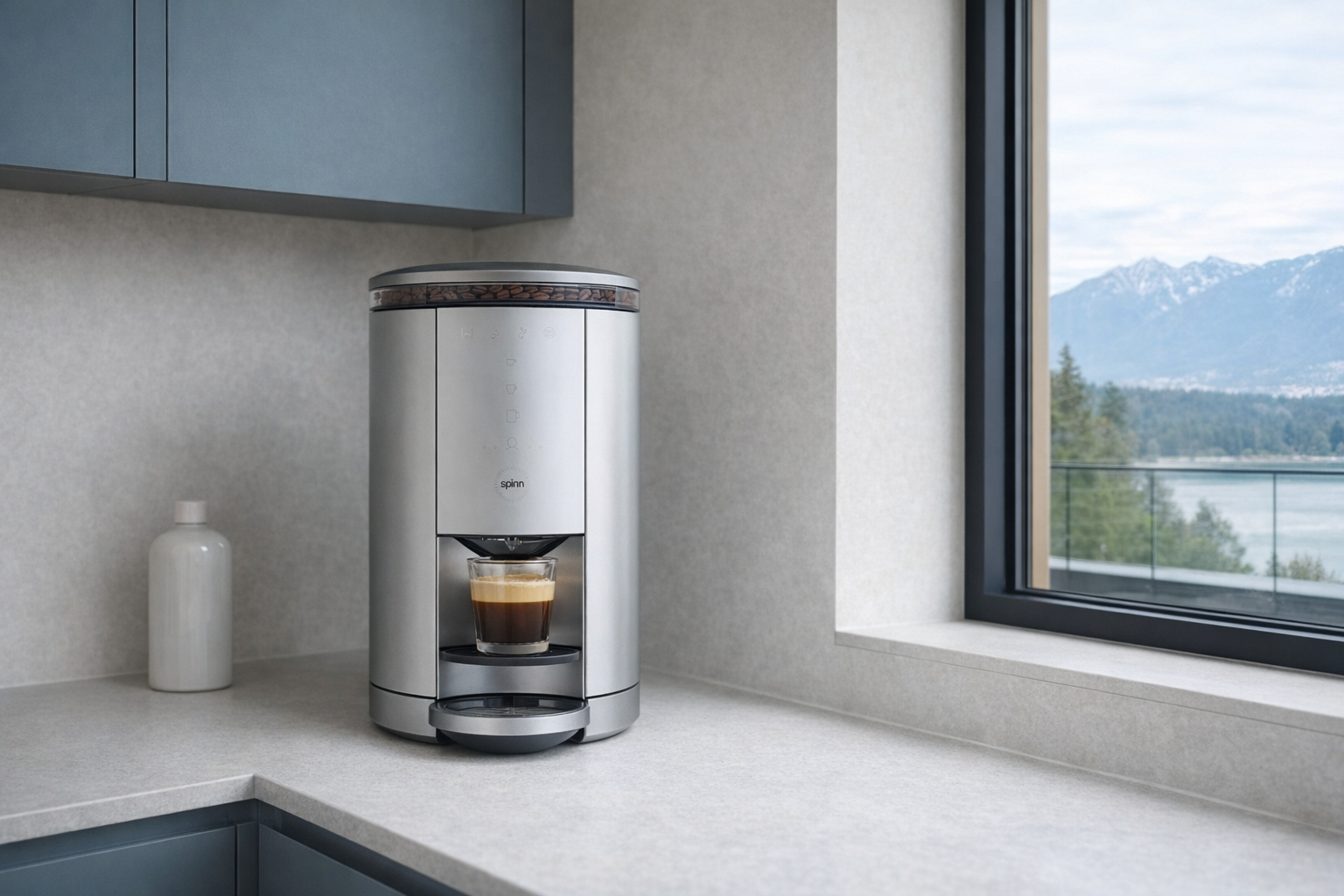
The SPINN Espresso & Coffee Machine sits in an interesting corner of the coffee world: not quite a traditional espresso machine, not quite a pod brewer, and not just another bean-to-cup box with a touchscreen. It is a connected countertop coffee maker built around centrifugal brewing at 4,5...
The SPINN Espresso & Coffee Machine sits in an interesting corner of the coffee world: not quite a traditional espresso machine, not quite a pod brewer, and not just another bean-to-cup box with a touchscreen. It is a connected countertop coffee maker built around centrifugal brewing at 4,500 RPM, with a built-in grinder, app control, and a pitch that sounds very modern: fresh-ground espresso, drip coffee, and cold brew from one machine, fast, with no pods and no paper filters. That combination makes people curious for a reason. It also makes the usual "is it worth it?" question more complicated than the product page suggests.
This article is not a hands-on review. Nothing here is based on personally using the machine. Instead, the goal is to look at what the SPINN Espresso & Coffee Machine appears to be from its listing details, and more importantly, what owning one is likely to cost over time — including beans, cleaning, electricity, possible app dependence, and the simple math of whether it beats a cheaper espresso setup. If you are trying to decide between this and a basic Nespresso, a drip machine, or a simpler grinder-plus-brewer combo, this is the calmer breakdown.
📺 Watch: Product demo video available on the retailer page.
Quick snapshot
| Question | What the SPINN Espresso & Coffee Machine actually is |
|---|---|
| Category | Smart Kitchen |
| Made by | SPINN |
| Typical price | ~$299 CAD (listing at the time of writing — verify current pricing) |
| Rating signal | 4.7/5 on the source listing |
| Best for | People who want fresh-ground coffee variety without pods, and who like app-based control |
| Skip if | You want old-school manual espresso, the cheapest possible cup, or a totally offline machine |
Pro tip: If you are considering the SPINN mainly to save money, compare it against a good grinder plus a basic drip machine, not against café prices. The café comparison flatters almost every home brewer; the real question is whether SPINN beats simpler home gear once the novelty wears off.
What the SPINN Espresso & Coffee Machine actually is
In plain English, the SPINN Espresso & Coffee Machine is a connected bean-to-cup brewer that tries to collapse several machines into one. Instead of asking you to buy pods, tamp grounds, or swap between a drip brewer and a separate espresso maker, it uses whole beans, grinds them just before brewing, and then relies on a 4,500 RPM spinning brew system to produce different drink styles. That matters because the ownership case for SPINN is not just convenience. It is also about avoiding recurring pod waste and keeping your coffee setup physically small.
Smart WiFi-enabled espresso and coffee machine using centrifugal brewing technology at 4,500 RPM. Grinds whole beans to precise consistency seconds before brewing. Makes espresso, drip coffee, and cold brew — all in 60 seconds. Zero waste, no pods or disposable filters.
That description is the core of the pitch, and it is fairly specific. SPINN is saying the machine handles the grind, the brew, and the drink variation, while also reducing ongoing waste by skipping capsules and paper filters. Compared with a Nespresso Vertuo, which is probably the most obvious mainstream rival in spirit, SPINN looks like the more flexible and arguably more honest long-term system: you bring your own beans, not proprietary pods. On the other hand, Nespresso's model is simpler and usually more predictable day to day. SPINN asks you to accept a bit more machine complexity in exchange for lower waste and more control.
Key features at a glance
- Centrifugal brewing technology at 4,500 RPM for multiple drink styles
- Built-in grinder that grinds whole beans just before each brew
- Espresso, drip coffee, cold brew, and more from one machine
- WiFi + Bluetooth connectivity for remote brewing through the Spinn App
- Zero-waste approach with no pods or disposable filters
- Adjustable brew strength and parameters through the app
How the SPINN Espresso & Coffee Machine actually works
The basic idea is simpler than the marketing language makes it sound. You load whole beans into the machine, choose a drink, and SPINN grinds those beans fresh before brewing. Instead of a pod system or a manual portafilter process, the machine uses its spinning brew mechanism to extract different coffee styles. The listing says it can produce espresso, drip coffee, and cold brew, all in 60 seconds, which suggests a system designed more for speed and consistency than for the ritual side of coffee making.
There are really three layers to how this machine works as a product people live with:
- Bean-to-cup automation. The grinder handles the dosing and grind step automatically, which is one of the biggest quality upgrades over capsule machines. Fresh grinding matters more to flavour than many "smart" features do.
- Brew-profile control. The app reportedly lets you adjust strength and other parameters, which is useful if one person wants a stronger espresso-style shot while another wants a milder cup.
- Connected convenience. WiFi and Bluetooth let you trigger brewing remotely and manage recipes in the app. That is convenient, though it also means part of the machine's personality depends on software staying maintained.
The 4,500 RPM centrifugal piece is what makes SPINN distinct. Traditional espresso depends on pressure; drip depends on gravity and contact time; cold brew normally depends on a long steep. SPINN appears to use spinning force to accelerate extraction and create different results from the same platform. That's clever, and probably a better fit for people who want a fast, compact all-rounder than for coffee purists chasing the exact behavior of a prosumer espresso machine.
For ownership cost, the mechanism matters because it changes what you are buying into. You are not just buying a coffee maker. You are buying a grinder, a brewer, and a connected recipe system in one body. That can be good value if you actually use the range. If you only ever make one plain morning coffee, a simpler machine may do the same job with fewer things to clean and fewer things to go wrong.
A realistic "day in the life" with SPINN Espresso & Coffee Machine
Based on the listed features and the way machines like this are typically used, a realistic day might look something like this:
- Morning. You load whole beans, open the app or press a preset, and the machine grinds and brews a fast coffee in roughly 60 seconds. This is where SPINN's convenience case is strongest: fresher than pods, less fiddly than manual espresso.
- Midday. Someone else in the house wants a different style — maybe a lighter drip-style cup rather than a short, stronger espresso. The adjustable brew settings are the practical feature here, not the "smart" branding.
- Afternoon. You use the machine's broader recipe range for a colder drink style. The appeal is not that it replaces every café drink on earth, but that one countertop machine can shift formats without you keeping separate brewers around.
- Evening. You empty grounds, wipe down what needs wiping, and think about whether the convenience still feels worth the maintenance. That is the part product pages rarely emphasize, but it is part of ownership just as much as the first cup.
Who the SPINN Espresso & Coffee Machine is actually for (and who it isn't)
Great fits
- People replacing a pod machine and wanting lower per-cup costs without going fully manual.
- Small households that want one machine for espresso-style drinks and regular coffee, rather than multiple brewers.
- App-friendly users who already control appliances from a phone and will actually use recipe adjustments.
- Buyers looking at the refurbished price around $299 CAD and thinking in terms of total system cost, not luxury coffee theatre.
- Households that care about reducing capsule waste and disposable filter use.
Poor fits
- Espresso hobbyists who enjoy dialing in grind size, tamping, and pressure like a traditional machine.
- People who just want the cheapest possible morning coffee; a plain drip maker still wins that contest.
- Anyone skeptical of connected appliances and cloud-linked features in the kitchen.
- Buyers who rarely switch drink styles and mostly drink one basic cup per day.
- Households that are bad about routine cleaning; bean-to-cup machines punish neglect more than simple kettles or French presses do.
Practical trade-offs
Ongoing coffee cost
This is where SPINN can look better than pod machines, but only if you compare honestly. With SPINN, your ongoing coffee cost is mostly beans. With something like Nespresso Vertuo, you are paying for proprietary capsules every time. That usually makes bean-based brewing cheaper per cup over time, sometimes dramatically so, depending on the beans you buy.
But there is a catch: beans are not automatically "cheap." If you start buying premium specialty beans for every cup, your savings versus pods may shrink. Against a basic drip machine using the same beans, SPINN does not magically cut ingredient cost. Its economic case is strongest against capsule systems, not against simple brewers.
Cleaning and maintenance
"Zero waste" does not mean "zero upkeep." No pods and no disposable filters is good news for garbage output, but the machine still has to deal with oils, grounds, moisture, and scale. A built-in grinder also means more surfaces where stale coffee residue can accumulate over time.
That matters because maintenance has a real ownership cost, even when it is not billed monthly. It costs time, attention, and eventually replacement parts or service if the machine is neglected. Evaluate SPINN like a compact automatic coffee appliance, not like a foolproof kettle. Any machine combining grinder + brewer + connected features has more to maintain than a plain drip brewer.
App dependence, support, and warranty reality
The WiFi and Bluetooth features are part of the appeal, but they also create a softer long-term risk. A connected coffee machine only stays "smart" if the app remains supported and the company keeps maintaining the experience. Even if the core brewing functions continue to work locally, recipe control and remote-start convenience may depend on software staying alive.
The listing here is for a product on SPINN's own retailer page, and the price suggests a refurbished configuration. That can be excellent value, but it also means warranty terms, return conditions, and support details are worth reading carefully on the current product page. A refurbished smart appliance can be a bargain, but only if you are comfortable with the support model behind it.
Where the SPINN Espresso & Coffee Machine fits in a smart kitchen
SPINN makes the most sense in a kitchen that already leans toward convenient, connected appliances but still wants better raw coffee economics than pod systems. Think of it as fitting between a basic brewer and a full coffee hobby setup.
A realistic kitchen stack might look like this:
- SPINN Espresso & Coffee Machine for daily coffee, espresso-style drinks, and quick variety
- A good electric kettle for tea, manual backup brewing, or cleaning tasks
- Smart plugs or a kitchen routine if you like having appliances ready on schedule
- A milk frother if your actual goal is milk-heavy café drinks rather than black coffee
- A simple backup brewer like an AeroPress or French press for power outages, app issues, or when you want less fuss
The key point is expectation-setting. SPINN is not a prosumer espresso centerpiece in the way a Breville Barista Express is. It is closer to a convenience-first smart coffee platform. For busy households, that can be exactly the right compromise. For coffee hobbyists, it may feel like paying extra for automation they did not ask for.
The buying decision, in plain terms
Three questions usually get to the answer pretty quickly with the SPINN Espresso & Coffee Machine:
- Are you replacing pods, or replacing a simple bean setup? If you are replacing Nespresso-style pods, SPINN's bean-based system may save money and reduce waste. If you already own a decent grinder and a basic brewer, the financial case gets weaker.
- Will you actually use more than one brew style? If espresso, drip, and colder coffee options matter to your routine, the all-in-one design has value. If you drink one identical mug every morning, much of SPINN's appeal goes unused.
- Are you comfortable owning a connected appliance with maintenance needs? The app control and automation are part of the convenience, but so are the cleaning duties and software dependence. If that balance sounds annoying rather than helpful, skip it.
If your honest answers are yes, yes, and yes, SPINN looks like a sensible buy at around $299 CAD; if not, a simpler grinder-plus-brewer setup is probably the smarter place to put your money.
Got Questions About the SPINN Espresso & Coffee Machine? Let's Clear Things Up.
Is this a hands-on review?
No. This is an informational explainer based on the listed product details and the broader realities of owning a connected bean-to-cup coffee machine. It is meant to help you understand the likely costs and trade-offs before you dig deeper.
What does it cost in Canada?
At the time of writing, the listed price is ~$299 CAD. That is the listing price provided here, and you should verify the current price before buying because refurbished inventory and promotions can change.
Where can I verify the listing or buy it?
The current retailer link provided for this product is the official SPINN page here. If you are seriously considering it, that page is also the place to confirm the latest pricing, support terms, and any warranty language attached to the refurbished offer.
Does SPINN use pods or paper filters?
According to the listing, no. The machine uses whole beans and is marketed as zero waste, specifically calling out no pods and no disposable filters. That is one of its clearest long-term ownership advantages over capsule systems.
Is the SPINN actually cheaper than Nespresso over time?
Potentially, yes — mostly because whole beans usually cost less per cup than proprietary capsules. But the break-even point depends on how often you drink coffee, what beans you buy, and whether you are comparing SPINN to a pod machine or to a much cheaper drip setup. Against pods, the math is friendlier; against a basic coffee maker, less so.
Can it really replace both espresso and drip coffee machines?
It appears designed to cover both use cases at a convenience level, and the listing says it can produce espresso, drip coffee, and cold brew. The more careful way to say it is this: it may replace multiple machines for people who value speed and flexibility, but it is unlikely to satisfy someone specifically chasing traditional café-style espresso craftsmanship.
Do you need the app to get value from it?
The app is clearly part of the experience because it handles remote brewing and parameter adjustments. Whether you need it depends on how much you care about those features. If you want a coffee machine that feels complete without software, SPINN may not be the most comfortable fit.
Where is the Celmin Directory listing for this product?
For a catalog-style view of the same product — structured specs, pros and cons, similar picks, and FAQ — see SPINN Espresso & Coffee Machine on Celmin Directory.
If you're building a smarter home in Canada and want honest explainers on gadgets worth considering — plus the ones worth skipping — Celmin covers the full catalog without the marketing theater. More reviews, comparisons, and buyer guides at https://celmin.ca.
Discussion
Sign up or sign in to join the conversation.