
The MEATER Plus Smart Wireless Meat Thermometer sits in a useful middle ground in smart kitchen gear: more serious than a cheap instant-read thermometer, but not as intimidating as a full multi-probe barbecue controller with dangling wires everywhere. Its whole pitch is convenience. You inser...
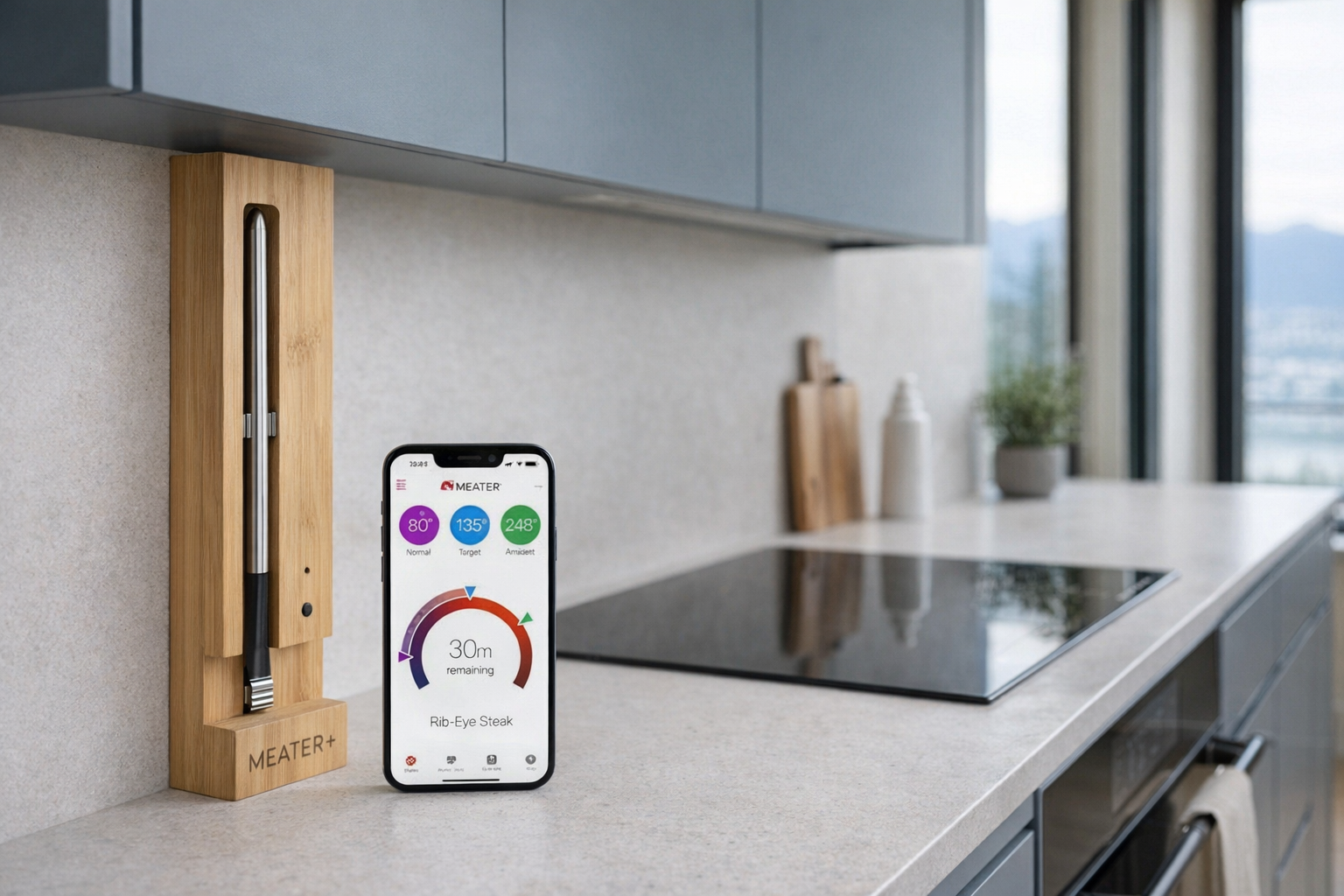
The MEATER Plus Smart Wireless Meat Thermometer sits in a useful middle ground in smart kitchen gear: more serious than a cheap instant-read thermometer, but not as intimidating as a full multi-probe barbecue controller with dangling wires everywhere. Its whole pitch is convenience. You insert a single wireless probe into meat, leave the cable clutter behind, and let the app track both the inside of the food and the cooking environment around it.
This is not a hands-on review. Nothing here is based on personally cooking with the MEATER Plus Smart Wireless Meat Thermometer. Instead, this is a plain-English explainer built around the listed features, the way devices in this category generally work, and the practical questions owners usually have: how to care for the probe, how the app workflow likely fits into actual cooking, and where this product makes the most sense for brisket, poultry, and sous vide.
📺 Watch: MEATER Plus Smart Wireless Meat Thermometer in context
Quick snapshot
| Question | What the MEATER Plus Smart Wireless Meat Thermometer actually is |
|---|---|
| Category | Smart Kitchen |
| Made by | MEATER |
| Typical price | ~$120 CAD (listing at the time of writing — verify current pricing) |
| Rating signal | 4.4/5 on the source listing |
| Best for | Grill and smoker owners, oven-roast cooks, holiday turkey duty, and people who want fewer wires |
| Skip if | You want a cheap basic thermometer, need multiple probes at once, or dislike relying on an app |
Pro tip: Use the MEATER Plus for the cooks where timing uncertainty is expensive — a brisket, a turkey, a thick roast — not for every random chicken breast on a Tuesday. That is where the app guidance and wireless design earn their keep.
What the MEATER Plus Smart Wireless Meat Thermometer actually is
In plain English, the MEATER Plus Smart Wireless Meat Thermometer is a single-probe cooking tool for people who want better temperature tracking without shutting a grill lid on a cable. You insert the probe into the meat, keep the charger nearby as part of the Bluetooth setup, and monitor progress from the MEATER app. The big practical appeal is that it measures two things at once: the internal meat temperature up to 100°C and the ambient cooking temperature up to 275°C. That gives it a broader role than a simple doneness checker.
Truly wireless food & meat thermometer. 100% wire-free with built-in Bluetooth repeater for extended range. Monitor everything from steak and chicken to turkey and roasts with precision through the MEATER app.
That description is fairly direct, and for once the marketing is not wildly overcomplicating the product. This is not a countertop appliance. It is not a smart oven. It is a temperature probe plus charging dock plus phone app, designed to reduce guesswork. Compared with a wired option like the ThermoPro TempSpike, the MEATER Plus leans harder into the polished app-guided workflow and the charger-as-repeater idea. The trade-off is simple: wireless convenience is cleaner, but it also means you are now managing battery, Bluetooth range, and probe care more carefully than you would with an old-fashioned wired lead.
Key features at a glance
- Truly wireless design with no probe cable hanging out of the oven or smoker
- Built-in Bluetooth repeater in the charger for better range than probe-only setups
- Dual sensors for internal meat temperature and ambient temperature at the same time
- Guided Cook System with step-by-step cooking flow, alerts, and estimated finish times
- Fast top-up charging with up to 2 hours of cook time from a 5-minute charge
- Dishwasher safe probe for easier cleanup after greasy or smoky cooks
How the MEATER Plus Smart Wireless Meat Thermometer actually works
At a basic level, the MEATER Plus Smart Wireless Meat Thermometer works by combining a temperature probe with a companion app. One sensor tracks the food internally, while another tracks the cooking environment outside the meat. That matters because doneness is only half the story. If the ambient temperature around the roast or brisket is swinging around, the app's finish-time estimates and guidance have more context to work with.
The probe charges in its dock, and that dock also acts as a Bluetooth repeater according to the listing. That is one of the more important details here. Wireless meat thermometers often sound simpler than they are; the real challenge is not inserting the probe, but keeping a stable connection through oven walls, grill metal, smoker lids, and distance. Using the charger as a repeater is a more honest design than pretending a tiny probe alone can magically cut through every backyard obstacle.
A realistic workflow likely looks like this:
- Charge the probe in the dock. Even a short 5-minute charge is said to provide about 2 hours of cooking time, which is handy for shorter cooks or last-minute grilling.
- Insert the probe properly. With a dual-sensor probe, placement matters. You want the internal sensor in the thickest part of the meat, and the outer part positioned where it can read the surrounding heat accurately.
- Open the app and choose a cook flow. The Guided Cook System is meant to walk you through meat choice, target doneness, and alerts.
- Leave the food alone more often. This is really the promise of the category: fewer lid openings, less poking, less "I think it's probably done."
- Get alerts and estimated finish times. Those estimates will always be estimates, not guarantees, especially on long cooks where weather, meat size, and grill behaviour vary.
For owners, the key thing is to think of the MEATER Plus as a process tool, not just a thermometer. If you only ever want one exact final temperature, a cheaper instant-read model can do that. MEATER's value is in the workflow between raw and ready.
A realistic "day in the life" with MEATER Plus Smart Wireless Meat Thermometer
Based on the listed features and the way these products are normally used, here is what ownership likely looks like across a few common cooking scenarios.
- Morning: brisket prep for a long smoker session. You season the brisket, charge the probe, insert it into the thickest section, and set up a long cook in the app. The ambient sensor helps you keep an eye on smoker conditions while the Guided Cook System gives a rough finish-time estimate that is more useful than pure guesswork.
- Midday: checking progress without opening the lid. Instead of repeatedly lifting the smoker or barbecue lid and dumping heat, you glance at the app to monitor both the internal rise and the surrounding temperature. That is one of the main quality-of-life wins of a wireless probe: less fussing.
- Afternoon: poultry roast in the oven. For a whole chicken or turkey, the app workflow is likely most helpful for nervous cooks who worry about overcooking the breast or undercooking the centre. A single guided readout is calmer than juggling oven temp, bird size, and online charts.
- Evening: sous vide finish and cleanup. For a sous vide cook followed by a sear, the probe can help verify the internal stage before finishing. Afterward, the dishwasher-safe probe is a practical perk, especially after fatty cuts, marinades, or sticky barbecue rubs.
Who the MEATER Plus Smart Wireless Meat Thermometer is actually for (and who it isn't)
Great fits
- Backyard grill owners who are tired of threading wired probes through lids and vents every weekend.
- Smoker users doing brisket, pork shoulder, or ribs-and-roast sessions where constant peeking hurts temperature stability.
- Holiday hosts responsible for a turkey or prime rib and who want clearer timing than "about 20 minutes per pound."
- Apartment or condo cooks using an oven for thick roasts and wanting app alerts without hovering in the kitchen.
- Sous vide hobbyists who like a second layer of temperature confidence before or after a finishing sear.
Poor fits
- People who mainly cook thin cuts fast, like burgers, cutlets, or small steaks, where an instant-read thermometer is often quicker and simpler.
- Budget-focused shoppers who just need safe doneness confirmation and do not care about app workflows.
- Serious pitmasters managing multiple proteins at once, because one probe is one probe; some cooks really need a multi-channel setup.
- Anyone who dislikes app-dependent gear and wants kitchen tools that work the same way every time without pairing, charging, or permissions.
- People rough on equipment who will toss the dock in a drawer, forget to charge it, and expect flawless results anyway.
Practical trade-offs
Probe care
This is the first thing owners should get right. Wireless probes pack sensors, battery, and electronics into a piece of hardware that still has to live inside hot food. Even though the probe is listed as dishwasher safe, "dishwasher safe" is not the same as "indestructible." It still makes sense to avoid banging it around in a cutlery basket, scraping it aggressively with metal tools, or leaving burnt-on residue to harden after every cook.
Probe insertion matters too. On products like this, correct depth is not fussy perfectionism; it is part of how the temperature system works. If the probe is not seated properly in the thickest part of the meat, readings and finish-time estimates can become less useful. Evaluate it like a measuring instrument, not like a fork.
Range and connectivity
The listing's built-in repeater is encouraging, but no Bluetooth cooking device is immune to the realities of metal grills, brick walls, cold weather, and distance. In a Canadian winter, for example, a smoker on the patio and a phone deep inside the house is a tougher signal path than the product page makes it sound. The charger's repeater design helps, but it does not suspend physics.
That means setup discipline matters. Keep the charger positioned intelligently, and do not assume every backyard, balcony, or oven placement will behave the same. Wireless convenience is real, but it works best when the owner respects the limits.
Battery and cook planning
The fast-charge claim — 2 hours from a 5-minute charge — sounds genuinely useful, especially for shorter cooks or forgotten prep. But that does not mean owners should wing a long brisket day on a rushed top-up. Long sessions are exactly where battery confidence matters most.
For roasts, poultry, and smoking sessions, the practical habit is obvious: return the probe to its dock after cleaning, so it is ready next time. If you treat charging as an afterthought, the "wireless" benefit can turn into the most annoying part of ownership.
Where the MEATER Plus Smart Wireless Meat Thermometer fits in a modern kitchen
The MEATER Plus fits best as part of a cooking setup that already includes one or two boring, dependable tools. Think of it this way:
- MEATER Plus handles live monitoring, guided cook timing, and wireless convenience.
- A ThermoWorks Thermapen ONE or similar instant-read thermometer still makes sense for spot-checking thinner cuts or verifying doneness before serving.
- A pellet grill, charcoal smoker, gas barbecue, or standard oven supplies the actual heat.
- A phone or tablet becomes the monitoring screen, especially useful during longer cooks when you would rather not stand beside the appliance.
For brisket and roast-heavy households, it fits especially well beside a smoker or pellet grill. For poultry, it works well in a normal oven. For sous vide, it is more of a supplemental tool than the main event, since the circulator controls the water bath while the probe helps monitor the food itself around the finishing stages.
The healthiest expectation is to treat the MEATER Plus as the visibility layer in your cooking routine. It does not replace good technique, resting meat properly, or knowing that a stall can happen on a brisket. What it does do is reduce blind spots.
The buying decision, in plain terms
Before buying or fully committing to the MEATER Plus Smart Wireless Meat Thermometer, three questions usually tell you whether it actually fits your kitchen.
- Do you regularly cook large or expensive cuts where timing mistakes hurt? If yes, the app guidance and dual-sensor monitoring make much more sense than they do for quick weeknight basics.
- Are you willing to manage charging and Bluetooth placement? If no, a wired thermometer may be less elegant but more predictable.
- Do you want a cooking workflow, or just a final temperature check? If you only want the final number, this is probably more product than you need.
Three yeses make the MEATER Plus easy to justify. If you hesitate on two or more, a simpler instant-read or a cheaper wired probe setup is probably the smarter buy.
Got Questions About the MEATER Plus Smart Wireless Meat Thermometer? Let's Clear Things Up.
Is this a hands-on review?
No. This is an informational explainer based on the listed product details, the stated features, and the way wireless meat thermometers generally fit into real cooking routines. It is meant to help owners and near-buyers think through care, workflow, and fit.
How is the MEATER Plus different from a regular meat thermometer?
A regular instant-read thermometer tells you the temperature when you physically check it. The MEATER Plus is designed to stay in the meat during cooking, track internal and ambient temperatures continuously, and send updates through the app. That makes it more useful for long cooks, but also more dependent on charging and connectivity.
Is the MEATER Plus good for brisket and other long smokes?
On paper, yes — that is one of its most logical use cases. Brisket, pork shoulder, and larger roasts benefit from ongoing monitoring and estimated finish timing more than short cooks do. Just remember that long smokes are also where battery planning and signal placement matter most.
Can you use the MEATER Plus for poultry and turkey?
Yes, that is one of the clearer fits for this product. Poultry is exactly the kind of cook where people worry about balancing safety and juiciness, and the guided app workflow may help reduce some of that stress. For a full turkey, proper probe placement in the thickest part remains important.
Does it work for sous vide cooking?
It can fit into a sous vide workflow, especially for people who want extra visibility into the food itself or who finish with a sear afterward. That said, sous vide is already a temperature-controlled method, so the MEATER Plus is more complementary than essential there. It is arguably more valuable in ovens, grills, and smokers.
Where can you verify the current listing or buy it?
The current retailer link provided is Amazon Canada, and that is the best place to verify live pricing, listing notes, and availability before buying. You can check it here: MEATER Plus Smart Wireless Meat Thermometer on Amazon. As always with connected gadgets, it is worth confirming the current app situation and any updated support details on the listing page.
What does it cost in Canada?
At the time of writing, the listed price is ~$120 CAD. More specifically, the supplied listing price is $119.95 CAD, but retail pricing can move around with sales and stock levels. Verify the current price before checkout.
Where is the Celmin Directory listing for this product?
For a catalog-style view of the same product — structured specs, pros and cons, similar picks, and FAQ — see MEATER Plus Smart Wireless Meat Thermometer on Celmin Directory.
If you're building a smarter home in Canada and want honest explainers on gadgets worth considering — plus the ones worth skipping — Celmin covers the full catalog without the marketing theater. More reviews, comparisons, and buyer guides at https://celmin.ca.
Discussion
Sign up or sign in to join the conversation.