
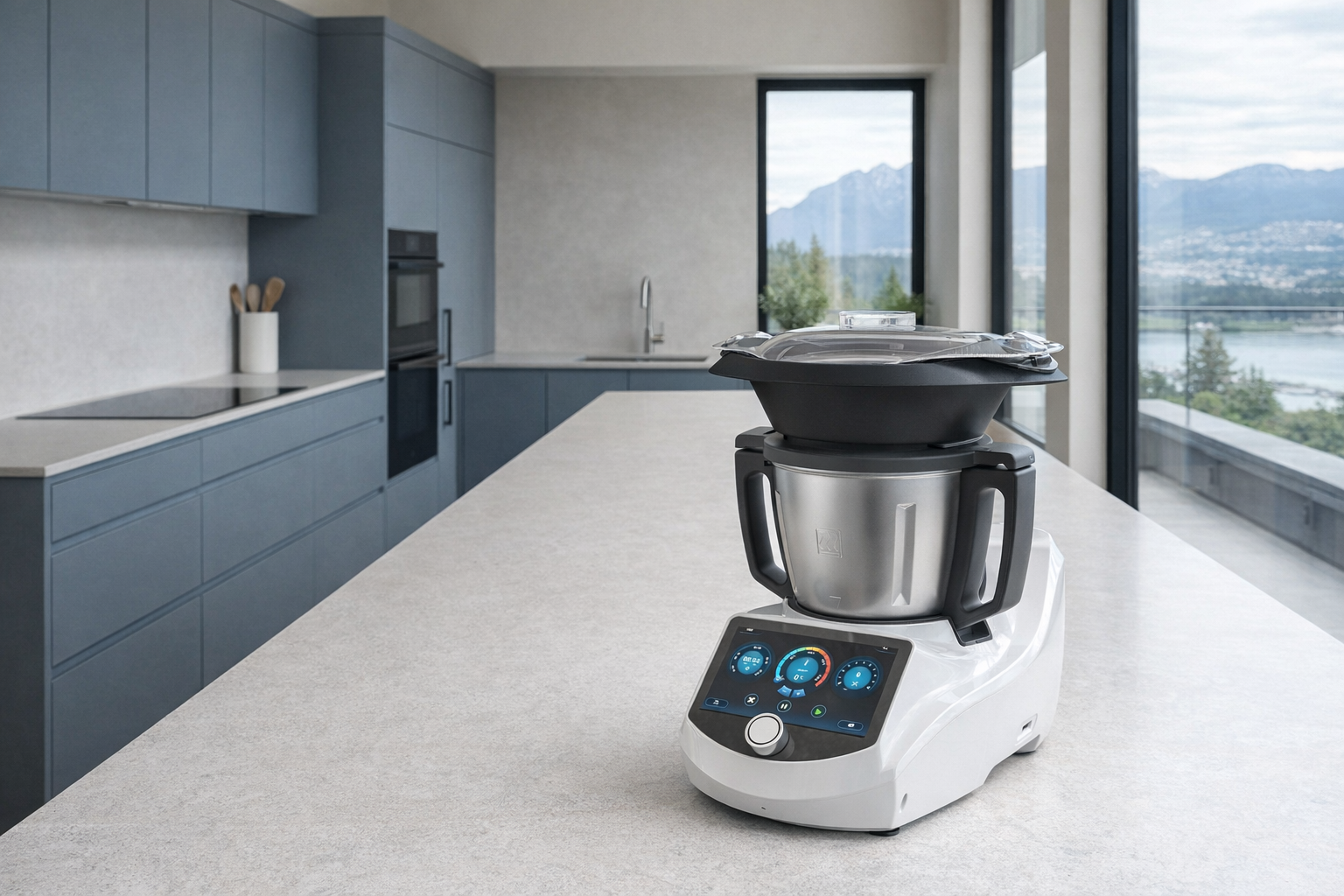
The ChefRobot Kitchen Food Processor Robot All-In-One sits in a category that keeps getting more ambitious: the countertop cooker that wants to replace a pile of smaller appliances. It is not just a food processor in the old sense of chopping and slicing. According to the listing, it also hea...
The ChefRobot Kitchen Food Processor Robot All-In-One sits in a category that keeps getting more ambitious: the countertop cooker that wants to replace a pile of smaller appliances. It is not just a food processor in the old sense of chopping and slicing. According to the listing, it also heats, steams, kneads, blends, weighs ingredients, and walks you through recipes in an app. In plain terms, this is the kind of machine aimed at people who like the idea of a more automated cooking workflow, but do not want a kitchen full of single-purpose gadgets.
This article is not a hands-on review. Nothing here is based on personally using the machine. The goal is simpler: explain what the ChefRobot Kitchen Food Processor Robot All-In-One appears to do, how its feature set compares with more established all-in-one cookers, and who it realistically suits. If you are trying to decide whether this is a clever consolidation tool or just a bulky compromise, this is the calmer version of that conversation.
📺 Watch: ChefRobot Kitchen Food Processor Robot All-In-One in context
Quick snapshot
| Question | What the ChefRobot Kitchen Food Processor Robot All-In-One actually is |
|---|---|
| Category | Kitchen & Dining |
| Made by | ChefRobot |
| Typical price | ~$499 CAD (listing at the time of writing — verify current pricing) |
| Rating signal | 3.8/5 on the source listing |
| Best for | Busy home cooks, small kitchens trying to reduce appliance clutter, recipe followers who want guided cooking |
| Skip if | You prefer manual cooking, hate app dependence, or need large batch capacity for big families |
Pro tip: Treat the ChefRobot as a guided cooking station, not a replacement for every pan and appliance you own. It makes the most sense if you want help with repeatable weekday meals, soups, sauces, doughs, and prep-heavy tasks — not if you expect it to fully replace a proper stovetop.
What the ChefRobot Kitchen Food Processor Robot All-In-One actually is
The simplest way to describe the ChefRobot Kitchen Food Processor Robot All-In-One is this: it is a heated mixing bowl with a motor, a scale, app-based guided recipes, and enough presets to cover a lot of routine kitchen jobs in one footprint. Instead of using one machine to chop vegetables, another to steam, another to knead dough, and a pot on the stove to cook, this product tries to combine those steps into one countertop system. That is the appeal. The risk, of course, is that combo devices often do many things adequately and only a few things really well.
Smart all-in-one kitchen food processor robot with 15+ cooking functions including steam, mix, blend, knead, and grind. Features 500+ guided English recipes via app, self-cleaning, and 3.5L stainless steel bowl.
That description tells you most of what matters. The machine appears to combine a 500W motor for mechanical jobs like mixing and blending with a 1000W heater for cooking and steaming. The 3.5L stainless steel bowl gives you a clue about scale: this is not a commercial machine, and it is not built for giant party batches. It looks better suited to everyday household cooking — think sauces, soups, doughs, purees, steamed dishes, and guided one-bowl meals.
The most obvious comparison is the Thermomix TM6, because that is the product this whole category gets measured against. The ChefRobot appears to target a similar idea — guided recipes, heating, weighing, mixing, and multi-step cooking in one device — but at a lower listed price. That matters. It also means expectations should stay grounded. A cheaper Thermomix-style machine can be a smart buy if the workflows are good enough for your kitchen, but it should be evaluated like a practical alternative, not assumed to match the polish, ecosystem depth, or long-term support of the category leader.
Key features at a glance
- 15+ cooking functions including steam, mix, blend, scale, knead, and grind
- 500W motor and 1000W heater for both prep and cooking tasks
- 500+ guided English recipes with app control
- 3.5L stainless steel bowl for everyday batch cooking
- Self-cleaning function to reduce cleanup friction
- 10+ appliances in one device according to the listing
- 10 speed settings with a safety lock
How the ChefRobot Kitchen Food Processor Robot All-In-One actually works
At a basic level, this is a cooking base plus a metal bowl plus interchangeable motion and heat. The motor spins or agitates ingredients for jobs like mixing, blending, kneading, or grinding. The heater warms the bowl for cooking, steaming, or simmering. The built-in scale function is meant to reduce the usual back-and-forth between countertop scale, cutting board, blender, and saucepan. That is the real promise: fewer transfers, fewer dishes, and less guesswork in recipe steps.
The app side matters almost as much as the hardware. With 500+ guided English recipes, the ChefRobot appears designed for people who do not want to manually set every step. Instead of reading a recipe on your phone and then operating separate appliances, the recipe workflow seems to tell the machine what to do next — mix at one speed, heat to a certain stage, then steam, then blend, and so on. That's a more honest use of "smart" than slapping Wi‑Fi onto a toaster. If the recipe library is well organized and maintained, it can genuinely change how often the machine gets used.
The likely workflow breaks down into a few layers:
- Load ingredients into the 3.5L bowl. This is the central vessel for most tasks, so ingredient prep gets consolidated.
- Choose a manual function or guided recipe. Manual mode likely suits confident cooks; guided mode suits people who want step-by-step prompts.
- Let the machine handle motion and heat. The 10 speed settings and heating element do the repetitive work that normally happens across multiple tools.
- Use self-cleaning for a first pass. That will probably loosen residue, especially after soups or sauces, though it should not be mistaken for a dishwasher-grade deep clean.
What stands out here is not that any single function is unusual. Steamers exist. Food processors exist. Stand mixers exist. Heated blenders exist. The value only appears if you regularly do recipes that combine several of those tasks in sequence. If you mostly chop vegetables and fry things in a pan, a regular food processor may be enough. If you want a machine to weigh, stir, heat, and guide you through a soup or dough workflow, the ChefRobot starts making more sense.
A realistic "day in the life" with ChefRobot Kitchen Food Processor Robot All-In-One
Because this is an informational explainer, think of this as what the listed features imply rather than a verified routine.
- Morning. You use the bowl to mix a batter or blend a smoothie base, relying on the motor and one of the 10 speed settings rather than dragging out a separate blender. If you are making porridge or a warm breakfast mixture, the heating function could turn it into a single-machine job.
- Midday. For lunch prep, the scale and guided recipe system likely help with soups, dips, or sauces. You add ingredients directly into the bowl instead of measuring everything in separate containers, which is exactly the kind of small friction reduction these machines are built for.
- Afternoon. Dough or prep work is where the machine could shine for busy households. A knead function means pizza dough, bread dough, or dumpling dough can be partially automated, which is useful if you like homemade food but not the repetitive mixing.
- Evening. Dinner is the strongest use case: steam vegetables, cook a sauce, grind or blend ingredients, then run the self-cleaning function afterward. That does not mean zero cleanup, but it does suggest less mess than using a pot, steamer insert, blender jug, and mixing bowl separately.
Who the ChefRobot Kitchen Food Processor Robot All-In-One is actually for (and who it isn't)
Great fits
- Home cooks in condos or smaller kitchens who genuinely want to replace several countertop appliances with one larger one.
- Busy parents making repeatable weekday meals like soups, sauces, steamed sides, and dough-based recipes.
- Beginner cooks who get intimidated by multi-step recipes and would benefit from 500+ guided English recipes in an app.
- People with limited time but decent interest in cooking from scratch, especially those who like semi-automated prep more than full manual stovetop work.
- Gadget-friendly households that already use app-connected kitchen gear and are comfortable with firmware-style product updates or recipe-library ecosystems.
Poor fits
- Large families who regularly cook huge batches; a 3.5L bowl is useful, but not especially generous for crowd-sized meals.
- Skilled cooks who improvise constantly and do not want a screen-led workflow interrupting their rhythm.
- Anyone who dislikes keeping a substantial appliance on the counter all the time. Machines like this earn their space only if used often.
- Buyers expecting restaurant-level performance from every function. Combo appliances are about convenience and consolidation, not perfection in every mode.
- People who want a low-tech kitchen. If app-guided cooking sounds annoying rather than helpful, this will feel like too much machine for too little benefit.
Practical trade-offs
Counter space and batch size
This kind of appliance saves space only if it replaces enough things you already own. If it sits beside a stand mixer, blender, food processor, rice cooker, and steamer instead of replacing them, then it is just one more bulky object. The 3.5L bowl is practical for everyday meals, but it also sets a hard ceiling. For couples, singles, or small families, that may be fine. For big meal-prep sessions, holiday cooking, or large-batch soup, it may feel limiting.
Cleanup reality
The listing mentions self-cleaning, which is useful, but buyers should treat that as a convenience feature rather than a miracle. A warm rinse-and-spin cycle can absolutely loosen sauces, batters, and soft residue. That saves time. But sticky dough, oily films, or cooked-on food still usually need a manual wash. Evaluate self-cleaning like the rinse cycle on a blender, not like a fully automatic dishwasher replacement.
App dependence and recipe ecosystem
The 500+ guided English recipes are one of the stronger selling points, but they also create a dependency. If the app is polished and updated, the machine feels easier and smarter. If the app is clunky, poorly translated, or thinly maintained, the hardware can feel less compelling very quickly. This is a bigger deal than it sounds. In products like this, software quality often decides whether the device becomes a weekday staple or a once-a-month experiment.
Where the ChefRobot Kitchen Food Processor Robot All-In-One fits in a modern kitchen
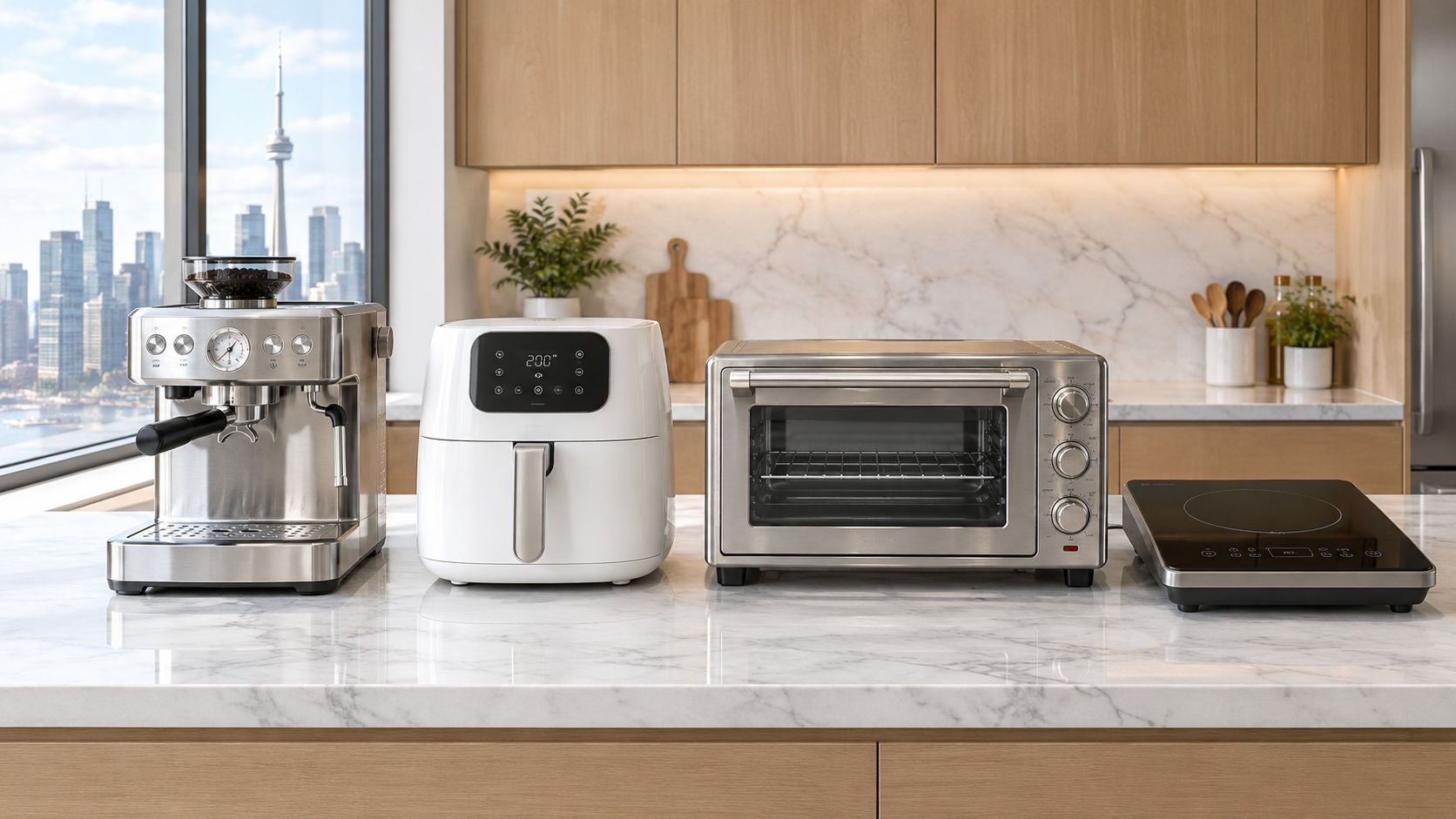
The ChefRobot makes the most sense in a kitchen built around efficient weeknight cooking, not hobbyist gear collecting. It pairs well with a fairly normal setup: a good chef's knife, a cutting board, an air fryer or oven, and a standard cooktop for jobs that still make more sense in a pan. In that kind of kitchen, the ChefRobot handles the repetitive, contained, bowl-based tasks.
A realistic division of labour looks like this:
- ChefRobot handles soups, sauces, steamed dishes, dough mixing, blending, grinding, and guided prep.
- An Instant Pot or rice cooker still handles large grains, beans, or pressure-cooked meals if those are common in your routine.
- An air fryer or oven takes care of roasting, crisping, and finishing textures this machine will not replicate.
- A stovetop pan remains the right tool for searing, fast sautéing, and dishes where browning matters.
That is the healthiest expectation. Like the Thermomix TM6, the ChefRobot appears best as a cooking assistant for structured meals, not as the sole centre of the kitchen. If you respect that boundary, it can be easier to see whether the $499 CAD price is sensible. Evaluate it like a premium consolidation tool, not like a magical chef replacement.
The buying decision, in plain terms
Before buying, three questions usually surface the right answer.
- Do you actually cook the kinds of meals this machine helps with? If your routine includes soups, sauces, steaming, doughs, purees, and guided multi-step recipes, the ChefRobot's functions line up well. If you mostly grill, roast, or fry, it probably will not change much.
- Will you use the app-guided recipe system, or ignore it? The recipe library is a major part of the product's value. If you know you will default to your own methods and never open the app, a simpler appliance may be the better buy.
- Can your kitchen justify a dedicated 3.5L all-in-one machine? If this replaces several tools and earns regular use, the price is reasonable for a premium convenience appliance. If it becomes an occasional curiosity, it is expensive clutter.
Three yeses make it a sensible buy. If you are hesitating on two or more, a separate food processor plus a good pot may be the smarter route.
Got Questions About the ChefRobot Kitchen Food Processor Robot All-In-One? Let's Clear Things Up.
Is this a hands-on review?
No. This is an informational explainer based on the product listing and the broader all-in-one cooking category. It is meant to clarify what the machine appears to offer and where it fits, not to replace direct testing.
What does the ChefRobot actually replace?
According to the listing, it is meant to cover 10+ appliances in one device, including functions like steaming, mixing, blending, kneading, grinding, and weighing. Realistically, that means it may reduce reliance on a separate blender, food processor, steamer, and mixer for many recipes. It does not fully replace an oven, frying pan, or full-size stovetop.
Is the bowl big enough for family cooking?
The listed bowl size is 3.5L, which is decent for everyday cooking but not huge. That should be enough for many soups, sauces, doughs, and smaller family meals. If you regularly cook for a large family or batch-cook in very large quantities, it may feel modest.
Does the self-cleaning feature mean you barely have to wash it?
Probably not. Self-cleaning is best understood as a time-saving rinse cycle that helps loosen leftover food. It should make cleanup easier after things like soups or sauces, but manual washing will still matter, especially with sticky dough or oily residue.
Is this better than buying a regular food processor?
That depends on your cooking style. A regular food processor is usually simpler, often cheaper, and ideal if you mainly chop, slice, or puree. The ChefRobot only makes more sense if you want the added heating, steaming, kneading, scale, and guided recipe workflow in one machine.
Where can you verify the current listing or buy it?
The best place to verify the current price, feature list, and availability is the seller page on Amazon. You can check the current listing here. That matters because pricing, app details, and listing language can change over time.
What does it cost in Canada?
At the time of writing, the listed price is ~$499 CAD. As with many imported kitchen gadgets, that can shift with sales, stock levels, or retailer changes, so it is worth checking the live product page before buying.
Where is the Celmin Directory listing for this product?
For a catalog-style view of the same product — structured specs, pros and cons, similar picks, and FAQ — see ChefRobot Kitchen Food Processor Robot All-In-One on Celmin Directory.
If you're building a smarter home in Canada and want honest explainers on gadgets worth considering — plus the ones worth skipping — Celmin covers the full catalog without the marketing theater. More reviews, comparisons, and buyer guides at https://celmin.ca.
Discussion
Sign up or sign in to join the conversation.