
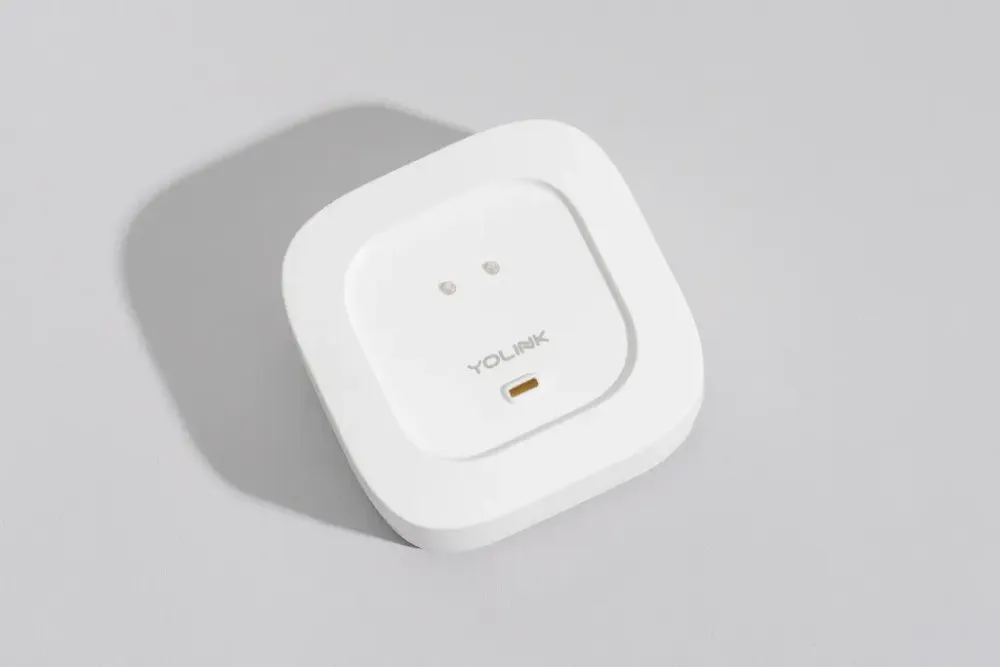

Water damage is the most common homeowner insurance claim, averaging $12,000 per incident. A slow leak under your sink or behind your washing machine can go unnoticed for weeks, destroying floors, walls, and creating mold.
Water damage is the most common homeowner insurance claim, averaging C$16,300 per incident. A slow leak under your sink or behind your washing machine can go unnoticed for weeks, destroying floors, walls, and creating mold.
A smart water leak detector costs C$27-50 and sends an alert to your phone the moment it detects moisture. That's the cheapest insurance policy you'll ever buy.
How Smart Leak Detectors Work
These small pucks sit on the floor in leak-prone areas. Metal contacts on the bottom detect water. When moisture bridges the contacts, the sensor triggers:
- Phone notification — instant alert wherever you are
- Audible alarm — loud siren on the device itself
- Smart home automation — trigger a water shutoff valve, turn on lights, etc.
Most run on coin cell batteries that last 1-2 years.
Best Smart Water Leak Detectors
Aqara Water Leak Sensor — Best Overall
Tiny, cheap, and incredibly reliable.
- Protocol: Zigbee
- Hub Required: Yes (Aqara hub, SmartThings, or Home Assistant)
- Battery: CR2032 (lasts ~2 years)
- Alert Methods: App notification, audible buzzer, automations
- IP Rating: IP67 (waterproof)
- Size: 50mm diameter
- Price: ~C$20
The Aqara sensor is the size of a large coin. It's IP67 waterproof (it can sit in water), runs on Zigbee for instant local response, and costs almost nothing. Buy a handful and put them everywhere.
Ring Alarm Flood & Freeze Sensor — Best for Ring Users
Detects both water and freezing temperatures.
- Protocol: Z-Wave
- Hub Required: Yes (Ring Alarm base station)
- Battery: CR123A (lasts ~3 years)
- Alert Methods: App notification, Ring alarm siren, monitoring service
- Bonus: Temperature monitoring (alerts below 40°F)
- Price: ~C$48
If you have Ring Alarm, this is a no-brainer. The freeze detection is great for vacation homes or unheated basements.
Govee WiFi Water Sensor — Best No-Hub Option
WiFi-based, no hub needed.
- Protocol: WiFi
- Hub Required: No
- Battery: AAA x 3 (lasts ~1 year)
- Alert Methods: App notification, audible alarm, email
- Bonus: Optional gateway for extended range
- Price: ~C$16
The cheapest entry point. Connect directly to WiFi, get alerts on your phone. No hub, no ecosystem commitment.
Flo by Moen Smart Water Detector — Best Premium
Part of a complete water monitoring system.
- Protocol: WiFi
- Hub Required: No (but pairs with Flo Smart Water Monitor)
- Battery: CR123A (lasts ~2 years)
- Alert Methods: App notification, audible alarm
- Bonus: Temperature and humidity monitoring
- Price: ~C$68
Flo's real power is when paired with their Smart Water Monitor (C$680), which can automatically shut off your main water supply when a leak is detected.
Comparison Table

| Sensor | Protocol | Hub | Battery Life | Freeze Alert | Price |
|---|---|---|---|---|---|
| Aqara | Zigbee | Yes | ~2 years | No | C$20 |
| Ring Flood & Freeze | Z-Wave | Yes (Ring) | ~3 years | Yes | C$48 |
| Govee WiFi | WiFi | No | ~1 year | No | C$16 |
| Flo by Moen | WiFi | No | ~2 years | Yes | C$68 |
For most people, Aqara sensors are the move. They're so cheap you can put one under every sink, behind every toilet, and near every appliance.
📺 Watch: Smart Water Leak Detectors — Are They Worth It?
Where to Place Leak Detectors
High-Priority Locations
- Under kitchen sink — most common leak source
- Behind washing machine — hose failures are catastrophic
- Near water heater — tanks eventually corrode and leak
- Under bathroom sinks — slow drips go unnoticed
- Near toilets — wax ring failures, supply line leaks
- In basement/crawl space — first place water accumulates
Secondary Locations
- Near dishwasher
- Under refrigerator (if it has a water line)
- Near sump pump
- In laundry room floor drain area
- Near HVAC condensate drain
Placement Tips
- Place flat on the floor with contacts facing down
- Position where water would pool first (lowest point)
- Keep away from areas that get wet normally (shower splash zone)
- Test monthly by touching a wet finger to the contacts
Automations That Save Your Home
Basic: Alert Only
Sensor detects water → phone notification + audible alarm
Intermediate: Smart Response
Sensor detects water → notification + turn on nearby lights + announce on smart speakers
Advanced: Automatic Shutoff
Sensor detects water → notification + activate smart water shutoff valve + turn on lights + send alert to all family members
Smart water shutoff valves (C$270-500) are the ultimate protection. Pair with leak sensors for a system that detects and stops leaks automatically.
Got Questions About Smart Leak Detectors? Let's Clear Things Up.
How fast do they detect leaks?
Most detect water within seconds of contact. The alert reaches your phone within 10-30 seconds depending on the protocol (Zigbee is fastest via local hub, WiFi depends on cloud processing).
Do they work when I'm not home?
Yes—that's the whole point. You get a phone notification wherever you are. Some systems (Ring, Flo) can also alert a professional monitoring service.
What about false alarms?
Rare with proper placement. High humidity alone won't trigger them—they need actual water contact. Condensation on cold pipes can occasionally cause false alerts; place the sensor slightly away from pipes.
How many do I need?
At minimum: one under each sink, one near the water heater, one near the washing machine. That's 4-6 for a typical home. At C$16-15 each, there's no reason to skimp.
A C$20 leak detector can save you from a C$16,300 disaster. Start with Aqara sensors for the best value, or Govee if you don't want a hub. For more home protection, check out our best smart smoke detector guide or our best security camera system for home.




Discussion
Sign up or sign in to join the conversation.